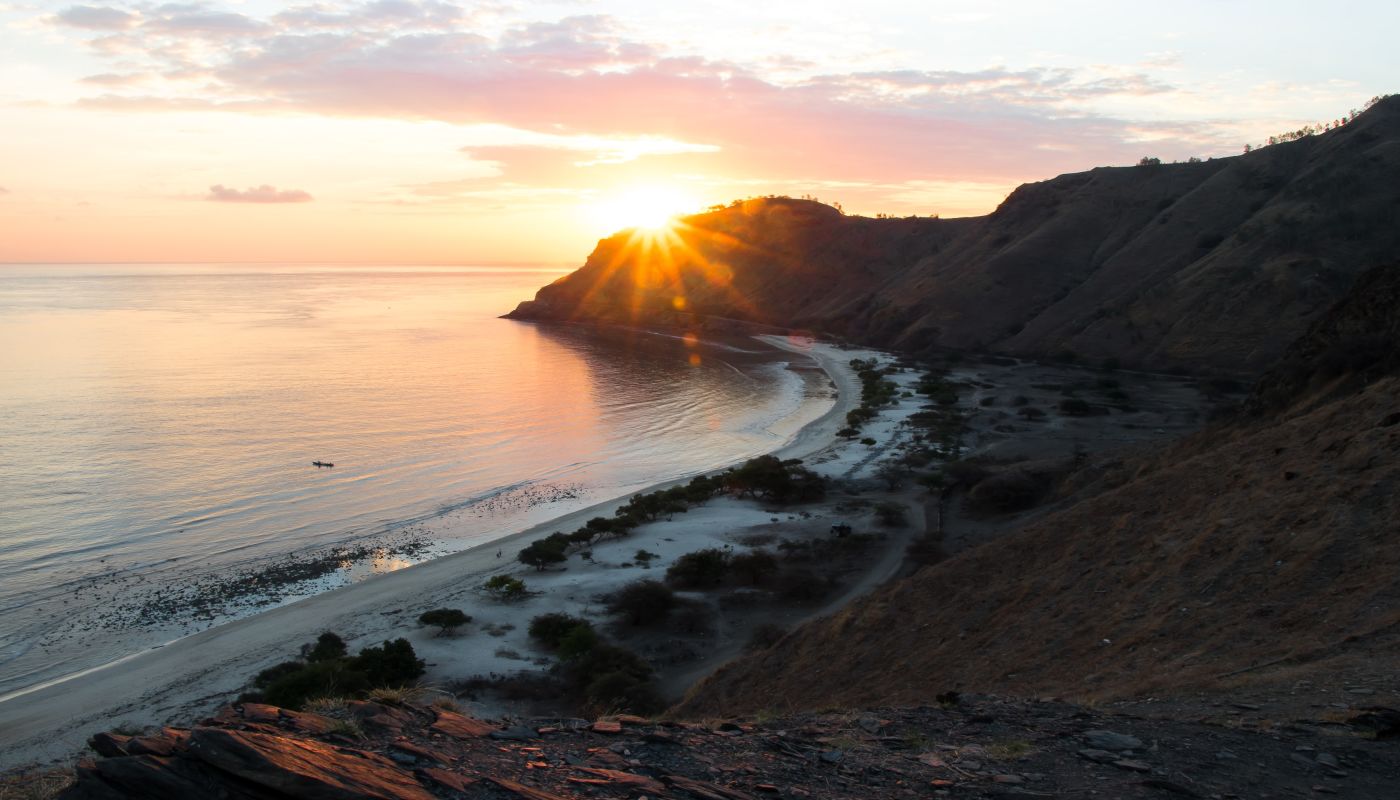

Landscape of East Timor
Flag of East Timor

East Timor

Australia/Oceania

Timor-Leste was formerly known as East Timor, and was a Portuguese colony until it declared its independence from Portugal in 1975. The nation become occupied by Indonesian military forces for the next 20 years, and an estimated 100,000–250,000 died over the course of the occupation. When, in 1999, the United Nations held a referendum and the Timorese people voted for independence from Indonesia, anti-independence militias setting off a large-scale operation to destroy the Timorese infrastructure, crippling the electric grid, water supply and education systems. Approximately 1,400 people were killed, and 300,000 became refugees in western Timor. An Australian peacekeeping force arrived on September 20, 1999, bringing the destruction to an end. In 2002, Timor-Leste was internationally recognized as an independent state.1 The infant and maternal mortality rates in Timor-Leste are the highest in Southeast Asia,2 at 35 deaths per 1,000 live births, and 215 deaths per 100,000 live births, respectively.3 28 percent of the population lacks access to an improved drinking water source, and 59 percent lacks access to modern sanitation facilities.4 37.7 percent of children under the age of 5 are underweight in Timor-Leste, the highest rate in the world.5 1 https://www.cia.gov/library/publications/the-world-factbook/geos/tt.html 2 https://www.usaid.gov/timor-leste/global-health 3 https://www.cia.gov/library/publications/the-world-factbook/geos/tt.html 4–5 Ibid

What would you like to learn about in East Timor?

Select a section to explore the country where nonprofits are creating positive change.

About East Timor

The Portuguese began to trade with the island of Timor in the early 16th century and colonized it in mid-century. Skirmishing with the Dutch in the region eventually resulted in an 1859 treaty in which Portugal ceded the western portion of the island. Imperial Japan occupied Portuguese Timor from 1942 to 1945, but Portugal resumed colonial authority after the Japanese defeat in World War II. East Timor declared itself independent from Portugal on 28 November 1975 and was invaded and occupied by Indonesian forces nine days later. It was incorporated into Indonesia in July 1976 as the province of Timor Timur (East Timor). An unsuccessful campaign of pacification followed over the next two decades, during which an estimated 100,000 to 250,000 individuals lost their lives. On 30 August 1999, in a UN-supervised popular referendum, an overwhelming majority of the people of Timor-Leste voted for independence from Indonesia. However, in the next three weeks, anti-independence Timorese militias - organized and supported by the Indonesian military - commenced a large-scale, scorched-earth campaign of retribution. The militias killed approximately 1,400 Timorese and forcibly pushed 300,000 people into western Timor as refugees. Most of the country's infrastructure, including homes, irrigation systems, water supply systems, and schools, and nearly 100% of the country's electrical grid were destroyed. On 20 September 1999, Australian-led peacekeeping troops deployed to the country and brought the violence to an end. On 20 May 2002, Timor-Leste was internationally recognized as an independent state. In 2006, internal tensions threatened the new nation's security when a military strike led to violence and a breakdown of law and order. At Dili's request, an Australian-led International Stabilization Force (ISF) deployed to Timor-Leste, and the UN Security Council established the UN Integrated Mission in Timor-Leste (UNMIT), which included an authorized police presence of over 1,600 personnel. The ISF and UNMIT restored stability, allowing for presidential and parliamentary elections in 2007 in a largely peaceful atmosphere. In February 2008, a rebel group staged an unsuccessful attack against the president and prime minister. The ringleader was killed in the attack, and most of the rebels surrendered in April 2008. Since the attack, the government has enjoyed one of its longest periods of post-independence stability, including successful 2012 elections for both the parliament and president. In late 2012, the UN Security Council voted to end its peacekeeping mission in Timor-Leste and both the ISF and UNMIT departed the country by the end of the year.

Quick Facts

Population
1,172,390
Area
14,874 sq km
ISO Code
TL
Continent
Australia/Oceania
Government
republic
Active Causes
12
View all countries in Australia/Oceania

Geography & Environment

Climate

tropical; hot, humid; distinct rainy and dry seasons

Terrain

mountainous

Natural Resources

gold, petroleum, natural gas, manganese, marble

Environmental Issues

widespread use of slash and burn agriculture has led to deforestation and soil erosion

People & Society

67.06 years
Avg. Life Expectancy
58.3%
Literacy Rate
28.3% of total population (2011)
Total Urban Population

Languages

Tetum (official), Portuguese (official), Indonesian, English

Religions

Roman Catholic 98%, Muslim 1%, Protestant 1% (2005)

Health Expenditure

9.1% of GDP (2010) of GDP

Education Expenditure

10.1% of GDP (2011) of GDP

Economy

$10,000
GDP per Capita (PPP)
18.4%
Unemployment Rate
41% (2009 est.)
Below Poverty Line

Economic Overview

Since its 1999 independence, Timor-Leste has faced great challenges in rebuilding its infrastructure, strengthening the civil administration, and generating jobs for young people entering the work force. The development of oil and gas resources in offshore waters has greatly supplemented government revenues. This technology-intensive industry, however, has done little to create jobs for the unemployed in part because there are no production facilities in Timor-Leste. Gas is piped to Australia. In June 2005, the National Parliament unanimously approved the creation of a Petroleum Fund to serve...

Causes in East Timor

Environment

Timor-Leste is an island nation in the Pacific with a tropical climate, bordering Indonesia to the west. Its natural resources include gold, petroleum, natural gas, manganese and marble, and the oil industry accounts for a majority of the nation’s revenue.1 The nation faces issues with soil erosion, air pollution and forest depletion. Slash-and-burn agricultural practices contribute to soil erosion and forest depletion, and to loss of biodiversity.2 Timor-Leste is prone to floods and landslides, as well as earthquakes, tsunamis and tropical cyclones.3

Family

30 percent of Timorese women have experienced domestic violence in the last year, and 38 percent of Timorese women will experience it in their lifetime.1 In 2010, the government of Timor-Leste passed the Law Against Domestic Violence, establishing domestic violence as a punishable crime.2 The law defines domestic violence as being physical, psychological, sexual, or economic abuse.3 Additionally, the law also approved the development of a number of safe houses and shelters for victims of domestic violence.4 The infant and maternal mortality rates are the highest in Southeast Asia,5 at 35 deaths per 1,000 live births, and 215 deaths per 100,000 live births, respectively.6

Human Rights

Victims of the offenses committed during the Indonesian occupation persist in seeking reparations. Journalists are not protected, particularly when it comes to critique of the government, and have been charged with defamation.1 The governments of Timor-Leste and Indonesia have not acted on the Commission on Reception, Truth and Reconciliation (CAVR) report, a report of the human rights crimes committed against the Timorese people during the Indonesian occupation.2

Education

Despite political turmoil over the last couple of decades, Timor-Leste brought the national school enrollment rate up from 67 to 83 percent in just five years, and the completion rate is 95 percent.1 The literacy rate is just 67.5 percent.2 Education accounts for 7.5 percent of the GDP, a very high rate, the 7th highest in the world.3 An average student is expected to remain in school for a total of 13 years, from the primary through tertiary level, in Timor-Leste.4

Poverty

Timor-Leste is one of the poorest countries in East Asia.1Unemployment is just 4.4 percent, but 41.8 percent of the population is below the poverty line.2 With the bulk of the economic activity being generated from offshore drilling, job creation is sparse for those who actually live on the island.3 37.7 percent of children under the age of five are underweight, the highest rate in the world.4 28 percent of the population lacks access to an improved drinking water source, and 59 percent lacks access to modern sanitation facilities.5

Religion

Approximately 97.6 percent of Timor-Leste’s population is Roman Catholic, followed by 2 percent identifying as Protestant, 0.2 percent identifying as Muslim and the remainder identifying as other.1 The constitution of Timor-Leste provides for religious freedom and this is generally well respected by the government.2 However, there are reports of preferential treatments being given to Catholic institutions, including in marriage licenses and funding.3

Clean Water

28 percent of the population in Timor-Leste lacks access to an improved drinking water source, and nearly 60 percent of the population lacks access to modern sanitation facilities.1 The risk of contracting waterborne diseases like bacterial diarrhea, hepatitis A and typhoid is very high.2

Economy

Timor-Leste’s GDP is $6.753 billion, and the GDP per capita is $5,400. Some of the leading industries are printing, soap manufacturing and woven cloth. The primary agricultural products are coffee, rice, corn, cassava, sweet potatoes, soybeans, cabbage, mangoes, bananas and vanilla.1 Timor-Leste’s primary luxury exports include coffee, oil, sandalwood and marble. The unemployment rate is 4.4 percent, but 41.8 percent of the population is below the poverty line.2 Timor-Leste is one of the poorest countries in East Asia. Oil and gas comprise 95 percent of the government’s annual revenue. The nation’s oil industry does not create many jobs, despite the fact that it accounts for such a large part of the national revenue, as the oil industry is technologically oriented.3 As a result, Timor-Leste is very dependent on foreign aid.4 The nation is considering ecotourism as a way to boost economy and simultaneously protect the coral reef system.5

Government

The Democratic Republic of Timor-Leste is a relatively small, semi-presidential republic of 1,291,358 people. The country is led by a president and a prime minister, with the president acting as the chief of state and the prime minister acting as the head of government.1 Timor-Leste was formerly known as East Timor, and was a Portuguese colony until it declared its independence from Portugal in 1975, only to become occupied by Indonesian military forces for the next 20 years, and an estimated 100,000–250,000 died over the course of the occupation. When, in 1999, the United Nations held a referendum and the Timorese people voted for independence from Indonesia, anti-independence militias set off a large-scale operation to destroy the Timorese infrastructure, crippling the electric grid, water supply and education systems. Approximately 1,400 people were killed, and 300,000 became refugees in western Timor. An Australian peacekeeping force arrived on September 20, 1999, bringing the destruction to an end. In 2002, Timor-Leste was internationally recognized as an independent state.2 Despite new leadership, and an end to the Indonesian occupation, the country still suffers from governmental corruption, inconsistent property laws, and an ill-equipped judicial system.3

Health

The infant and maternal mortality rates in Timor-Leste are the highest in Southeast Asia,1 at 35 deaths per 1,000 live births, and 215 deaths per 100,000 live births, respectively.2 28 percent of the population lacks access to an improved drinking water source, and 59 percent lacks access to modern sanitation facilities.3 37.7 percent of children under the age of 5 are underweight in Timor-Leste, the highest rate in the world.4 The risk of contracting waterborne diseases like bacterial diarrhea, hepatitis A and typhoid is very high.5

Children

The Law to Prevent and Fight Against Human Trafficking was enacted in Timor-Leste in 2017 to prevent child labor in the commercial sex industry by forming a monitoring community to oversee the Inter-Agency Trafficking Working Group who enforces the National Action Plan on Combating Human Trafficking across the nation. 1 The infant mortality rate is 35 deaths per 1,000 live births. 37.7 percent of children under the age of 5 are underweight in Timor-Leste, the highest rate in the world.2 The average child is expected to be in school for 13 years.3

Animals

Timor-Leste is part of the dry tropical climate region, and is home to a variety of both land and marine wildlife.1 Species include the spotted cuscus monkey, a number of endemic bird species, including the yellow-crested cockatoo, and a wide variety of fish in Timor-Leste’s coral reefs.2 Whales and dolphins are also known to frequent the nation’s waters.3 Timor-Leste is party to an international agreement on biodiversity.4

Nonprofits Working in East Timor

Discover organizations making a difference in East Timor

Make Your Impact Today

Discover causes you care about and support the nonprofits making a difference in communities around the world.

Are you a nonprofit? Join Project World Impact for free

Join Us Free