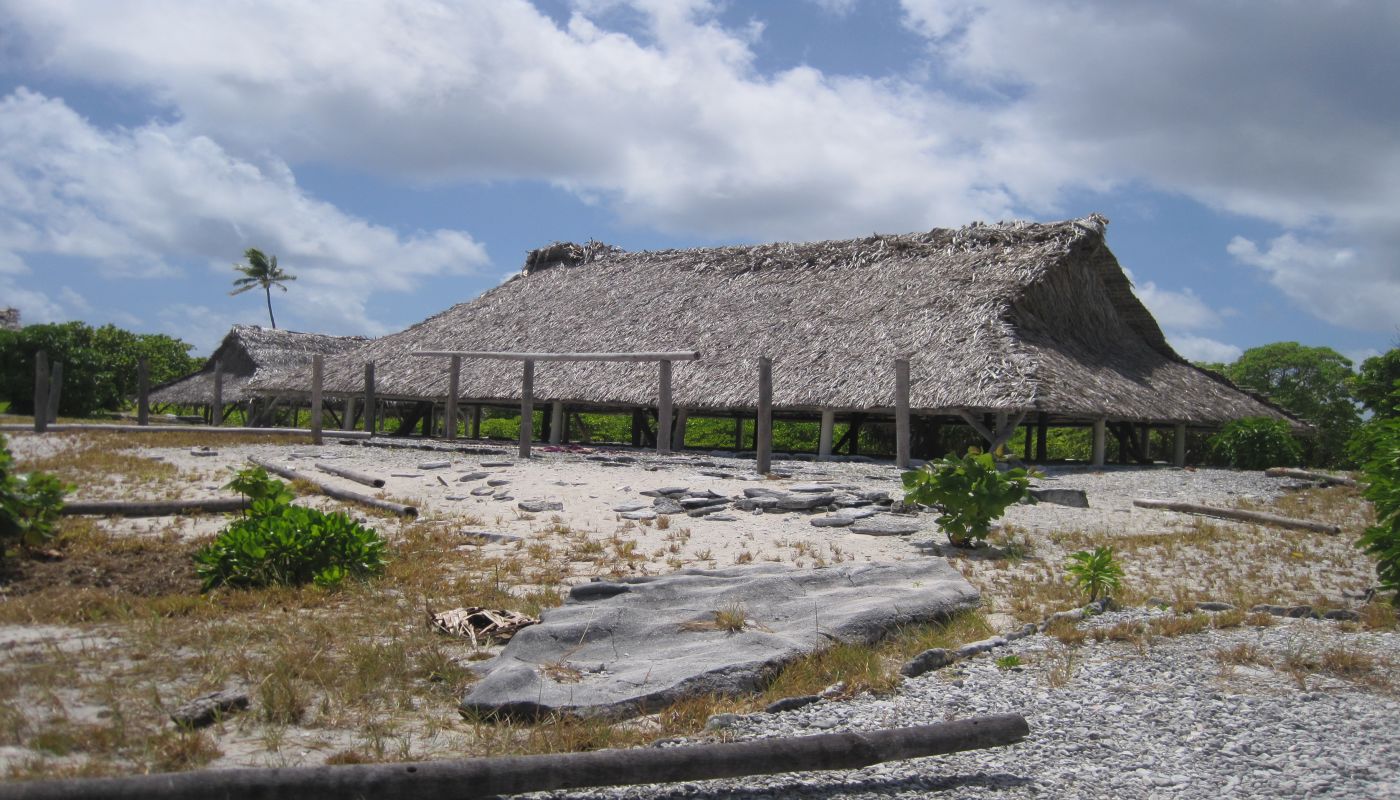
Landscape of Kiribati
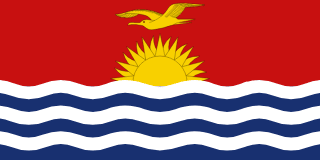
Flag of Kiribati

Kiribati

Australia/Oceania

The island nation of Kiribati is well-known for its importance in World War II in the Pacific War between Japan and the US. It is located on the Equator about halfway between Hawaii and Australia. The country gained complete independence from Britain in 1979, the same year that the US also relinquished claim to islands it had occupied since World War II. Kiribati faces issues providing clean water to all of its rural populations.1 1 https://www.cia.gov/library/publications/the-world-factbook/geos/kr.html

What would you like to learn about in Kiribati?

Select a section to explore the country where nonprofits are creating positive change.

About Kiribati

The Gilbert Islands became a British protectorate in 1892 and a colony in 1915; they were captured by the Japanese in the Pacific War in 1941. The islands of Makin and Tarawa were the sites of major US amphibious victories over entrenched Japanese garrisons in 1943. The Gilbert Islands were granted self-rule by the UK in 1971 and complete independence in 1979 under the new name of Kiribati. The US relinquished all claims to the sparsely inhabited Phoenix and Line Island groups in a 1979 treaty of friendship with Kiribati.

Quick Facts

Population
103,248 (July 2013 est.)
Area
811 sq km
ISO Code
KI
Continent
Australia/Oceania
Government
republic
Active Causes
12
View all countries in Australia/Oceania

Geography & Environment

Climate

tropical; marine, hot and humid, moderated by trade winds

Terrain

mostly low-lying coral atolls surrounded by extensive reefs

Natural Resources

phosphate (production discontinued in 1979)

Environmental Issues

heavy pollution in lagoon of south Tarawa atoll due to heavy migration mixed with traditional practices such as lagoon latrines and open-pit dumping; ground water at risk

People & Society

65.11 years
Avg. Life Expectancy
44% of total population (2010)
Total Urban Population

Languages

I-Kiribati, English (official)

Religions

Roman Catholic 55%, Protestant 36%, Mormon 3.1%, Baha'i 2.2%, Seventh-Day Adventist 1.9%, other 1.8% (2005 census)

Health Expenditure

11.3% of GDP (2010) of GDP

Education Expenditure

11.6% of GDP (2002) of GDP

Economy

$6,100
GDP per Capita (PPP)
2%
Unemployment Rate
NA%
Below Poverty Line

Economic Overview

A remote country of 33 scattered coral atolls, Kiribati has few natural resources and is one of the least developed Pacific Islands. Commercially viable phosphate deposits were exhausted at the time of independence from the UK in 1979. Copra and fish now represent the bulk of production and exports. The economy has fluctuated widely in recent years. Economic development is constrained by a shortage of skilled workers, weak infrastructure, and remoteness from international markets. Tourism provides more than one-fifth of GDP. Private sector initiatives and a financial sector are in the early st...

Causes in Kiribati

Environment

Kiribati’s government has developed the Kiribati Adaptation Program that seeks to reduce the overall vulnerability and adverse effects of rising sea levels on the small island nation. The major areas of focus include the maintaining water infrastructures, managing potential sea water inundation, and strengthening laws regarding coastal erosion.1 In Kiribati, many villages have had to relocate due to erosion, saltwater inundation, and rising sea levels.2

Education

Kiribati’s education sector receives financial and technical assistance from Australia in order to keep the country on track to achieving the Millennium Development Goal of universal education. Australia has helped Kiribati improve classrooms, develop education policies, and train the teachers.1 One of the greatest problems facing the country is retention of its educated population; it is common practice to leave the islands in search of a job after graduation from high school or higher education. Another area of focus for the government is the provision of training for its teachers to keep them up to date with educational standards.2

Clean Water

67% of the population is estimated to have access to clean water sources. There are great discrepancies between rural and urban populations; 87% of people in urban areas have clean water access compared to 50% of rural populations. 40% of I-Kiribati (people who are natives of Kiribati) have access to sanitation services.1 The European Union has established a relationship with the island to help the nation deliver clean water to its citizens. The EU provides funds to help implement water projects.2

Economy

Around half of Kiribati’s GDP comes from the public sector, which is responsible for the employment of two-thirds of the labor force. The financial sector of the economy is woefully underdeveloped, so much so that the majority of the population has no access to banking services.1 Kiribati’s main trade partners are Morocco, Fiji, Australia, and New Zealand. The country’s public debt is 27% of GDP. Exports are limited to fish and coconut products.2

Health

The life expectancy in Kiribati is 66 years. The government spends about 10% of GDP on healthcare. 46% of the adult population is overweight. The infant mortality rate is 32 deaths per 1,000 live births, and the maternal mortality rate is 90 deaths per 100,000 live births. One major issue for the islands is the scarcity of doctors; there are only two per 10,000 citizens.1

Family

Alcohol abuse is often a catalyst for domestic violence in Kiribati. Rape carries a life prison sentence, but judges often decide on much shorter sentences. There are also many cultural taboos against reporting sexual abuse.1 Historically, the island has a male-dominated culture where women are subordinate to and dependent on men, which leads to strong stigmas against reporting abusive men.2

Human Rights

Gender-based violence and child abuse are the two dominant social issues facing the I-Kiribati people. Due to the nature of communication and transportation on the island nation it is difficult for the government to successfully monitor and prosecute domestic violence.1

Poverty

30% of the I-Kiribati population is unemployed.1 Poverty is mainly caused by a lack of employment opportunities, loss of traditional training among the youth, and the degradation of natural resources over time. The economy is also extremely vulnerable to price fluctuations because the country imports nearly all of its goods.2

Religion

57% of the I-Kiribati population is Roman Catholic, 31% are members of the Kiribati Uniting Church, 5% are Mormon, 2% are Baha’i, and 2% are Seventh Day Adventist.1 The Constitution protects religious freedoms, but there are still two islands that practice one church policy, which is the protection.2

Government

The Republic of Kiribati is a presidential republic. The country gained independence in 1979 from the UK. The president serves as both chief of state and head of government. Rather than political parties, the political system consists of a grouping of interest groups.1

Children

Children are often abused and sometimes sexually exploited on the islands. There are issues with girls being targeted for child sex trafficking to earn money from foreign fishermen who dock on the islands for short periods of time.1 In early 2018 there was a ferry that sunk carrying 23 school children, along with over 50 others, leading to a national outcry for investigation into negligence on the part of the ferry company.2

Animals

The islands of Kiribati remain largely isolated from human activity, and are home to a wide array of seabirds. One of the few introduced species is the Polynesian rat. One of the greatest dangers facing the local species is the mining of phosphate, which has occurred on nearby islands but has not yet spread to the Kiribati islands. The government declared all of the islands to be wildlife sanctuaries, but there are no patrols responsible for enforcement of this law.1

Nonprofits Working in Kiribati

Discover organizations making a difference in Kiribati

Make Your Impact Today

Discover causes you care about and support the nonprofits making a difference in communities around the world.

Are you a nonprofit? Join Project World Impact for free

Join Us Free