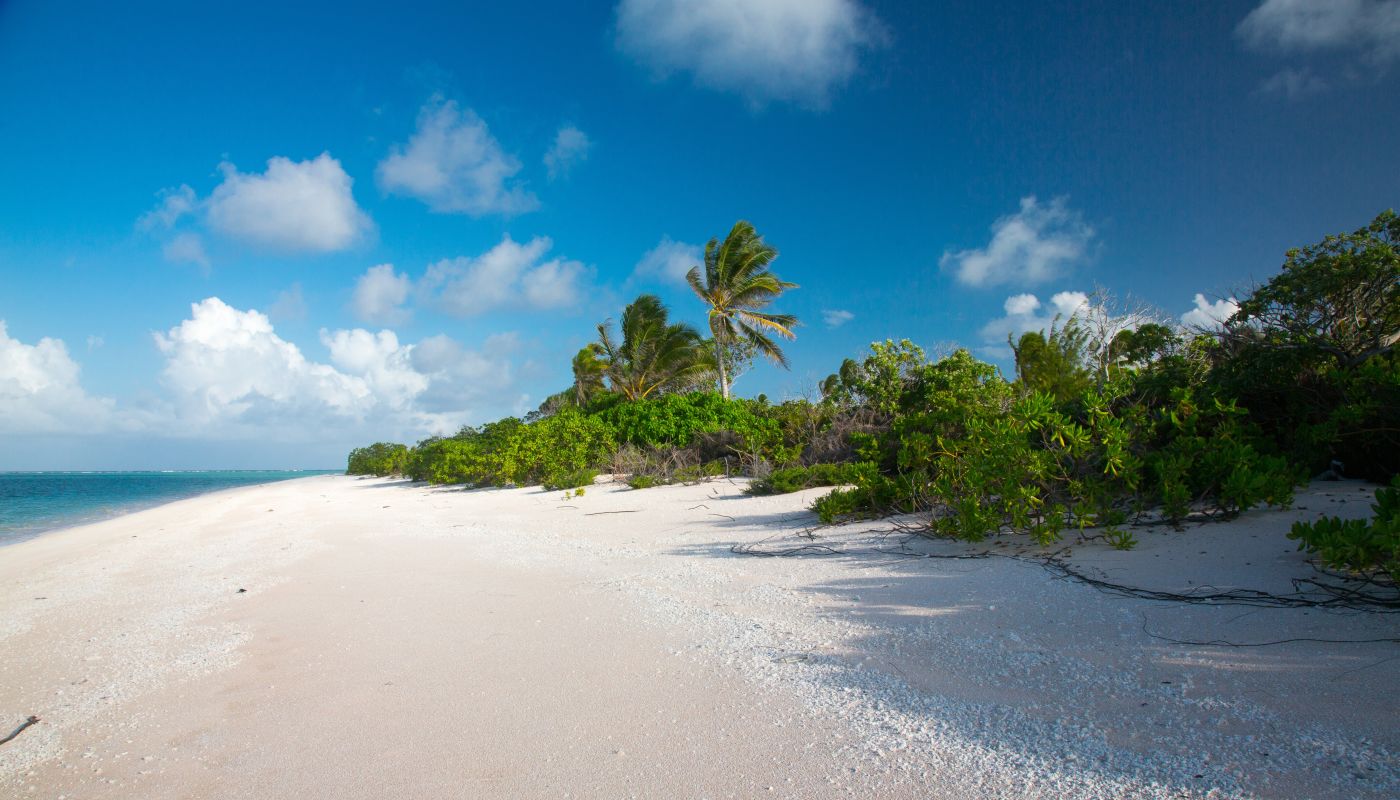
Landscape of Marshall Islands
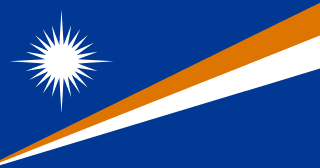
Flag of Marshall Islands

Marshall Islands

Australia/Oceania

The Marshall Islands became an independent nation in 1986 after being governed by the U.S. in the decades after World War II. Its native inhabitants are of Melanesian descent and rely on subsistence agriculture and imports to survive. As a result of rising tides, flooding, and after-effects from nuclear testing, many citizens have left the islands in search of better economic opportunities in the United States.1 1 https://www.theguardian.com/environment/2016/sep/15/marshall-islands-climate-change-springdale-arkansas

What would you like to learn about in Marshall Islands?

Select a section to explore the country where nonprofits are creating positive change.

About Marshall Islands

After almost four decades under US administration as the easternmost part of the UN Trust Territory of the Pacific Islands, the Marshall Islands attained independence in 1986 under a Compact of Free Association. Compensation claims continue as a result of US nuclear testing on some of the atolls between 1947 and 1962. The Marshall Islands hosts the US Army Kwajalein Atoll (USAKA) Reagan Missile Test Site, a key installation in the US missile defense network.

Quick Facts

Population
69,747 (July 2013 est.)
Area
181 sq km
ISO Code
MH
Continent
Australia/Oceania
Government
constitutional government in free association with the US; the Compact of Free Association entered into force on 21 October 1986 and the Amended Compact entered into force in May 2004
Active Causes
12
View all countries in Australia/Oceania

Geography & Environment

Climate

tropical; hot and humid; wet season May to November; islands border typhoon belt

Terrain

low coral limestone and sand islands

Natural Resources

coconut products, marine products, deep seabed minerals

Environmental Issues

inadequate supplies of potable water; pollution of Majuro lagoon from household waste and discharges from fishing vessels

People & Society

72.31 years
Avg. Life Expectancy
93.7%
Literacy Rate
72% of total population (2010)
Total Urban Population

Languages

Marshallese (official) 98.2%, other languages 1.8% (1999 census)

Religions

Protestant 54.8%, Assembly of God 25.8%, Roman Catholic 8.4%, Bukot nan Jesus 2.8%, Mormon 2.1%, other Christian 3.6%, other 1%, none 1.5% (1999 censu...

Health Expenditure

18.1% of GDP (2010) of GDP

Education Expenditure

12.2% of GDP (2004) of GDP

Economy

$8,800
GDP per Capita (PPP)
36%
Unemployment Rate
NA%
Below Poverty Line

Economic Overview

US assistance and lease payments for the use of Kwajalein Atoll as a US military base are the mainstay of this small island country. The Marshall Islands received roughly $1 billion in aid from the US during 1986-2001 under the original Compact of Free Association (Compact). In 2002 and 2003, the US and the Marshall Islands renegotiated the Compact's financial package for a 20-year period, from 2004 to 2024. Under the amended Compact, the Marshall Islands will receive roughly $1.5 billion in direct US assistance. Agricultural production, primarily subsistence, is concentrated on small farms; t...

Causes in Marshall Islands

Environment

Although the islands in the Southwest Pacific are not big producers of greenhouse gases and carbon emissions, they are affected by manmade pollution from around the world. Climate change is causing sea levels to rise, which threatens low-lying islands and causes coastal erosion.1 Land loss and flooding are destructive to those who live on the islands, where residents are powerless to stop the effects of climate change. They rely on the rest of the world to cut back on carbon emissions in order to save their homeland.2 The Marshall Islands are flooded almost yearly by rising tides that destroy homes and roads. The islands alternate between flood and drought conditions, and one report indicates that the Marshallese may be among the world’s first climate change refugees. Over one third of the population of 60,000 has already left.3

Family

The Marshallese have strong family ties, even in the midst of a mass exodus to the United States. Some family members leave the islands to find better economic opportunities and send back money to provide for those who stayed behind. About 10,000 Marshallese immigrants settled in Springdale, Arkansas, where they continue to celebrate their culture and national holidays.1

Human Rights

The United States military used abandon atolls on the Marshall Islands chain to test nuclear weapons starting in 1946. Some citizens were relocated as a result, causing overcrowding on other small islands without sufficient natural resources.1 In 2016, the U.S. Department of State published a report indicating that the Marshall Islands are a center for victims of human trafficking transported from East Asia. Many women are lured with the promise of employment opportunities and are then forced into prostitution at the Marshall Islands port cities. The U.S. found that the Marshall Islands government was not enforcing anti-trafficking laws and failed to investigate any reports of trafficking and abuse. After the report, the Marshallese government increased anti-trafficking education but still failed to enforce proper legal protocol for ending sex crimes.2

Education

Education is free and compulsory from the ages of 6-14 on the Marshall Islands.1 U.S. funding has helped the quality and enrollment of primary schools, but dropout rates for students aged 15-24 continue to increase. A low adult literacy rate sometimes poses a problem for people seeking employment opportunities in the United States.2

Poverty

Poverty is a common struggle in the Marshall Islands. The islands’ main source of income is aid money from the United States. Each citizen receives a trust of $500 per year as compensation for damages from military nuclear testing that took place between 1946-1958. Minimum wage is $2 per hour and 36% of residents are unemployed. Many citizens are left destitute by flooding and depleted sources of drinking water, and their only hope for survival is to leave their home in search for better economic opportunity.1

Religion

95% of Marshallese identify with some denomination of Christianity. The remaining percentage are Mormon, Bukot nan Jesus, and others.1

Clean Water

Marshallese are dependent on rainfall as a source of drinking water, so a severe drought in 2013 left many deprived of potable water. In hopes of avoiding another water shortage, the government constructed a reservoir that would hold 3-4 months supply of water for emergencies and over 100 solar panels for water purification.1

Economy

US lease payments for the use of Kwajalein Atoll, one of the Marshall Islands, as a military base are the mainstay of the Marshall Islands’ economy. The islands produce limited agricultural exports in coconut and breadfruits, but not enough to provide substantial income. Citizens who are not employed at the military base rely on government aid sent from the United States. Direct aid will end in 2024, and then the Marshall Islands will work with the U.S. government to provide an income stream that extends beyond that time.1

Government

The Marshall Islands are part of the Pacific Islands Forum, an organization that provides a place for heads of government in self-governing Pacific islands to discuss their common issues. The Forum provides assistance to member countries struggling with violence and political unrest. One bureau focuses solely on trade and economic affairs.1 The Marshall Islands operate under a mix of U.S. common law and local statutes, and are governed by an elected president and legislative body. Though they gained total independence in 1986, they operate in a free association with the United States.2

Health

The United States military used abandoned atolls on the Marshall Islands to test nuclear weapons from 1946-1958. Some citizens were relocated as a result, causing overcrowding on other small islands without sufficient natural resources. Radioactive debris was blown onto other inhabited islands, where it rained down on residents. In the following years, many people who came in contact with the radioactivity were afflicted by cancer. Limited access to health care also means that non-serious illnesses can become fatal simply by lack of treatment.1

Children

In 2016, half of the population of the Marshall Islands was under age 24, in part due to adult immigration to the U.S. in order to provide for their families. More and more youth are motivated to leave the island in search of better opportunities.1 Under the country’s current relationship with the U.S., students have the opportunity to travel without a visa to the United States in order to study or work.2

Animals

Harsh environmental conditions, combined with years of destruction from atomic bomb testing and military conflict, make the Marshall Islands an inhospitable place for many animals. The islands are a migration spot for many birds and home to several endemic bird species.1

Nonprofits Working in Marshall Islands

Discover organizations making a difference in Marshall Islands

Make Your Impact Today

Discover causes you care about and support the nonprofits making a difference in communities around the world.

Are you a nonprofit? Join Project World Impact for free

Join Us Free