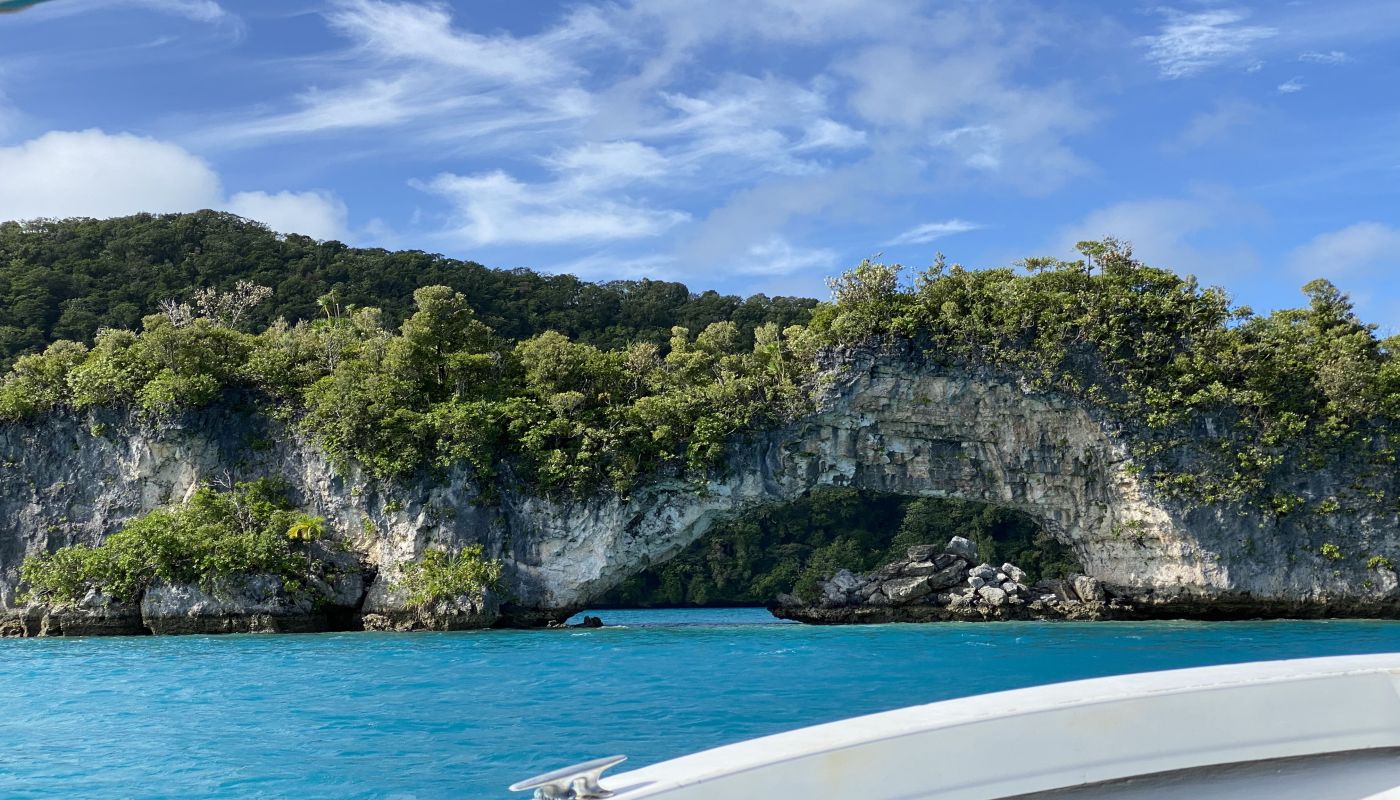
Landscape of Palau
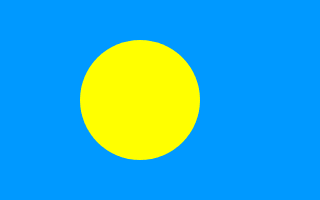
Flag of Palau

Palau

Australia/Oceania

Palau is an independent island nation in the South Pacific in a free association with the U.S. Its economy depends on financial subsidies from the U.S. It is an enticing destination for tourists due to its diverse marine life, lush rainforests, and World War II relics.1 1 https://www.cia.gov/library/publications/the-world-factbook/geos/ps.html

What would you like to learn about in Palau?

Select a section to explore the country where nonprofits are creating positive change.

About Palau

After three decades as part of the UN Trust Territory of the Pacific under US administration, this westernmost cluster of the Caroline Islands opted for independence in 1978 rather than join the Federated States of Micronesia. A Compact of Free Association with the US was approved in 1986 but not ratified until 1993. It entered into force the following year when the islands gained independence.

Quick Facts

Population
21,108 (July 2013 est.)
Area
459 sq km
ISO Code
PW
Continent
Australia/Oceania
Government
constitutional government in free association with the US; the Compact of Free Association entered into force on 1 October 1994
Active Causes
12
View all countries in Australia/Oceania

Geography & Environment

Climate

tropical; hot and humid; wet season May to November

Terrain

varying geologically from the high, mountainous main island of Babelthuap to low, coral islands usually fringed by large barrier reefs

Natural Resources

forests, minerals (especially gold), marine products, deep-seabed minerals

Environmental Issues

inadequate facilities for disposal of solid waste; threats to the marine ecosystem from sand and coral dredging, illegal fishing practices, and overfishing

People & Society

72.33 years
Avg. Life Expectancy
92%
Literacy Rate
83% of total population (2010)
Total Urban Population

Languages

Palauan (official on most islands) 64.7%, Filipino 13.5%, English (official) 9.4%, Chinese 5.7%, Carolinian 1.5%, Japanese 1.5%, other Asian 2.3%, oth...

Religions

Roman Catholic 41.6%, Protestant 23.3%, Modekngei 8.8% (indigenous to Palau), Seventh-Day Adventist 5.3%, Jehovah's Witnesses 0.9%, Mormon 0.6%, other...

Health Expenditure

10.3% of GDP (2010) of GDP

Education Expenditure

10.3% of GDP (2002) of GDP

Economy

$10,500
GDP per Capita (PPP)
4.2%
Unemployment Rate
NA%
Below Poverty Line

Economic Overview

The economy consists of tourism and other services such as trade, subsistence agriculture, and fishing. Government is a major employer of the work force relying on financial assistance from the US under the Compact of Free Association (Compact) with the US. The Compact took effect, after the end of the UN trusteeship on 1 October 1994. The US provided Palau with roughly $700 million in aid for the first 15 years following commencement of the Compact in 1994 in return for unrestricted access to its land and waterways for strategic purposes. Business and leisure tourist arrivals numbered over 10...

Causes in Palau

Environment

Although the islands in the Southwest Pacific are not big producers of greenhouse gases and carbon emissions, they are affected by manmade pollution from around the world. Climate change is causing sea levels to rise, which threatens low-lying islands and causes coastal erosion.1 Land loss and flooding are destructive to those who live on the islands, where residents are powerless to stop the effects of climate change. They rely on the rest of the world to cut back on carbon emissions in order to save their homeland.2 Palau is home to a very diverse marine environment. The islands are covered in volcanic rock and rainforest. After World War I, approximately 25% of the natural forestry was destroyed by the Japanese to make room for pineapple and sugar plantations. Thanks to low population density, Palau’s environment is in relatively good condition.3

Family

Palauans are believed to be descendents of the Malays of Indonesia and the Melanesians of New Guinea and Polynesia.1 Traditionally, women in Palau were responsible for housekeeping and educating children, while men fished in the ocean and protected the village from attacks. Many locals today adhere to this same structure and participate in traditional ceremonies and dance.2

Human Rights

Rape and sexual abuse are punishable by law in Palau, but many cases are never reported. There are no shelters for victims of abuse in place as of 2016. However, there are no laws in place referring specifically to domestic abuse, so it often goes unchecked. In 2016, the U.S. Department of State recommended additional laws to protect victims of domestic violence and to prevent gender discrimination in the workforce.1

Education

Palau follows the U.S. system of education, requiring students to attend from kindergarten through high school graduation.1 On average, students attend school through age 17. As a result, the country has an adult literacy rate of 99.5%.2

Poverty

Palau has one of the highest standards of living in the Pacific Islands, largely because of the amount of financial aid it receives from the United States. Less than 20% of its 21,000 citizens are affected by poverty. Most of these live in rural areas and rely on small-scale agriculture and fishing for their livelihood.1

Religion

The most dominant religions on Palau are Catholicism, Protestantism, and a small percentage of those who adhere to the indigenous Modekngei religion.1 Traditionally Modekngei followers worshipped a variety of gods, but the Christian trinity has replaced those gods under the influence of Christian missionaries.2

Clean Water

Palauans mainly rely on rainfall as a source of drinking water, although rivers and groundwater are also available. Groundwater sources are often polluted by improper waste disposal and soil erosion.1 In 2016 an El Nino-induced drought caused a massive water shortage on the island.2 International aid organizations repaired broken cisterns, provided backup water tanks, and educated community members on improvement efforts.3

Economy

Palau depends on money from the U.S. to sustain its economy. Since 1994, the U.S. has paid hundreds of millions of dollars in exchange for unrestricted access to Palau’s land and waterways.1 The U.S. also provides assistance in the form of defense, environmental protection, and promoting sustainable development.2 Other income comes from the growing tourism industry.1

Government

Palau is part of the Pacific Islands Forum, an organization that provides a place for heads of government in self-governing Pacific islands to discuss their common issues. The Forum provides assistance to member countries struggling with violence and political unrest. One bureau focuses solely on trade and economic affairs.1 Palau gained independence from the United States in 1994. Their current democracy is patterned after the U.S., with an elected president and legislature. In keeping with tradition, local village chiefs are also elected and represent their people to the government.2

Health

In 2014, 47% of Palau’s population was considered obese. This is due partially to lack of education on the importance of active lifestyles and partially to the introduction of a Western diet - more carbs at a lower cost.1 Citizens are also affected by treatable conditions such as diabetes and HIV/AIDS.2

Children

Youth in Palau struggle with malnutrition and drug abuse. Only 10% of children eat fruit and vegetables daily, and 35% of adolescents use marijuana regularly.1 Children with disabilities receive welfare and institutionalized care, but there are no systems in place to care for them after they turn 21. Also, there are no social systems in place to aid abused children. Problems are usually settled by family members and are never reported to the courts.1

Animals

Palau is home to a wide variety of marine life, as well as multiple endemic bird species. The locals treat the wildlife and natural resources well, but the government does not have the money necessary for full-scale conservation efforts.1 Tourism and exploited fisheries are the biggest threat to the country’s marine ecosystems.2

Nonprofits Working in Palau

Discover organizations making a difference in Palau

Make Your Impact Today

Discover causes you care about and support the nonprofits making a difference in communities around the world.

Are you a nonprofit? Join Project World Impact for free

Join Us Free