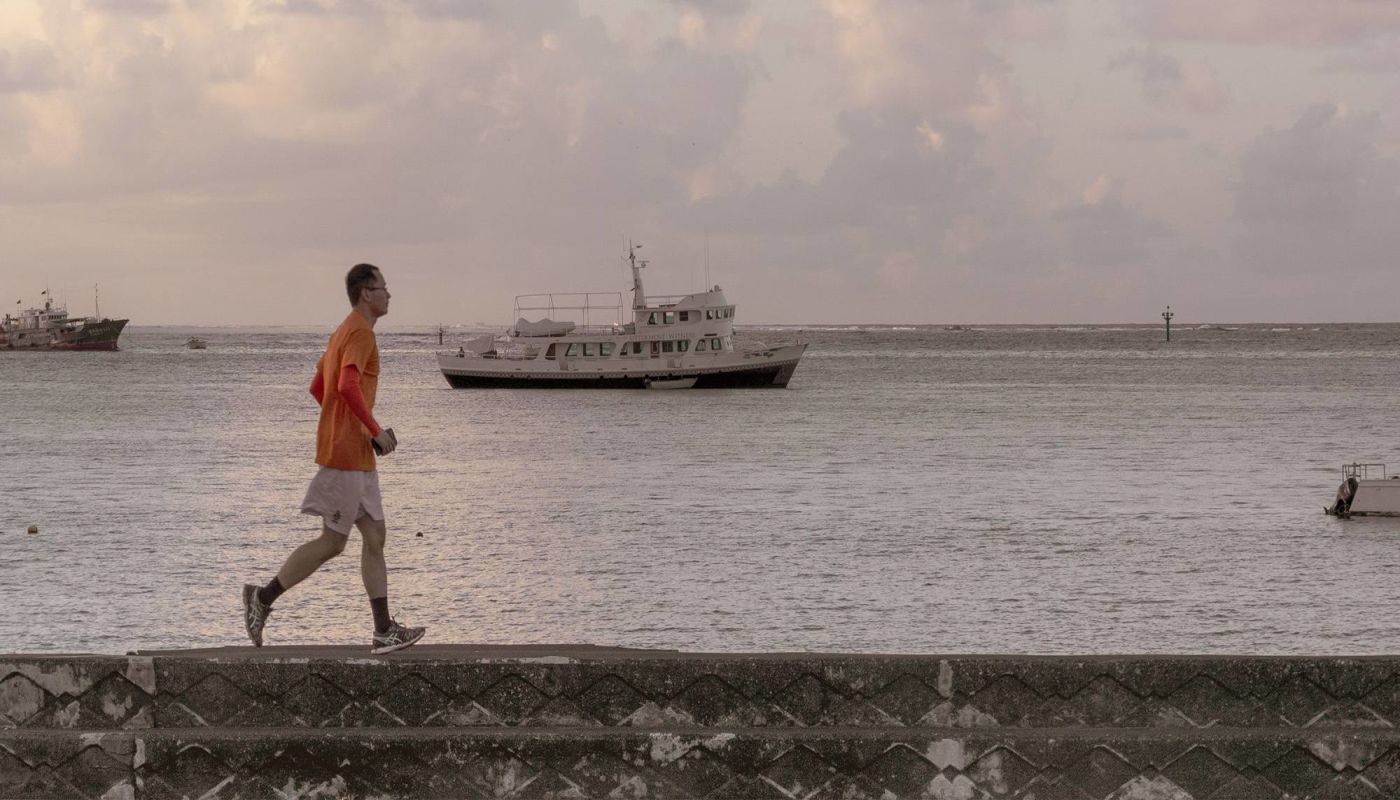
Landscape of Samoa
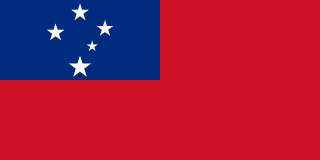
Flag of Samoa

Samoa

Australia/Oceania

Originally called Western Samoa, the island grouping was occupied by New Zealand until 1962, and then in 1997 changed its name to Samoa. The country’s economy is heavily reliant on family remittances and aid from international organizations. The only armed force on the islands is the Police; there is no Samoan military. Domestic violence and discrimination against women are major cultural issues.1 1 https://www.cia.gov/library/publications/the-world-factbook/geos/ws.html

What would you like to learn about in Samoa?

Select a section to explore the country where nonprofits are creating positive change.

About Samoa

New Zealand occupied the German protectorate of Western Samoa at the outbreak of World War I in 1914. It continued to administer the islands as a mandate and then as a trust territory until 1962, when the islands became the first Polynesian nation to reestablish independence in the 20th century. The country dropped the "Western" from its name in 1997.

Quick Facts

Population
195,476 (July 2013 est.)
Area
2,831 sq km
ISO Code
WS
Continent
Australia/Oceania
Government
parliamentary democracy
Active Causes
12
View all countries in Australia/Oceania

Geography & Environment

Climate

tropical; rainy season (November to April), dry season (May to October)

Terrain

two main islands (Savaii, Upolu) and several smaller islands and uninhabited islets; narrow coastal plain with volcanic, rocky, rugged mountains in interior

Natural Resources

hardwood forests, fish, hydropower

Environmental Issues

soil erosion, deforestation, invasive species, overfishing

People & Society

72.94 years
Avg. Life Expectancy
98.8%
Literacy Rate
20% of total population (2010)
Total Urban Population

Languages

Samoan (Polynesian) (official), English

Religions

Protestant 59.9% (Congregationalist 34.8%, Methodist 15%, Assembly of God 6.6%, Seventh-Day Adventist 3.5%), Roman Catholic 19.6%, Mormon 12.7%, Worsh...

Health Expenditure

6.5% of GDP (2010) of GDP

Education Expenditure

5.8% of GDP (2008) of GDP

Economy

$6,300
GDP per Capita (PPP)
NA%
Unemployment Rate
NA%
Below Poverty Line

Economic Overview

The economy of Samoa has traditionally been dependent on development aid, family remittances from overseas, agriculture, and fishing. The country is vulnerable to devastating storms. Agriculture employs roughly two-thirds of the labor force and furnishes 90% of exports, featuring coconut cream, coconut oil, and copra. The manufacturing sector mainly processes agricultural products. One factory in the Foreign Trade Zone employs 3,000 people to make automobile electrical harnesses for an assembly plant in Australia. Tourism is an expanding sector accounting for 25% of GDP; 122,000 tourists visit...

Causes in Samoa

Environment

As a grouping of small islands, Samoa is uniquely vulnerable to inclement weather. In particular, storms and tsunamis pose a serious threat to the population, as evidenced by the devastating tsunami in 2009.1 Overfishing and marine pollution threaten Samoa’s coastal aquatic biodiversity.2 In 2017 the government initiated a multi-million dollar plan that is projected to have 100% of the country running on renewable energy by 2025. This project is being completed in coordination with the United Nations Development Programme.3

Family

Between 2012 and 2015 the number of reports of domestic violence rose from 200 to 723. This prompted an investigation by the United Nations which found that domestic violence has become more “socially legitimized”..1 While the Samoan constitution prohibits domestic abuse, cultural norms often tolerate domestic abuse and inhibit the reporting of domestic crimes. Corporal punishment of children is legal in Samoa, and in recent years there has been a rise in reports of child abuse, particularly incest and assault cases. There are currently no provisions against spousal rape in Samoa, and instances of rape and sexual assault frequently go unreported.2

Human Rights

The most common human rights violations in Samoa involve domestic abuse against women and poor prison conditions. There have been no reports of politically motivated detentions, unlawful killings, or disappearances in Samoa in recent years. However, there have been limited reports of abuses of power by security or police forces, which included police brutality, sodomy, and indecent assault.There are also reports that a lack of government enforcement has allowed for the emergence of local militia groups who discriminate against women and abuse children.1

Education

NGOs and local communities are responsible for a majority of early childhood education on the islands. Primary school enrollment is high, and a majority of students go to school for eight years. 60% of students continue on to secondary education, and 90% of those graduated in 2016. Unequal distribution of quality education has been cited by Samoan national reports as one of the factors keeping rural families poor.1 Education is Samoa is compulsory through age 14. Despite this, there are reports of student-aged children that work in the streets as vendors or in other occupations during school hours.1

Poverty

Poverty is not a major concern in Samoa, as the country is considered to have one of the most stable economies in the Pacific Region. None of the population are reported to be living under the extreme poverty line. 20% of the population, however, lives under the basic income line. The Borgen Project states that one of the difficulties facing people living on little income is the geography of the islands. The soil is fertile but spread thinly and is extremely vulnerable to erosion. Additionally, natural resources such as fish are dwindling as the human population increases.1

Religion

Religious freedom is a constitutional provision in Samoa and is generally upheld by both the government and society. There have been no recent reports of religious discrimination on the islands.1 The majority of Samoan citizens identify with some denomination of Christianity. The most popular denomination on the islands is Protestantism, which accounts for 57% of the population, followed by Roman Catholicism, which accounts for 19% of the population. Additionally, Mormons account for approximately 15% of the population.2

Clean Water

99% of Samoa’s population has access to clean drinking water, and 92% of the population has access to improved sanitation facilities.1 One of the greatest issues with the water supply is contamination due to poor waste management practices. Low-lying urban areas are among those most affected by this issue. Runoff and sediment erosion from these areas also contribute to the contamination of local water sources.2

Economy

Corruption and inconsistent application of the rule of law hinder economic productivity.2 Samoa’s economy is largely dependent on the agricultural sector. The public debt is 52% of GDP. Exports include fish and coconut products, while imports consist of machinery and industrial supplies. The country’s main trade partners are Australia, New Zealand, and Singapore. Family remittances and development aid have been crucial to the continued health of Samoa’s economy.2

Government

Samoa officially gained independence from New Zealand in 1962 and is now an independent state made up of ten small islands, governed by a parliamentary republic. There are four major political parties. There is a chief of state as well as a prime minister who serves as head of government. The chief of state has the power to appoint the cabinet.1 Corruption is pervasive in government offices, and legal property ownership has not been clearly defined and is poorly enforced.2

Health

The average life expectancy in Samoa is 74 years. The maternal mortality rate is 51 deaths per 100,000 live births, while infant mortality is 19 deaths per 1,000 live births. The government spends 7% of GDP on healthcare annually. Samoa is the eighth most obese country in the world; 47% of the population is overweight.1

Children

Samoa was the first Pacific Island country to take action to adopt provisions of the Convention on the Rights of the Child. Government officials have vocalized their support of improved protections for children, but as of 2018 legislation still had not been written and approved.1 The largest threats to children’s wellbeing in Samoa are lack of education, abuse, and child labor. There have been reports of student-age children working on the streets during school hours. The main people addressing these problems are nonprofit organizations.1

Animals

The tropical islands of Samoa are part of the critically endangered Oceania ecoregion. Rainforests and brush-covered lowlands make up a majority of the landscape. There are over 100 native species of orchids. Common wildlife includes the Samoan tooth-billed pigeon, Australian grey duck, fruit dove, and island thrush, along with a variety of geckos and skinks. Many of these species are threatened by over-hunting and invasive species such as rats and cats that were introduced by humans.1

Nonprofits Working in Samoa

Discover organizations making a difference in Samoa

Make Your Impact Today

Discover causes you care about and support the nonprofits making a difference in communities around the world.

Are you a nonprofit? Join Project World Impact for free

Join Us Free