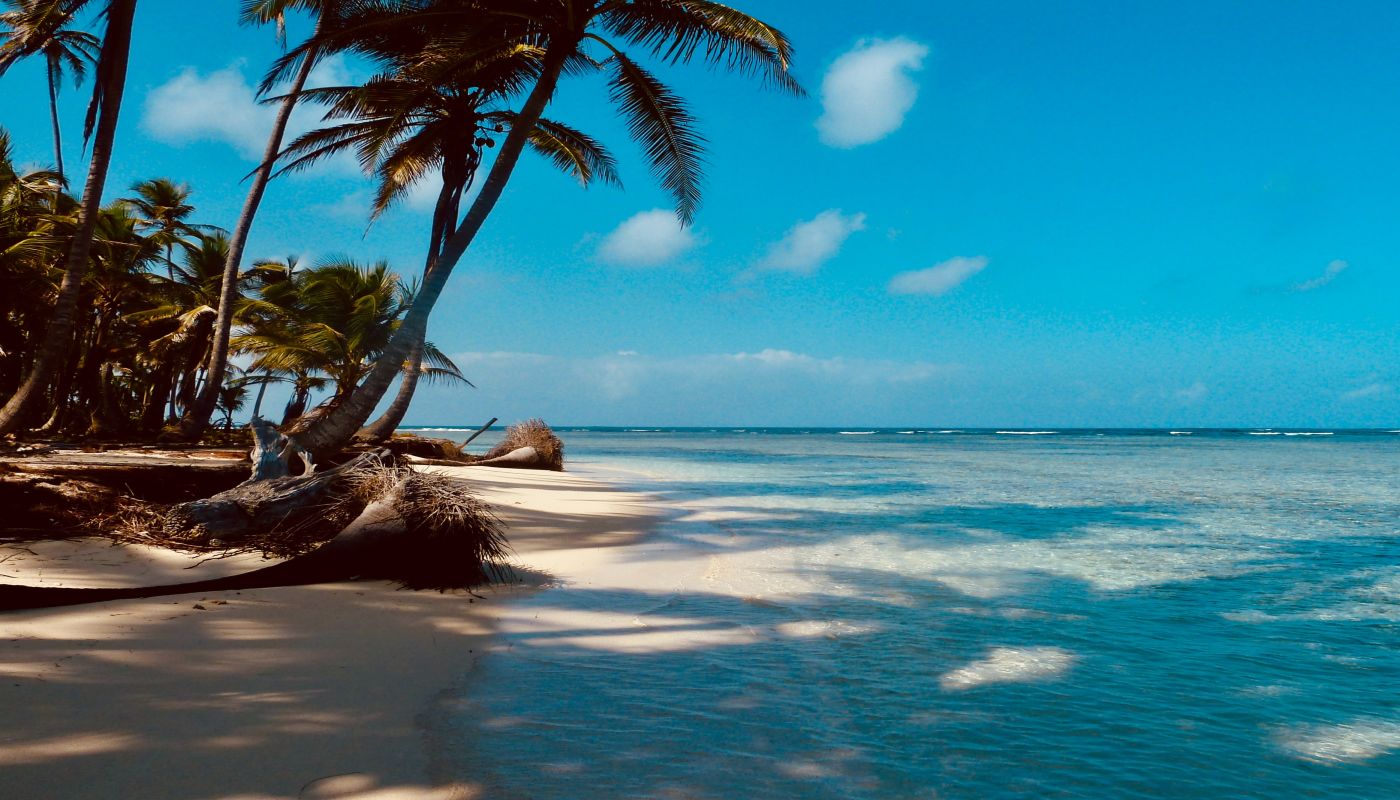
Landscape of Solomon Islands
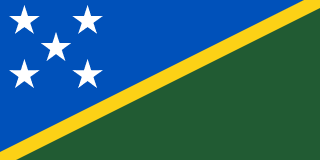
Flag of Solomon Islands

Solomon Islands

Australia/Oceania

The Solomon Islands are most well-known as a pivotal battleground in World War II, where Japanese and U.S. soldiers fought for control of the Pacific on the main island of Guadalcanal. The destruction from the war affected the country’s government and economy for years to come. An early 2000s political coup destroyed many urban areas on Guadalcanal and still contributes to instability in the islands’ economy.1 1 https://www.cia.gov/library/publications/resources/the-world-factbook/geos/bp.html

What would you like to learn about in Solomon Islands?

Select a section to explore the country where nonprofits are creating positive change.

About Solomon Islands

The UK established a protectorate over the Solomon Islands in the 1890s. Some of the most bitter fighting of World War II occurred on this archipelago. Self-government was achieved in 1976 and independence two years later. Ethnic violence, government malfeasance, and endemic crime have undermined stability and civil society. In June 2003, then Prime Minister Sir Allan KEMAKEZA sought the assistance of Australia in reestablishing law and order; the following month, an Australian-led multinational force arrived to restore peace and disarm ethnic militias. The Regional Assistance Mission to the Solomon Islands (RAMSI) has generally been effective in restoring law and order and rebuilding government institutions.

Quick Facts

Population
597,248 (July 2013 est.)
Area
28,896 sq km
ISO Code
SB
Continent
Australia/Oceania
Government
parliamentary democracy and a Commonwealth realm
Active Causes
11
View all countries in Australia/Oceania

Geography & Environment

Climate

tropical monsoon; few extremes of temperature and weather

Terrain

mostly rugged mountains with some low coral atolls

Natural Resources

fish, forests, gold, bauxite, phosphates, lead, zinc, nickel

Environmental Issues

deforestation; soil erosion; many of the surrounding coral reefs are dead or dying

People & Society

74.66 years
Avg. Life Expectancy
84.1%
Literacy Rate
19% of total population (2010)
Total Urban Population

Languages

Melanesian pidgin (in much of the country is lingua franca), English (official but spoken by only 1%-2% of the population), 120 indigenous languages

Religions

Protestant 73.7% (Church of Melanesia 32.8%, South Seas Evangelical 17%, Seventh-Day Adventist 11.2%, United Church 10.3%, Christian Fellowship Church...

Health Expenditure

8.6% of GDP (2010) of GDP

Education Expenditure

7.3% of GDP (2010) of GDP

Economy

$3,400
GDP per Capita (PPP)
NA%
Unemployment Rate
NA%
Below Poverty Line

Economic Overview

The bulk of the population depends on agriculture, fishing, and forestry for at least part of its livelihood. Most manufactured goods and petroleum products must be imported. The islands are rich in undeveloped mineral resources such as lead, zinc, nickel, and gold. Prior to the arrival of The Regional Assistance Mission to the Solomon Islands (RAMSI), severe ethnic violence, the closing of key businesses, and an empty government treasury culminated in economic collapse. RAMSI's efforts to restore law and order and economic stability have led to modest growth as the economy rebuilds.

Causes in Solomon Islands

Environment

Although the islands in the Southwest Pacific are not big producers of greenhouse gases and carbon emissions, they are affected by manmade pollution from around the world. Climate change is causing sea levels to rise, which threatens low-lying islands and causes coastal erosion.1 Land loss and flooding are destructive to those who live on the islands, where residents are powerless to stop the effects of climate change. They rely on the rest of the world to cut back on carbon emissions in order to save their homeland.2 Five of the Solomon Islands have already been lost due to climate changes, and an increasing amount are becoming uninhabitable.3

Family

The Solomon Islands have a traditional Melanesian culture, especially characterized by their use of an English hybrid language called Pidgin. Since the island chain has over 900 individual islands, there is a strong sense of pride and community amongst people on each island. Extended families tend to build houses together in villages, but in the least modernized mountainous areas there are separate living quarters for men and women. Arranged marriage is traditional, although many marriages today are the choice of the individuals.1

Human Rights

Domestic violence is very prevalent in the Solomon Islands. Cases of domestic violence that are reported to authorities often never make it to the court system, and many other cases are never reported because of pressure from the abusers and cultural taboos on the subject. Research in 2013 indicated that 67% of women have been victims of some kind of domestic or sexual abuse, but cultural structures prevent them from speaking out or escaping their situations. Women are also often limited to traditional household roles, and a shortage of jobs and education prevent them from transitioning into careers.1

Poverty

Poverty occurs mainly in the non-urban areas of the Solomon Islands. People who are employed in government, industrial, or service jobs move to the city, but most islanders who live in villages are self-employed.1

Religion

The majority of Solomon Islanders identify as Christians as a result of New Zealand missionary efforts in the 1800’s. However, the actual practice of their religion is often more of a mix of traditional animism and Christianity. Ancestors are seen as mediators between living believers and God.1

Clean Water

80% of Solomon Islanders live in rural areas and have difficulty accessing clean water sources. Traditionally, females walked to the closest fresh water sources and carried back as much as they could. In this practice, sometimes storms left them without any clean water options. A clean water initiative started in 2013 with the goal of providing underground clean water sources in all rural villages so that residents wouldn’t have to travel far or be limited by the weather in order to get drinking water.1

Economy

Civil unrest, natural disaster, and even a political coup in the early 2000s devastated the Solomon Islands’ economy. Urban areas on the main island of Guadalcanal was damaged in violent riots. The country’s biggest exports are its natural resources of timber and fish, although improper conservation is quickly depleting them.Tourism has only emerged in recent years, although it is still not a big money-making industry in the area.1 Agriculture and fishing are the main source of sustenance for village dwellers.2

Government

The Solomon Islands are part of the Pacific Islands Forum, an organization that provides a place for heads of government in self-governing Pacific islands to discuss their common issues. The Forum provides assistance to member countries struggling with violence and political unrest. One bureau focuses solely on trade and economic affairs.1 The Solomon Islands are locally governed by an elected prime minister and parliament.2 During World War II, the capital island of Guadalcanal was a central battleground for Japanese and United States soldiers fighting for control of the Pacific.3

Health

Diabetes, cardiovascular, and pulmonary diseases were the leading causes of death in the Solomon Islands in 2015. These, and many other non-communicable diseases, are caused by unhealthy habits like smoking, drinking, and inactivity. Other causes of death were malaria, stroke, and traffic accidents.1

Children

In the Solomon Islands, raising children is a collective family effort. Families are responsible for educating their children, and once they are able to think and talk for themselves they are given more and more independence.1 Because of the close knit family structures, there are almost no homeless children. Communities come together to ensure that children have their basic needs met.2

Animals

The Solomon Islands have less biodiversity than some of their other Pacific Island neighbors. Almost 200 species of birds live in the rainforest areas and are under threat because of the mass deforestation taking place as a result of the logging industry. Invasive species are also a threat to indigenous rodents and other small animals.1 In 2009, some local landowners formed a coalition to stand against the logging industry and prevent further deforestation.2

Nonprofits Working in Solomon Islands

Discover organizations making a difference in Solomon Islands

Make Your Impact Today

Discover causes you care about and support the nonprofits making a difference in communities around the world.

Are you a nonprofit? Join Project World Impact for free

Join Us Free