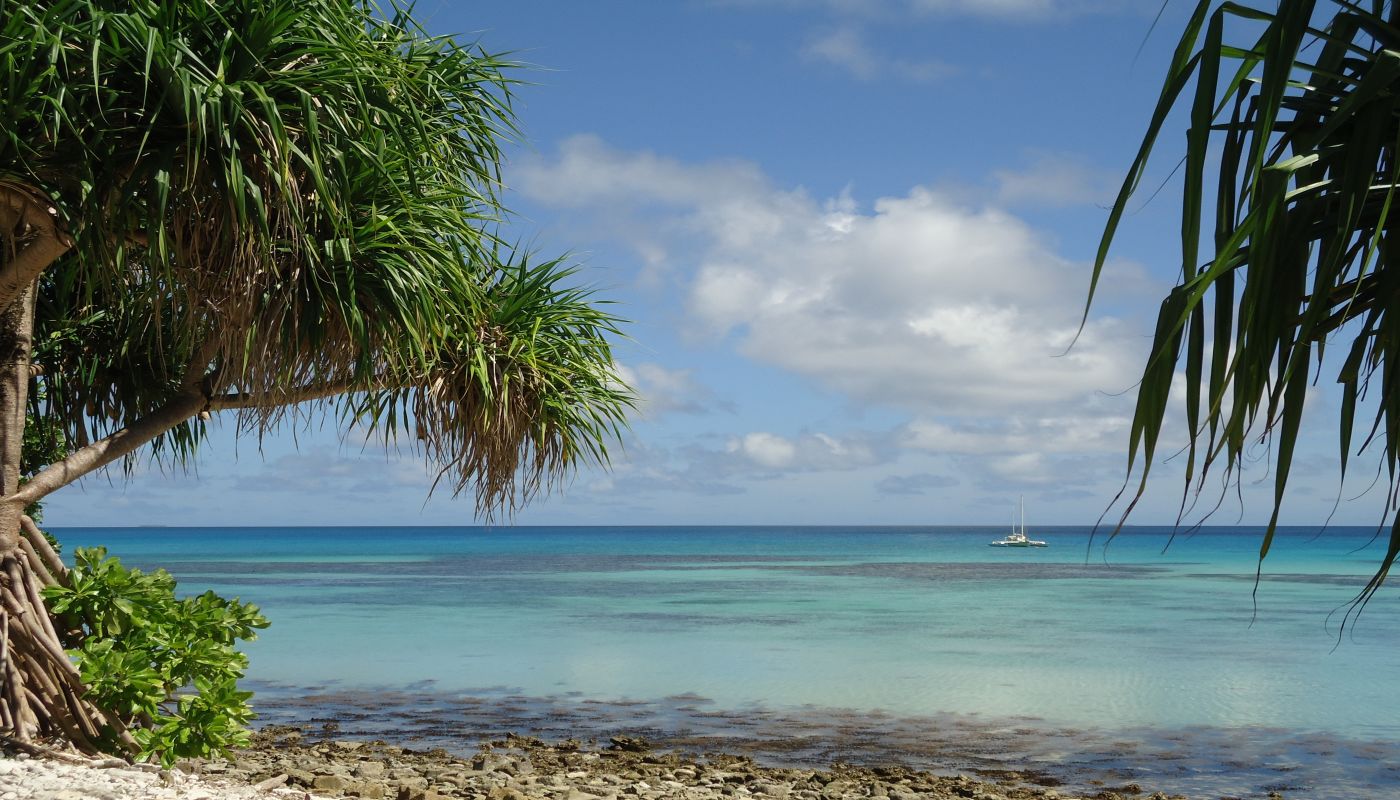
Landscape of Tuvalu
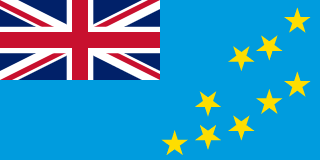
Flag of Tuvalu

Tuvalu

Australia/Oceania

Tuvalu is an independent nation but is still part of a commonwealth arrangement with the UK.1 It is a collection of nine atolls in the South Pacific, and climate change is a large threat to the preservation of the islands. The highest point on the atolls is 15 feet above sea level, so as the sea level rises more land will be submerged. Residents of the islands are also threatened by tropical storms and flash floods that destroy homes.2 1 https://www.cia.gov/library/publications/the-world-factbook/geos/tv.html 2 https://www.thoughtco.com/geography-and-history-of-tuvalu-1435673

What would you like to learn about in Tuvalu?

Select a section to explore the country where nonprofits are creating positive change.

About Tuvalu

In 1974, ethnic differences within the British colony of the Gilbert and Ellice Islands caused the Polynesians of the Ellice Islands to vote for separation from the Micronesians of the Gilbert Islands. The following year, the Ellice Islands became the separate British colony of Tuvalu. Independence was granted in 1978. In 2000, Tuvalu negotiated a contract leasing its Internet domain name ".tv" for $50 million in royalties over a 12-year period.

Quick Facts

Population
10,698 (July 2013 est.)
Area
26 sq km
ISO Code
TV
Continent
Australia/Oceania
Government
parliamentary democracy and a Commonwealth realm
Active Causes
12
View all countries in Australia/Oceania

Geography & Environment

Climate

tropical; moderated by easterly trade winds (March to November); westerly gales and heavy rain (November to March)

Terrain

low-lying and narrow coral atolls

Natural Resources

fish

Environmental Issues

since there are no streams or rivers and groundwater is not potable, most water needs must be met by catchment systems with storage facilities (the Japanese Government has built one desalination plant...

People & Society

65.47 years
Avg. Life Expectancy
50% of total population (2010)
Total Urban Population

Languages

Tuvaluan (official), English (official), Samoan, Kiribati (on the island of Nui)

Religions

Protestant 98.4% (Church of Tuvalu (Congregationalist) 97%, Seventh-Day Adventist 1.4%), Baha'i 1%, other 0.6%

Health Expenditure

17.5% of GDP (2010) of GDP

Education Expenditure

NA of GDP

Economy

$3,400
GDP per Capita (PPP)
NA%
Unemployment Rate
NA%
Below Poverty Line

Economic Overview

Tuvalu consists of a densely populated, scattered group of nine coral atolls with poor soil. Only eight of the atolls are inhabited. The country has no known mineral resources and few exports and is almost entirely dependent upon imported food and fuel. Subsistence farming and fishing are the primary economic activities. Fewer than 1,000 tourists, on average, visit Tuvalu annually. Job opportunities are scarce and public sector workers make up most of those employed. About 15% of the adult male population work as seamen on merchant ships abroad, and remittances are a vital source of income con...

Causes in Tuvalu

Environment

Since Tuvalu is comprised of nine low-lying atolls, the country is very vulnerable to the adverse effects of climate change. Some of these effects are the acidification of ocean water, ground water contamination, and rising sea and temperature levels.1 In 2015, the island was devastated by Cyclone Pam which caused massive flooding and destroyed many homes. The Australian government sent financial assistance and advised Tuvalu on preparation measures for future natural disasters.2

Education

The school system in Tuvalu consists of seven compulsory years of education. There is a significant need in Tuvalu for increasing the availability of education for students with disabilities and reforming the administration.1 Other students also suffer from a lack of educational resources, teachers, and inconsistency in curriculum from school to school.2

Poverty

Around 26% of people live below the national poverty line in Tuvalu.1 Only 15% of the population is employed, and the average worker makes only $1,000 per year.2 One of the ways that Tuvalu has been attempting to increase employment opportunities for its youth is by participating in the Australian Seasonal Worker Program. Additionally, the government receives funds from the Australian government for bolstering economic opportunities.3

Clean Water

Tuvalu is under imminent threat from climate change. Rising sea levels threaten homes as the highest elevation on the islands is only 15 feet above sea level. One-fifth of the population has already been forced from their homes because of destruction from tropical storms.1 Climate change has had a negative impact on the amount of water available since the temperatures have been increasing and viable groundwater sources are decreasing. Tuvalu receives financial assistance from New Zealand to remediate groundwater sources in order to alleviate the living conditions.2

Economy

Since Tuvalu is a nation of nine atolls that are extremely densely populated with no mineral resources and very limited export options, nearly all of their food and fuel are imported. The two most common economic activities are farming and fishing. There are limited employment opportunities and Tuvalu has attempted to expand into tourism, although fewer than 1,000 tourists visit annually. It is highly dependent on remittances from men who work on ships abroad and financial assistance from Australia, New Zealand, and South Korea.1 From 2012-2016, the country’s GDP steadily increased each year.2 An unusual source of income is connected to the country’s name—in 1998, it sold the rights to the domain “.tv” to entertainment companies, and it still receives millions of dollars in compensation that boosts its economy.3

Government

Tuvalu is a parliamentary democracy and a Commonwealth realm that is still led by the Queen of England, as well as a prime minister. Independence was given to the island in 1978.1 In Tuvalu, no formal political parties exist and the prime minister is chosen by the members of Parliament.There are very few instances of political corruption, although Tuvalu receives aid from international donors who have expressed concern over the quality of governance on the island.2

Health

Despite its tiny size, Tuvalu has managed to provide primary health care and medical services free of charge. The islands have a collaboration where more extreme and serious medical cases are sent to nearby Fiji and New Zealand, which is becoming increasingly expensive. The leading causes of death are non-communicable diseases, specifically cardiac diseases. Tuvalu’s Ministry of Health has launched a program that seeks to educate the public on the effects of tobacco, alcohol, poor nutrition, and lack of physical activity on their health, as well increasing health coverage to the outer islands.1

Children

Some of the largest issues that youth currently face in Tuvalu are a lack of employment opportunities, inconsistent education, and underfunded youth activities.1 The government has not yet made significant advancements towards eradicating child labor and providing a safe environment for children. The legislative frameworks currently in place do not adequately protect youth from commercial sexual exploitation.2

Family

Marriage is highly respected by Tuvaluans. Once a couple gets married, they usually move in with the husband’s family and live with extended family members. Men are generally the heads of households and women are responsible for raising children.1 About one-third of the population lives on the main island of Funafuti, but those who live in rural areas often live in villages that are clustered by family.2

Human Rights

Traditional customs and cultural practices perpetuate gender discrimination and domestic violence. There are no laws to prevent sexual harassment or gender discrimination in the workplace, so women do not have as many opportunities for employment. Domestic violence is common, and victims often don’t report offense.1

Religion

98% of Tuvaluans identify as Protestant, and a small percentage of others adhere to traditional religions.1

Animals

Because of Tuvalu’s isolation, there are no indigenous mammal species. Dogs, rats, and mice were eventually introduced by explorers who discovered the islands. The surrounding waters have a diverse marine life including dolphins, whales, and many species of fish.1

Make Your Impact Today

Discover causes you care about and support the nonprofits making a difference in communities around the world.

Are you a nonprofit? Join Project World Impact for free

Join Us Free