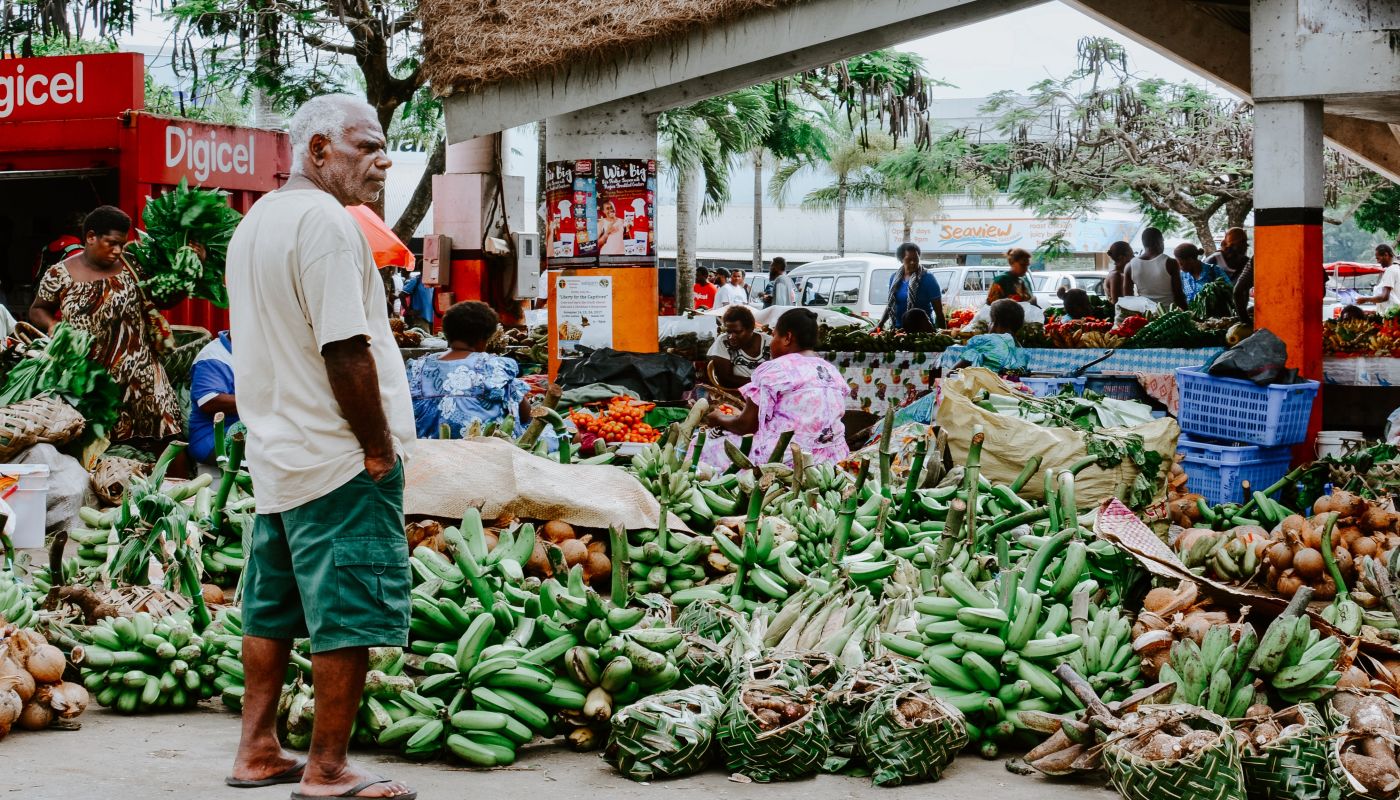
Landscape of Vanuatu
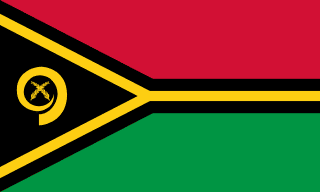
Flag of Vanuatu

Vanuatu

Australia/Oceania

Vanuatu is a chain of over 80 islands located in the South Pacific. The islands are a self-governing country that gained independence from France and Britain in 1980.1 The main source of income and employment on the islands is small-scale agriculture.2 In 2015, Cyclone Pam caused widespread destruction on the islands, demolishing thousands of homes and killing a dozen people.3 1 http://www.bbc.com/news/world-asia-16426193 2 http://dfat.gov.au/geo/vanuatu/development-assistance/Pages/development-assistance-in-vanuatu.aspx 3 http://www.bbc.com/news/world-asia-16426193

What would you like to learn about in Vanuatu?

Select a section to explore the country where nonprofits are creating positive change.

About Vanuatu

Multiple waves of colonizers, each speaking a distinct language, migrated to the New Hebrides in the millennia preceding European exploration in the 18th century. This settlement pattern accounts for the complex linguistic diversity found on the archipelago to this day. The British and French, who settled the New Hebrides in the 19th century, agreed in 1906 to an Anglo-French Condominium, which administered the islands until independence in 1980, when the new name of Vanuatu was adopted.

Quick Facts

Population
261,565 (July 2013 est.)
Area
12,189 sq km
ISO Code
VU
Continent
Australia/Oceania
Government
parliamentary republic
Active Causes
12
View all countries in Australia/Oceania

Geography & Environment

Climate

tropical; moderated by southeast trade winds from May to October; moderate rainfall from November to April; may be affected by cyclones from December to April

Terrain

mostly mountainous islands of volcanic origin; narrow coastal plains

Natural Resources

manganese, hardwood forests, fish

Environmental Issues

most of the population does not have access to a reliable supply of potable water; deforestation

People & Society

72.38 years
Avg. Life Expectancy
83.2%
Literacy Rate
26% of total population (2010)
Total Urban Population

Languages

local languages (more than 100) 72.6%, pidgin (known as Bislama or Bichelama - official) 23.1%, English (official) 1.9%, French (official) 1.4%, other...

Religions

Protestant 55.6% (Presbyterian 31.4%, Anglican 13.4%, Seventh-Day Adventist 10.8%), Roman Catholic 13.1%, other Christian 13.8%, indigenous beliefs 5....

Health Expenditure

5.3% of GDP (2010) of GDP

Education Expenditure

5.2% of GDP (2009) of GDP

Economy

$5,000
GDP per Capita (PPP)
1.7%
Unemployment Rate
NA%
Below Poverty Line

Economic Overview

This South Pacific island economy is based primarily on small-scale agriculture, which provides a living for about two-thirds of the population. Fishing, offshore financial services, and tourism, with nearly 197,000 visitors in 2008, are other mainstays of the economy. Mineral deposits are negligible; the country has no known petroleum deposits. A small light industry sector caters to the local market. Tax revenues come mainly from import duties. Economic development is hindered by dependence on relatively few commodity exports, vulnerability to natural disasters, and long distances from main...

Causes in Vanuatu

Environment

Vanuatu is prone to frequent natural disasters such as cyclones, which destroy roads and infrastructure and pollute water supplies.1 Soil erosion, loss of biodiversity, and inadequate waste disposal are all contributing to environmental degradation and decreased agricultural and economic productivity on the islands.2 A large percentage of Vanuatu’s population depends on the agricultural sector for a living, and the increasing effects of climate change will hinder agricultural productivity.3 In 2015, the country was devastated by Cyclone Pam, which destroyed thousands of structures and killed a dozen people.4

Family

Across the islands, 13% of girls are married before their nineteenth birthday.1 Violence against women is also a rampant problem in Vanuatu. Approximately 60% of women in Vanuatu experience physical violence at the hands of a husband or partner. Additionally, 1 in 4 women experiences physical abuse from a non-partner. Moreover, 1 in 3 women have experienced sexual abuse before the age of 15.2

Education

The Vanuatu government subsidizes primary education on the island, but many people still cannot afford to pay the school’s fee. Only 73% of students who start primary school complete it, and only 17% of children aged 13-16 attend secondary school.1 The adult literacy rate in Vanuatu was estimated to be 85% in 2015.2 Australia provides aid to improve children’s access to early elementary education, train teachers, and deliver resources and supplies to schools.3

Poverty

Approximately 12% of Vanuatu’s population lives below the international poverty line, which is one of the lowest amongst Pacific Islands. 34.5% of the population has access to electricity.1 The unemployment rate is at 4.3%.2 Vanuatu's rural population relies largely on agriculture and subsistence farming, and the high population growth rate, coupled with the effects of natural disasters and climate change, is hindering the economic productivity of the islands’ agricultural sector.2

Religion

Vanuatu is approximately 82% Christian. Of that group, 70% are Protestant and 12% are Catholic.1 About 6% of the population is Jewish and small groups of Muslims and Baha’is also exist. The constitution of Vanuatu protects religious freedom and this is generally well respected by the government and society. Reports of religious conflict and discrimination are largely nonexistent.2

Clean Water

Approximately 95% of Vanuatu’s population has access to drinking water sources, but only 57% of the population has access to improved sanitation infrastructure. 1 Vanuatu is also prone to frequent cyclones which destroy roads and infrastructure and pollute existing water supplies.2 Cyclone Pam destroyed many structures in 2015, leaving about half the population without water purification structures or sanitation facilities. It also polluted 70% of wells.3 In 2017, the Vanuatu government sponsored the implementation of a drill rig that would provide rural areas with access to groundwater.2

Economy

Vanuatu’s economy is based mainly on small-scale agriculture, which employs around two-thirds of the total population. The islands are very vulnerable to natural disasters and Vanuatu’s extreme distance from other countries has made economic diversification and growth difficult. The two main countries that provide support, aid and tourists to Vanuatu are New Zealand and Australia.1 Australia provides millions of dollars in aid to Vanuatu , providing 54% of the country’s official development assistance.2 Corruption within the economy is a pervasive issue for Vanuatu and the need for institutional reforms is necessary for the economy to continue to grow. The country’s unemployment rate is around 4.3%.3

Government

Vanuatu is a parliamentary republic with a President and a Prime Minister at the head of the governmental system. The country has a long history with several different types of colonizers, all who came from different countries. The last two colonial rulers were the British and the French. Vanuatu gained independence in 1980.1 Corruption within the government is a pervasive issue for Vanuatu. The need for institutional reforms is necessary for the economy to continue to grow.2

Health

The estimated life expectancy for both males and females in Vanuatu is 72 years of age. Overall, the population of Vanuatu is very young and there is a high rate of population growth.1 Non Communicable and communicable diseases are common in Vanuatu. The most common causes of death for citizens of Vanuatu are heart disease, diabetes, and cancer. Diarrheal diseases are the leading causes of death for children under 5 years old. Malnutrition and stunted growth are leading health issues for children.2

Children

Vanuatu lacks a comprehensive policy regarding child labor. There are no mechanisms in place or social services to help children who have fallen victim to child labor or human trafficking.1 Australia is helping Vanuatu end violence against children through the provision of technical training and funds.2 The infant mortality rate in Vanuatu is currently 23 deaths per 1,000 live births.3 Child marriage is also a significant problem in Vanuatu, and across the islands 13% of girls are married before their nineteenth birthday. Child marriage is most frequent among poor, uneducated families in rural areas. Increasing educational opportunities have been shown to decrease the prevalence of child marriage.4

Human Rights

Violence against women is one of the most significant human rights concerns in Vanuatu. Sexual harassment does not violate the law and is very common. Traditional marriage practices such as dowries perpetuate a culture of male dominance.1 Approximately 60% of women in Vanuatu experience physical violence at the hands of a husband or partner. Additionally, 1 in 4 women experiences physical abuse from a non-partner. Moreover, 1 in 3 women have experienced sexual abuse before the age of 15.2 Other human rights violations include police violence, poor prison conditions, arrests without warrants, and government corruption.1

Animals

There is a limited variety of wildlife in Vanuatu because of the islands’ isolated location. The surrounding waters are filled with a wide array of wildlife, such as whales, shellfish, and many other kinds of fish. Many birds are migratory waterfowls.1 Vanuatu has one national park and over 100 areas designated as wildlife protection areas.2

Nonprofits Working in Vanuatu

Discover organizations making a difference in Vanuatu

N

NYCMedics

NYC Medics’ two-pronged approach towards disaster focuses on both pre and post disaster impacts. Our primary focus has been responding to disasters and treating those affected in hard to reach areas. This is accomplished through our network of committed volunteer medical personnel, willing to deploy within hours of being contacted. In our training program in Kenya we are working with local government officials and organizations to build a sustainable, well trained work force in pre-hospital care, incorporating fire services cross training in basic first aid. By teaching and certifying a greater number of personnel in pre-hospital care, we hope to increase access to the healthcare system and provide basic life saving measures to those who currently lack access to these services.

New York, New York

Make Your Impact Today

Discover causes you care about and support the nonprofits making a difference in communities around the world.

Are you a nonprofit? Join Project World Impact for free

Join Us Free