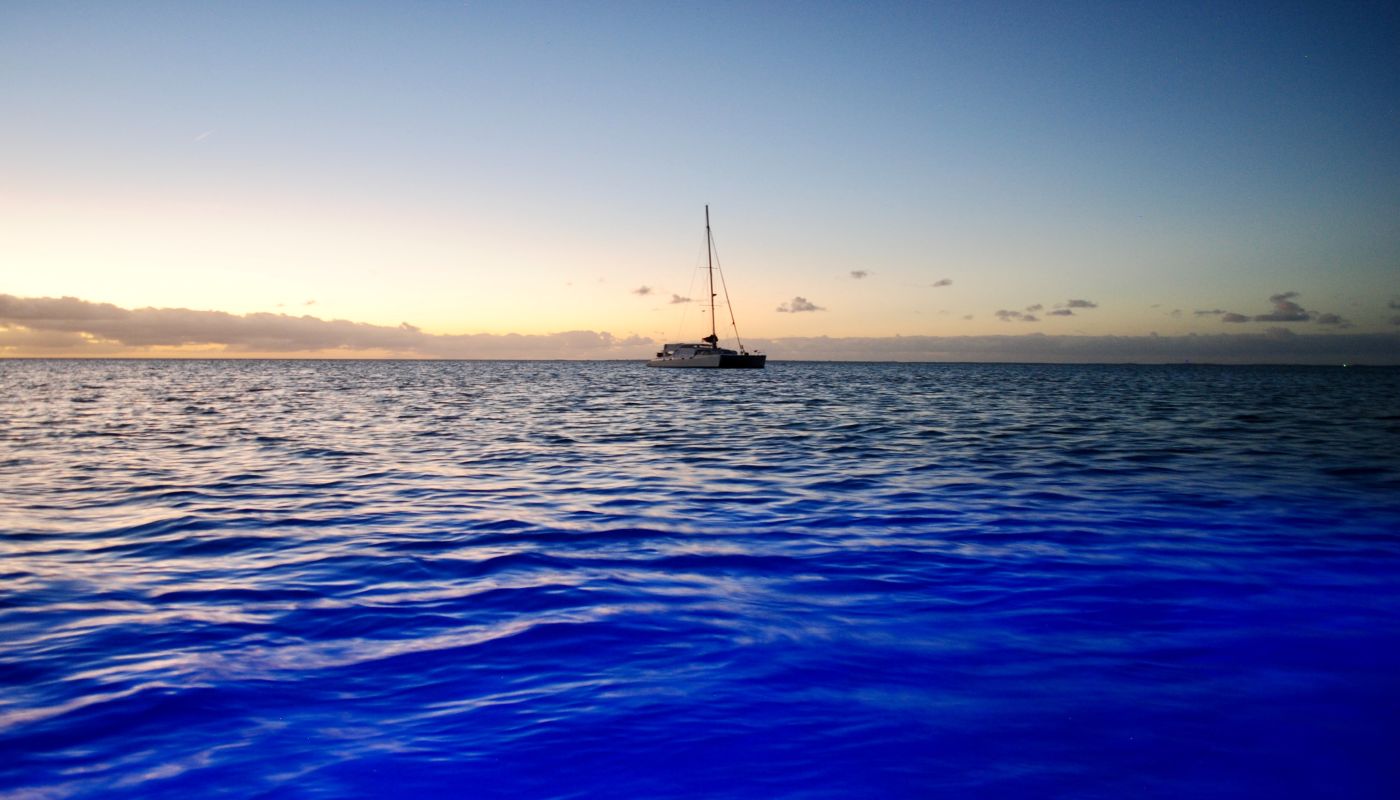
Landscape of The Bahamas
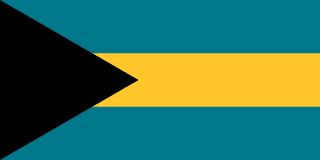
Flag of The Bahamas

The Bahamas

North America

The Bahamas are a British Commonwealth, and the chief of state is the British monarch who is represented by an appointed governor. A prime minister acts as the head of government. The legal system is modeled after the British common law.1 The Bahamas receive high marks from Transparency International for its lack of corruption perceived by the public.2 The Bahamas are home to a variety of marine life, including the grouper, queen conch, lobsters, sea turtles, starfish, manta rays, dolphins, sharks and, a popular tourist attraction, the swimming pigs on the island of Exuma.3 Tourism represents 50 percent of the Bahamas’ economy, and banking accounts for 15 percent.4 1 https://www.cia.gov/library/publications/the-world-factbook/geos/bf.html 2 https://www.transparency.org/news/feature/corruption_perceptions_index_2017 3 https://theculturetrip.com/caribbean/articles/in-the-bahamas-you-can-swim-with-these-amazing-animals/ 4 https://www.cia.gov/library/publications/the-world-factbook/geos/bf.html

What would you like to learn about in The Bahamas?

Select a section to explore the country where nonprofits are creating positive change.

About The Bahamas

Lucayan Indians inhabited the islands when Christopher COLUMBUS first set foot in the New World on San Salvador in 1492. British settlement of the islands began in 1647; the islands became a colony in 1783. Since attaining independence from the UK in 1973, The Bahamas has prospered through tourism, international banking, and investment management. Because of its geography, the country is a major transshipment point for illegal drugs, particularly shipments to the US and Europe, and its territory is used for smuggling illegal migrants into the US.

Quick Facts

Population
319,031 (July 2013 est.)
Area
13,880 sq km
ISO Code
BS
Continent
North America
Government
constitutional parliamentary democracy and a Commonwealth realm
Active Causes
12
View all countries in North America

Geography & Environment

Climate

tropical marine; moderated by warm waters of Gulf Stream

Terrain

long, flat coral formations with some low rounded hills

Natural Resources

salt, aragonite, timber, arable land

Environmental Issues

coral reef decay; solid waste disposal

People & Society

71.69 years
Avg. Life Expectancy
95.6%
Literacy Rate
84% of total population (2010)
Total Urban Population

Languages

English (official), Creole (among Haitian immigrants)

Religions

Protestant 67.6% (Baptist 35.4%, Anglican 15.1%, Pentecostal 8.1%, Church of God 4.8%, Methodist 4.2%), Roman Catholic 13.5%, other Christian 15.2%, n...

Health Expenditure

7.9% of GDP (2010) of GDP

Education Expenditure

NA of GDP

Economy

$31,900
GDP per Capita (PPP)
14%
Unemployment Rate
9.3% (2004)
Below Poverty Line

Economic Overview

The Bahamas is one of the wealthiest Caribbean countries with an economy heavily dependent on tourism and offshore banking. Tourism together with tourism-driven construction and manufacturing accounts for approximately 60% of GDP and directly or indirectly employs half of the archipelago's labor force. Financial services constitute the second-most important sector of the Bahamian economy and, when combined with business services, account for about 36% of GDP. Manufacturing and agriculture combined contribute less than a 10th of GDP and show little growth, despite government incentives aimed at...

Causes in The Bahamas

Environment

The Bahamas are home to a variety of marine life, including the grouper, queen conch, lobsters, sea turtles, starfish, manta rays, dolphins, sharks and, a popular tourist attraction, the swimming pigs on the island of Exuma.1 The nation is party to a number of international environmental agreements including policies on biodiversity, endangered species, desertification, endangered species, wetlands and ship pollution.2

Family

There are 11.3 infant deaths for every 1,000 live births, but the maternal death rate is a bit higher proportionately at 80 deaths for every 100,000 live births.1 People experiencing domestic violence can report their experiences to the Family Services Unit of the Department of Social Services, and can receive assistance from a Social Services Representative.2

Human Rights

The United States State Department cites that the mistreatment of prisoners is the most prominent human rights concern in the Bahamas. Prisoners reported inadequate access to doctors, and mental care professionals, as well as to potable water and waste disposal. Inmates also reported lack of proper nutrition in the two daily meals, and that the guards exhibited unnecessary violence.1

Education

Education is free and compulsory for children ages 5 to 16,1 and 88.19 percent of children are enrolled in primary school.2 After finishing primary school, children can choose to attend the University of Bahamas or a university overseas.3

Poverty

Approximately 9 percent of the population falls below the poverty line, and 10 percent are unemployed.1 Virtually the entire Bahamian population has access to an improved water source, with just 1.6 percent without access.2 However, 8 percent of the population lacks access to modern sanitation facilities.3

Religion

69.9 percent of the Bahamian population identifies with some form of Protestant Christianity. Roman Catholicism accounts for another 12 percent, 13 percent are another Christian faith and the remainder claim an unspecified faith, or none.1

Clean Water

Virtually the entire Bahamian population has access to an improved water source, with just 1.6 percent without access.1 However, 8 percent of the population lacks access to modern sanitation facilities.2

Economy

Tourism represents 50 percent of the Bahamas’ economy, and banking accounts for 15 percent.1 The GDP is $11.6 billion, and the GDP per capita is $32,100. The Bahamas’ leading industries include tourism, banking, oil, salt, aragonite and pharmaceuticals, though manufacturing and agriculture together account for less than 7 percent of the Bahamian GDP. Approximately 9 percent of the population falls below the poverty line, and the unemployment rate is 10 percent.2 The Bahamas have the second highest GDP per capita of all English-speaking Caribbean nations.3 The Economic Freedom Index gives the Bahamas a score of 63.3 for economic freedom, a fairly positive score.4

Government

The Bahamas are a British Commonwealth, and the chief of state is the British monarch who is represented by an appointed governor. A prime minister acts as the head of government. The legal system is modeled after the British common law.1 The Bahamas receive high marks from Transparency International for its lack of corruption perceived by the public.2

Health

Virtually the entire Bahamian population has access to an improved water source, with just 1.6 percent without access.1 However, 8 percent of the population lacks access to modern sanitation facilities.2 The adult prevalence rate of HIV/AIDS is 1.9 percent, putting the Bahamas in the top 10 percent for highest HIV/AIDS prevalence.3

Children

There are 11.3 infant deaths for every 1,000 live births, but the maternal death rate is a bit higher proportionately at 80 deaths for every 100,000 live births.1 Education is free and compulsory for children ages 5 to 16. After finishing primary school, children can choose to attend the University of Bahamas or a university overseas.2 88.19 percent of children are enrolled in primary school.3 The Bahamas’ Child Protection Act establishes a number of legal policies to safeguard Bahamian children.3

Animals

The Bahamas are home to a variety of marine life, including the grouper, queen conch, lobsters, sea turtles, starfish, manta rays, dolphins, sharks and, a popular tourist attraction, the swimming pigs on the island of Exuma.1 The nation is party to agreements on biodiversity and endangered species.2

Nonprofits Working in The Bahamas

Discover organizations making a difference in The Bahamas

Make Your Impact Today

Discover causes you care about and support the nonprofits making a difference in communities around the world.

Are you a nonprofit? Join Project World Impact for free

Join Us Free