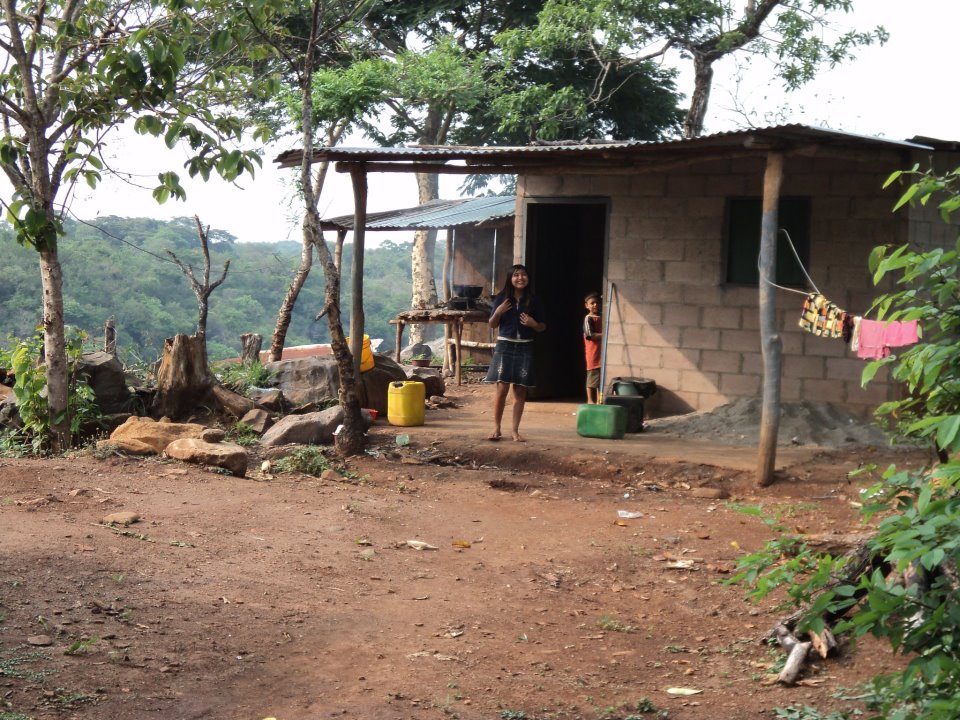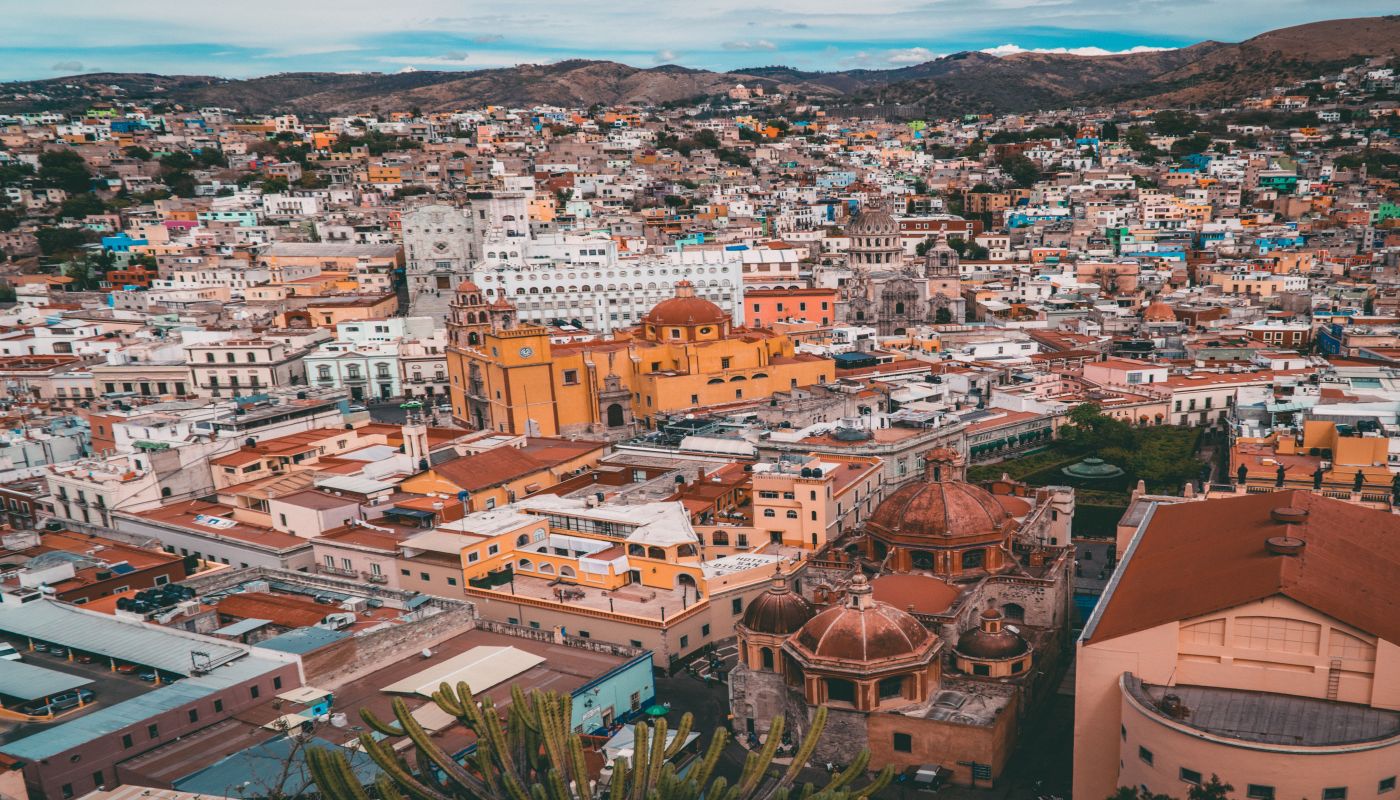
Landscape of Mexico
Flag of Mexico

Mexico

North America

Mexico has a rich past filled with many advanced ancient empires, Spanish conquest, and wars with the United States. However, modern Mexico is known for its staggering wealth discrepancies even with its vast regional economic power. The country’s economic and governmental woes are seen in the rampant corruption, violence, and active drug cartels. In addition, stark poverty is found right next to luxury beach resorts.1 There have been tens of thousands of unsolved homicide cases in Mexico since 2010.2 1 https://www.britannica.com/place/Mexico 2 https://www.cia.gov/library/publications/the-world-factbook/geos/mx.html

What would you like to learn about in Mexico?

Select a section to explore the country where nonprofits are creating positive change.

About Mexico

The site of several advanced Amerindian civilizations - including the Olmec, Toltec, Teotihuacan, Zapotec, Maya, and Aztec - Mexico was conquered and colonized by Spain in the early 16th century. Administered as the Viceroyalty of New Spain for three centuries, it achieved its independence early in the 19th century. The global financial crisis beginning in late 2008 caused a massive economic downturn the following year, although growth returned quickly in 2010. Ongoing economic and social concerns include low real wages, underemployment for a large segment of the population, inequitable income distribution, and few advancement opportunities for the largely indigenous population in the impoverished southern states. The elections held in 2000 marked the first time since the 1910 Mexican Revolution that an opposition candidate - Vicente FOX of the National Action Party (PAN) - defeated the party in government, the Institutional Revolutionary Party (PRI). He was succeeded in 2006 by another PAN candidate Felipe CALDERON, but the PRI regained the presidency in 2012. Since 2007, Mexico's powerful drug-trafficking organizations have engaged in bloody feuding, resulting in tens of thousands of drug-related homicides.

Quick Facts

Population
116,220,947 (July 2013 est.)
Area
1,964,375 sq km
ISO Code
MX
Continent
North America
Government
federal republic
Active Causes
12
View all countries in North America

Geography & Environment

Climate

varies from tropical to desert

Terrain

high, rugged mountains; low coastal plains; high plateaus; desert

Natural Resources

petroleum, silver, copper, gold, lead, zinc, natural gas, timber

Environmental Issues

scarcity of hazardous waste disposal facilities; rural to urban migration; natural freshwater resources scarce and polluted in north, inaccessible and poor quality in center and extreme southeast; raw...

People & Society

76.86 years
Avg. Life Expectancy
93.5%
Literacy Rate
78% of total population (2010)
Total Urban Population

Languages

Spanish only 92.7%, Spanish and indigenous languages 5.7%, indigenous only 0.8%, unspecified 0.8%

Religions

Roman Catholic 82.7%, Protestant 1.6%, Jehovah's Witnesses 1.4%, other Evangelical Churches 5%, other 1.9%, none 4.7%, unspecified 2.7% (2000 census)

Health Expenditure

6.3% of GDP (2010) of GDP

Education Expenditure

5.3% of GDP (2009) of GDP

Economy

$15,600
GDP per Capita (PPP)
5%
Unemployment Rate
51.3%
Below Poverty Line

Economic Overview

Mexico has a free market economy in the trillion dollar class. It contains a mixture of modern and outmoded industry and agriculture, increasingly dominated by the private sector. Recent administrations have expanded competition in seaports, railroads, telecommunications, electricity generation, natural gas distribution, and airports. Per capita income is roughly one-third that of the US; income distribution remains highly unequal. Since the implementation of the North American Free Trade Agreement (NAFTA) in 1994, Mexico's share of US imports has increased from 7% to 12%, and its share of Can...

Causes in Mexico

Environment

Air pollution, water shortage, and deforestation due to human activity are the greatest threats to Mexico’s environment. Government policies meant to decrease pollution and greenhouse gas emissions are not enforced regularly. As a result, the quality of living is poor for citizens in both rural and urban areas, and increasing amounts of people are migrating north due to climate conditions.1

Human Rights

In the pursuit of curbing violent crime in Mexico, security forces have often overstepped their boundaries and committed human rights abuses in the form of killings, disappearances, torture, and bribes. Due to widespread corruption, these abuses are largely unreported and inadequately investigated. Criminal groups also continually harass, threaten, and attack people, often arbitrarily.1 Additionally, courts are rarely impartial, and often result in bribes or untried trials.2

Education

Barely half of Mexican children complete middle school, and those who do often still fail to meet basic educational standards.1 Although 95% of the population is literate, most of the illiterate population is concentrated in rural areas.2 1 in 4 rural children are illiterate, sometimes due to the fact that teachers do not speak the indigenous dialects that many of their students know. Rural children also have higher dropout rates because their families cannot pay school fees or provide meals at school. In 2017, the country’s education budget was cut by 11%, which affected the availability of textbooks and teacher training courses. Schools that have received technology in their classrooms still struggle because they have no way of repairing their devices once they break down. Government educational reforms have been unsuccessful because schools lack the resources to implement them.3

Poverty

Over 45% of Mexico’s population lives below the poverty line. The corrupt government faces many challenges in trying to reduce poverty while simultaneously sustaining economic growth and supporting the tourism industry.1 Inflation remains very high, and the dire situation has caused tens of thousands of children to be abandoned because their families are no longer able to support them.2

Religion

There is no official religion in Mexico, and the constitution declares there to be a separation of church and state. The vast majority of Mexicans identify as Roman Catholic, and a minority are protestant Christians. Religion plays an integral role in Mexican culture, and the church is central in uniting families and communities.1

Clean Water

Approximately 95% of Mexicans have access to clean drinking water, and 85% have access to adequate sanitation infrastructure.1 Urbanization and climate change have led to the destruction of many natural water sources in Mexico City. Although the region gets considerable rainfall, inefficient collection systems make the water purification and collection process one of the most expensive in the world.2

Economy

Mexico has low to moderate economic freedoms due to corruption and the dynamism of free trade markets. Sustainable economic growth has been difficult to achieve due to the low levels of competition, a lack of economic contract enforcement, and the general informality of the economic process. Drug trade and black markets are pervasive, and they are perpetuated by impunity and bribery in the judicial system.1 There are extremely high levels of economic inequality, and the poverty rate, based on food and assets, is around 46%.2

Government

Mexico has a democratic system of government with a president serving as head of government and state. Government corruption is deeply entrenched in society.1 The judicial system is not immune to this corruption, and judges and law enforcement officials are highly susceptible to political influence and bribes. The money and power of the drug trafficking business have further corrupted the political processes.2 The prevalence and escalating violence of organized crime groups in Mexico have also eroded the government’s efficacy.3

Health

The life expectancy in Mexico is 76 years, but there are high levels of infant mortality with 30 infants dying out of every 1,000 live births. There are discrepancies in health care based on urban and rural divides. Often, because of poor conditions and lack of access to medical assistance, people living away from cities are more susceptible to malnutrition, anemia, and infectious diseases that can lead to premature death.1

Children

In Mexico, millions of children are employed in some form of labor. These children comprise over 50% of all working minors in Latin America. Many who work drop out of school and never finish their education, and half report that they work to help pay for their school expenses or to support their family.1 Despite several legal protections, Mexico remains a source, transit, and destination country for the sexual exploitation of children. This phenomenon is most common in the northern resort regions of the country.2 Many abused and abandoned children flock to Mexico City, where close to 15,000 minors live on the streets.3

Family

Mexican families typically adhere to a patriarchal family structure with men being the main breadwinners. Over 67% of women in Mexico over the age of 15 have experienced some form of household violence, which continues to be one of the leading social issues in Mexican society.1

Animals

Some studies show that dozens of species have had up to 75% of their habitat blocked because of physical barriers. Border fences along the US-Mexican border have created territorial problems for animals such as bison, which have seen significant decreases in herd size.1 Mexico is home to a variety of unique animals such as spider monkeys, anteaters, tapirs, jaguars, porpoises, and an array of tropical fish.2

Nonprofits Working in Mexico

Discover organizations making a difference in Mexico

Make Your Impact Today

Discover causes you care about and support the nonprofits making a difference in communities around the world.

Are you a nonprofit? Join Project World Impact for free

Join Us Free