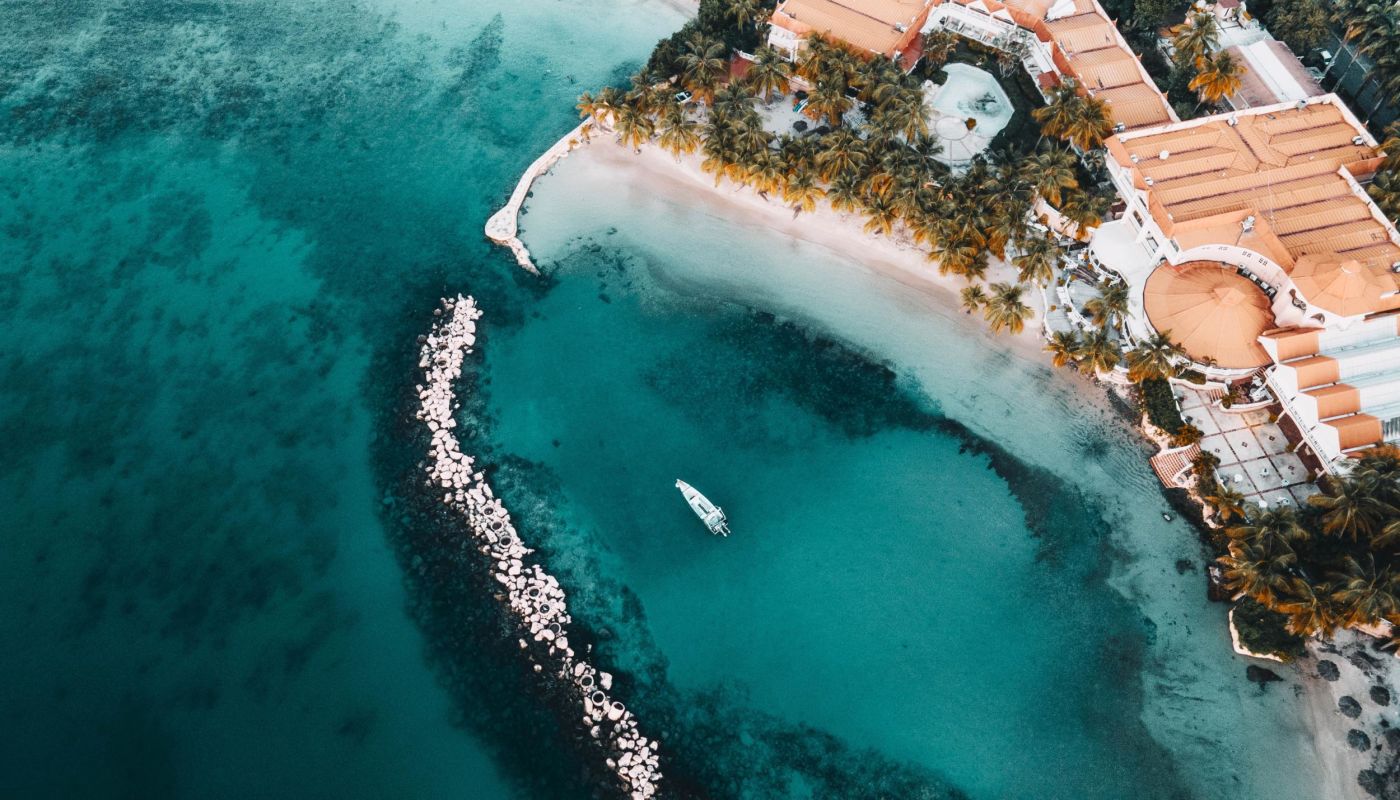
Landscape of Trinidad and Tobago
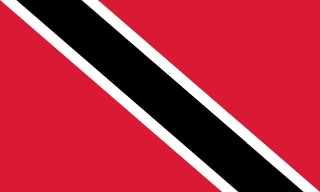
Flag of Trinidad and Tobago

Trinidad and Tobago

North America

Trinidad and Tobago is a dual island Caribbean country that gained its independence in 1962 from Britain. Most of the citizens live in Trinidad, and half of them work in the tourism industry. 1 Because of the diverse culture, Trinidad and Tobago is home to many music festivals, and several forms of music, such as Soca, Calypso and Steel Pan, were created on the islands. 2 1 https://borgenproject.org/water-quality-in-trinidad-and-tobago/
2 http://gotrinidadandtobago.com/trinidad-and-tobago/culture-in-trinidad-and-tobago.html

What would you like to learn about in Trinidad and Tobago?

Select a section to explore the country where nonprofits are creating positive change.

About Trinidad and Tobago

First colonized by the Spanish, the islands came under British control in the early 19th century. The islands' sugar industry was hurt by the emancipation of the slaves in 1834. Manpower was replaced with the importation of contract laborers from India between 1845 and 1917, which boosted sugar production as well as the cocoa industry. The discovery of oil on Trinidad in 1910 added another important export. Independence was attained in 1962. The country is one of the most prosperous in the Caribbean thanks largely to petroleum and natural gas production and processing. Tourism, mostly in Tobago, is targeted for expansion and is growing. The government is coping with a rise in violent crime.

Quick Facts

Population
1,225,225 (July 2013 est.)
Area
5,128 sq km
ISO Code
TT
Continent
North America
Government
parliamentary democracy
Active Causes
12
View all countries in North America

Geography & Environment

Climate

tropical; rainy season (June to December)

Terrain

mostly plains with some hills and low mountains

Natural Resources

petroleum, natural gas, asphalt

Environmental Issues

water pollution from agricultural chemicals, industrial wastes, and raw sewage; oil pollution of beaches; deforestation; soil erosion

People & Society

71.96 years
Avg. Life Expectancy
98.8%
Literacy Rate
14% of total population (2010)
Total Urban Population

Languages

English (official), Caribbean Hindustani (a dialect of Hindi), French, Spanish, Chinese

Religions

Roman Catholic 26%, Protestant 25.8% (Anglican 7.8%, Baptist 7.2%, Pentecostal 6.8%, Seventh-Day Adventist 4%), Hindu 22.5%, Muslim 5.8%, other Christ...

Health Expenditure

5.7% of GDP (2010) of GDP

Education Expenditure

NA of GDP

Economy

$20,400
GDP per Capita (PPP)
5.6%
Unemployment Rate
17% (2007 est.)
Below Poverty Line

Economic Overview

Trinidad and Tobago has earned a reputation as an excellent investment site for international businesses and has one of the highest growth rates and per capita incomes in Latin America. Economic growth between 2000 and 2007 averaged slightly over 8%, significantly above the regional average of about 3.7% for that same period; however, GDP has slowed down since then and contracted during 2009-2011 due to depressed natural gas prices and changing markets. Growth had been fueled by investments in liquefied natural gas, petrochemicals, and steel with additional upstream and downstream investment p...

Causes in Trinidad and Tobago

Environment

As a small island nation, Trinidad and Tobago does not have high greenhouse gas emissions, but the effects of climate change are very apparent. Despite its low contribution to the exacerbation of climate change, Trinidad and Tobago has been very active in the international community in addressing environmental changes. The island has very recently drafted a National Climate Change Policy aimed at addressing possible damage, coastline erosion, and increased salinization of groundwater.1 Other issues on the islands include industrial wastes and raw sewage, oil pollution on beaches, and deforestation.2

Family

Many experts suggest that the rising divorce rate is crippling the family unit in the island and is a major catalyst for the societal breakdown and subsequent rise in crime that is happening. The Minister of Gender, Youth, and Child Development has stated that there would be significantly less crime if there was more societal emphasis on rebuilding familial structures, rather than just going straight to divorce. There are many single parent families headed by women, and significant numbers of children are growing up without a father figure. Studies on the island have suggested that children who grow up without a father are more likely to fall into crime, delinquency, promiscuity, teen pregnancy, substance abuse, and dropping out of school.1

Poverty

Even though some citizens in Trinidad and Tobago have cell phones, TVs, and cars, over 300,000 people live on $985 a month or less. The unemployment rate on the island was recently recorded at 3.8% of the population.1

Religion

Trinidad and Tobago is a very religiously diverse state—21.6% of citizens are Roman Catholic, 26.2% are Protestant, 1.5% are Jehovah’s Witnesses, 18.2% are Hindus, and 5% Muslims. There are Spiritual Baptists sprinkled throughout the country, a Christian denomination that has kept some aspects of the African roots and religious tendencies. The vast majority of Trinidad is Christian, but there is a small Muslim community. On the island of Tobago where the population is primarily from African descent, the most frequently practiced religion is Christianity. Trinidad’s constitution allows religious freedom, which is well respected among the citizens.1

Clean Water

Around 95% of the population has access to clean water and 92% has access to sanitation services.1 This was not always the case—in 2012 a “black poisonous liquid run-off” from a Guanapo landfill was found to have been polluting the water for more than 30 years. The Water and Sewerage Authority of Trinidad and Tobago (WASA) has been working ever since to clean up the water for not just the citizens, but also the many tourists that visit each year. 2

Economy

Trinidad and Tobago has one of the highest GDP’s in the Caribbean.1 However, the low energy prices and declining natural gas reserves caused Trinidad and Tobago’s government to start contracting in 2015. Oil production on the islands has also started to decline over the last decade because the country started to focus more on natural gas. As a result, the prime minister has faced many economic policy challenges including a decrease in bond ratings because of an ineffective fiscal consolidation strategy.2

Government

Trinidad and Tobago is a parliamentary republic with both a prime minister and a president.1 Because of the islands’ closeness to other major drug trafficking countries, money laundering is a major concern. There is also a large black market for certain smuggled goods like diesel fuels and firearms. Even though the banking system is one of the most efficient in the area, financial crimes including use of fraudulent checks, illegal wire transfers, and money laundering are common. Public casinos and online gaming are illegal in Trinidad and Tobago, but people still use “private members clubs” that generally move significant amounts of cash for money laundering purposes. The Trinidad and Tobago government is involved in the Caribbean Financial Action Task Force that focuses on stopping money laundering and crime in the area. 2

Health

A rising health trend in the country is the high rate of childhood obesity. The childhood obesity rate has become a matter of public health concern, since obesity in childhood can lead to the development of Type 2 diabetes, liver disease, cardiovascular disease, and other health complications later in life. Within the Caribbean and Latin America region, the highest mortality rate due to cancer was found in Trinidad and Tobago. The leading types of cancer are prostate, lung, and stomach cancers. Overall, the cancer mortality rate has been found to be higher in men rather than women.1 Another major concern is the mosquitoes in Trinidad and Tobago that carry dengue and chikungunya fever. Authorities have also said that there is a risk of the Zika virus as well.2

Children

Children in Trinidad and Tobago face many struggles on a day to day basis. Sex trafficking, poverty, child marriage, child labor, and violence in the home and on the street are just some of the major concerns for children on these islands 1 Roughly 8% of girls in Trinidad and Tobago are married before they turn 18 years old. 2 The government has passed the Domestic Violence Act which provides protection for children that are growing up in violent homes. 1

Animals

Trinidad and Tobago have many different types of animals—more than any of the other Caribbean islands. It is quite common to see many kinds of butterflies and birds flying around the islands, 130 different species of birds to be exact. There are also 15 different varieties of hummingbirds in Trinidad and Tobago.1

Nonprofits Working in Trinidad and Tobago

Discover organizations making a difference in Trinidad and Tobago

Make Your Impact Today

Discover causes you care about and support the nonprofits making a difference in communities around the world.

Are you a nonprofit? Join Project World Impact for free

Join Us Free