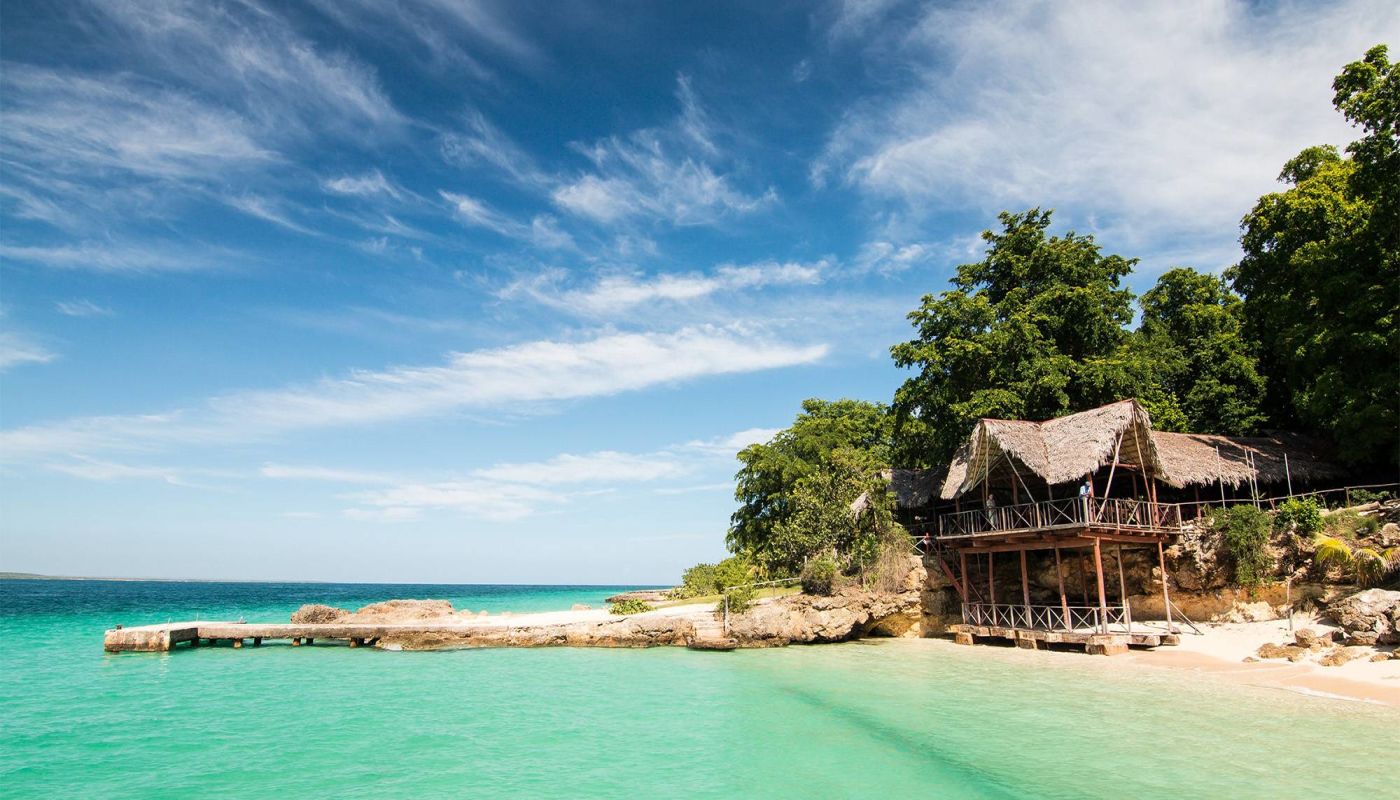
Landscape of Cuba
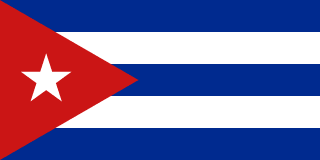
Flag of Cuba

Cuba

North America

Cuba has a history with strong ties to the Soviet Union, but has struggled to recover economically from the loss of funding after its collapse. The US sanctions have also hindered Cuba’s growth. The recent easing of tensions between the US and Cuba has created concerns among Cuban officials about the protection of the environment while dealing with the effects of increased tourism. There are rampant human rights abuses prevalent in Cuba including suppression of expression and the detention of independent journalists and human rights defenders. The Cuban healthcare system is internationally recognized for its effectiveness.1 1 https://www.cia.gov/library/publications/the-world-factbook/geos/cu.html

What would you like to learn about in Cuba?

Select a section to explore the country where nonprofits are creating positive change.

About Cuba

The native Amerindian population of Cuba began to decline after the European discovery of the island by Christopher COLUMBUS in 1492 and following its development as a Spanish colony during the next several centuries. Large numbers of African slaves were imported to work the coffee and sugar plantations, and Havana became the launching point for the annual treasure fleets bound for Spain from Mexico and Peru. Spanish rule eventually provoked an independence movement and occasional rebellions that were harshly suppressed. US intervention during the Spanish-American War in 1898 assisted the Cubans in overthrowing Spanish rule. The Treaty of Paris established Cuban independence from the US in 1902 after which the island experienced a string of governments mostly dominated by the military and corrupt politicians. Fidel CASTRO led a rebel army to victory in 1959; his iron rule held the subsequent regime together for nearly five decades. He stepped down as president in February 2008 in favor of his younger brother Raul CASTRO. Cuba's communist revolution, with Soviet support, was exported throughout Latin America and Africa during the 1960s, 1970s, and 1980s. The country faced a severe economic downturn in 1990 following the withdrawal of former Soviet subsidies worth $4 billion to $6 billion annually. Cuba at times portrays the US embargo, in place since 1961, as the source if its difficulties. Illicit migration to the US - using homemade rafts, alien smugglers, air flights, or via the US's southwest border - is a continuing problem. The US Coast Guard interdicted 1,275 Cuban nationals attempting to cross the Straits of Florida in 2012.

Quick Facts

Population
11,061,886 (July 2013 est.)
Area
110,860 sq km
ISO Code
CU
Continent
North America
Government
Communist state
Active Causes
12
View all countries in North America

Geography & Environment

Climate

tropical; moderated by trade winds; dry season (November to April); rainy season (May to October)

Terrain

mostly flat to rolling plains, with rugged hills and mountains in the southeast

Natural Resources

cobalt, nickel, iron ore, chromium, copper, salt, timber, silica, petroleum, arable land

Environmental Issues

air and water pollution; biodiversity loss; deforestation

People & Society

78.05 years
Avg. Life Expectancy
99.8%
Literacy Rate
75% of total population (2010)
Total Urban Population

Languages

Spanish (official)

Religions

nominally Roman Catholic 85%, Protestant, Jehovah's Witnesses, Jewish, Santeria

Health Expenditure

10.6% of GDP (2010) of GDP

Education Expenditure

12.9% of GDP (2010) of GDP

Economy

$10,200
GDP per Capita (PPP)
3.8%
Unemployment Rate
NA%
Below Poverty Line

Economic Overview

The government continues to balance the need for loosening its socialist economic system against a desire for firm political control. The government in April 2011 held the first Cuban Communist Party Congress in almost 13 years, during which leaders approved a plan for wide-ranging economic changes. President Raul CASTRO said such changes were needed to update the economic model to ensure the survival of socialism. The government has expanded opportunities for self-employment and has introduced limited reforms, some initially implemented in the 1990s, to increase enterprise efficiency and alle...

Causes in Cuba

Environment

The recent increase of American tourism on the island of Cuba has brought environmental policy to the forefront of Cuban politics. Officials are concerned that the massive increase in tourism will harm and possibly destroy the well-preserved wildlife present in the ecosystem.1 Cuba has taken substantial action, creating agencies like the National Parks Service and the National Commission of Environmental Protection to protect the delicate ecosystem.2 Roughly 60% of Cuba’s agricultural land is negatively impacted by soil degradation, and water and air quality have declined in recent years.3 Cuba has begun to create new climate change policies, including the construction of reservoirs to help decrease water shortages. Cuba is also vulnerable to hurricanes.4

Family

The Cuban Revolution changed ideas surrounding the roles of women and sexuality in society, emphasizing the importance of economic and social liberation of women. The country has seen a rise in single-parent households, usually single-mother households, in recent years. It is not uncommon to have a child, mother, and grandmother in a home without any male figures.1 Currently, domestic violence is not a crime in Cuban law, and reports of domestic violence often go unanswered by the police and unreported by the media.3

Human Rights

The largest human rights concerns in Cuba are abuses perpetrated by the government to maintain its power. Those who advocate for human rights or oppose the government are relentlessly repressed.1 The government actively extinguishes opposition through a myriad of ways, including unlawful detentions, beatings, threats of long term imprisonment, public acts of shaming, termination of employment, unfair and partial trials, and forced exile. Basic human rights are continually denied to Cuban citizens by the government, and police authorities often use public beatings to instill fear in the Cuban public. Other developments include short-term prison sentences for human rights defenders and independent journalists, but a large increase in short-term detentions, threats, and harassment. The government controls all media outlets and denies labor rights such as collective bargaining and the prohibition of forced labor.2

Poverty

Strict government controls and the lack of published data make it difficult to discern how much of the Cuban population is living in poverty. The Borgen Project states that the percentage could be anywhere from 5-26% of the nation.1 The invasion of the government into every area of citizens’ lives makes it nearly impossible for them to invest or create more wealth beyond what is needed day-to-day. Many families suffer from shortages of various commodities at some point or another.2

Religion

The constitution of Cuba officially guarantees freedom of religion, but the reality of strict government control undermines the true freedom with which religion is practiced in Cuba. It is up to the government’s discretion to recognize religions and grant building permits for places of worship. There is a governmental Office of Religious Affairs that has the power to accept or decline the entrance of religious visitors and the importation of certain religious literatures.1 Nearly 85% of the Cuban population identifies with Roman Catholicism. Other religions groups represented in Cuba include Protestant denominations, Afro-Caribbean religions, Judaism, and Islam.2

Clean Water

96% of Cubans have access to improved water sources and 95% have access to sanitation facilities. This number, however, varies depending on geographic location. In rural areas, only 90% of the population has access to improved water sources and 89% have access to sanitation facilities.1 In the years leading up to 2017, Cuba has been plagued by a drought, which also has damaged the arability of the soil. 2

Economy

Cuba’s economy is one of the most restricted in the world. Cuba ranks 177th out of 178 countries surveyed for economic freedom, placing it just above North Korea in the international listing. Restrictive property rights, rampant corruption, limited enforcement of law, and extensive government regulation hinder economic development.1 6% of youth ages 15-24 are unemployed, and 2% of the total population is unemployed. The tension between loosening the current socialist economic system and the government’s desire for political control over the economy has plagued Cuba for years. 2

Government

The Republic of Cuba is categorized as a communist state. The state controls virtually all aspects of society.1 The government also actively represses forms of dissent. According to Transparency International, Cuba ranks 60 out of 176 countries measured on the Corruption Perceptions Index, and the Cuban public scored their own government 47 out of 100 for perceived corruption.2 Political dissidence in Cuba is a crime punishable by law. Those who may have some affiliation with government opposition are subject to detention and may be denied impartial hearings, parole, or held without charge.3

Health

The maternal mortality rate in Cuba is 39 deaths per 100,000 live births. The infant mortality rate is a little over 4 deaths per 1,000 births. The average life expectancy is 79 years.1 Cuba’s healthcare is largely considered to be very effective and is one of the primary reasons that their life expectancy is one of the highest in the region. The country regularly attracts individuals internationally who are in search of medical attention inaccessible in their own countries. The major weaknesses of the Cuban health system are largely due to a shortage of medical equipment and medicine.2 Cuba is still very prone to cholera outbreaks because their water sources are frequently contaminated. Citizens in Cuba can get cholera by drinking untreated water and undercooked street food.3

Children

Child labor and child trafficking are serious threats to the well-being of children in Cuba. Child prostitution and sex tourism are prevalent in populations of young girls made vulnerable due to poverty, abandonment, or social exclusion. Cuba is ranked as a Tier 2 country according to the US Department of State’s 2017 Trafficking in Persons Report. The country recently moved down from Tier 3, indicating significant improvements in the realm of child protection. The report cites government efforts to prosecute offenders and provide services for children affected by child labor or sex trafficking.1

Education

While Cuba was a newly communist country in 1959, the education became a top priority for the government. The country is considered to have the best education in Latin America and the Caribbean.1 99.85% of the population is literate, and 13% of GDP is spent on education annually. School life expectancy for the average student is 14 years.2

Animals

The caribbean island of Cuba lies within the Neotropical ecoregion. Dry forests make up nearly half of the landscape, but the lowlands contain more tropical climates. There are more than 200 endemic species in this area, including the Priotrochatella constellata snail and birds like the tocororo, zunzuncito, or the sabanero. There are areas protected by the government, but many species remain threatened by potential habitat loss from human activity. Environmental dangers include deforestation, slash and burn agricultural habits, and the production of coal.1

Nonprofits Working in Cuba

Discover organizations making a difference in Cuba

Make Your Impact Today

Discover causes you care about and support the nonprofits making a difference in communities around the world.

Are you a nonprofit? Join Project World Impact for free

Join Us Free