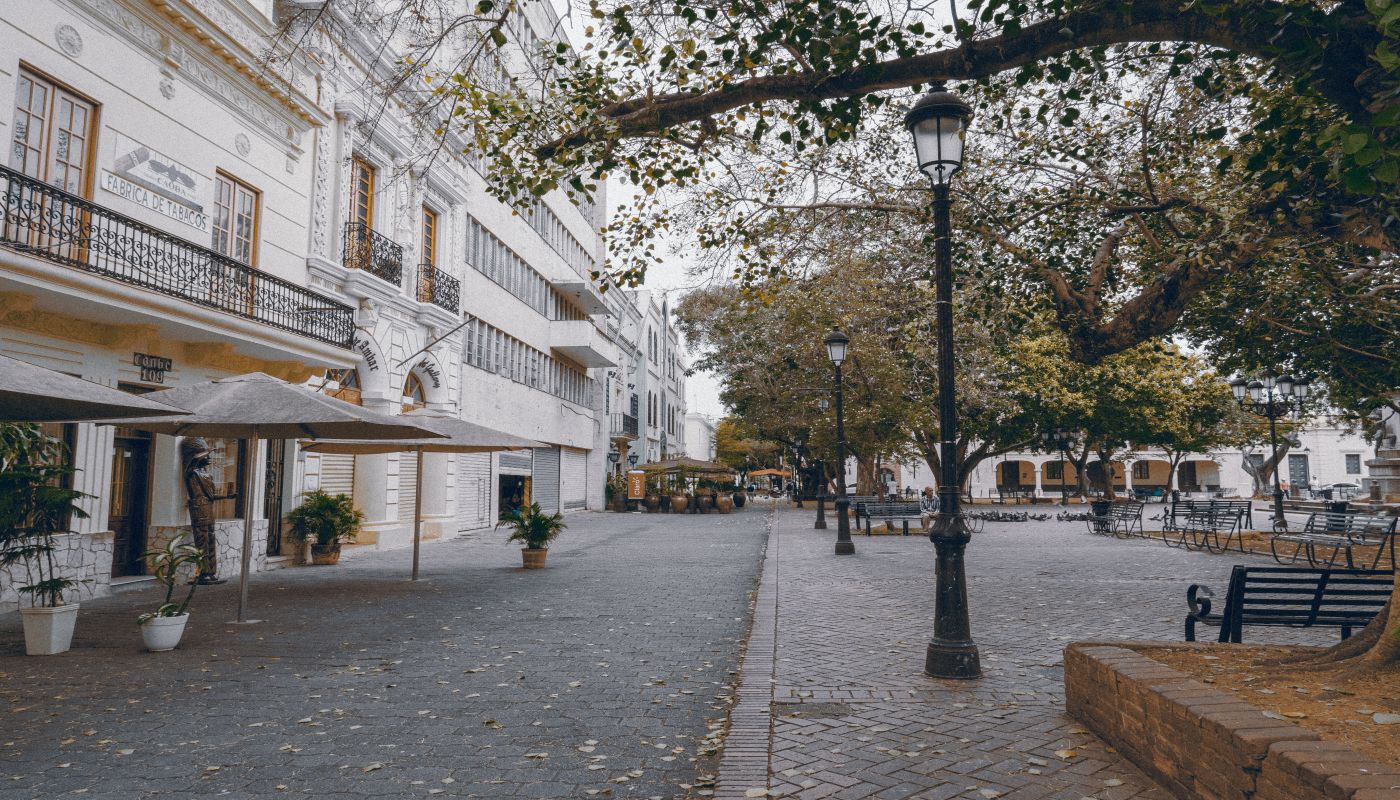
Landscape of Dominican Republic
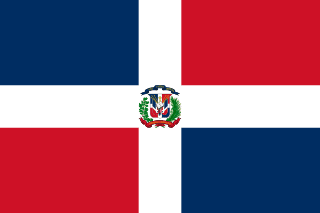
Flag of Dominican Republic

Dominican Republic

North America

The country gained its independence on February 27, 1844. There have been 38 constitutions adopted in the course of the Dominican Republic’s history, due to the tradition of claiming a new constitution for each amendment. The government has strong ties with the French civil law system; it is the basis of their government. Poverty and a poor education system are markers of Dominican rural society. There are also problems with domestic abuse and discrimination.1 1 https://www.cia.gov/library/publications/the-world-factbook/geos/dr.html

What would you like to learn about in Dominican Republic?

Select a section to explore the country where nonprofits are creating positive change.

About Dominican Republic

The Taino - indigenous inhabitants of Hispaniola prior to the arrival of the Europeans - divided the island into five chiefdoms and territories. Christopher COLUMBUS explored and claimed the island on his first voyage in 1492; it became a springboard for Spanish conquest of the Caribbean and the American mainland. In 1697, Spain recognized French dominion over the western third of the island, which in 1804 became Haiti. The remainder of the island, by then known as Santo Domingo, sought to gain its own independence in 1821 but was conquered and ruled by the Haitians for 22 years; it finally attained independence as the Dominican Republic in 1844. In 1861, the Dominicans voluntarily returned to the Spanish Empire, but two years later they launched a war that restored independence in 1865. A legacy of unsettled, mostly non-representative rule followed, capped by the dictatorship of Rafael Leonidas TRUJILLO from 1930 to 1961. Juan BOSCH was elected president in 1962 but was deposed in a military coup in 1963. In 1965, the United States led an intervention in the midst of a civil war sparked by an uprising to restore BOSCH. In 1966, Joaquin BALAGUER defeated BOSCH in an election to become president. BALAGUER maintained a tight grip on power for most of the next 30 years when international reaction to flawed elections forced him to curtail his term in 1996. Since then, regular competitive elections have been held in which opposition candidates have won the presidency. Former President Leonel FERNANDEZ Reyna (first term 1996-2000) won election to a new term in 2004 following a constitutional amendment allowing presidents to serve more than one term, and was since reelected to a second consecutive term.

Quick Facts

Population
10,219,630 (July 2013 est.)
Area
48,670 sq km
ISO Code
DO
Continent
North America
Government
democratic republic
Active Causes
12
View all countries in North America

Geography & Environment

Climate

tropical maritime; little seasonal temperature variation; seasonal variation in rainfall

Terrain

rugged highlands and mountains with fertile valleys interspersed

Natural Resources

nickel, bauxite, gold, silver

Environmental Issues

water shortages; soil eroding into the sea damages coral reefs; deforestation

People & Society

77.62 years
Avg. Life Expectancy
90.1%
Literacy Rate
69% of total population (2010)
Total Urban Population

Languages

Spanish (official)

Religions

Roman Catholic 95%, other 5%

Health Expenditure

6.2% of GDP (2010) of GDP

Education Expenditure

2.2% of GDP (2007) of GDP

Economy

$9,800
GDP per Capita (PPP)
14.7%
Unemployment Rate
34.4% (2010 est.)
Below Poverty Line

Economic Overview

The Dominican Republic has long been viewed primarily as an exporter of sugar, coffee, and tobacco, but in recent years the service sector has overtaken agriculture as the economy's largest employer, due to growth in telecommunications, tourism, and free trade zones. The economy is highly dependent upon the US, the destination for more than half of exports. Remittances from the US amount to about one-tenth of GDP, equivalent to almost half of exports and three-quarters of tourism receipts. The country suffers from marked income inequality; the poorest half of the population receives less than...

Causes in Dominican Republic

Environment

The Dominican Republic faces substantial threats from pollution. One town in particular, Haina, is located near a closed down automobile battery recycling plant. The town has the highest levels of lead contamination in the world and its population reveals symptoms of lead poisoning.1 Moreover, factories and industrial centers are estimated to emit a total of 15,800 tons of pollutants every year. USAID has assisted the Dominican Republic with conducting climate change vulnerability assessments periodically.2 These assessments will help the government draft climate change policies more effectively.3

Family

One of the largest threats to domestic harmony is the prevalence of domestic abuse in the Dominican Republic. According to a report by The Guardian, gender-based violence is the fourth highest cause of death of women in the DR.1 Furthermore, the divorce rate in the Dominican Republic is one of the highest in the world, with over 14 divorces for every 100 couples. Broken families and poverty pose significant threats to the well being of children within the family and can limit their ability to succeed in life.2 The first six months of 2016 displayed a 2% increase in the number of killings of women and girls in comparison to 2015, while sexual violence complaints increased by 10%.3

Human Rights

Police and security forces in the Dominican Republic routinely abuse their power in ways that violate the basic human rights of citizens. Reports of forced disappearances, unlawful killings, politically motivated killings, and other such abuses of power have raised human rights concerns.1 Significant discrimination and abuse is directed towards Haitian migrants and their descendants, as well as stateless groups. Furthermore, human trafficking and sex tourism are listed as concerns in the Dominican Republic. Extrajudicial killings still continue in the Dominican Republic.2 There is a pervasive culture of impunity among police and government officials that continually undermines the effective implementation of rule of law.3

Education

School is compulsory for all children ages 6-14, but is loosely enforced by the government. Classrooms are overcrowded in poor-quality buildings, and most have outdated curriculums. The law states that 4% of GDP must be spent on education, but only 2.1% is reported being spent for this sector.1 Only 30% of students in the Dominican Republic will finish primary school and only 18% finish secondary school.2 Children are required to wear uniforms and bring basic supplies to attend school, but families that cannot afford these items do not send their children to school.3 Rural populations are especially disadvantaged due to higher poverty rates and large distances between schools. Presently, the Dominican Republic has drafted a National Consultation on the Rights of the Child and is working to curb the high rate of family violence.4

Poverty

Over 40% of the Dominican Republic lives below the poverty line.1 Over 50% of children live in poverty.2 Poverty is especially crippling in the Dominican Republic because money is needed to participate in schools and access healthcare services. Those without money are doubly limited in opportunities for social mobility due to limited access to education and health. Poverty is especially common in rural areas, where social exclusion and geographic isolation exacerbate low incomes. Many of the poverty stricken citizens find work as small merchants, farmers, and manual labor.3 Dominicans of Haitian descent that live near the border of the two countries are particularly disadvantaged from both poverty and high levels of social exclusion.4

Religion

The Dominican Republic generally supports religious freedom and there have been few instances of religious discrimination. The state declares Roman-Catholicism to be the official state religion, which grants the Catholic church benefits that other religious groups are not granted. Religious groups are expected to register with the government, but there have generally not been reports of abuse or discrimination in these proceedings.1 The vast majority, 95% of the population, declares themselves to be Roman Catholic with varying degrees of activity and practice. The remaining 5% either do not declare a religion or subscribe to indigenous beliefs.2

Clean Water

Approximately 85% of the Dominican population has access to clean water. 84% of the population has access to improved sanitation facilities.1 Limited access to water sources or access to only polluted sources poses a serious threat to the health of the Dominican Republic populace.2 The strong ties between baseball leagues in the United States and the Dominican Republic have led to the Major League Baseball Players Trust donating significant amounts of money toward the development of clean water infrastructure in an effort to give back to the country that raises many renowned players.3

Economy

Over 5% of Dominican citizens are unemployed. Unemployment for those between the ages of 15 and 24 is even higher, with 7.7% of males unemployed and 16% of females unemployed.1 Corruption is a further inhibitor of economic progress. Corruption pervades virtually all levels of society, including police and security forces, government officials, and the private sector.2 Contracts are not honored, government payments are delayed, bribes are regular features of transactions, and court rulings are not heeded. The lack of institution of deep reforms and government inefficiencies have allowed corruption to invade the economy.3 Public debt is 47% of the GDP, and rose by 3% between 2015 and 2016. The Dominican Republic’s main export partners are the US and Haiti, while the country mainly imports from the US and China.4

Government

Government corruption is a rampant problem in the Dominican Republic. The judiciary is so susceptible to political influence it is considered nearly impossible to pursue legal recourse without money or influence. Large-scale drug trafficking thrives in the Dominican Republic as a result of corruption in both public and private sectors.1 The Dominican Republic ranks 120 out of 176 on Transparency International’s Corruption Perceptions Index, indicating a high level of corruption. The Dominican public scores their own government 31 of a possible 100.2 Although the Dominican Republic is formally classified as a democratic republic, the democratic process has been undermined by all of the prevalent human rights and social issues.3

Health

Infectious diseases such as cholera and diarrheal diseases are prevalent in the Dominican Republic.1 28% of the population is obese, and 4% of children under the age of 5 are underweight. Furthermore, maternal care suffers severely from lack of resources. The maternal mortality rate is 92 deaths for every 100,000 live births. The infant mortality rate is 18 deaths per 1,000 live births.2 According to research, the high maternal death rate in Dominican Republic reflects not so much limited access to care as much as the overextension of limited resources.3

Children

Roughly 50% of children in the Dominican Republic live in poverty.1 Furthermore, drug use increased tenfold between 1975 and 2005.Young children are strongly affected because they are the most likely to be targeted for child labor in the industry.2 Factors such as adult unemployment and a 30% general poverty rate have created a very unfavorable environment for children.3

Animals

The Dominican Republic falls under the Neotropical zone in the Caribbean. Birds known to be native to this area include the Hispaniolan parrot, the parakeet, the Hispaniolan lizard cuckoo, and the palm crow. Some major threats to the area include illegal forestry operations and migratory agricultural expansion.1

Nonprofits Working in Dominican Republic

Discover organizations making a difference in Dominican Republic

NPH USA

NPH USA

NPH USA transforms the lives of orphaned, abandoned and disadvantaged children in Latin America and the Caribbean by supporting the homes, healthcare and educational programs of Nuestros Pequeños Hermanos (NPH, Spanish for "Our Little Brothers and Sisters"). Together, we create families for life and teach children the values of unconditional love, shared responsibility and helping others. Our donors help children overcome poverty and become leaders in their own communities. Since its founding in 1954, NPH has assisted more than 20,000 children and is currently raising more than 3,400 boys and girls in Bolivia, the Dominican Republic, El Salvador, Guatemala, Haiti, Honduras, Mexico, Nicaragua and Peru. An additional 1,600 students who live outside the homes receive scholarships, meals and health care. NPH outreach programs provided over 95,000 services in 2014.

Chicago, Illinois

Make Your Impact Today

Discover causes you care about and support the nonprofits making a difference in communities around the world.

Are you a nonprofit? Join Project World Impact for free

Join Us Free