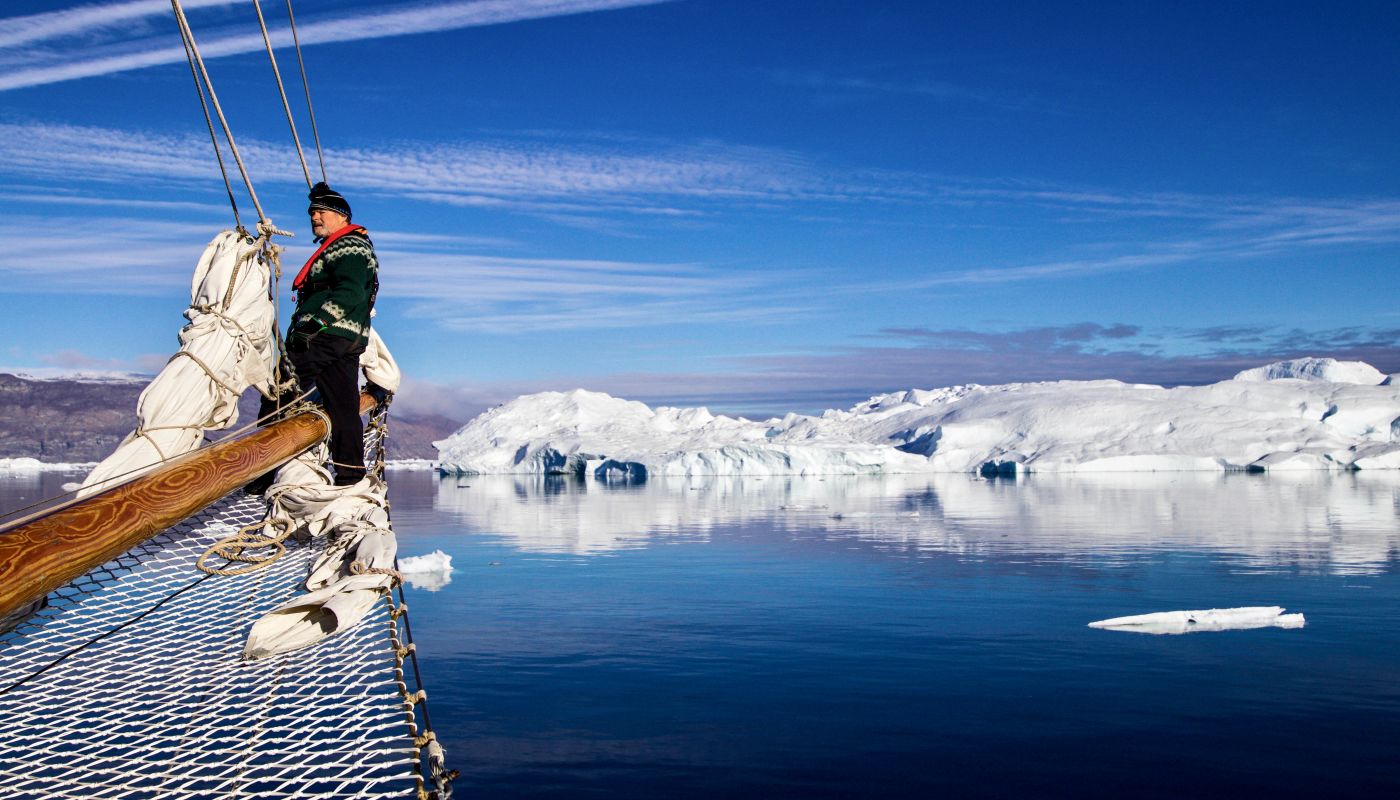
Landscape of Greenland
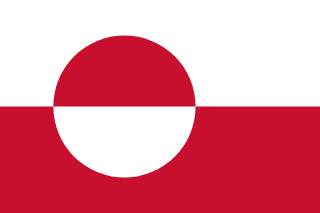
Flag of Greenland

Greenland

North America

Greenland is a self governing branch of the Danish Realm. The largest island in the world, it only has a population of 60,000, with many people still living in rural areas without modern luxuries.1 The prevalence of alcoholism, the lack of healthcare, and the push for modernization all strain the island nation and contribute to its severe mental health and abuse problems.2 1 https://www.cia.gov/library/Publications/the-world-factbook/geos/gl.html
2 http://www.npr.org/sections/goatsandsoda/2016/04/21/474847921/the-arctic-suicides-its-not-the-dark-that-kills-you

What would you like to learn about in Greenland?

Select a section to explore the country where nonprofits are creating positive change.

About Greenland

Greenland is a self governing branch of the Danish Realm. The largest island in the world, it only has a population of 60,000, with many people still living in rural areas without modern luxuries.1 The prevalence of alcoholism, the lack of healthcare, and the push for modernization all strain the island nation and contribute to its severe mental health and abuse problems.2 1 https://www.cia.gov/library/Publications/the-world-factbook/geos/gl.html
2 http://www.npr.org/sections/goatsandsoda/2016/04/21/474847921/the-arctic-suicides-its-not-the-dark-that-kills-you

Causes in Greenland

Environment

Greenland is 81% ice caps, and these ice caps house 10% of the earth’s fresh water reserve.1 However, due to climate change, these ice caps have been recorded to recede at an alarming rate of about two miles per year.2

Family

Inuits are 88% of the population in Greenland.1 Most mothers are under the age of 21 when they have their first child, but the extended family is expected to help in raising each other's children. The family works together to fish and hunt and splits the food evenly between them.2

Human Rights

As Greenland has been given more autonomy, human rights protections have slipped through the cracks. Greenland does not have any legislation protecting against discrimination.1

Education

In Greenland, many villages only have education facilities up until secondary education, which requires students to move to larger towns to continue their education.1 They follow the Danish system of schooling closely with primary, lower secondary, and secondary education facilities. Education is compulsory for children aged 6-16.2 Greenland has various vocational training schools in smaller areas with universities being concentrated in a select few large cities.1

Poverty

The unemployment rate is 9%, and 9% of the population lives below the poverty line.1

Religion

In Greenland, most people are Evangelical Lutheran Christians with a small minority practicing traditional inuit religions, Catholicism, or Atheism.1 As a part of the Kingdom of Denmark, there is a Danish bishop located in the territory. There are 92 churches and other religious facilities in Greenland.2

Clean Water

Many people in Greenland do not have water or sanitation capabilities in their homes, particularly in rural areas, because there is no national grid to supply these services.1 In the summer, when water is not frozen, residents simply fill water basins from streams as Greenland is home to the largest reserve of pristine fresh water on earth.2 In the winter months, residents must rely on smelting centers that melt ice to make drinking water, but this process is 16 times more expensive than water services are in mainland Europe.2

Economy

In Greenland, over 90% of exports are from fisheries, which makes up over half of their GDP.1 The undiversified economy of Greenland is not forecasted to be sustainable in the future, and mining the island’s natural resources alone will not supplement it enough to become economically independent of Denmark.2 The economy are highly volatile depending on fish prices worldwide.

Government

As a self governing territory of Denmark, Greenland has two representatives in the Danish parliament. They also have independent government institutions that have power over all affairs except foreign and financial policy.1 The Greenlandic government has faced allegations of corruption in the past for forcing government officials to resign, but the Danish government has had no reports of corruption in recent years.2

Health

The life expectancy is 72 in Greenland.1 Due to its massive size and single hospital in Nuuk, transportation is the biggest limit to quick and effective medical care.2 It has the highest suicide rate in the world with 100 out of 100,000 people killing themselves each year.3 There is an extreme lack of social workers and support systems for those with suicidal thoughts, especially in small towns. The underlying issues facing society are child neglect and alcoholism, with 30% of Greenlandic people having lived in a household with alcohol abuse.4

Children

Child abuse and neglect is prevalent amongst Greenlanders, and one in three Greenlanders report sexual abuse as a child.1 Many link this to alcohol abuse which is found in 21% of parents with children under the age of 18.2 Children participate in dog sledding, hunting, fishing, and sailing activities. Youth mix together their traditional practices with modern culture and have high levels of independence from a young age to act as contributing members of society.3 Extended families often live near each other and play an influential role in raising children.

Animals

Polar bears, wolves, whales, arctic foxes, reindeer and seals are common in Greenland, but they are losing parts of their environment because of the changing climate.1

Nonprofits Working in Greenland

Discover organizations making a difference in Greenland

Make Your Impact Today

Discover causes you care about and support the nonprofits making a difference in communities around the world.

Are you a nonprofit? Join Project World Impact for free

Join Us Free