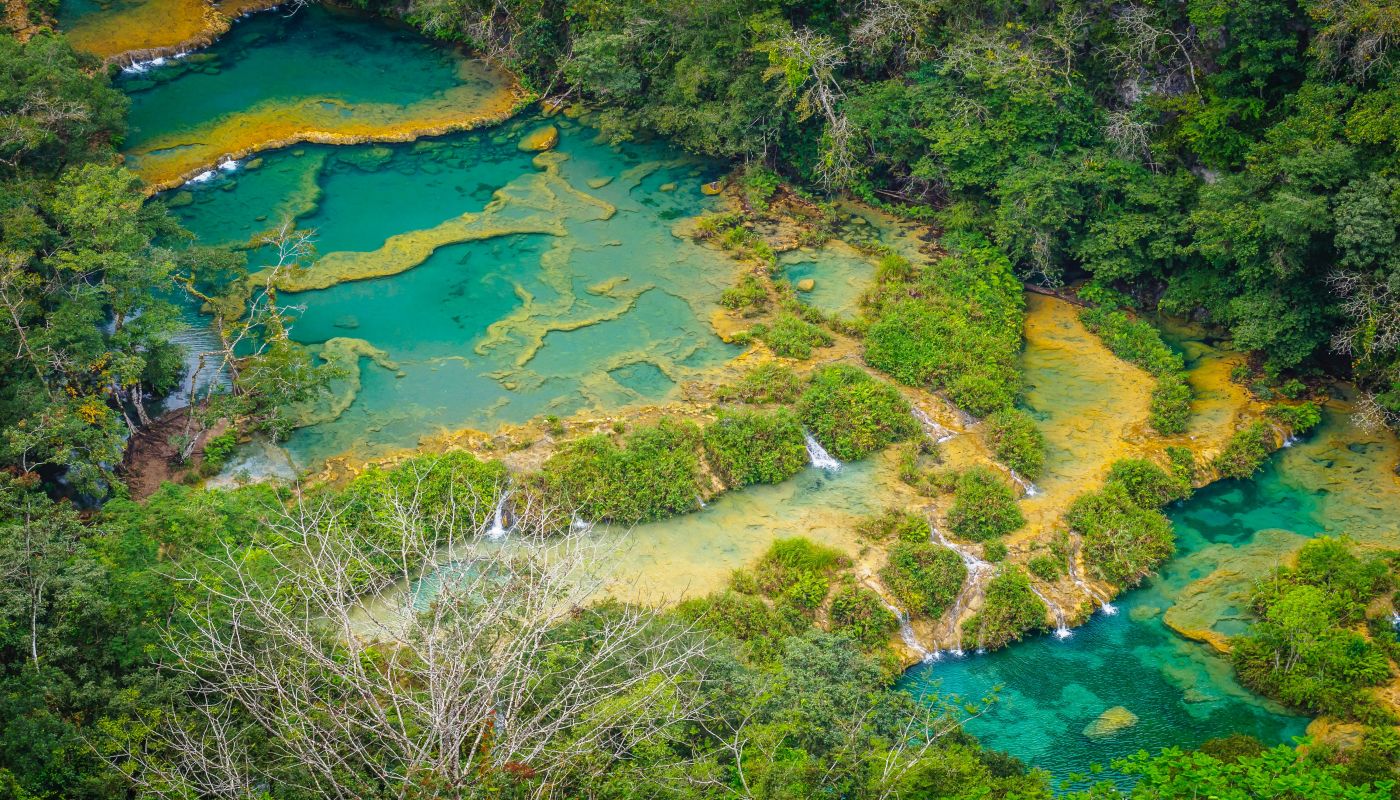
Landscape of Guatemala
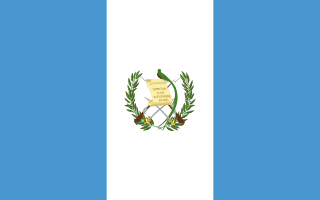
Flag of Guatemala

Guatemala

North America

Guatemala is still recovering from the violent 36-year civil war that ended in 1996. This war is credited with forcing about 1 million refugees to flee the country. The government is highly corrupt and bribery is a common occurrence. Poverty and lack of education are two of the largest obstacles facing rural populations, as well as inadequate access to proper healthcare. The economy is still recovering from the civil war and is hindered by the prevalence of transitional policymaking and governments.1 1 https://www.cia.gov/library/publications/the-world-factbook/geos/gt.html

What would you like to learn about in Guatemala?

Select a section to explore the country where nonprofits are creating positive change.

About Guatemala

The Maya civilization flourished in Guatemala and surrounding regions during the first millennium A.D. After almost three centuries as a Spanish colony, Guatemala won its independence in 1821. During the second half of the 20th century, it experienced a variety of military and civilian governments, as well as a 36-year guerrilla war. In 1996, the government signed a peace agreement formally ending the conflict, which had left more than 200,000 people dead and had created, by some estimates, some 1 million refugees. In January 2012, Guatemala assumed a nonpermanent seat on the UN Security Council for the 2012-13 term.

Quick Facts

Population
14,373,472 (July 2013 est.)
Area
108,889 sq km
ISO Code
GT
Continent
North America
Government
constitutional democratic republic
Active Causes
12
View all countries in North America

Geography & Environment

Climate

tropical; hot, humid in lowlands; cooler in highlands

Terrain

mostly mountains with narrow coastal plains and rolling limestone plateau

Natural Resources

petroleum, nickel, rare woods, fish, chicle, hydropower

Environmental Issues

deforestation in the Peten rainforest; soil erosion; water pollution

People & Society

71.46 years
Avg. Life Expectancy
75.9%
Literacy Rate
49% of total population (2010)
Total Urban Population

Languages

Spanish (official) 60%, Amerindian languages 40%

Religions

Roman Catholic, Protestant, indigenous Mayan beliefs

Health Expenditure

6.9% of GDP (2010) of GDP

Education Expenditure

2.8% of GDP (2010) of GDP

Economy

$5,300
GDP per Capita (PPP)
4.1%
Unemployment Rate
54% (2011 est.)
Below Poverty Line

Economic Overview

Guatemala is the most populous country in Central America with a GDP per capita roughly one-half that of the average for Latin America and the Caribbean. The agricultural sector accounts for 13% of GDP and 38% of the labor force; key agricultural exports include coffee, sugar, bananas, and vegetables. The 1996 peace accords, which ended 36 years of civil war, removed a major obstacle to foreign investment, and since then Guatemala has pursued important reforms and macroeconomic stabilization. The Dominican Republic-Central American Free Trade Agreement (CAFTA-DR) entered into force in July 200...

Causes in Guatemala

Poverty

Eight out of ten people in rural contexts are considered poor in Guatemala. Mercado Global is working to fight this problem by training women in the rural highlands to weave and run their own businesses and eventually work with international retailers to sell their wares. Women suffer from gender inequality in pay; statistics reveal that women earn 31% less than men. Only 28% of rural women are employed, compared to 68% of rural men.1 An estimated 60% of people live below the poverty line.2

Religion

A majority of the Guatemalan population considers themselves to be Roman Catholic. In rural communities, aspects of Roman Catholicism and Maya traditional rites are combined and practiced as one religion. The Guatemalan constitution recognizes the Catholic Church as a separate legal entity.1

Clean Water

Around 92% Guatemalans have access to improved or clean water sources, and approximately 64% have adequate sanitation facilities. Despite the fact that water systems and infrastructures have improved, they still do not meet government or international requirements.1 At the end of 2017 the country was facing one of the worst droughts in decades, causing suffering for rural populations. The nonprofit Water for People has started multiple projects with the aim of improving these people’s situations.2

Economy

Following the conclusion of a disastrous civil war that lasted 36 years, Guatemala greatly improved its economic and political stability.1 Guatemala’s public debt is 30% of the GDP. The richest 20% of the population accounts for around 51% of the country’s wealth. Corruption in the government has led to mistrust in the investment market and has caused foreign investments to drop.2 The rise of government spending and rampant taxation has also stagnated economic growth and undermined the improvements in trade and investment freedom.. Currently there are open markets, but rule of law is nearly nonexistent in Guatemala.3

Government

Guatemala is a presidential republic. The government has long been plagued with violent crime, corruption, and impunity. Government officials often demand bribes to do their work. The judiciary is no different and, though it is technically independent, remains inefficient and subject to intimidation.1 Additionally, with the rise of drug trafficking in and through Guatemala, the amount of violent crime has increased.2 Transparency International ranks the country 143rd out of 180 countries for corruption, and the Guatemalan public scores their government 28 out of 100 for perceived transparency.3

Health

The health and social systems were largely destroyed after the Guatemalan civil war and are still in the process of being rebuilt. The public health expenditure is 6.2% of the GDP. The maternal mortality rate is 88 deaths per 100,000 live births. The infant mortality rate is 21 deaths per 1,000 live births. The average life expectancy is 73 years, and 21% of the population suffers from obesity. 46,000 people in Guatemala are living with HIV/AIDs.1

Children

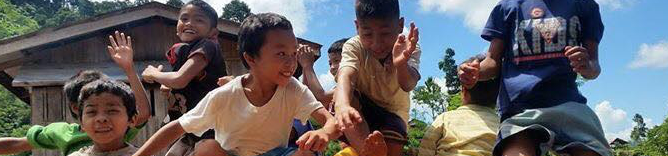
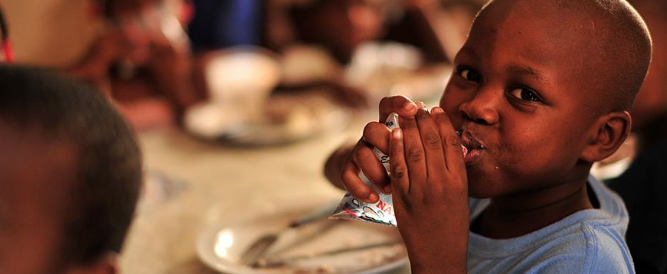
Guatemala is the poorest country in Central America and has a long history of violence, chaos, and poverty, all of which negatively affect Guatemalan children. 12% of children under the age of five are underweight.1 Over 5,800 children live in institutions and temporary children’s homes. They are not afforded access to surviving family members or an alternative to the temporary homes.2 Child marriage is another issue facing young people; 30% of children are married by the time they are 18. 6% are married by the time they are 15.3

Environment

Guatemala has one of the most diverse environments on the planet; the country is made up of 14 different eco-regions. The landscape is dominated by subtropical rainforests. There are environmental protection laws in place but enforcement is limited. This enforcement issue negatively affects small-scale farmers who depend on the biodiversity of the country for their livelihood.1 Guatemalans are also in danger of contracting waterborne illnesses due to the contamination of the water sources near their cities.2

Family

Marriages are still arranged in some Maya communities, but marriage by choice is by far the norm in Guatemala. In Maya and Ladino, the economically poor classes, family unions are free and many children do not know their fathers. Even though the Catholic Church exerts authority and influence in Guatemalan culture, divorces are fairly common.1 Family planning centers are few and far between in rural Guatemala, where women often have up to 7 children. In communities experiencing extreme poverty, children have become a financial burden that is almost impossible to bear.2

Human Rights

Drug cartels and criminal organizations use violence and intimidation to advance their political inclinations and illegal activities. 98% of all crimes committed in Guatemala are never prosecuted.1 All efforts being made by the government to reconcile the atrocities committed during the violent civil war have been unproductive and have suffered large setbacks in the transitional phases of the government. There are reports of human rights defenders being attacked and subjected to smear campaigns. Many people fleeing violence in Guatemala enter Mexico and the US illegally and find themselves deported back to their country.2

Education

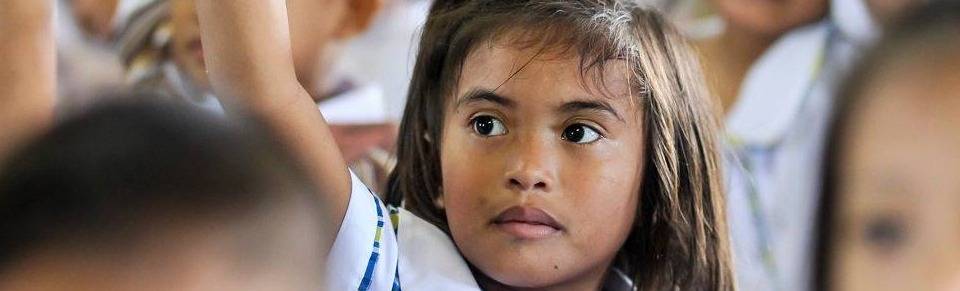
The average Guatemalan has only four years of schooling. The generation faces challenges of high levels of unemployment, social marginalization, urbanization, and increased crime rates. The wide range of languages spoken presents a communication barrier that has yet to be resolved effectively. Out of every ten students, only four finish primary school.1 The government only spends 3% of GDP on education.2

Animals

Much of the terrain in Guatemala’s Neotropical environment is considered endangered. The dry climate is home to many bird families including the Columbidae, Tyrannidae, and Fringillidae. Evergreen forests are a rarity; most of the dry landscape is covered by Opuntia cacti and Acacia plants. These species are threatened by human development and the lack of legal protection of highly biodiverse areas.1

Nonprofits Working in Guatemala

Discover organizations making a difference in Guatemala

Make Your Impact Today

Discover causes you care about and support the nonprofits making a difference in communities around the world.

Are you a nonprofit? Join Project World Impact for free

Join Us Free