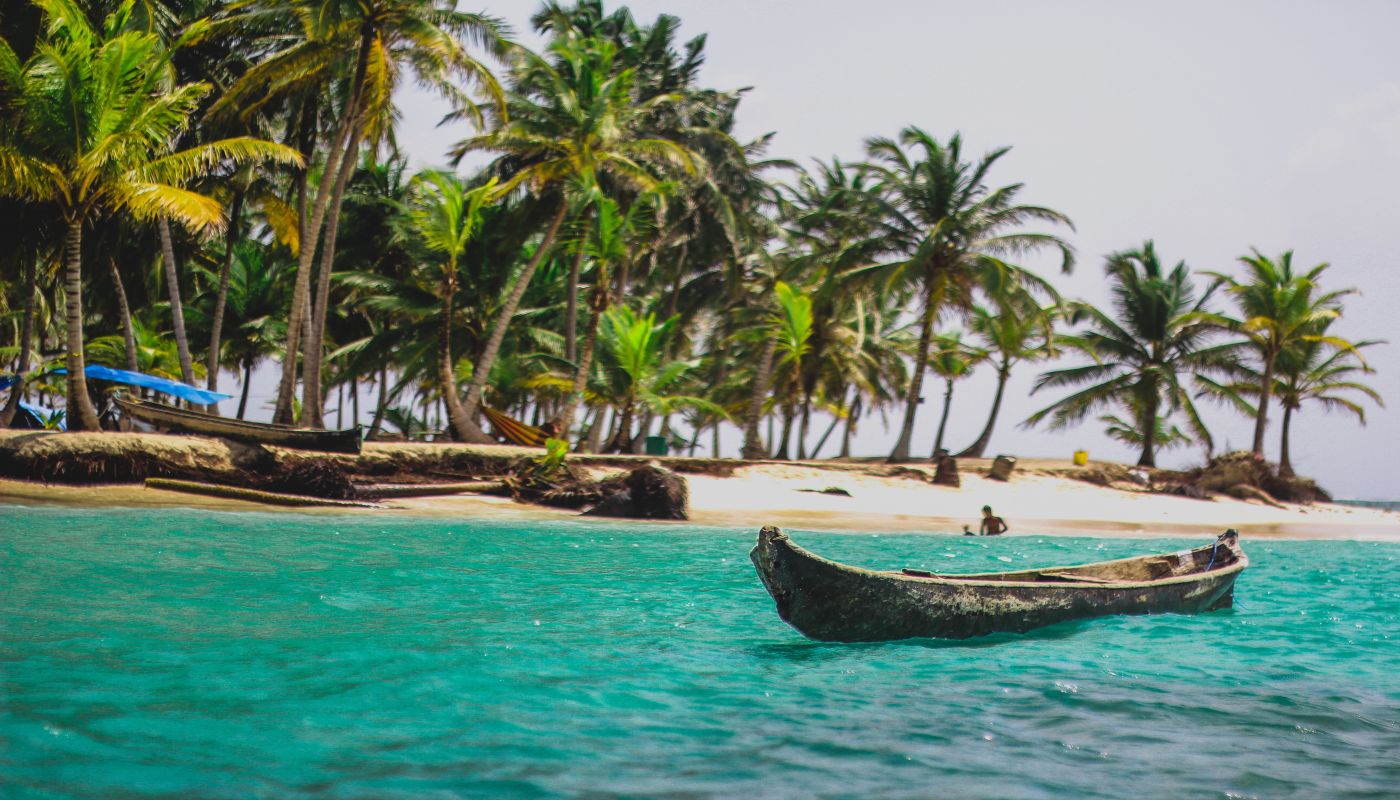
Landscape of Panama
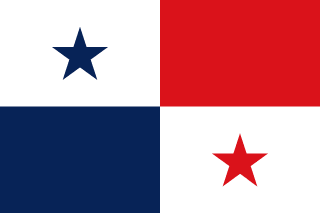
Flag of Panama

Panama

North America

Panama’s economy is fueled by services and agriculture, and also boasts the great trading portal known as the Panama Canal. Environmental and climate concerns threaten these economic mainstays, as unpredictable drought and flooding can drastically affect farming and canal infrastructure.1 Despite having successful economic sectors, Panama remains one of the most unequal countries in the world in terms of wealth distribution. Almost one-fourth of the population lives in poverty and lacks access to improved water and sanitation systems and are mostly concentrated in rural areas.2 Human trafficking is also a major issue, as the country is a source, transit, and destination site for trafficked victims.3 1 https://www.theguardian.com/sustainable-business/2014/aug/14/climate-change-panama-canal-water-shipping-closures 2 https://www.cia.gov/library/publications/the-world-factbook/geos/pm.html 3 https://pa.usembassy.gov/2017-trafficking-persons-report-panama/

What would you like to learn about in Panama?

Select a section to explore the country where nonprofits are creating positive change.

About Panama

Explored and settled by the Spanish in the 16th century, Panama broke with Spain in 1821 and joined a union of Colombia, Ecuador, and Venezuela - named the Republic of Gran Colombia. When the latter dissolved in 1830, Panama remained part of Colombia. With US backing, Panama seceded from Colombia in 1903 and promptly signed a treaty with the US allowing for the construction of a canal and US sovereignty over a strip of land on either side of the structure (the Panama Canal Zone). The Panama Canal was built by the US Army Corps of Engineers between 1904 and 1914. In 1977, an agreement was signed for the complete transfer of the Canal from the US to Panama by the end of the century. Certain portions of the Zone and increasing responsibility over the Canal were turned over in the subsequent decades. With US help, dictator Manuel NORIEGA was deposed in 1989. The entire Panama Canal, the area supporting the Canal, and remaining US military bases were transferred to Panama by the end of 1999. In October 2006, Panamanians approved an ambitious plan (estimated to cost $5.3 billion) to expand the Canal. The project, which began in 2007 and could double the Canal's capacity, is expected to be completed in 2015.

Quick Facts

Population
3,559,408 (July 2013 est.)
Area
75,420 sq km
ISO Code
PA
Continent
North America
Government
constitutional democracy
Active Causes
12
View all countries in North America

Geography & Environment

Climate

tropical maritime; hot, humid, cloudy; prolonged rainy season (May to January), short dry season (January to May)

Terrain

interior mostly steep, rugged mountains and dissected, upland plains; coastal areas largely plains and rolling hills

Natural Resources

copper, mahogany forests, shrimp, hydropower

Environmental Issues

water pollution from agricultural runoff threatens fishery resources; deforestation of tropical rain forest; land degradation and soil erosion threatens siltation of Panama Canal; air pollution in urb...

People & Society

78.13 years
Avg. Life Expectancy
94.1%
Literacy Rate
75% of total population (2010)
Total Urban Population

Languages

Spanish (official), English 14%

Religions

Roman Catholic 85%, Protestant 15%

Health Expenditure

8.1% of GDP (2010) of GDP

Education Expenditure

4.1% of GDP (2011) of GDP

Economy

$15,900
GDP per Capita (PPP)
4.4%
Unemployment Rate
26% (2012 est.)
Below Poverty Line

Economic Overview

Panama's dollar-based economy rests primarily on a well-developed services sector that accounts for more than three-quarters of GDP. Services include operating the Panama Canal, logistics, banking, the Colon Free Zone, insurance, container ports, flagship registry, and tourism. Economic growth will be bolstered by the Panama Canal expansion project that began in 2007 and is estimated to be completed by 2015 at a cost of $5.3 billion - about 10-15% of current GDP. The expansion project will more than double the Canal's capacity, enabling it to accommodate ships that are too large to traverse th...

Causes in Panama

Environment

With rich biodiversity and tropical rainforests, it is critical that Panama’s government develops strategies that will be able to effectively mitigate the effects of climate change on the Panamanian environment. Large agricultural businesses continue to illegally claim and drain protected wetlands, and the government does nothing to discourage them.1 Climate extremes affect the water levels of the Panama Canal. Seasons of drought may decrease the water level enough to limit the amount of weight that can be transported through the canal, and flood conditions threaten to overwhelm the infrastructure.2 Construction, logging, and mining all cause Panama to lose 1% of its native forest area every year.3

Family

Domestic violence remains one of the largest threats to women in Panama. In 2015, 50 women were murdered as a result of domestic violence, and over 7,000 others reported cases of physical and sexual violence.1 Despite stricter legislation to crack down on offenders, domestic violence cases are on the rise. Laws meant to punish criminals are often not enforced, leaving abused women trapped in a cycle of violence. Education is also needed to help victims know what resources are available.2

Human Rights

Prison conditions in Panama continue to be life threatening and unduly harsh. Additionally, the judicial system is prone to inefficiency and corruption. Women are not treated equally, and only became protected from violence by law recently. The annual rate of teenage pregnancy has risen by over 60% in the last decade due to rape and social exclusion.1 Panama is also known as a source, transit, and destination country for human trafficking. Panamanian children are commonly kept in the country for commercial sex work, and Panamanian men and women are subjected to sex and labor trafficking both locally and abroad. The government does not adequately fund anti-trafficking efforts or provide victim care resources.2

Education

From an international standpoint, Panama has a weak education system. Its curriculum is outdated, teachers are not adequately trained or compensated, and students often drop out of school to work.1 The literacy rate in Panama is around 93%.2 The primary school enrollment rate is around 95%.3

Poverty

Almost 26% of the population of Panama lives under the international poverty line, and about 4.5% of the population is unemployed.1 Poverty in Panama is distributed very unequally. Citizens who live in urban areas have much greater access to economic opportunities and social welfare services than those who live in rural or indigenous regions.2 50% of those in rural areas live in poverty, and 80% of indigenous people live at or below the poverty line.3 Because of these disparities, Panama is ranked as one of the world’s most unequal countries, with little resources allocated to those who live in rural regions.2

Religion

Approximately 85% of the country is Roman Catholic and 15% is Protestant.1 The constitution has established Roman Catholicism as the official religion, and religion is taught in public schools, although parents can choose for their children to be exempt from any religious instruction. The constitution of Panama also advocates for religious freedom and tolerance.2

Clean Water

95% of citizens have access to clean water, but only 75% have improved sanitation. Rates are vastly different between rural and urban areas.1 International aid has helped improve water infrastructure, and new sources of potable water have cut down on diseases in affected areas.2

Economy

Panama’s economy has an extremely developed services sector that provides almost three-fourths of the country’s GDP. The services sector is comprised of tourism, banking, the Colon Free Trade Zone, and the operation of the Panama Canal. Panama also enjoys a high level of foreign investments that allot for 10% of the GDP. Despite these economic successes, Panama still has the second worst income distribution out of all countries in Latin America. Because of this inequality, almost one-fourth of the population lives in poverty.1 The country continues to struggle with weak enforcement of anti-corruption laws, which was exemplified in the Panama Papers scandal of 2016. The scandal exposed many world leaders and bankers who evaded taxes and even participated in money laundering through offshore accounts in Panama.2

Government

The Republic of Panama is a constitutional democracy. Panama’s geographical location makes it a valuable trading partner for the US, and the United States and Panama have had close economic ties since the construction of the Panama Canal. The US has also been active in promoting democratic practices and governmental institutions.1 However, corruption is pervasive and widespread throughout the country, and the anti-corruption laws that exist are rarely enforced.2 The judiciary is inefficient, politicized, and very prone to corruption.3

Health

Overall, Panama spends around 8% of the GDP on its healthcare system.1 Over 16% of children in Panama are malnourished, and 20% of these are stunted.2, 3 Leading causes of death in the country include cardiovascular diseases, injury, cancer, malnutrition, and communicable diseases.3 There is a large discrepancy in the availability of health care between urban and rural areas, and there is a nine-year gap in the regions with the highest and lowest average life expectancies. Maternal and infant mortality rates are also higher in rural areas.4

Children

5% of children ages 5-14 are engaged in some form of labor that prevents them from attending school. The worst forms of labor include agriculture and sex trafficking, and Panamanian law does not adequately protect minors from dangerous work.1 Children suffer the effects of vast wealth inequality—poverty-stricken families are especially vulnerable to child labor and trafficking because they rely on it for income.2 Over 16% of children under 5 in Panama suffer from malnutrition, and 85% of these are poor.3

Animals

Panama’s unique geographic location is showcased in its diverse animal population. It is the link between Central and South America, so South American mammals such as sloths and capuchins are found only its southern rainforest regions. Its coastal waters are also home to many fish, dolphins, and whales, and are a common site of sea turtle nesting.1

Nonprofits Working in Panama

Discover organizations making a difference in Panama

Make Your Impact Today

Discover causes you care about and support the nonprofits making a difference in communities around the world.

Are you a nonprofit? Join Project World Impact for free

Join Us Free