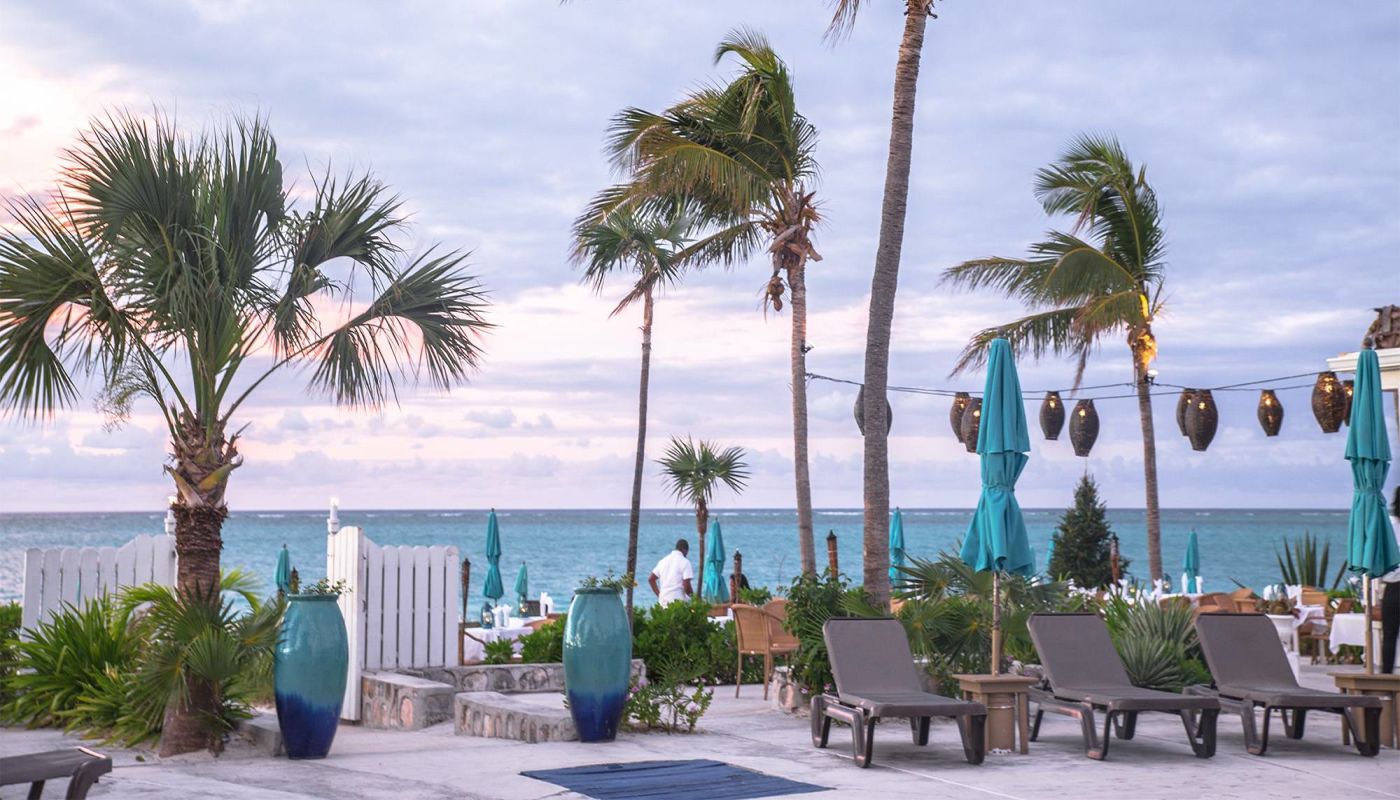
Landscape of Turks and Caicos Islands
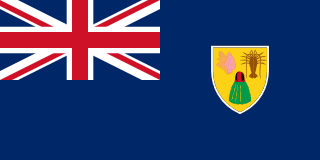
Flag of Turks and Caicos Islands

Turks and Caicos Islands

North America

The British Overseas Territories (BOT’s) are a remnant of the once world-dominant British Empire. Some have no permanent inhabitants, while others are almost completely self-sustaining. Most BOT residents are British citizens, although each island has its own unique constitution and legal relationship to the UK. The UK is responsible for defense and foreign relations of all the BOT’s.1 These territories include, but are not limited to: Bermuda, British Virgin Islands, Gibraltar, St. Helena, South Georgia, Pitcairn Islands, Turks and Caicos Islands, Montserrat, St. Kitts and Nevis, and the British Indian Ocean Territory. The islands of Bermuda, Turks and Caicos, Montserrat, St. Kitts and Nevis, and the British Virgin Islands are part of the Caribbean island chain known as the West Indies. Natives mainly speak a creole language that is a mix of English and African languages.2 1http://www.telegraph.co.uk/news/wikileaks-files/london-wikileaks/8305236/A-GUIDE-TO-THE-BRITISH-OVERSEAS-TERRITORIES.html 2ttps://www.britannica.com/place/West-Indies-island-group-Atlantic-Ocean

What would you like to learn about in Turks and Caicos Islands?

Select a section to explore the country where nonprofits are creating positive change.

About Turks and Caicos Islands

The British Overseas Territories (BOT’s) are a remnant of the once world-dominant British Empire. Some have no permanent inhabitants, while others are almost completely self-sustaining. Most BOT residents are British citizens, although each island has its own unique constitution and legal relationship to the UK. The UK is responsible for defense and foreign relations of all the BOT’s.1 These territories include, but are not limited to: Bermuda, British Virgin Islands, Gibraltar, St. Helena, South Georgia, Pitcairn Islands, Turks and Caicos Islands, Montserrat, St. Kitts and Nevis, and the British Indian Ocean Territory. The islands of Bermuda, Turks and Caicos, Montserrat, St. Kitts and Nevis, and the British Virgin Islands are part of the Caribbean island chain known as the West Indies. Natives mainly speak a creole language that is a mix of English and African languages.2 1http://www.telegraph.co.uk/news/wikileaks-files/london-wikileaks/8305236/A-GUIDE-TO-THE-BRITISH-OVERSEAS-TERRITORIES.html 2ttps://www.britannica.com/place/West-Indies-island-group-Atlantic-Ocean

Causes in Turks and Caicos Islands

Environment

The British West Indies have a tropical maritime climate. The forests were depleted hundreds of years ago by sugarcane plantation owners making room to create more farmable land. Some islands have mountainous terrain while others are lower in elevation, so plant life varies based on the terrain.1 Turks and Caicos Islands are a group of islands near the Bahamas. The Turks and Caicos groups are separated from each other by a 22-mile long, 7,000 feet deep marine trench called “the Wall”. Both sections are low-lying islands formed by reefs. Among the driest islands in the Caribbean, Turks and Caicos are home to many desert-like plants.2

Family

The ethnicity of the islanders is quite heterogeneous because of the history of slave labor on the islands. Citizens have a mix of African, Spanish, French, British, and Dutch heritage. Their culture and language is a mix of British and Native American tradition.1

Human Rights

Since the islands are a British territory, residents enjoy the rights of British citizenship, including free speech and fair trial.1 As a result of new legislation in 2011, the British Caribbean islands have taken measures to improve human rights, especially in the area of gender discrimination.2

Education

Primary education in the British Caribbean Islands is free and compulsory from the average ages of 5-16. Schools follow a traditional British model of education, although changes are being made to integrate vocational skills into curriculum. The majority of the population is literate.1,2

Poverty

Poverty levels, along with the rest of the economy of many Caribbean islands, can change according to the ebb and flow of the tourism industry. Declines in tourism affect the national economy and individual’s livelihoods.1

Religion

All the islands enjoy religious freedom under British rule. The majority religion in English territories is Protestantism, with different countries varying between Christian denominations.1

Clean Water

Clean water is a difficulty for many Caribbean islands that don’t have fresh water sources. Besides distilling seawater, another option is to harvest rainwater.1 As the driest islands in the Bahamas, Turks and Caicos islands especially face a short supply of clean drinking water.1

Economy

The majority of the economy in the British Caribbean islands comes from tourism and agriculture.1 Turks and Caicos underwent massive economic growth from 1980-2000 due to large foreign investment and commercial land development. It’s also a center for offshore banking because it has no income or company tax.2

Government

For all British Overseas Territories, the British monarch is the head of state and is represented by an appointed governor. Both Montserrat and Turks and Caicos implemented a new constitution in 2011 that included an executive branch, led by a premier, and a legislative council.1

Health

Along with many other Caribbean islands, the main health problems in the British West Indies are those associated with the supply and improvement of drinking water and with the disposal of sewage. Dense populations are also linked to inadequate numbers of medical personnel to meet basic health needs.1

Children

Labor laws prevent children under age 13 from entering the workforce. Children also have access to free public school up until age 16, where they receive academic and vocational training.1

Animals

The West Indies British islands are home to tropical birds like flamingos and parrots, along with numerous species of bats and lizards. There is a diverse variety of marine life, although many species are endangered due to improper care and conservation.1

Nonprofits Working in Turks and Caicos Islands

Discover organizations making a difference in Turks and Caicos Islands

Make Your Impact Today

Discover causes you care about and support the nonprofits making a difference in communities around the world.

Are you a nonprofit? Join Project World Impact for free

Join Us Free