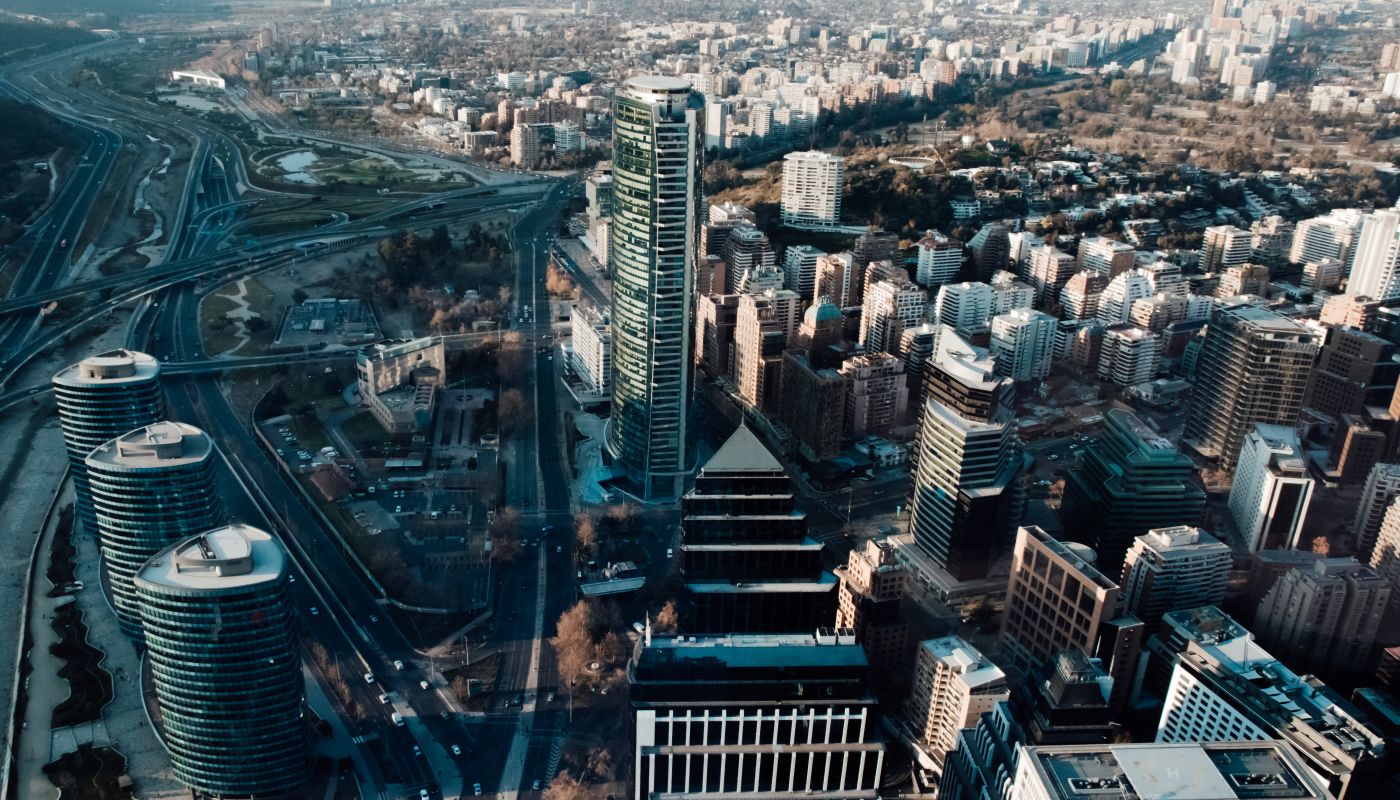
Landscape of Chile
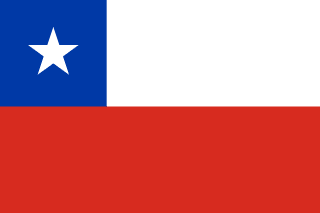
Flag of Chile

Chile

South America

Chile’s history involves occupation and dictatorships, and the country only adopted its current democratic system in 1990 after the overthrow of General Augusto Pinochet. Recent policy-making has allowed for significant economic and educational improvements. Student protests across campuses nationwide led to education reform in 2016, and recent operations have encouraged a greater spread of wealth across the population. Chile has one of the greatest income inequalities in the world.1 1 https://www.cia.gov/library/publications/the-world-factbook/geos/ci.html

What would you like to learn about in Chile?

Select a section to explore the country where nonprofits are creating positive change.

About Chile

Prior to the arrival of the Spanish in the 16th century, the Inca ruled northern Chile while the Mapuche inhabited central and southern Chile. Although Chile declared its independence in 1810, decisive victory over the Spanish was not achieved until 1818. In the War of the Pacific (1879-83), Chile defeated Peru and Bolivia and won its present northern regions. It was not until the 1880s that the Mapuche were brought under central government control. After a series of elected governments, the three-year-old Marxist government of Salvador ALLENDE was overthrown in 1973 by a military coup led by Augusto PINOCHET, who ruled until a freely elected president was inaugurated in 1990. Sound economic policies, maintained consistently since the 1980s, have contributed to steady growth, reduced poverty rates by over half, and have helped secure the country's commitment to democratic and representative government. Chile has increasingly assumed regional and international leadership roles befitting its status as a stable, democratic nation.

Quick Facts

Population
17,216,945 (July 2013 est.)
Area
756,102 sq km
ISO Code
CL
Continent
South America
Government
republic
Active Causes
12
View all countries in South America

Geography & Environment

Climate

temperate; desert in north; Mediterranean in central region; cool and damp in south

Terrain

low coastal mountains; fertile central valley; rugged Andes in east

Natural Resources

copper, timber, iron ore, nitrates, precious metals, molybdenum, hydropower

Environmental Issues

widespread deforestation and mining threaten natural resources; air pollution from industrial and vehicle emissions; water pollution from raw sewage

People & Society

78.27 years
Avg. Life Expectancy
98.6%
Literacy Rate
89% of total population (2010)
Total Urban Population

Languages

Spanish (official), Mapudungun, German, English

Religions

Roman Catholic 70%, Evangelical 15.1%, Jehovah's Witnesses 1.1%, other Christian 1%, other 4.6%, none 8.3% (2002 census)

Health Expenditure

8% of GDP (2010) of GDP

Education Expenditure

4.2% of GDP (2010) of GDP

Economy

$18,700
GDP per Capita (PPP)
6.4%
Unemployment Rate
15.1% (2009 est.)
Below Poverty Line

Economic Overview

Chile has a market-oriented economy characterized by a high level of foreign trade and a reputation for strong financial institutions and sound policy that have given it the strongest sovereign bond rating in South America. Exports account for approximately one-third of GDP, with commodities making up some three-quarters of total exports. Copper alone provides 19% of government revenue. From 2003 through 2012, real growth averaged almost 5% per year, despite the slight contraction in 2009 that resulted from the global financial crisis. Chile deepened its longstanding commitment to trade libera...

Causes in Chile

Environment

The Chilean government began a ten year initiative in 2016 to clear the air of Santiago, one its most air polluted cities. The plan is projected to cost about $1 billion, and will reduce air pollution by 60 percent by tightening car emission requirements and banning the burning of firewood within city limits.1 The country also had to contain extensive wildfires in early 2017. 337,000 acres of forest were burned, and 600 people were evacuated from their homes.2

Family

Chile has one of the highest rates of domestic violence in Latin America, as well as a high rate of domestic violence against children. In 2013, there were 760 instances of domestic violence per 100,000 people.1 Abortion is also a criminal offense in Chile, and women who attempted unsafe abortions were reported to the authorities and risked criminal charges. In 2016, the Senate approved abortions for cases in which the mother’s life was threatened, including rape, but also removed the prohibition of doctors reporting women who sought such services.2

Human Rights

There are multiple reports of police violence against children, women, and journalists. A new law in 2016 mandated that cases of police violence will no longer be tried in military courts. The country finally banned torture in the government after being scrutinized for lack of participation in the Optional Protocol to the UN Convention against Torture.1 Courts continue to deal with punishment of officers who committed egregious crimes during the time of Augusto Pinochet’s dictatorship. Certain prisons are operating at 200 percent of capacity. The National Human Rights Institute filed multiple lawsuits in an attempt to bring poor prison conditions to the attention of the public.1

Education

Education is compulsory for 13 years beginning at age six. The primary grades have compulsory classes in the English language. There are public schools and private schools that receive government subsidies.1 Education reform has been at the center of many campaigns in the country for recent elections, instigated by student-led protests on campuses nationwide. Students were protesting the unavoidable educational separation that resulted from the ability of certain families to send their children to subsidized private schools.2 Since the early 1990s, the country has worked to make significant educational reforms to provide equal and quality education for its students. The government also provides nutritional food rations for students in need.3

Poverty

Chile’s national poverty rate is at 14 percent. 7 percent of the population is unemployed. The poverty level is highest among rural and indigenous populations.1 In comparison with other nations, Chile has one of the highest levels of income inequality. Overall, poverty levels have declined since the 1990s, but the risk of falling into poverty remains very high because a significant portion of income is subject to intense fluctuations. These fluctuations are attributed to the volatile agriculture industry.3

Religion

Approximately 67 percent of Chile’s population identifies as Roman Catholic and 16 percent identify as Protestant. Roughly 5 percent of the population is made up of various other religious demographics, and 11 percent are non-religious. The country’s constitution provides for the freedom of religion and this is generally well-respected by the government.1

Clean Water

Nearly all of Chileans have access to improved water and sanitation sources in rural areas.1 The local water resources have been threatened recently by excessive mining and draining of natural resources.2 Chile also provides subsidies for impoverished families to assist them in accessing clean water. Chile recently implemented a method of providing water from fog to provide another source of potable water for citizens.3

Economy

There is little government corruption, which has kept the public debt at 25 percent of the GDP. Chile is a member of the Trans-Pacific Partnership.1 Main exports include copper, fish products, and fruit, while imports are dominated by petroleum, chemicals, and industrial machinery. Chile’s main trade partners are China, the US, Brazil, and Japan. The unemployment rate in Chile is 7 percent, and 15 percent of the population live below the poverty line.2

Government

The Republic of Chile is a presidential republic. During the past decade, the government of Chile has passed many influential anti-corruption laws.1 Within Latin America, Chile is considered to have one of the strongest, most stable political systems.2 Transparency International ranks the country 24th out of 176 for corruption, and the Chilean public scores the government 66th out of 100.3

Health

Chile’s infant mortality rate is 7 deaths per 1,000 live births, while the maternal mortality rate is 22 deaths per 100,000 live births. The average life expectancy in Chile is currently 79 years of age. Roughly 61,000 people in Chile are currently living with HIV/AIDS, and 28 percent of adults in the country are obese. The government spends approximately 5 percent of the GDP on healthcare.1 One of the main issues facing the health sector is the migration of doctors to more lucrative jobs, such as specialized practices in urban areas, instead of family medicine in rural areas. This issue has been exacerbated by the widespread income disparity between the richest and poorest members of society.2

Children

Commercial exploitation of children for labor and sexual abuse is an issue the Chilean government is currently battling. Child labor is commonly seen in the lucrative drug industry. There are also reports of police using violent force against children.1 Children who come from poverty stricken families often do not have adequate access to social services like healthcare and education. In rural areas, children often receive only 4-5 years of education and many children between ages 5 and 15 are required to work to help provide for their families.2

Animals

Chile has a unique environmental setting due to its seclusion caused by the natural land border of the Andes Mountains. 50 percent of the floral species found in the country are endemic to Chile. The forests are home to the world’s smallest deer species, as well as the magellanic woodpecker and the mountain monkey. The coastal waters have blue whales and great white sharks. These species are threatened by extensive logging and unsustainable conversion of habitat areas into tree farms. Marine life is threatened by overfishing and fish farming.1

Nonprofits Working in Chile

Discover organizations making a difference in Chile

Make Your Impact Today

Discover causes you care about and support the nonprofits making a difference in communities around the world.

Are you a nonprofit? Join Project World Impact for free

Join Us Free