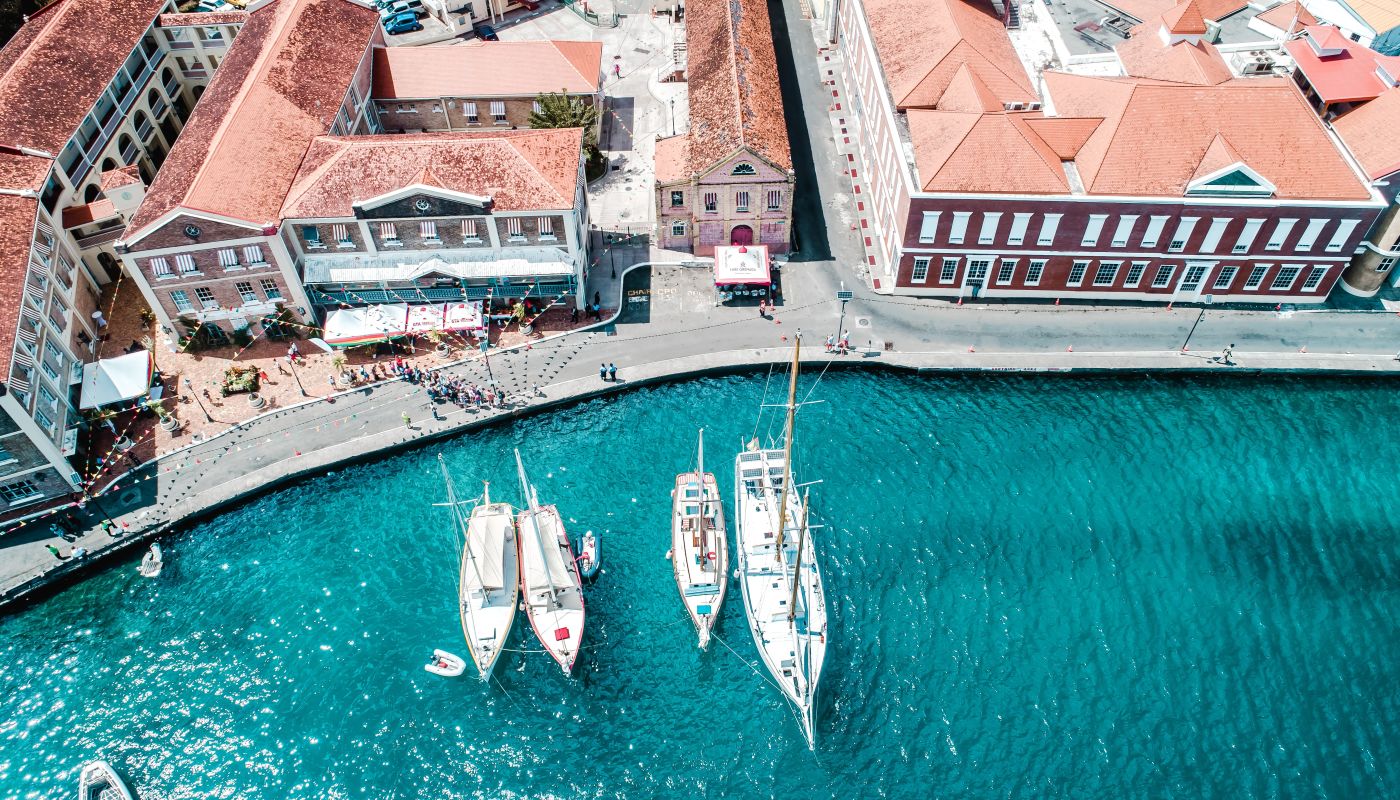
Landscape of Grenada
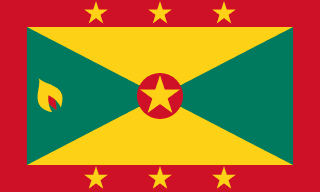
Flag of Grenada

Grenada

North America

Grenada has always been a highly agriculture-focused country. Cacao and nutmeg became the leading crops after decades of exporting mainly sugar. The Grenadian government maintains close ties to neighboring islands such as Dominica and St. Lucia. One of the biggest difficulties facing the country is the devastation caused annually by the hurricane season. The weak infrastructure causes sewage to overflow into freshwater sources and creates many health problems.1 1 https://www.cia.gov/library/publications/the-world-factbook/geos/gj.html

What would you like to learn about in Grenada?

Select a section to explore the country where nonprofits are creating positive change.

About Grenada

Carib Indians inhabited Grenada when Christopher COLUMBUS discovered the island in 1498, but it remained uncolonized for more than a century. The French settled Grenada in the 17th century, established sugar estates, and imported large numbers of African slaves. Britain took the island in 1762 and vigorously expanded sugar production. In the 19th century, cacao eventually surpassed sugar as the main export crop; in the 20th century, nutmeg became the leading export. In 1967, Britain gave Grenada autonomy over its internal affairs. Full independence was attained in 1974 making Grenada one of the smallest independent countries in the Western Hemisphere. Grenada was seized by a Marxist military council on 19 October 1983. Six days later the island was invaded by US forces and those of six other Caribbean nations, which quickly captured the ringleaders and their hundreds of Cuban advisers. Free elections were reinstituted the following year and have continued since that time. Hurricane Ivan struck Grenada in September of 2004 causing severe damage.

Quick Facts

Population
109,590 (July 2013 est.)
Area
344 sq km
ISO Code
GD
Continent
North America
Government
parliamentary democracy and a Commonwealth realm
Active Causes
12
View all countries in North America

Geography & Environment

Climate

tropical; tempered by northeast trade winds

Terrain

volcanic in origin with central mountains

Natural Resources

timber, tropical fruit, deepwater harbors

Environmental Issues

NA

People & Society

73.55 years
Avg. Life Expectancy
96%
Literacy Rate
39% of total population (2010)
Total Urban Population

Languages

English (official), French patois

Religions

Roman Catholic 53%, Anglican 13.8%, other Protestant 33.2%

Health Expenditure

5.9% of GDP (2010) of GDP

Education Expenditure

3.9% of GDP (2003) of GDP

Economy

$13,900
GDP per Capita (PPP)
25%
Unemployment Rate
38% (2008)
Below Poverty Line

Economic Overview

Grenada relies on tourism as its main source of foreign exchange especially since the construction of an international airport in 1985. Hurricanes Ivan (2004) and Emily (2005) severely damaged the agricultural sector - particularly nutmeg and cocoa cultivation - which had been a key driver of economic growth. Grenada has rebounded from the devastating effects of the hurricanes but is now saddled with the debt burden from the rebuilding process. Public debt-to-GDP is nearly 110%, leaving the THOMAS administration limited room to engage in public investments and social spending. Strong performan...

Causes in Grenada

Environment

Grenada’s fragile climate is heavily influenced by hurricanes. Hurricane Irma in 2017 caused 1,000,000 gallons of raw sewage to leak into St. John’s river, and Hurricane Matthew caused nearly ten times that amount to be released in the previous year. The inability of the existing infrastructure to absorb the effects of extreme weather creates health hazards each time a hurricane hits.1

Human Rights

The political process of elections and policy making within the Grenadian government has typically been free and fair. The security forces that are present and active on the island are kept under control and are not typically the perpetrators of human rights violations. Other major human rights violations are deplorable prison conditions and gender based violence.1 There were 465 prisoners contained in a prison intended for 200 inmates in 2016. There is also a growing issue of open harassment and violence against the LGBT community.2

Economy

Tourism is the backbone of the Grenadian economy, along with exports of nutmeg and cocoa. The economy now carries a heavy public debt from the rebuilding of infrastructures after recent hurricanes. 70% of the labor force is employed in the service industry, and public debt is 84.4% of GDP.1 The Grenadian government is hoping that with the increased popularity of nutmeg in the world market, the economy will be able to experience growth while simultaneously increasing food security on the island. Small scale farmers of nutmeg and other spices have received financial support from the World Bank in order to purchase seeds and fertilizer.2

Government

Grenada is a parliamentary democracy and Commonwealth realm under the jurisdiction of the Queen of England. The island has had free and fair elections since 1983 after the successful US invasion of Grenada.1 Even though the government of Grenada is a part of the Inter-American Convention against Corruption, there are still widespread perceptions of corruption. Bribery is a serious accusation and government officials take allegations of bribery very seriously. Even so, there are recorded instances where citizens reported bribery in the bureaucracy.2 Transparency International ranks the country 46th out of 176 countries for perceived corruption. The citizens in Grenada score their government 56 out of 100 for corruption spread in the government.3

Health

The healthcare system of Grenada is ranked as one of the best in the Caribbean region. Primary health care and health care cost minimization are the main goals of the government.1 In the past five years, maternal and infant health has increased, and the amount of hospital attended births was universal. The leading cause of deaths were non communicable diseases such as heart disease and metabolic diseases. The island has a very low incidence rate of HIV/AIDS at 0.57%.2 The maternal mortality rate is 27 deaths per 100,000 live births, and infant mortality is 9.7 deaths per 1,000 live births. 21.3% of the adult population is obese.3

Children

The law in Grenada does not prohibit sexual exploitation or commercial trafficking of children, and there are few protections to prevent children from being used in the production or trafficking of drugs. The country signed on to the Regional Initiative to eliminate the worst forms of child labor by 2020. There is little to no research done that can specifically quantify child labor in Grenada.1 The poorest households are often single-parent households headed by women. Despite the high rates of poverty, the government has shown commitment towards enhancing child protection and welfare agencies that provide for children.2

Family

Rape and domestic violence are two of the main safety concerns for women and girls in Grenada. Domestic violence is prohibited by law, but in 2015 there were about 700 reported cases of domestic abuse, in comparison to 257 cases reported the year before. Children are subject to child marriage, sexual exploitation, and abduction.1

Education

School attendance is compulsory for children ages five to fourteen. There are 105 preschools, 77 public schools, and 59 private schools in Grenada. The Ministry of Education works with the neighboring Ministries of Education for Dominica, St. Lucia, and St. Vincent and the Grenadines to collectively better their education systems.1

Poverty

The unemployment rate in Grenada is 33.5%, and the labor force is nearly 60,000 people.1 Poverty is one of the country’s leading concerns; 13% of the population exceeds the poverty rating and falls into the category of extreme poverty. The main sectors upholding 90% of Grenada’s economy are agriculture and tourism, but the agricultural sector is failing due to financial insecurity of individual farmers.2

Religion

Around 50% of citizens are Protestant. 36% are Roman Catholic, 1.2% Jehovah’s Witness, and 1.2% Rastafarian. The rest of the population is either non-religious or unspecified.1 The law that guarantees the freedom of citizens to worship or believe what they wish is relatively well enforced.2

Clean Water

97% of the Grenadian population has access to improved drinking water; 98% have access to improved sanitation facilities.1 The country’s numerous rainfall-fed water sources keep the population from suffering from lack of water access. Some of the main concerns are pollutants and contamination of highly-used water sources.2

Animals

The Neotropical region that Grenada is a part of is home to the mongoose, agouti, pig, and the mona monkey. There are no more endemic species, all the animals in existence on the islands were brought in by American and Colonial settlers. Grenada has one protected area, the Grand Etang Forest Reserve. Threats to the forests on mountains in Grenada is The slowly improving infrastructure and repaving of roads, which provide easier access to the more remote parts of the island, also disturb the habitats of many species and threaten the forests on mountains in Grenada. Other threats include agricultural encroachment, hunting, and limited enforcement of wildlife and environmental legislation1

Nonprofits Working in Grenada

Discover organizations making a difference in Grenada

Make Your Impact Today

Discover causes you care about and support the nonprofits making a difference in communities around the world.

Are you a nonprofit? Join Project World Impact for free

Join Us Free