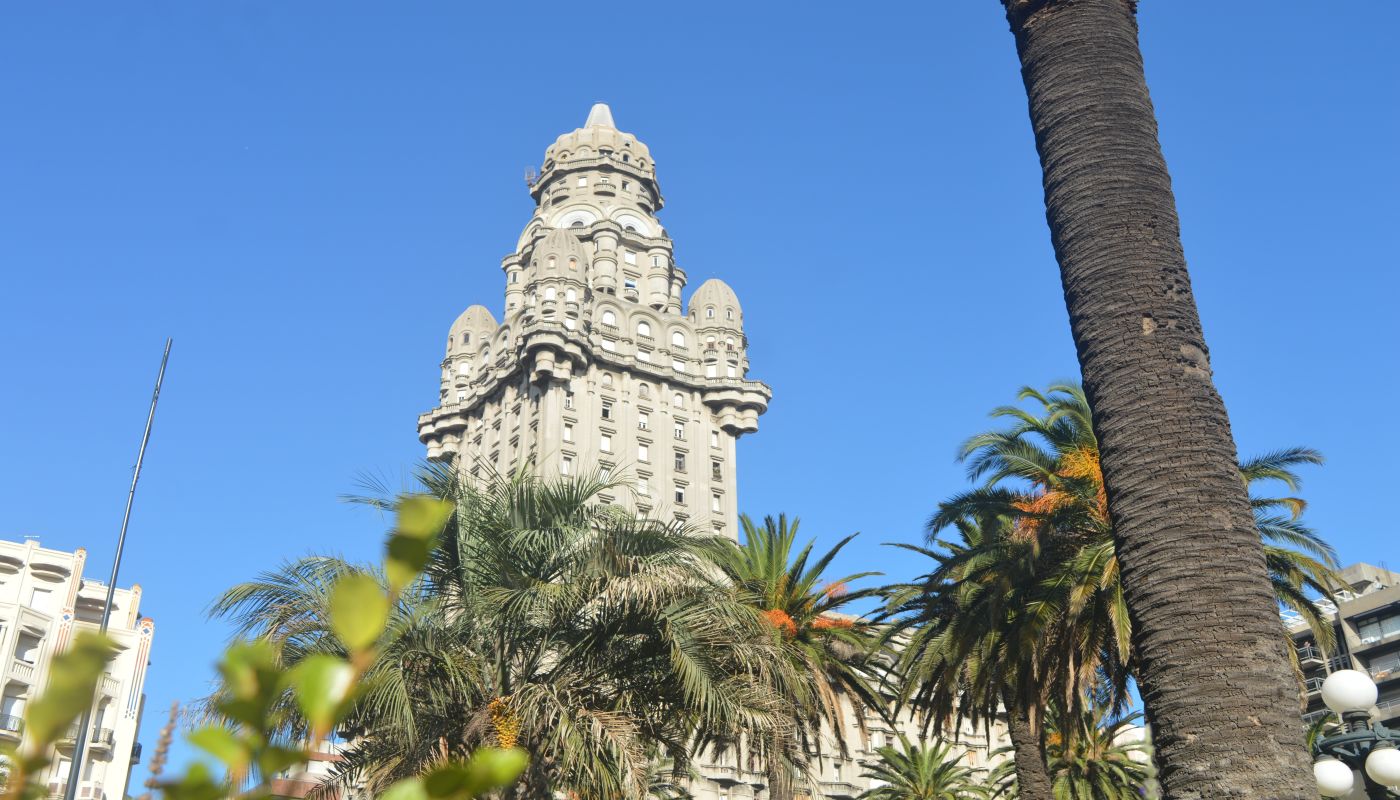
Landscape of Uruguay
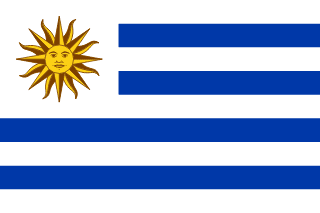
Flag of Uruguay

Uruguay

South America

Uruguay is a small South American country known as one of the most liberal countries in Latin America.1 Recent legislation has focused on improving human rights conditions and ending discrimination based on race and gender.2 The majority of the population has access to education, clean drinking water, and health care. Poverty is mainly an issue in rural areas of the country.3 1 https://www.cia.gov/library/publications/the-world-factbook/geos/uy.html 2 http://www.state.gov/documents/organization/220687.pdf 3 http://web.worldbank.org/WBSITE/EXTERNAL/TOPICS/EXTPOVERTY/EXTPA/0,,contentMDK:20208459~menuPK:435735~pagePK:148956~piPK:216618~theSitePK:430367~isCURL:Y~isCURL:Y,00.htm

What would you like to learn about in Uruguay?

Select a section to explore the country where nonprofits are creating positive change.

About Uruguay

Montevideo, founded by the Spanish in 1726 as a military stronghold, soon took advantage of its natural harbor to become an important commercial center. Claimed by Argentina but annexed by Brazil in 1821, Uruguay declared its independence four years later and secured its freedom in 1828 after a three-year struggle. The administrations of President Jose BATLLE in the early 20th century established widespread political, social, and economic reforms that established a statist tradition. A violent Marxist urban guerrilla movement named the Tupamaros, launched in the late 1960s, led Uruguay's president to cede control of the government to the military in 1973. By yearend, the rebels had been crushed, but the military continued to expand its hold over the government. Civilian rule was not restored until 1985. In 2004, the left-of-center Frente Amplio Coalition won national elections that effectively ended 170 years of political control previously held by the Colorado and Blanco parties. Uruguay's political and labor conditions are among the freest on the continent.

Quick Facts

Population
3,324,460 (July 2013 est.)
Area
176,215 sq km
ISO Code
UY
Continent
South America
Government
constitutional republic
Active Causes
12
View all countries in South America

Geography & Environment

Climate

warm temperate; freezing temperatures almost unknown

Terrain

mostly rolling plains and low hills; fertile coastal lowland

Natural Resources

arable land, hydropower, minor minerals, fish

Environmental Issues

water pollution from meat packing/tannery industry; inadequate solid/hazardous waste disposal

People & Society

76.61 years
Avg. Life Expectancy
98.1%
Literacy Rate
92% of total population (2010)
Total Urban Population

Languages

Spanish (official), Portunol, Brazilero (Portuguese-Spanish mix on the Brazilian frontier)

Religions

Roman Catholic 47.1%, non-Catholic Christians 11.1%, nondenominational 23.2%, Jewish 0.3%, atheist or agnostic 17.2%, other 1.1% (2006)

Health Expenditure

8.4% of GDP (2010) of GDP

Education Expenditure

2.9% of GDP (2006) of GDP

Economy

$16,200
GDP per Capita (PPP)
6.1%
Unemployment Rate
18.6% (2010 est.)
Below Poverty Line

Economic Overview

Uruguay has a free market economy characterized by an export-oriented agricultural sector, a well-educated work force, and high levels of social spending. Following financial difficulties in the late 1990s and early 2000s, economic growth for Uruguay averaged 8% annually during the period 2004-08. The 2008-09 global financial crisis put a brake on Uruguay's vigorous growth, which decelerated to 2.6% in 2009. Nevertheless, the country managed to avoid a recession and keep positive growth rates, mainly through higher public expenditure and investment, and GDP growth reached 8.9% in 2010 but fell...

Causes in Uruguay

Environment

With an economy based on agricultural exports, Uruguay is very vulnerable to the effects of climate change. Small-scale rural farm production suffers the most. In recent years, the average temperatures across Uruguay have risen three degrees Celsius. The rising temperatures have caused an increase in both the frequency and the intensity of floods and droughts. The estimated economic losses in the agricultural sector from climate change were anywhere from $750 million USD to $1 billion USD. To help ease the severity of the effects, Uruguay has developed the National Agricultural Information System in order to consolidate all information that would help farmers plan for their crops.1 The Uruguayan government purchased around $450 million worth of climate insurance that is intended to protect the economy from the negative effects of droughts and rising oil prices. The insurance is incredibly critical in Uruguay, since the majority of their power comes from hydraulics and, if the water levels are low, the only option left is fossil fuels.2 From 2015-2017, hundreds of thousands of people in Uruguay were affected by heavy flooding.3

Family

In 2012, Uruguay passed a law that allowed women to have access to abortion services, making it legal for a woman to have an abortion within the first trimester. This law is very liberal in comparison to Uruguay’s Latin American counterparts.1 In 2015, Uruguay passed a bill that aimed to reduce the amount of gender-based violence and crimes against youth and disabled people.2

Human Rights

Uruguay has a generally good record of human rights. In 2013, the country approved an act to legalize same-sex marriages.1 Human rights abuses came about through the overcrowding and harsh prison conditions. Investigations also found that disabled and institutionalized children were abused and their care was not monitored by the government. In 2016, the government passed legislation that aimed to protect victims of gender violence and offer them access to justice.2

Education

Education is free and compulsory for children ages 6-11 in Uruguay.1 One of the most pressing concerns regarding Uruguay’s education system is the high rate of dropouts and the high number of students who are required to repeat their secondary education.2 The high rate of secondary school drop outs is a result of structural issues within the school system. Approximately 44% of all secondary school students do not receive high enough grades to pass onto the university level. In urban areas of Uruguay, only 38% of secondary school students continue onto university.3 The national literacy rate is at 98%.4

Poverty

Around 18.6% of the Uruguayan population lives below the international poverty line. Uruguay has a well-developed social welfare and social services sector that has done an excellent job in helping those in need.1 Rural areas have the highest poverty levels in Uruguay.2 There are also high numbers of children that are born into poverty stricken households. 24% of Uruguay’s children are born into poverty each year.3

Religion

The religious population of Uruguay is approximately 47% Catholic, 11% non-Catholic Christian, 23% nondenominational, 0.3% Jewish, 17% Atheist or Agnostic, and 1.1% other.1 The constitution provides for religious freedom and does not allow discrimination based on religion.2

Clean Water

Overall, Uruguay has provided its citizens with a wealth of clean water. 99% of the population has access to clean drinking water and 96% of the population has access to improved sanitation infrastructure.1 Uruguay is one of the only countries in Latin America and the Caribbean where this level of clean water access has been achieved. The challenges remaining are reducing the amount of water that is wasted and increasing the wastewater treatment plants coverage and sanitation services. The other issue with water management in Uruguay is fighting the fraud and theft of water services. The water service, OSE, has decided to launch investigations into neighborhoods that appear to be siphoning off water without paying for it.2 Increased use of fertilizers in agriculture has contributed to contamination of groundwater sources. 3

Economy

The free market economy that Uruguay has cultivated is based on their exports from the agricultural sector, the high level of education that the workforce possesses, and the high amounts of spending in the social sector. Their strong economy weathered the global economic crisis exceptionally well and it did not fall into a recession. Uruguay has a strong trade relationship with Argentina and Brazil.1 Exports are responsible for the majority of the country’s GDP. The advanced degree of economic growth can be attributed to the favorable government policies that encourage global trade and foreign investments. Uruguay is considered the least corrupt country in Latin America. 2 The unemployment rate is at 7.1% and 10% of the population lives below the poverty line.1

Government

Uruguay is a constitutional republic that has a president as the head of state and the chief of government.1 It ranks as the least corrupt country in Latin America, with an economy relatively free of restrictions and a transparent judicial system. There are transparency laws in place that criminalize abuses of power of government officials.2

Health

The leading causes of death in Uruguay are diseases having to do with the circulatory system, cancer, and accidents. The majority of Uruguay’s population is aging, and deaths by chronic, non-communicable disease are the most prevalent and take up the most government resources.1 Health care is guaranteed in the constitution and it also guarantees that health care will be free of charge to indigenous people and those who cannot afford it.2

Children

Though the state of children and adolescent rights in Uruguay have improved in recent years, there are still issues that remain, such as the difficulty of accessing adequate education in poor regions, and the living conditions that children from lower socio-economic regions live in. For example, Uruguay has the highest level of inequity between child and adult poverty out of all countries in Latin America and the Caribbean. 20.4% of children are considered to be poor.1 6% of children aged 6-14 in Uruguay work in agriculture, industry, or other services. In 2015, Uruguay passed legislation in an attempt to reduce the amount of children working in sexual exploitation and garbage scavenging.2

Animals

The Uruguayan government designated over 30 areas for wildlife protection, although over half of those have not been maintained and are in poor condition.1 A variety of small mammals, mainly rodents, live in the country’s grasslands. The coastal waters attract a variety of marine life and migratory birds that feed on fish.2

Nonprofits Working in Uruguay

Discover organizations making a difference in Uruguay

Make Your Impact Today

Discover causes you care about and support the nonprofits making a difference in communities around the world.

Are you a nonprofit? Join Project World Impact for free

Join Us Free