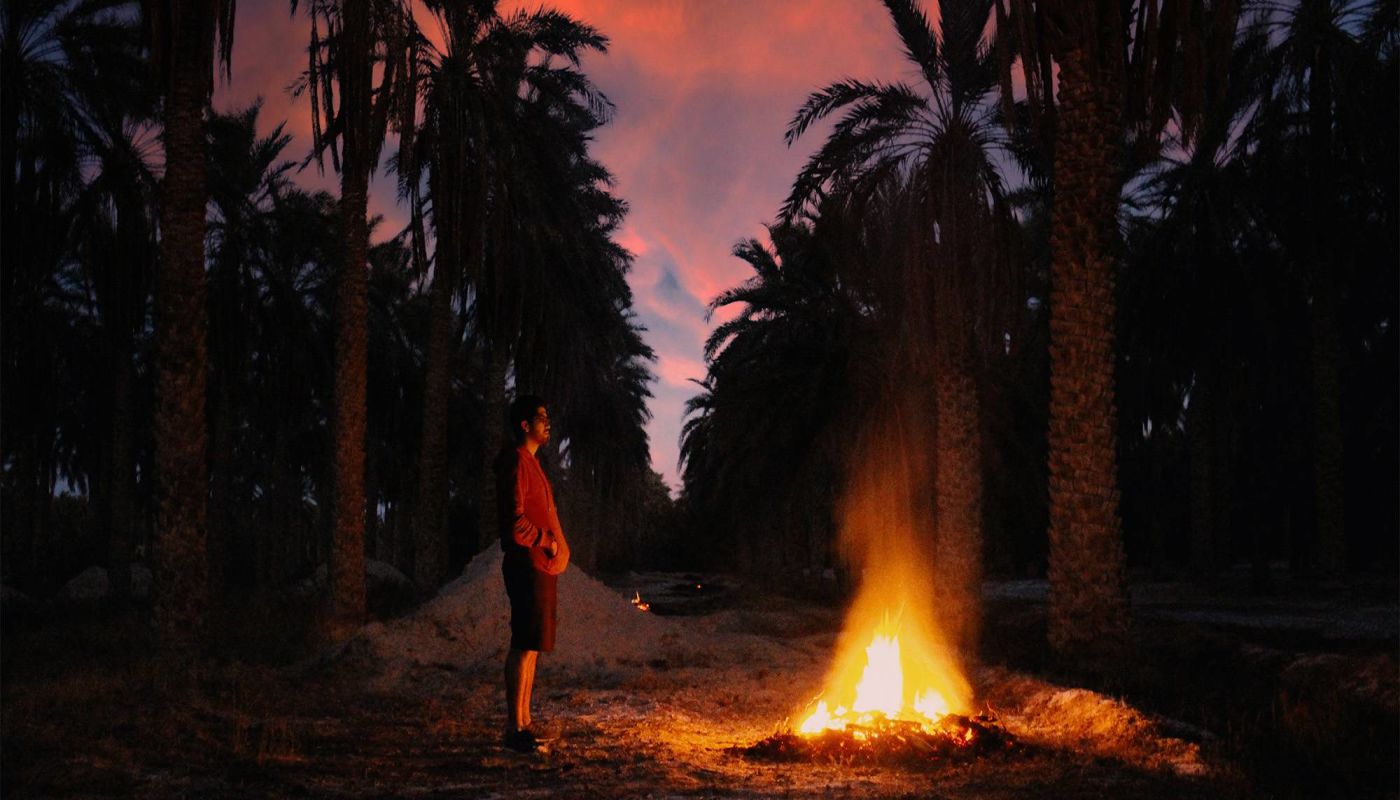
Landscape of Algeria
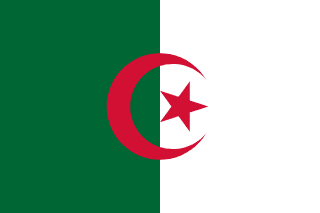
Flag of Algeria

Algeria

Africa

Algeria has a tumultuous political past, but since the early 2010s the economy and government have begun to stabilize. The education system has become stretched as the population growth rate increases and creates a youth-heavy population. Poverty and unemployment rates are high. In 2015, Algeria was one of the first countries in the region to pass legislation that criminalizes domestic violence and abuse. The government restricts many human rights, such as the freedom of speech, assembly, and the right to unionize.1 1 https://www.cia.gov/library/publications/the-world-factbook/geos/ag.html

What would you like to learn about in Algeria?

Select a section to explore the country where nonprofits are creating positive change.

About Algeria

After more than a century of rule by France, Algerians fought through much of the 1950s to achieve independence in 1962. Algeria's primary political party, the National Liberation Front (FLN), was established in 1954 as part of the struggle for independence and has largely dominated politics since. The Government of Algeria in 1988 instituted a multi-party system in response to public unrest, but the surprising first round success of the Islamic Salvation Front (FIS) in the December 1991 balloting led the Algerian army to intervene and postpone the second round of elections to prevent what the secular elite feared would be an extremist-led government from assuming power. The army began a crackdown on the FIS that spurred FIS supporters to begin attacking government targets. Fighting escalated into an insurgency, which saw intense violence from 1992-98, resulting in over 100,000 deaths - many attributed to indiscriminate massacres of villagers by extremists. The government gained the upper hand by the late-1990s, and FIS's armed wing, the Islamic Salvation Army, disbanded in January 2000. Abdelaziz BOUTEFLIKA, with the backing of the military, won the presidency in 1999 in an election widely viewed as fraudulent. He was reelected to a second term in 2004 and overwhelmingly won a third term in 2009, after the government amended the constitution in 2008 to remove presidential term limits. Longstanding problems continue to face BOUTEFLIKA, including large-scale unemployment, a shortage of housing, unreliable electrical and water supplies, government inefficiencies and corruption, and the continuing activities of extremist militants. The Salafist Group for Preaching and Combat (GSPC) in 2006 merged with al-Qa'ida to form al-Qa'ida in the Lands of the Islamic Maghreb, which has launched an ongoing series of kidnappings and bombings targeting the Algerian Government and Western interests. The government in 2011 introduced some political reforms in response to the Arab Spring, including lifting the 19-year-old state of emergency restrictions and increasing women's quotas for elected assemblies. Parliamentary elections in May 2012 and municipal and provincial elections in November 2012 saw continued dominance by the FLN, with Islamist opposition parties performing poorly. Political protest activity in the country remained low in 2012, but small, sometimes violent socioeconomic demonstrations by disparate groups continued to be a common occurrence. Parliament in 2013 is expected to revise the constitution.

Quick Facts

Population
38,087,812 (July 2013 est.)
Area
2,381,741 sq km
ISO Code
DZ
Continent
Africa
Government
republic
Active Causes
12
View all countries in Africa

Geography & Environment

Climate

arid to semiarid; mild, wet winters with hot, dry summers along coast; drier with cold winters and hot summers on high plateau; sirocco is a hot, dust/sand-laden wind especially common in summer

Terrain

mostly high plateau and desert; some mountains; narrow, discontinuous coastal plain

Natural Resources

petroleum, natural gas, iron ore, phosphates, uranium, lead, zinc

Environmental Issues

soil erosion from overgrazing and other poor farming practices; desertification; dumping of raw sewage, petroleum refining wastes, and other industrial effluents is leading to the pollution of rivers...

People & Society

76.18 years
Avg. Life Expectancy
72.6%
Literacy Rate
73% of total population (2011)
Total Urban Population

Languages

Arabic (official), French (lingua franca), Berber dialects: Kabylie Berber (Tamazight), Chaouia Berber (Tachawit), Mzab Berber, Tuareg Berber (Tamahaq...

Religions

Sunni Muslim (state religion) 99%, Christian and Jewish 1%

Health Expenditure

4.2% of GDP (2010) of GDP

Education Expenditure

4.3% of GDP (2008) of GDP

Economy

$7,600
GDP per Capita (PPP)
10.2%
Unemployment Rate
23% (2006 est.)
Below Poverty Line

Economic Overview

Algeria's economy remains dominated by the state, a legacy of the country's socialist post-independence development model. In recent years the Algerian Government has halted the privatization of state-owned industries and imposed restrictions on imports and foreign involvement in its economy. Hydrocarbons have long been the backbone of the economy, accounting for roughly 60% of budget revenues, 30% of GDP, and over 95% of export earnings. Algeria has the 10th-largest reserves of natural gas in the world and is the sixth-largest gas exporter. It ranks 16th in oil reserves. Strong revenues from...

Causes in Algeria

Environment

Algeria deals with several environmental issues, which include soil erosion from poor farming practices, as well as desertification and deforestation. Algeria’s pollution of the Mediterranean Sea and irresponsible disposal of toxic waste and other pollutants from its oil industry have also led to concerns about clean water.1 Algeria’s farming land is threatened by expansion of the desert, which poses a threat to fertile land in the northern part of the country as it spreads. Additionally, earthquakes, mudslides and floods negatively affect the Algerian landscape and farming practices.2

Family

Family life in Algeria is governed by the Algerian Family Code, which was enacted in 1984. Largely based on traditional Islamic law, the code serves as the guiding set of principles and rights for Algerian families. Under the Family Code, the man is the head of the household and has primary parenting responsibilities.1 Also, marriage is still often arranged, and women are encouraged to limit social interactions with males that are not family members. Most women work in the home, but it is also common for women to work in the fields.2 Sexual and domestic abuse are also major problems for women in Algeria, and over 1,000 women report sexual attacks each year.3 The government is battling a culture of acceptance of domestic violence. Algeria is one of the first countries in the region to criminalize domestic violence, but the laws passed in 2015 have been criticized for being too vague and containing too many loopholes.4

Human Rights

The Algerian government restricts several human rights and has strong punishments to those who violate the restrictions. Some of the rights regularly under threat are freedoms of assembly, association, speech, and the right to unionize. Additionally, women’s rights and the rights of protesters and the media have been limited within Algeria.1 The government has reportedly prosecuted some activists with time served in prison, and unions are prevented from peaceful demonstrations, organizations and strikes. The state operates television and radio outlets, and will broadcast only the official party line on controversial issues.2 Human rights defenders often face unfair imprisonment and have restricted free speech rights. There has been no effort to combat the culture of impunity perpetuated by the authorities.3

Education

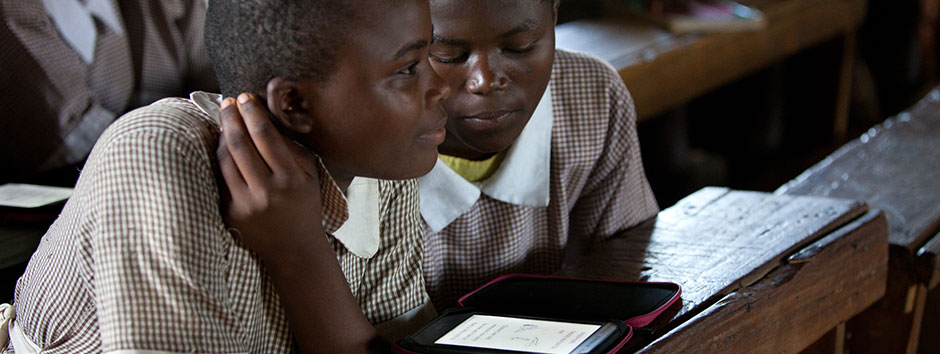
Founded by French colonists, the Algerian education system follows a similar system to France, with modifications. Although compulsory education is required of students aged 6-15 under Algerian law, only 50 percent of students who enroll in primary school continue to secondary school. There has been an increase in the national population growth rate, leading to classes with too many students and a shortage of teachers.1 Other discrepancies found in the education system are between boys’ and girls’ educational performance; girls’ school enrollment is typically lower than boys.2 Additionally, Algerian girls have lower literacy rates than their male peers.3

Poverty

Algeria has shown economic growth since it gained its independence from France and is now categorized as having an “upper middle class” average income level by the World Bank.1 The country still suffers from disparities in income, particularly between those living in urban and rural areas. Over 23 percent of the population lives below the national poverty line, with 11 percent of the population are unemployed. Years of conflict within the country have only served to worsen the problem, especially in rural areas. Once abundant resources have decreased, hindering local people’s livelihoods.2 Although measures have been taken to aid the economy, create jobs, and generate growth, infrastructure problems have slowed its progress.3

Religion

99 percent of the population is Sunni Muslim. Islam is the state religion.1 Islam has a large influence on many of the country’s legal systems and governing principles. There are also some Christians, Jews, and atheists, who make up the 1 percent of the population who do not identify as being Sunni.2 Proselytizing for a religion outside of Islam is considered a criminal offense that can mean up to three years in jail.3

Clean Water

Algerians have limited access to drinkable water, primarily due to contamination. The water is contaminated by both human and industrial waste. Piping systems that keep waste separate from clean water are rudimentary or nonexistent.1 Only 84 percent of the population currently has regular access to clean drinking water sources. 88 percent of the population has access to improved sanitation facilities.2

Economy

Algeria’s economy is primarily dependent on oil and natural gas.1 Informal transactions have historically impeded economic growth in the country. Furthermore, Algeria’s legal process discourages entrepreneurs and economic development, as it requires many procedures to be completed before a business can be created.2 Algeria’s main trade partners are China, France, Italy, and Spain. Exports include petroleum, natural gas, and other petroleum products. The country imports much of their capital goods and foodstuffs.3

Government

The People’s Democratic Republic of Algeria is a presidential republic. The president is the chief of state, and the prime minister is the head of government. There are more than 32 political parties in the country. The Algerian legal system is a mixture of French civil law as well as traditional Islamic laws.1 The country ranks 112th out of 180 countries on Transparency International’s Corruption Index. The Algerian public scores their public officials 33 out of a possible 100 for perceived corruption.2

Health

The average life expectancy in Algeria is 77 years. The maternal mortality rate is 140 deaths per 100,000 live births, and the infant mortality rate is 20 deaths per 1,000 live births. The government spends about 7 percent of the GDP on healthcare but there is only about one physician for every 1,000 people. 28 percent of the population is battling obesity.1 Algeria has a very young population, which has caused health care focus to shift to preventive medicine in smaller clinics. Most of the clinics and healthcare professionals are concentrated in the northern regions of the country, which has left the rural southern poor without adequate access to healthcare. Health risks include cholera and tuberculosis.2

Children

6.7 percent of children between the ages of six and 14 are working in Algeria. The US Department of Labor found that some children are involved in dangerous street jobs and commercial sexual exploitation. In 2016 the government initiated the National Authority of Child Protection and Promotion, as well as the National Committee for the Prevention of and Fight Against Trafficking in Persons.1 Algeria has a lower child marriage rate than other countries in the region.2

Animals

Algeria is part of the endangered Palearctic region, and is characterized by conifer and mixed forests. These habitats are home to the Maghrebian wild cat, red fox, common jackal, and Algerian hedgehog. Some of the forests have large butterfly populations. There is also a wide variety of tree species including oak and fir. The wildlife is threatened by overgrazing of nearby livestock, as well as deforestation, illegal logging operations, and wildfires caused by human activity.1

Nonprofits Working in Algeria

Discover organizations making a difference in Algeria

Make Your Impact Today

Discover causes you care about and support the nonprofits making a difference in communities around the world.

Are you a nonprofit? Join Project World Impact for free

Join Us Free