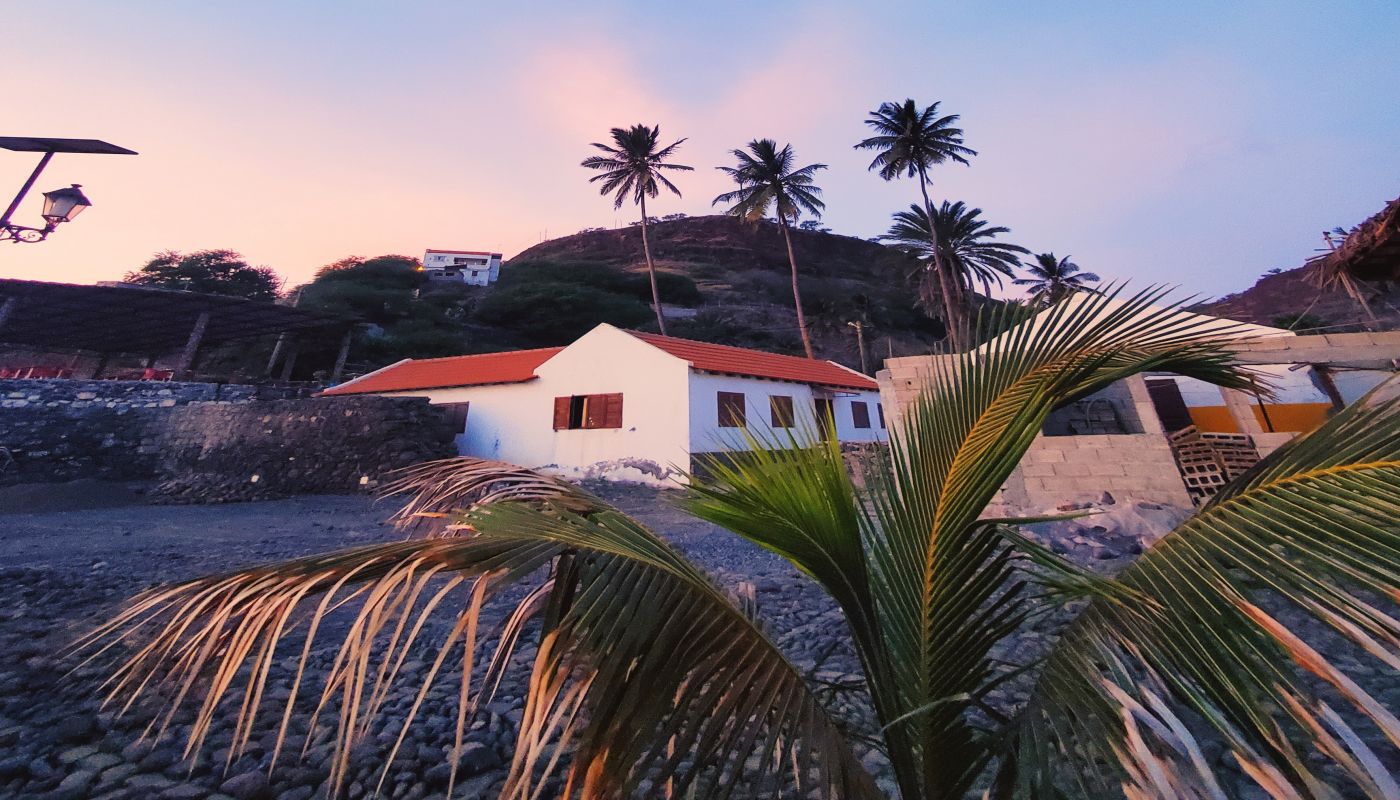
Landscape of Cabo Verde
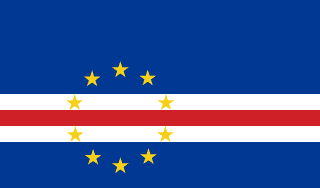
Flag of Cabo Verde

Cabo Verde

Africa

Cabo Verde is a parliamentary republic off the coast of western Africa with a president elected by popular vote and a prime minister appointed by the President.1 The nation was formerly a Portuguese province, and became a free republic in 1975 after fighting a war for its independence alongside Guinea-Bissau, which was seeking its own independence.2 18 percent of girls are married by age 18 in Cabo Verde.3 The Cabo Verdean climate is warm and dry.4 Historically, Cabo Verde has been known for its diverse variety of marine life. There are over 20 species of whales and porpoises, and 60 species of sharks and rays.5 The leading industries in Cabo Verde are fish processing, salt mining and ship repair.6 1 https://www.cia.gov/library/publications/the-world-factbook/geos/cv.html 2 https://www.everyculture.com/Bo-Co/Cape-Verde.html 3 https://www.girlsnotbrides.org/child-marriage/cape-verde/ 4 https://www.cia.gov/library/publications/the-world-factbook/geos/cv.html 5 https://www.fauna-flora.org/countries/cape-verde 6 https://www.cia.gov/library/publications/the-world-factbook/geos/cv.html

What would you like to learn about in Cabo Verde?

Select a section to explore the country where nonprofits are creating positive change.

About Cabo Verde

The uninhabited islands were discovered and colonized by the Portuguese in the 15th century; Cape Verde subsequently became a trading center for African slaves and later an important coaling and resupply stop for whaling and transatlantic shipping. Following independence in 1975, and a tentative interest in unification with Guinea-Bissau, a one-party system was established and maintained until multi-party elections were held in 1990. Cape Verde continues to exhibit one of Africa's most stable democratic governments. Repeated droughts during the second half of the 20th century caused significant hardship and prompted heavy emigration. As a result, Cape Verde's expatriate population is greater than its domestic one. Most Cape Verdeans have both African and Portuguese antecedents.

Quick Facts

Population
531,046 (July 2013 est.)
Area
4,033 sq km
ISO Code
CV
Continent
Africa
Government
republic
Active Causes
12
View all countries in Africa

Geography & Environment

Climate

temperate; warm, dry summer; precipitation meager and erratic

Terrain

steep, rugged, rocky, volcanic

Natural Resources

salt, basalt rock, limestone, kaolin, fish, clay, gypsum

Environmental Issues

soil erosion; deforestation due to demand for wood used as fuel; water shortages; desertification; environmental damage has threatened several species of birds and reptiles; illegal beach sand extract...

People & Society

71.28 years
Avg. Life Expectancy
84.9%
Literacy Rate
62.6% of total population (2011)
Total Urban Population

Languages

Portuguese (official), Crioulo (a blend of Portuguese and West African words)

Religions

Roman Catholic (infused with indigenous beliefs), Protestant (mostly Church of the Nazarene)

Health Expenditure

4.1% of GDP (2010) of GDP

Education Expenditure

5.6% of GDP (2010) of GDP

Economy

$4,200
GDP per Capita (PPP)
21%
Unemployment Rate
30% (2000)
Below Poverty Line

Economic Overview

The economy is service-oriented with commerce, transport, tourism, and public services accounting for about three-fourths of GDP. This island economy suffers from a poor natural resource base, including serious water shortages exacerbated by cycles of long-term drought and poor soil for agriculture on several of the islands. Although about 40% of the population lives in rural areas, the share of food production in GDP is low. About 82% of food must be imported. The fishing potential, mostly lobster and tuna, is not fully exploited. Cape Verde annually runs a high trade deficit financed by fore...

Causes in Cabo Verde

Environment

The Cabo Verdean climate is warm and dry. Deforestation and desertification are major environmental concerns in Cabo Verde due to the arid climate and the exploitation of already scarce natural resources.1 The nation is party to a number of international environmental agreements including ones on biodiversity, climate change, desertification, endangered species, environmental modification, hazardous wastes, law of the sea and marine dumping.2

Family

Half of the Cabo Verdean population is under the age of 24. The infant mortality rate is 21.9 deaths per 1,000 live births — one of the lowest rates in the region — and the maternal mortality rate is 42 deaths per 100,000 live births.1 In Cabo Verde, after four years of cohabitation couples are granted a common law marriage status.2 Homes are often multigenerational, and children are raised in households with many family members.3

Human Rights

Elections in Cabo Verde are perceived to be free and fair. The primary human rights concerns in the nation are violations committed by local security authorities — including the use of excessive force — human trafficking, poor prison conditions and lack of adequate child protection laws.1 Prisons often exceed their capacities; the Central Prison of Praia has a maximum occupancy of 880, but currently houses over 1,000 inmates.2 Sanitation facilities in prisons are cited to be inadequate and unsanitary. Mentally ill inmates do not receive proper care or attention.3

Education

Though the Cabo Verdean law dictates that 6 years of education are compulsory for students, fewer than half of all primary students go on to secondary school.1 The literacy rate in Cabo Verde is 86.8 percent.2 Education accounts for 5.4 percent of the GDP.3 Universities on the island are Jean Piaget University of Cape Verde and the University of Cape Verde.4

Poverty

24.2 percent of the population is below the poverty line,1 and 9 percent are unemployed.2 27.8 percent of the population lacks access to modern sanitation facilities, but just 8.3 percent of the population lacks access to an improved drinking water source.3 Cabo Verde’s emigration rates are high, and many are women traveling to be domestic workers in southern Europe.4

Religion

Around 77.3 of the Cabo Verdean population is Roman Catholic, 4.6 percent are Protestant and 3.4 percent are another Christian faith. 1.8 percent are Muslim, 1.3 percent are other and 10.8 percent claim none.1 Cabo Verdean law provides for the freedom of religion. However, the Catholic church is given privileges not given to other religious institutions.2

Clean Water

In Cabo Verde, 27.8 percent of the population lacks access to modern sanitation facilities, but just 8.3 percent of the population lacks access to an improved drinking water source.1 Though Cabo Verde is comprised of a series of islands, it is subject to inconsistent rains and long seasons of drought.2 As a result, it relies heavily on desalination to produce drinking water.3 The nation is party to international agreements on marine dumping and desertification.4

Economy

Cabo Verde’s GDP is $3.73 billion, and the GDP per capita is $6,900.1 The leading industries in Cabo Verde are fish processing, salt mining and ship repair.2 The unemployment rate is 9 percent.3 Trade is vital to the economy, and government debt continue to grow.4 24.2 percent of the population is below the poverty line.5 Agricultural products include bananas, corn, beans, sweet potatoes, sugarcane, coffee, peanuts and fish.6

Government

Cabo Verde is a parliamentary republic with a president elected by popular vote and a prime minister appointed by the president.1 The constitution of Cabo Verde was drafted in 1981, and the most recent revision was made in 2017.2 The government is known to be relatively stable, and promotes institutional transparency.3 Cabo Verde was formerly a Portuguese province, and became a free republic in 1975 after fighting a war for its independence alongside Guinea-Bissau, which was seeking its own independence.4

Health

The infant mortality rate is 21.9 deaths per 1,000 live births — one of the lowest rates in the region — and the maternal mortality rate is 42 deaths per 100,000 live births.1 27.8 percent of the population lacks access to modern sanitation facilities, but just 8.3 percent of the population lacks access to an improved drinking water source.2 2,400 people in Cabo Verde are living with AIDS, 0.6 percent of the national population, one of the higher rates of occurrences in the world.3 Access to health care facilities in Cabo Verde are limited. However, there are hospitals where patients can receive basic care in the capital of Praia and in the city of Mindelo. The health care system in Cabo Verde grants all citizens access to hospitals and clinics for free, and provides those same privileges to visitors from overseas.4 More serious health concerns often result in air evacuation.5

Children

18 percent of girls are married by age 18 in Cabo Verde.1 Cabo Verde does not currently have policies sufficient to achieve the elimination of human trafficking, include the trafficking of children. Law enforcement and the judicial system personnel have not received training in dealing with child trafficking cases, nor are officials given adequate protocol for identifying victims of trafficking and referring the victims to care and recovery resources.2 The infant mortality rate is 21.9 deaths per 1,000 live births.3

Animals

Historically, Cabo Verde has been known for its diverse variety of marine life. There are over 20 species of whales and porpoises, and 60 species of sharks and rays. Less than 1 percent of Cabo Verde’s marine life is protected, and 20 percent of the nation’s land species are endangered.1

Make Your Impact Today

Discover causes you care about and support the nonprofits making a difference in communities around the world.

Are you a nonprofit? Join Project World Impact for free

Join Us Free