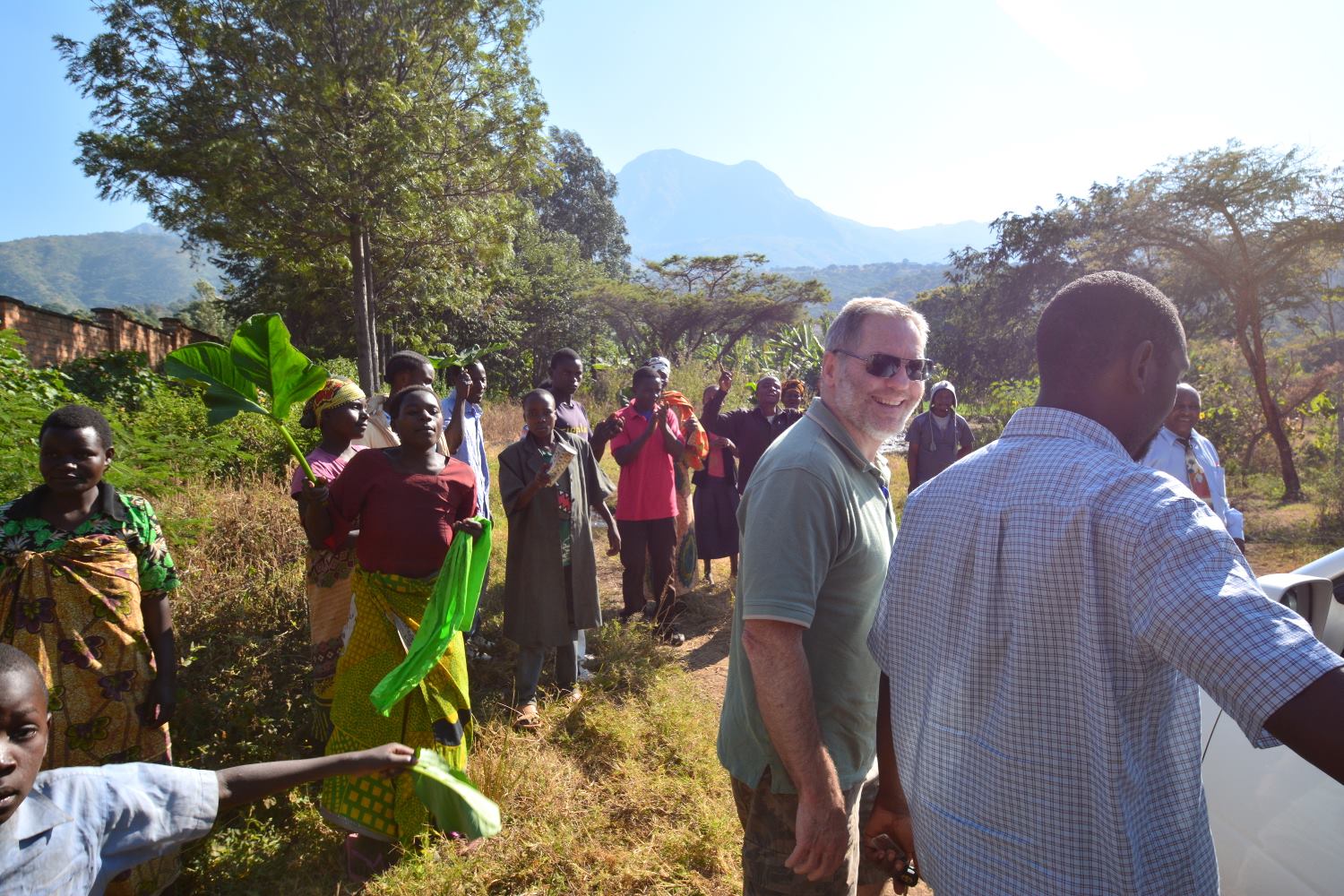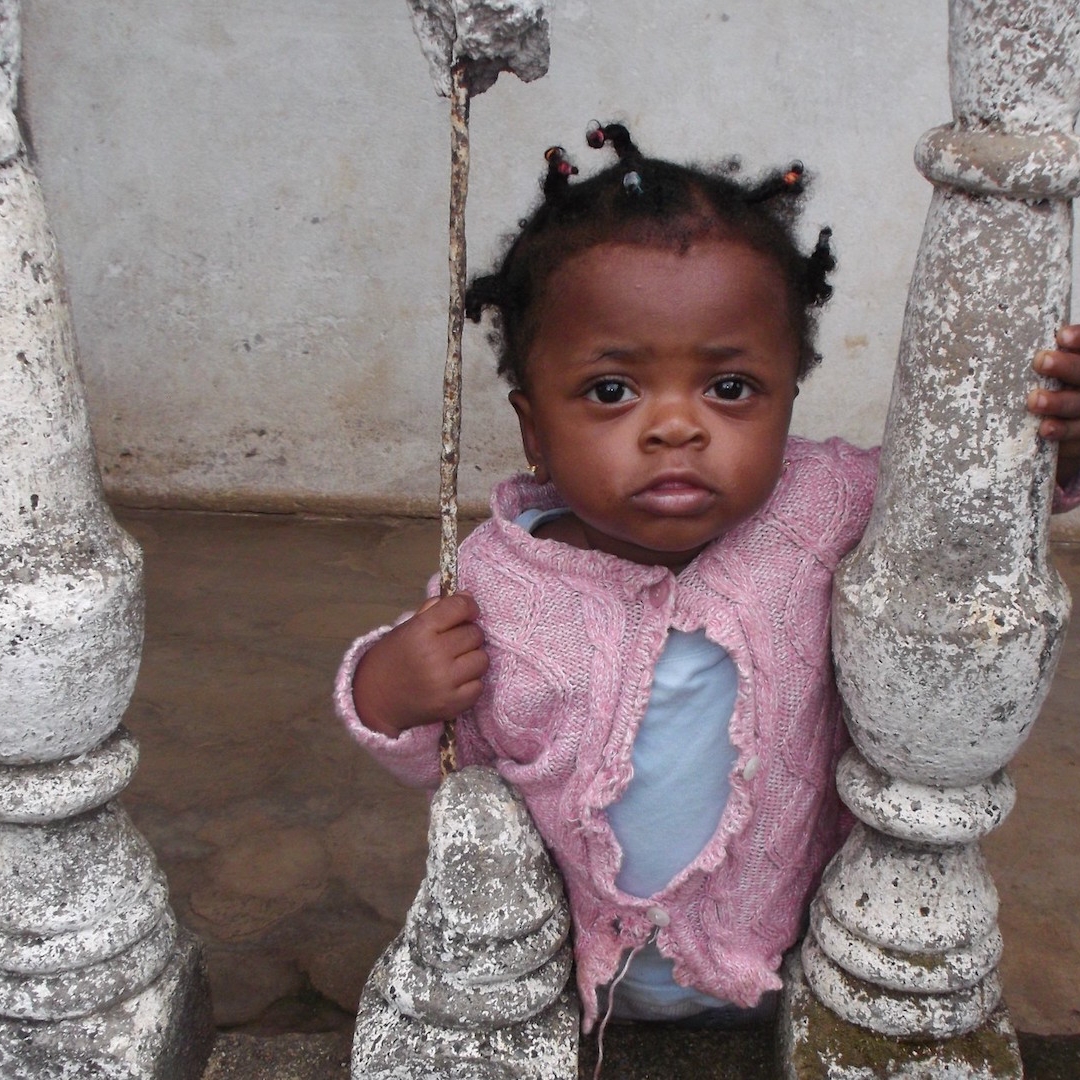
Landscape of Cameroon
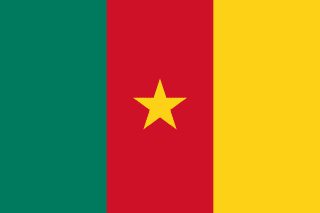
Flag of Cameroon

Cameroon

Africa

French Cameroon became independent in 1960. In 1961, British Cameroon elected to merge with the former French Cameroon to become the United Republic of Cameroon. The nation has been relatively stable.1 Cameroon is a presidential republic with both a president and prime minister. President Biya has been in power since 1982,2 and abolished presidential term limits in 2008. The northern region of Cameroon has been heavily affected by the violence of Boko Haram militants, particularly along the border with Nigeria.3 30 percent of the Cameroonian population currently lives below the national poverty line, as the GDP per capita is just $3,7004 With a wide array of geographical and ecological scapes, Cameroon is often called “Africa in miniature.”5 1 https://www.cia.gov/library/publications/the-world-factbook/geos/cm.html 2 https://www.cia.gov/library/publications/the-world-factbook/geos/cm.html 3 https://www.heritage.org/index/country/cameroon 4 Ibid 5 https://www.awf.org/country/cameroon

What would you like to learn about in Cameroon?

Select a section to explore the country where nonprofits are creating positive change.

About Cameroon

French Cameroon became independent in 1960 as the Republic of Cameroon. The following year the southern portion of neighboring British Cameroon voted to merge with the new country to form the Federal Republic of Cameroon. In 1972, a new constitution replaced the federation with a unitary state, the United Republic of Cameroon. The country has generally enjoyed stability, which has permitted the development of agriculture, roads, and railways, as well as a petroleum industry. Despite slow movement toward democratic reform, political power remains firmly in the hands of President Paul BIYA.

Quick Facts

Population
20,549,221 (July 2013 est.)
Area
475,440 sq km
ISO Code
CM
Continent
Africa
Government
republic; multiparty presidential regime
Active Causes
12
View all countries in Africa

Geography & Environment

Climate

varies with terrain, from tropical along coast to semiarid and hot in north

Terrain

diverse, with coastal plain in southwest, dissected plateau in center, mountains in west, plains in north

Natural Resources

petroleum, bauxite, iron ore, timber, hydropower

Environmental Issues

waterborne diseases are prevalent; deforestation; overgrazing; desertification; poaching; overfishing

People & Society

55.02 years
Avg. Life Expectancy
71.3%
Literacy Rate
52.1% of total population (2011)
Total Urban Population

Languages

24 major African language groups, English (official), French (official)

Religions

indigenous beliefs 40%, Christian 40%, Muslim 20%

Health Expenditure

5.1% of GDP (2010) of GDP

Education Expenditure

3.2% of GDP (2011) of GDP

Economy

$2,400
GDP per Capita (PPP)
30%
Unemployment Rate
48% (2000 est.)
Below Poverty Line

Economic Overview

Because of its modest oil resources and favorable agricultural conditions, Cameroon has one of the best-endowed primary commodity economies in sub-Saharan Africa. Still, it faces many of the serious problems confronting other underdeveloped countries, such as stagnant per capita income, a relatively inequitable distribution of income, a top-heavy civil service, endemic corruption, and a generally unfavorable climate for business enterprise. Since 1990, the government has embarked on various IMF and World Bank programs designed to spur business investment, increase efficiency in agriculture, im...

Causes in Cameroon

Environment

Leading environmental issues in Cameroon include deforestation and overgrazing — resulting in erosion, desertification, and reduced quality of pastureland — as well as poaching, overfishing and overhunting.1 The nation is party to environmental agreements on biodiversity, climate change, desertification, endangered species, hazardous wastes and whaling.2 Cameroon houses the tallest mountain in western Sub-Saharan Africa, Mount Cameroon, an active volcano that last erupted in 2000, also the most active volcano in that region.3

Family

The majority of families in Cameroon make their living through agriculture, raising cattle and growing a number of staple food crops.1 There are both monogamous and polygamous marriages practiced in Cameroon.2 The infant mortality rate in Cameroon is high, at 51 deaths per 1,000 live births, and the maternal mortality rate is extremely high, at 569 deaths per 100,000 lives births.3 The fertility rate is also high, with 4.64 children being born for every woman.4

Human Rights

Separatist forces have set fire to 58 schools in Anglophone regions of Cameroon since 2016, and have threatened to destroy more if schools continue to refuse the separatists’ orders to close.1 Violence is not limited to the separatists, government forces have also been known to abuse members of the Anglophone regions.2 The terrorist group Boko Haram is active in Cameroon, conducting approximately 120 attacks between summer of 2016 and 2017 alone.3 These attacks included suicide bombings, executions, abductions and recruitment of child soldiers.4 Over half of the population lacks access to modern sanitation facilities, and nearly a quarter of the population does not have access to a clean or improved drinking water source.5

Education

Education in Cameroon is compulsory until age 14 after six years are spent in the primary level. However, parents must pay for their child’s books and uniform, creating a disparity between the literacy rates of men and women.1 81.2 percent of men are literate, and 68.9 percent of women are literate.2 The average child is in school for a span of 12 years.3 Secondary education is divided into two systems, one modeled after the British system, the other modeled after the French. At the tertiary level, seven universities are taught in French — one is taught in English.3

Poverty

30 percent of the Cameroonian population currently lives below the national poverty line, and poverty is particularly on the rise in rural regions that lack infrastructure; the GDP per capita is just $3,7001 Additionally, over half of the population lacks access to modern sanitation facilities, and nearly a quarter of the population does not have access to a clean or improved drinking water source.2 14.8 percent of Cameroonian children under the age of five are underweight, and the infant mortality rate is 51 deaths per 1,000 live births.3

Religion

38.4 percent of the population identifies with the Roman Catholic faith, 26.3 percent identify as Protestant, 4.5 percent identify as Christian, 20.9 as Muslim, 5.6 as animist, 1 percent identify as another religion and 3.2 don’t identify with a belief.1 The terrorist group Boko Haram has persecuted and executed a number of Muslims and Christians, and destroyed the property of several religious institutions across Cameroon.2

Clean Water

24.4 percent of the population in Cameroon lacks access to clean drinking water, and 54.2 percent of the population lacks access to modern sanitation facilities.1 The risk of contracting waterborne diseases is high, particularly with bacterial and protozoal diarrhea and schistosomiasis.2

Economy

Cameroon’s economy is diverse, and market-based, and is centered around timber, oil, gas, agriculture and mining, with a GDP of $88.86 billion. The leading agricultural products include coffee, cocoa, cotton, rubber, bananas and cassava.1 40 percent of exports made in Cameroon are accounted for by oil. Despite this, Cameroon suffers from a low, static GDP per capita of just $3,700, and largely disparate distribution of income. The government subsidizes electricity, food and fuel. A large portion of national resources are directed toward large infrastructural renovations.2

Government

Cameroon is a presidential republic with both a president and prime minister. President Biya has been in power since 1982,1 and abolished presidential term limits in 2008.2 Transparency International gives Cameroon a low score of 25 on a scale of 100, reflecting low public trust in the government’s ability to curb corruption.3 Legal concerns often take years to settle.4 The northern region of Cameroon has been heavily affected by the violence of Boko Haram militants, particularly along the border with Nigeria.5

Health

14.8 percent of Cameroonian children under the age of five are underweight, and the risk of contracting a major infectious disease is high. Those diseases include typhoid, dengue fever, yellow fever, malaria, hepatitis A, meningococcal meningitis, rabies and schistosomiasis.1 In 2018, Cameroon faced epidemics of cholera and monkeypox.2 Cameroon has an extremely high maternal mortality rate, at 569 deaths per 100,000 live births, and just 4.1 percent of the GDP is dedicated to health expenditures.3 Over half of the population lacks access to modern sanitation facilities, and nearly a quarter of the population does not have access to a clean or improved drinking water source.4 The average life expectancy is just 59 years.5

Children

The eastern region of Cameroon received over 200 women and children from the Central African Republic in 2018. All were refugees fleeing from the conflict between the UN forces and the Central African Armed Forces, placing pressure on the regions hosting the asylum-seekers.1 Over 60 percent of the population in Cameroon is under the age of 25, yet the national life expectancy is just 59, as the prevalence of HIV/AIDS is high. 510,000 people in Cameroon live with HIV/AIDS, and the death toll as a result of HIV/AIDS in 2017 alone was 24,000. Cameroon has the ninth highest death rate due to HIV/AIDS in the world.2 In addition, 14.8 percent of children under the age of 5 in Cameroon are underweight.3

Animals

With a wide array of geographical and ecological scapes, Cameroon is often called “Africa in miniature.” The nation is home to the Cross River gorilla, black colobus, mustached monkey, black rhinoceros, Rumpi mouse shrew, humpback whale, forest warbler, African elephant, cheetah and West African manatee.1 Cameroon is said to be the fifth most biodiverse country on the continent of Africa, hosting over 320 different mammals, 1,000 species of butterflies and over 8,000 species of plants.2

Nonprofits Working in Cameroon

Discover organizations making a difference in Cameroon

GUTTMACHER INSTITUTE INC

GUTTMACHER INSTITUTE INC

Now in its fifth decade, the Guttmacher Institute remains committed to the mission and goals that led to its creation. The Guttmacher Institute was founded in 1968 as the Center for Family Planning Program Development. At the time, Presidents John F. Kennedy, Lyndon Johnson and Richard Nixon had begun to call the public's attention to the problem of unplanned and unwanted childbearing and its consequences for individual women and men, their children and their communities both at home and abroad. Concurrently, the United States Congress was taking its first steps toward the development of an international population assistance program, as well as a multifaceted, national program aimed at providing equitable access to modern methods of birth control in the United States. By integrating nonpartisan social science research, policy analysis and public education, the Center hoped to provide a factual basis for the development of sound governmental policies and for public consideration of the sensitive issues involved in the promotion of reproductive health and rights. This purpose and commitment continue today. The Center was originally housed within the corporate structure of Planned Parenthood Federation of America (PPFA). Its program, however, was independently developed and overseen by a National Advisory Council separate from the PPFA Board of Directors. Its early development was nurtured by Alan F. Guttmacher, an eminent obstetrician-gynecologist, teacher and writer who was PPFA's president for more than a decade until his death in 1974. The Center was renamed in Dr. Guttmacher's memory, and the Guttmacher Institute incorporated as an entirely independent nonprofit policy research institute with its own Board in 1977. The Guttmacher Institute maintains offices in New York and Washington. Its current staff of 81 comprises demographers, social scientists, public policy analysts, editors, writers, communications specialists, and financial and technical personnel. A few of its employees have been with the organization for most of its existence, and an affiliation that goes back 10 or 15 years is not unusual. The Institute's work is guided by a 39-member board made up of eminent professionals from a rich variety of disciplines, as well as civic leaders from across the United States and around the world. The Guttmacher Institute's annual budget of approximately $17 million is derived largely from private foundations, government agencies, multilateral organizations and individual contributions.

New York, New York
Make Your Impact Today

Discover causes you care about and support the nonprofits making a difference in communities around the world.

Are you a nonprofit? Join Project World Impact for free

Join Us Free