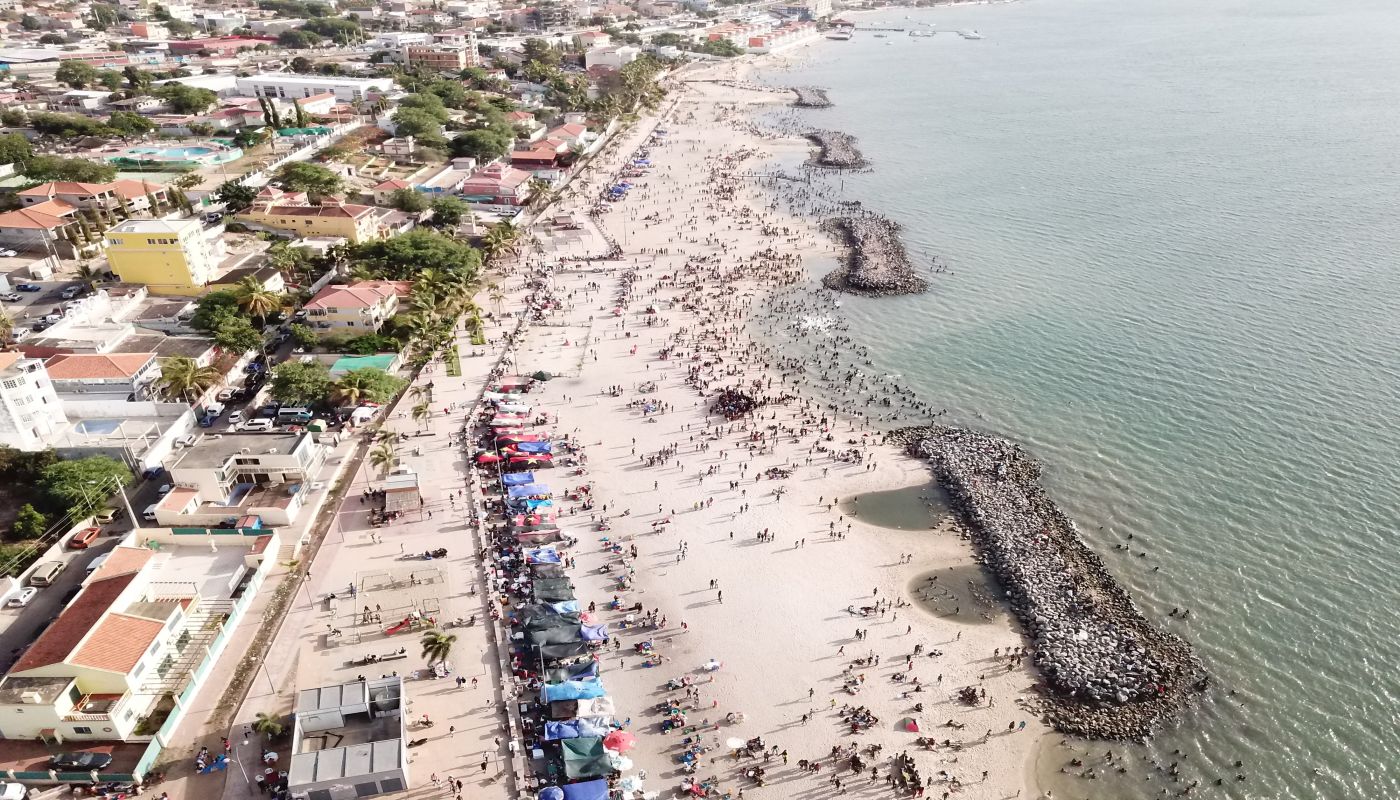
Landscape of Angola
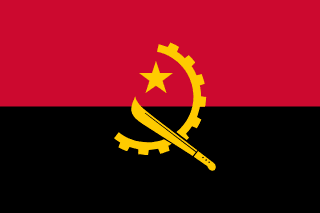
Flag of Angola

Angola

Africa

After gaining independence from colonial Portugal in 1975, Angola had a 27 year civil war which destabilized the country and ended in 2002. The war caused 4 million to become refugees or displaced persons, and it estimated that 73,000 are still living in the surrounding nations.1 However, at the end of the war, oil production boomed which boosted the Angolan economy to help rebuild society. Corruption, a lack of diverse economic opportunities, and ethnic divisions have made the country continually unpredictable and closed off.1 1https://www.cia.gov/library/publications/the-world-factbook/geos/ao.html

What would you like to learn about in Angola?

Select a section to explore the country where nonprofits are creating positive change.

About Angola

Angola is still rebuilding its country since the end of a 27-year civil war in 2002. Fighting between the Popular Movement for the Liberation of Angola (MPLA), led by Jose Eduardo DOS SANTOS, and the National Union for the Total Independence of Angola (UNITA), led by Jonas SAVIMBI, followed independence from Portugal in 1975. Peace seemed imminent in 1992 when Angola held national elections, but fighting picked up again in 1993. Up to 1.5 million lives may have been lost - and 4 million people displaced - during the more than a quarter century of fighting. SAVIMBI's death in 2002 ended UNITA's insurgency and cemented the MPLA's hold on power. President DOS SANTOS pushed through a new constitution in 2010; elections held in 2012 saw him installed as president.

Quick Facts

Population
18,565,269 (July 2013 est.)
Area
1,246,700 sq km
ISO Code
AO
Continent
Africa
Government
republic; multiparty presidential regime
Active Causes
12
View all countries in Africa

Geography & Environment

Climate

semiarid in south and along coast to Luanda; north has cool, dry season (May to October) and hot, rainy season (November to April)

Terrain

narrow coastal plain rises abruptly to vast interior plateau

Natural Resources

petroleum, diamonds, iron ore, phosphates, copper, feldspar, gold, bauxite, uranium

Environmental Issues

overuse of pastures and subsequent soil erosion attributable to population pressures; desertification; deforestation of tropical rain forest, in response to both international demand for tropical timb...

People & Society

54.95 years
Avg. Life Expectancy
70.4%
Literacy Rate
59.2% of total population (2011)
Total Urban Population

Languages

Portuguese (official), Bantu and other African languages

Religions

indigenous beliefs 47%, Roman Catholic 38%, Protestant 15% (1998 est.)

Health Expenditure

2.9% of GDP (2010) of GDP

Education Expenditure

3.5% of GDP (2010) of GDP

Economy

$6,500
GDP per Capita (PPP)
NA%
Unemployment Rate
40.5% (2006 est.)
Below Poverty Line

Economic Overview

Angola's high growth rate in recent years was driven by high international prices for its oil. Angola became a member of OPEC in late 2006 and its current assigned a production quota of 1.65 million barrels a day (bbl/day). Oil production and its supporting activities contribute about 85% of GDP. Diamond exports contribute an additional 5%. Subsistence agriculture provides the main livelihood for most of the people, but half of the country's food is still imported. Increased oil production supported growth averaging more than 17% per year from 2004 to 2008. A postwar reconstruction boom and re...

Causes in Angola

Environment

In 2016, Angola hosted World Environment Day with the UN in effort to raise awareness for the rich biodiversity in the nation.1 Environmental protection is stated as one of the government’s top concerns, but Angola has high levels of air pollution because of the lack of natural gas monitoring and poor mining techniques.2

Family

Because of the strong Christian presence in the country, many couples are married in churches, but they also follow tribal guidelines and rituals leading up the weddings.1 45 percent of the population is under the age of 15, and every woman is expected to have an average of five children.2 This, combined with the low prevalence of contraceptives at 18 percent of the population using them, is producing one of the highest population growth rates in the world — 3 percent each year.2

Human Rights

The Angolan government is notorious for forced house evictions, and in 2016 alone, 1,000 people in capital city Luanda were forcibly evicted from their homes.1 Often, peaceful protesters respond to these evictions and are threatened with gunshots and excessive force from security forces. Many anti-government peaceful protesters, activists, and journalists are in danger of being unfairly treated by the government due to high corruption levels. In addition, there is restricted access to private media sources with the majority of news agencies being run by the government and their affiliates.1

Education

School is compulsory until the age of 11 afterwhich schooling is optional. Many girls stay home to support their families which leads to a lower female literacy rate.1 The overall adult literacy rate in Angola is 71 percent.2 The most prominent problem facing the education system is a lack of funding which causes overcrowded schools, lack of seating and classroom materials, and no free secondary education.3 Together all of these problems lead to an inefficient schooling system where less than 10 percent of the population go on to universities.3

Poverty

Although the Angolan government does not perform censuses or offer its own statistics, it is estimated that about 60 percent of Angolans live below the poverty line on less than $2 a day.1 With a GINI coefficient of 43, the wealth discrepancy in Angola is huge, and most of the general population does not see the wealth the oil industry brings.2 Due to the lack of modern infrastructure, the country relies heavily on foreign imports which makes for an extremely high cost of living. For example, the price for a watermelon can start at $200.3 In rural areas, poverty rates are even higher.2

Religion

More than 80 percent of the population identifies as Christian, and the Roman Catholic church has historically played an important role in the country’s politics and culture.1 On the other hand, people practicing Islam are subject to systematic discrimination due to the government not recognizing their faith as a valid religion.2 This type of discrimination is also common within Baha’ism, Judaism, and indigenous faiths which are less than 1 percent of the population and not recognized by the government.2

Clean Water

Over 9 million people in Angola do not have access to safe water.1 This number is improving, and in 2017, the World Bank approved a $200 million loan to provide 1 million Angolans with access to clean, piped water in the next seven years.2 By piping water, sanitation and health are expected to improve.2

Economy

Angola’s oil accounts for 90 percent of their exports, 50 percent of their GDP, and grows their GDP by 4 percent each year.1 Oil prices have been decreasing in recent years which has caused economic growth to slow, and attempts have been made by the government to diversify the economy with diamond and agriculture exports—such as bananas, coffee, and sugarcane.2 The government has faced challenges diversifying because of corruption and economic inequality. The GDP per capita is around $7,000.2

Government

The 27 year civil war has had lasting impacts on the country with many geo-political factions still existing to fracture government stability.1 Angola is now a multiparty democracy where voters elect a party and the leader of the winning party becomes the president.1 However, many accuse the Angolan government of being increasingly authoritarian.2 It has frequently been investigated and accused for corruption and money laundering, and there is little transparency or checks and balances in place to hold the government accountable.3

Health

Angola has one of the highest infant mortality rates in the world at 10 percent, and if someone survives past childhood, the life expectancy is one of the lowest in the world at 53 years.1 The country has a high rate of Malaria, HIV, and diarrheal related deaths which are being brought down significantly with the help of international aid organizations. The most significant barriers to health care in Angola are because there are only two doctors for every 10,000 people, a lack of public funding to build health care infrastructure, and most citizens being unable to afford health care due to its high cost.2 In 2015, Severe Acute Malnutrition (SAM) in children was on the rise again with over 750,000 children at risk due to massive food shortages and droughts.3

Children

Angola has one of the highest child death rates in the world with 1 in 6 of all children and 1 in 4 of rural children dying before the age of 5.1 This is mostly due to malaria, AIDs, and lack of access to clean water and affordable health care. Recent studies show that 25 percent of children aged 5-14 work instead of attending school, and another 22 percent combine work and school.2

Animals

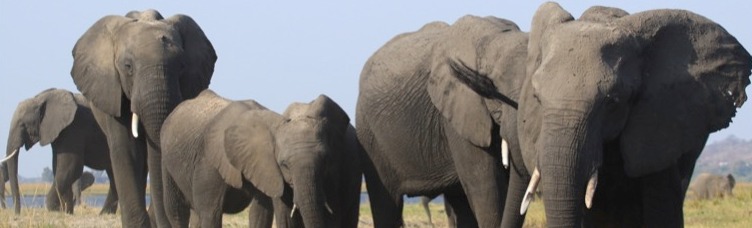
Due to its diverse terrain ranging from mountainous jungles to flat coastlines, Angola is home to many different types of animals and a significant amount of birds. To boost environmental tourism and hoping to become recognized globally for its environmental diversity, the government has recently pushed for a crackdown on poachers of mainly zebra, wildebeest, elephants, giraffes, and buffalos.1 Antelope, who historically have a large population in Angola, are severely over hunted with only about 100 remaining in the country.3 Because of the increase in agricultural activity, there has been an increase in deforestation in which has led to many species in the northwest jungles being in danger of losing their habitat.2

Nonprofits Working in Angola

Discover organizations making a difference in Angola

Make Your Impact Today

Discover causes you care about and support the nonprofits making a difference in communities around the world.

Are you a nonprofit? Join Project World Impact for free

Join Us Free