Landscape of Benin
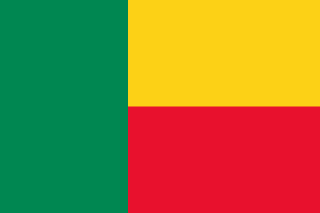
Flag of Benin

Benin

Africa

Benin was formerly Dahomey, a kingdom in western Africa that reached its peak in the 1600s, and for over two centuries was a large power in the area, primarily because of the slave industry. The French began to take over the coast of Benin in the mid 1800s, and Benin was completed overtaken by France in 1894. Benin gained its independence in 1960, but was known as French Dahomey until 1975 when the nation changed its name to the Republic of Benin. Benin did not move toward a representative government until 1989, and the first free elections were held in 1991.1 Nearly 65 percent of the population is under age 25,2 rendering Benin one of the youngest nations in the world.3 Additionally, 36 percent of the nation falls below the poverty line, resulting in many parents sending their children to work in wealthy households as domestic servants, or in mines, quarries or agriculture.4 The infant mortality rate is high, at 52.8 deaths per 1,000 live births,5 and 80 percent of the population lacks access to modern sanitation facilities.6 1 https://www.cia.gov/library/publications/the-world-factbook/geos/bn.html 2 Ibid 3 https://www.worldatlas.com/articles/the-youngest-populations-in-the-world.html 4 https://www.cia.gov/library/publications/the-world-factbook/geos/bn.html 5–6 Ibid

What would you like to learn about in Benin?

Select a section to explore the country where nonprofits are creating positive change.

About Benin

Present day Benin was the site of Dahomey, a West African kingdom that rose to prominence in about 1600 and over the next two and half centuries became a regional power, largely based on its slave trade. Coastal areas of Dahomey began to be controlled by the French in the second half of the 19th century; the entire kingdom was conquered by 1894. French Dahomey achieved independence in 1960; it changed its name to the Republic of Benin in 1975. A succession of military governments ended in 1972 with the rise to power of Mathieu KEREKOU and the establishment of a government based on Marxist-Leninist principles. A move to representative government began in 1989. Two years later, free elections ushered in former Prime Minister Nicephore SOGLO as president, marking the first successful transfer of power in Africa from a dictatorship to a democracy. KEREKOU was returned to power by elections held in 1996 and 2001, though some irregularities were alleged. KEREKOU stepped down at the end of his second term in 2006 and was succeeded by Thomas YAYI Boni, a political outsider and independent. YAYI, who won a second five-year term in March 2011, has attempted to stem corruption and has strongly promoted accelerating Benin's economic growth.

Quick Facts

Population
9,877,292 (July 2013 est.)
Area
112,622 sq km
ISO Code
BJ
Continent
Africa
Government
republic
Active Causes
12
View all countries in Africa

Geography & Environment

Climate

tropical; hot, humid in south; semiarid in north

Terrain

mostly flat to undulating plain; some hills and low mountains

Natural Resources

small offshore oil deposits, limestone, marble, timber

Environmental Issues

inadequate supplies of potable water; poaching threatens wildlife populations; deforestation; desertification

People & Society

60.67 years
Avg. Life Expectancy
42.4%
Literacy Rate
44.9% of total population (2011)
Total Urban Population

Languages

French (official), Fon and Yoruba (most common vernaculars in south), tribal languages (at least six major ones in north)

Religions

Catholic 27.1%, Muslim 24.4%, Vodoun 17.3%, Protestant 10.4% (Celestial 5%, Methodist 3.2%, other Protestant 2.2%), other Christian 5.3%, other 15.5%...

Health Expenditure

4.1% of GDP (2010) of GDP

Education Expenditure

5.4% of GDP (2010) of GDP

Economy

$1,700
GDP per Capita (PPP)
NA%
Unemployment Rate
37.4% (2007 est.)
Below Poverty Line

Economic Overview

The economy of Benin remains underdeveloped and dependent on subsistence agriculture, cotton production, and regional trade. Growth in real output had averaged almost 4% before the global recession and it has returned to roughly that level in 2011-12. Inflation has subsided over the past several years. In order to raise growth, Benin plans to attract more foreign investment, place more emphasis on tourism, facilitate the development of new food processing systems and agricultural products, and encourage new information and communication technology. Specific projects to improve the business cli...

Causes in Benin

Environment

Benin’s environmental issues include inadequate access to potable water, threatened wildlife populations, deforestation and desertification. The nation is party to international agreements on biodiversity, endangered species, desertification, ozone protection, ship pollution and whaling.1 Air pollution is also an issue, particularly in the nation’s capital.2 Gasoline illegally brought over from Nigeria is preferred by consumers to the gasoline sold at Benin’s port city of Cotonou’s gas stations, which sells at a price 40 percent higher than the smuggled gasoline. The smuggled gasoline often contains high levels of lead, increasing the amount of air pollution created by fuel emissions.3

Family

Benin’s constitution forbids the discrimination against persons on premise of gender, race or religion, and affirms the general equality of men and women.1 Over a quarter of girls are married before age 18, despite the national legal marriage age being 18, established by the 2007 Children’s Code. However, exceptions to the law can be made via legal proceedings. In 2016, the nation launched a Zero Tolerance campaign against child marriage, and in 2017 Benin became the 20th nation to join the African Union in efforts to eradicate child marriage.2

Human Rights

Over a quarter of girls are married before age 18, despite the national legal marriage age being 18, established by the 2007 Children’s Code. However, exceptions to the law can be made via legal proceedings. In 2016, the nation launched a Zero Tolerance campaign against child marriage, and in 2017 Benin became the 20th nation to join the African Union in efforts to eradicate child marriage.1 Only 38 percent of the population is literate, and only 27 percent of women are able to read and write while 49 percent of men are literate.2 Additionally, 36 percent of the nation falls below the poverty line, resulting in many parents sending their children to work in wealthy households as domestic servants, or in mines, quarries or agriculture.3

Education

In Benin, the length of time students are expected to remain in school is 12 years.1 Only 38 percent of the population is literate, and only 27 percent of women are able to read and write while 49 percent of men are literate. Education accounts for 4.4 percent of the nation’s GDP.2 Six years of primary and secondary education are free and compulsory for students in Benin.3 The education system’s structure has been in place since 2000.4

Poverty

36 percent of Benin’s population lives below the poverty line.1 This high level of poverty has increased the incidences of child labor and child trafficking when children are sent by their parents to take any economic opportunity that comes their way.2 The most recent studies conducted by the United Nations Educational, Scientific and Cultural Organization (UNESCO) show that 31 percent of children ages 5–14 are participating in some form of labor. 58 percent of children in that same age group are in school, and 20 percent both work and attend school.3 Some children may work up to 17 hour days. Benin is also a source country for child and human trafficking.4

Religion

Catholicism accounts for 27 percent of the Beninese population, Islam for 24 percent, West African Vodun for 17 percent and 16 percent are Protestant.1 Additionally, 7 percent of the population are Atheist, and 9 percent identify as a West African folk religion or other native faith.2

Clean Water

80 percent of Beninese people lack access to modern sanitation facilities. 22 percent lack access to improved water sources.1 In 2016, the World Bank financed Benin with $68 million to improve its water and sanitation infrastructure, particularly, but not limited to, the rural regions in the nation.2

Economy

Benin’s free market economy has grown steadily over the last several years, but slowed in 2017. The nation is vulnerable to ever-changing commodity prices for products like cotton. Piracy is an issue at Benin’s Port of Cotonou, but the government has accepted international assistance to establish a number of shipping and transport safety codes to reduce piracy. The government is in the processes of making a number of infrastructural changes, particularly addressing the nation’s electricity supply, providing access to rural communities that are otherwise off the grid.1 The GDP per capita is $2,300, and 36 percent of the nation falls below the poverty line.2The nation is one of Africa’s primary cotton producers, yet it is also dependent on subsistence farming, and is, on a whole, underdeveloped.3

Government

Benin is a presidential democracy, with the prime minister position being recently eliminated, and the nation has three branches of government.1 The nation was formerly known as French Dahomey, and is now the Republic of Benin. Presidents are elected by majority popular vote, and are elected for a five year term.2 The civil law system is structured similarly to that of France.3 Benin has a reputation of stability and healthy democracy, however, its prominent port location exposes the nation to a variety of trade-related crimes, including the drug trade.4

Health

Benin’s birth rate is relatively high, at 35 births per 1,000 of the population, as well as an equally high infant mortality rate at nearly 53 deaths per 1,000 live births, and 405 maternal deaths per 100,000 births.1 Risk of contracting an infectious disease is also high, with the major concerns being dengue fever, malaria, yellow fever, meningitis, hepatitis A, and typhoid fever.2 18 percent of children under the age of 5 are underweight,3 and 80 percent of the population lacks access to modern sanitation facilities.4 Life expectancy at birth in Benin is 62 years.5

Children

Nearly 65 percent of the population is under age 25,1 rendering Benin one of the youngest nations in the world.2 Additionally, 36 percent of the nation falls below the poverty line, resulting in many parents sending their children to work in wealthy households as domestic servants, or in mines, quarries or agriculture.3 The infant mortality rate is high, at 52.8 deaths per 1,000 live births,4 and 80 percent of the population lacks access to modern sanitation facilities.5 26 percent of girls are married by age 18, despite the legal age for marriage being 18.6

Animals

In the northern region of Benin is the W-Arly-Pendjari Complex, hosting the highest population of elephants in West Africa, and is also home to the African Manatee, the cheetah, African wild dog, Topi antelope, lion and leopard.1 The park is a transnational property spreading over Benin, Burkina Faso and Niger.2

Nonprofits Working in Benin

Discover organizations making a difference in Benin

Make Your Impact Today

Discover causes you care about and support the nonprofits making a difference in communities around the world.

Are you a nonprofit? Join Project World Impact for free

Join Us Free