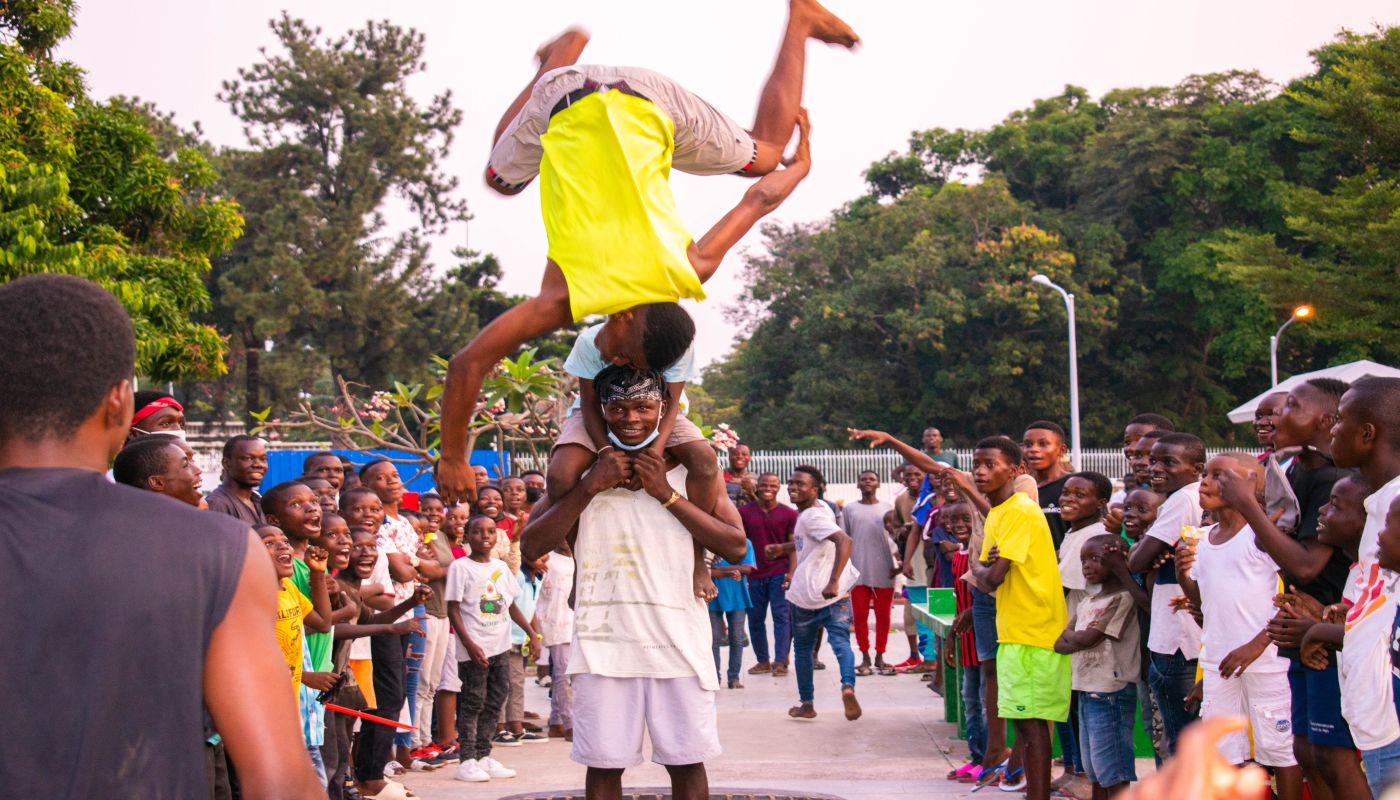
Landscape of Congo
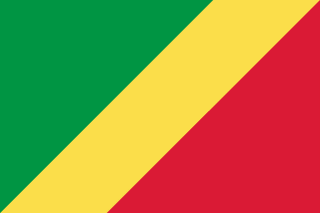
Flag of Congo

Congo

Africa

Gaining independence from colonial France in 1960, the Republic of the Congo, sometimes referred to as Congo-Brazzaville, has had a turbulent political past sprinkled with violence, coups, and military rule. Although the official language is French, many have retained strong ethnic ties, tradition, language skills, and have become known for their contemporary African music scene and rumba.1 Congo’s population is very concentrated in the two most populous cities—Brazzaville, the capital, and Pointe Noire on the coast. The remaining parts of the country are filled with thick rainforests..2 1 https://www.cia.gov/library/publications/the-world-factbook/geos/cf.html
2 http://www.ambacongo-us.org/en-us/aboutcongo/peopleculture/people.aspx

What would you like to learn about in Congo?

Select a section to explore the country where nonprofits are creating positive change.

About Congo

Upon independence in 1960, the former French region of Middle Congo became the Republic of the Congo. A quarter century of experimentation with Marxism was abandoned in 1990 and a democratically elected government took office in 1992. A brief civil war in 1997 restored former Marxist President Denis SASSOU-Nguesso, and ushered in a period of ethnic and political unrest. Southern-based rebel groups agreed to a final peace accord in March 2003, but the calm is tenuous and refugees continue to present a humanitarian crisis. The Republic of Congo is one of Africa's largest petroleum producers, but with declining production it will need new offshore oil finds to sustain its oil earnings over the long term.

Quick Facts

Population
4,492,689 (July 2013 est.)
Area
342,000 sq km
ISO Code
CG
Continent
Africa
Government
republic
Active Causes
12
View all countries in Africa

Geography & Environment

Climate

tropical; rainy season (March to June); dry season (June to October); persistent high temperatures and humidity; particularly enervating climate astride the Equator

Terrain

coastal plain, southern basin, central plateau, northern basin

Natural Resources

petroleum, timber, potash, lead, zinc, uranium, copper, phosphates, gold, magnesium, natural gas, hydropower

Environmental Issues

air pollution from vehicle emissions; water pollution from the dumping of raw sewage; tap water is not potable; deforestation

People & Society

55.6 years
Avg. Life Expectancy
83.8%
Literacy Rate
63.7% of total population (2011)
Total Urban Population

Languages

French (official), Lingala and Monokutuba (lingua franca trade languages), many local languages and dialects (of which Kikongo is the most widespread)

Religions

Christian 50%, animist 48%, Muslim 2%

Health Expenditure

2.5% of GDP (2010) of GDP

Education Expenditure

6.2% of GDP (2010) of GDP

Economy

$4,700
GDP per Capita (PPP)
53%
Unemployment Rate
46.5% (2011 est.)
Below Poverty Line

Economic Overview

The economy is a mixture of subsistence hunting and agriculture, an industrial sector based largely on oil and support services, and government spending. Oil has supplanted forestry as the mainstay of the economy, providing a major share of government revenues and exports. Natural gas is increasingly being converted to electricity rather than being flared, greatly improving energy prospects. New mining projects, particularly iron ore, that may enter production as early as late 2013 may add as much as $1 billion to annual government revenue. Economic reform efforts have been undertaken with the...

Causes in Congo

Environment

The Congo River on the southern and eastern borders is the most important natural resource in Congo. Located on the equator, Congo experiences a consistent climate for the entire year and hosts the second largest tropical rainforest area in Africa. These forests are now being threatened by logging and colonization. Lacking sufficient waste disposal facilities, much of the trash is left outside to pollute the environment. As a result, the government recently banned the use of plastic bags in hopes of eliminating some waste.1

Family

Over 50 percent of all families in Congo live in the two most major cities of Brazzaville and Pointe Noire.1 Women are often discouraged from activity outside of the home and are therefore underrepresented in business and government. Only half of women are economically active, as they are expected to stay home while men are the traditional money earners of Congolese families.2 The average woman bears five children in cities and ten in rural areas, and these children are often brought up in households with extended family members living with them.2

Human Rights

The government tightly censors journalists, limits access to independent media sources, and closely monitors all demonstrations.1 Since 2014, several journalists have been arrested or forced to flee the country for challenging the regime.2 Prisons in Congo are often overcrowded, lack medical care and food, and detainees can be treated with torture or beatings.3 Members of minority ethnic groups still feel the effects of the brutal civil war fought in the early 2000s and are subject to discrimination and enslavement. This also contributes to poor treatment of many asylum seekers from the Democratic Republic of Congo which flee to Congo for protection.3

Education

The adult literacy rate is nearly 80 percent, one of the highest in sub-saharan Africa.1 Education is compulsory for children aged 6-16. 80 percent of children are enrolled in primary education, and the teacher to student ratio is 20:1.2 However, there are still pressing issues facing the education system in Congo. For example, less than 50 percent of teachers are trained, and political instability and periodic violence make schooling challenging.3 Stated as one of the government’s main priorities, there have been recent strides taken to improve education like the construction of the nation’s second public university.4

Poverty

35 percent of the population lives under the poverty line.1 Widespread corruption hides much of the oil wealth from the general public, and a lack of infrastructure makes it difficult for the rural population, 35 percent of the entire nation, to participate in trade to improve their situation.2 These discrepancies in wealth are further seen in location of housing, with the upper social classes and foreigners living in gated neighborhoods while typical Congolese people live in cramped, fragile homes.3 In the last decade, there has been a boost in infrastructure, health, and education which has decreased the amount of people living in poverty by 40%.3

Religion

A secular state, freedom of religion is protected by the government with 33 percent being Roman Catholic, 55 percent Protestant, and 2 percent Muslim. Many combine traditional beliefs with their religion.1 In addition, there are almost 1 million migrant workers and asylum seekers in the country that are Muslims. In response to this massive influx of Muslims, in 2015 Congo became the first country in Central Africa to ban full-face Islamic veils in hope of combating extremism, even though there were not reported religiously motivated attacks.2 Christianity plays an important role in civil life, with churches providing schools with supplies and delivering aid to the poor.3

Clean Water

50% of the population has access to clean water, but only 9 percent has sanitary services.1 In recent years, there have been massive power shortages causing water to stop running. Even in Brazzaville, with its abundant rainfall and water resources available through the Congo River, water from taps is sparse, forcing people to dig wells.2 The Congolese government has permitted water vendors to sell clean bottled water, but many of their prices are inflated to an extent that is further crippling the economy.2

Economy

Congo is the fourth largest oil producer in Africa, which accounts for 70 percent of the GDP and 80 percent of the government’s revenue.1 However, due to the recent drop in oil prices, the Congolese government has had to reduce spending and attempt to diversify the economy by focusing on forestry, cement, and farming.2 The biggest detriment to business in Congo is government corruption and a lack of efficient tax and bureaucracy systems.1 The unemployment rate is at 50 percent.

Government

Congo gained independence from colonial France in 1960.1 The government in Congo is technically a presidential republic with elections held for both legislative and presidential positions, but for years elections have been subject to fraud, low voter turnout, and violence.2 In 2015, a referendum passed to eliminate term and age limits for the president, which raised concern that the nation is turning increasingly authoritarian under the power of long time leader Denis Sassou Nguesso.2 Many suspect high ranking state officials of money laundering. The state run oil company in Congo is controlled by people close to the president and their budget is not released to the public.2

Health

There is a serious shortage of healthcare facilities and professionals in Congo, and there is one physician for every 40,000 people.1 The life expectancy is 63, but 12 percent of children die before the age of five.2

Children

The population of Congo is extremely young, with 43 percent of the population under the age of 15 and the median age being 19.1 A quarter of Congolese children are forced into child labor.2 In addition, in the aftermath of war, violence against children is still rampant with over 250 registered acts of violence committed in 2016.3

Animals

There are nearly 600 different species of birds and 200 species of mammals in Congo including chimps, gorillas, elephants, boars, and monkeys.1 However, poaching elephants is on the rise. About 20,000 elephants are illegally hunted a year, and the revenue generated on the black market is similar to that of the drug trade or human trafficking.2 The Congolese government has stated that environmental protection is a top priority, but there has been trouble convincing the general public and poachers that this activity is damaging.2

Nonprofits Working in Congo

Discover organizations making a difference in Congo

Make Your Impact Today

Discover causes you care about and support the nonprofits making a difference in communities around the world.

Are you a nonprofit? Join Project World Impact for free

Join Us Free