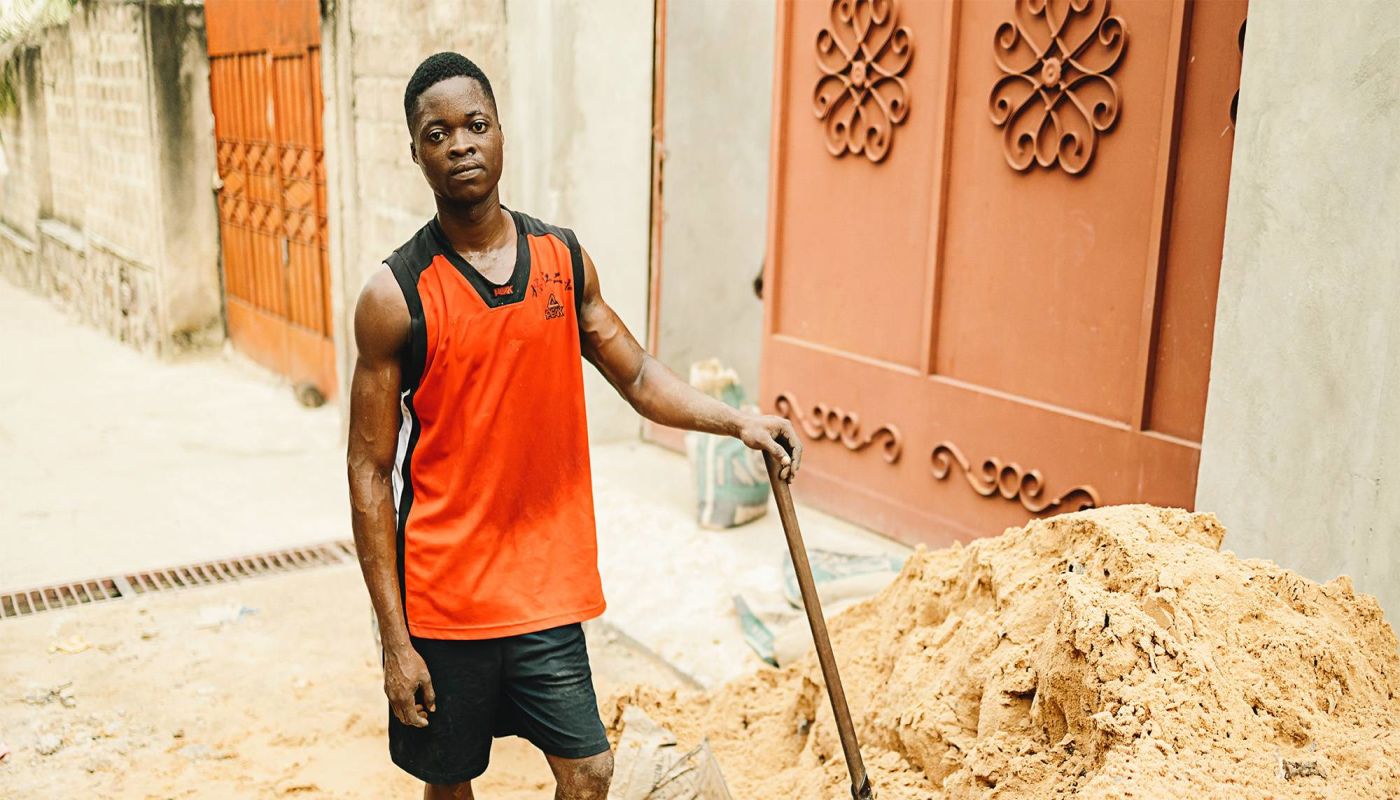
Landscape of Congo (Democratic Republic)
Flag of Congo (Democratic Republic)

Congo (Democratic Republic)

Africa

The Democratic Republic of Congo exists in a tumultuous political environment which has often led to violence within the borders. A third term in office for the president is not permitted, but the current government has delayed elections by two years in order to avoid this stipulation. Youth recruitment for military groups and low enrollment rates threaten the children in the country. The healthcare system is poorly organized and lacks the infrastructure needed to help it run effectively.1 1 https://www.cia.gov/library/publications/the-world-factbook/geos/cg.html

What would you like to learn about in Congo (Democratic Republic)?

Select a section to explore the country where nonprofits are creating positive change.

About Congo (Democratic Republic)

Established as a Belgian colony in 1908, the then-Republic of the Congo gained its independence in 1960, but its early years were marred by political and social instability. Col. Joseph MOBUTU seized power and declared himself president in a November 1965 coup. He subsequently changed his name - to MOBUTU Sese Seko - as well as that of the country - to Zaire. MOBUTU retained his position for 32 years through several sham elections, as well as through brutal force. Ethnic strife and civil war, touched off by a massive inflow of refugees in 1994 from fighting in Rwanda and Burundi, led in May 1997 to the toppling of the MOBUTU regime by a rebellion backed by Rwanda and Uganda and fronted by Laurent KABILA. He renamed the country the Democratic Republic of the Congo (DRC), but in August 1998 his regime was itself challenged by a second insurrection again backed by Rwanda and Uganda. Troops from Angola, Chad, Namibia, Sudan, and Zimbabwe intervened to support KABILA's regime. In January 2001, KABILA was assassinated and his son, Joseph KABILA, was named head of state. In October 2002, the new president was successful in negotiating the withdrawal of Rwandan forces occupying the eastern DRC; two months later, the Pretoria Accord was signed by all remaining warring parties to end the fighting and establish a government of national unity. A transitional government was set up in July 2003; it held a successful constitutional referendum in December 2005 and elections for the presidency, National Assembly, and provincial legislatures took place in 2006. In 2009, following a resurgence of conflict in the eastern DRC, the government signed a peace agreement with the National Congress for the Defense of the People (CNDP), a primarily Tutsi rebel group. An attempt to integrate CNDP members into the Congolese military failed, prompting their defection in 2012 and the formation of the M23 armed group - named after the 23 March 2009 peace agreements. Renewed conflict has lead to the displacement of large numbers of persons and significant human rights abuses. As of February 2013, peace talks between the Congolese government and the M23 were on-going. In addition, the DRC continues to experience violence committed by other armed groups including the Democratic Forces for the Liberation of Rwanda and Mai Mai groups. In the most recent national elections, held in November 2011, disputed results allowed Joseph KABILA to be reelected to the presidency.

Quick Facts

Population
75,507,308 (July 2013 est.)
Area
2,344,858 sq km
ISO Code
CD
Continent
Africa
Government
republic
Active Causes
12
View all countries in Africa

Geography & Environment

Climate

tropical; hot and humid in equatorial river basin; cooler and drier in southern highlands; cooler and wetter in eastern highlands; north of Equator - wet season (April to October), dry season (Decembe...

Terrain

vast central basin is a low-lying plateau; mountains in east

Natural Resources

cobalt, copper, niobium, tantalum, petroleum, industrial and gem diamonds, gold, silver, zinc, manganese, tin, uranium, coal, hydropower, timber

Environmental Issues

poaching threatens wildlife populations; water pollution; deforestation; refugees responsible for significant deforestation, soil erosion, and wildlife poaching; mining of minerals (coltan - a mineral...

People & Society

56.14 years
Avg. Life Expectancy
66.8%
Literacy Rate
34.3% of total population (2011)
Total Urban Population

Languages

French (official), Lingala (a lingua franca trade language), Kingwana (a dialect of Kiswahili or Swahili), Kikongo, Tshiluba

Religions

Roman Catholic 50%, Protestant 20%, Kimbanguist 10%, Muslim 10%, other (includes syncretic sects and indigenous beliefs) 10%

Health Expenditure

7.9% of GDP (2010) of GDP

Education Expenditure

2.5% of GDP (2010) of GDP

Economy

$400
GDP per Capita (PPP)
NA%
Unemployment Rate
71% (2006 est.)
Below Poverty Line

Economic Overview

The economy of the Democratic Republic of the Congo - a nation endowed with vast natural resource wealth - is slowly recovering after decades of decline. Systemic corruption since independence in 1960, combined with country-wide instability and conflict that began in the mid-90s has dramatically reduced national output and government revenue and increased external debt. With the installation of a transitional government in 2003 after peace accords, economic conditions slowly began to improve as the transitional government reopened relations with international financial institutions and interna...

Causes in Congo (Democratic Republic)

Environment

The largest environmental issues that face the DRC today are poaching of nationally preserved wildlife, water pollution, deforestation, urbanization, air pollution, increased numbers of refugees who are responsible for soil erosion and poaching, and mineral mining.1 Most of the population in the DRC is aware of the current situation with the environment but high unemployment rates make it difficult for many to change their lifestyles, since often the most lucrative businesses are not environmentally friendly.2

Family

In the Democratic Republic of Congo, family planning services are provided as a part of integrated health services. Currently, the contraceptive use rate in the DRC is only 20 percent.1 Sexual violence has been referred to as a weapon of war in the country due to its commonality in wartime, but domestic violence is an equally pressing issue. There is difficulty in collecting statistics on how much domestic and sexual violence actually occurs due to social stigmas that prevent women from feeling safe or comfortable reporting these incidents.2

Human Rights

The government has limited its tolerance of freedoms of assembly, cracking down on public gatherings and demonstrations. Political opponents are often imprisoned and allegations of torture and ill-treatment in prisons go uninvestigated. It is estimated that, although there were only 59,000 internally displaced people registered at the end of 2017, there could be as many as 81,000 people displaced. Over 50 percent of families in the Pool Department region are experiencing food insecurity.1 During the 2011 elections in Kinshasa, over 57 opposition party supporters were killed by security and there were reports of voter intimidation. There has been little to no investigation into killings carried out by military forces.2 There are still very high rates of child soldier recruitment by armed rebel groups throughout the DRC.3

Education

3.5 percent of primary-aged children in the DRC are not enrolled in school. 44 percent of the children who do enroll don’t begin their education until they are six years old. Only 67 percent of students who enter first grade will finish sixth grade. The Ministry of Education has seen many changes of government and remained intact while experiencing major structural changes for each regime. The country has a $100 million grant from the Global Partnership for Education that is in the process of being distributed.1 Children who have been recruited as soldiers lack access to education, or their studies have been disrupted. Their traumatic experiences have highlighted the need for a priority on psychological services rather than education.2 Many parents are forced to send their children to work instead of school because of their desperate financial situation.3

Poverty

63 percent of the population lives below the poverty line.1 There are severe geographic and economic inequalities throughout the country. Furthermore, there are few roads and the cost of transportation is high, meaning there are limited opportunities for rural residents to move to urban areas. The country regularly occupies the lowest levels of the United Nations Human Development Index. The responsibility of harvesting the DRC’s vast natural resources often falls to the poor.2

Religion

In the Democratic Republic of the Congo, the largest percentage of the population follows Christianity. 50 percent of the population are Roman Catholic, 20 percent are Protestant, 10 percent are Kimbanguist, 10 percent are Muslim, and 10 percent are other religions.1 Muslims are mainly found in the provinces of Maniema, Orientale, and Kinshasa. The constitution has clauses that support the freedom of religious expression.2 The Democratic Republic of the Congo has generally been consistent in upholding the protection of religious freedom. In order to have foreign religious groups enter the country, the DRC requires the written approval of the President.2

Clean Water

52 percent of the population has access to clean water, but this number varies greatly depending on the density of the population. 81 percent of urban populations have clean water available to them, while only 31 percent of rural communities can say the same. Far fewer people have improved sanitation facilities; only 28 percent of the total population. This percentage does not vary significantly between rural and urban populations.1 The government does not have the necessary funds to overhaul and improve the water pumping system. The DRC has the highest urbanization rate in the world, which will only increase the strain on the water supply. Water-borne diseases are an increasing issue facing the Congolese people.2 Currently, there is no governmental oversight given to the restructuring and maintenance of the water systems, which leaves the entire system susceptible to issues.3

Economy

Continued political instability over recent decades has prevented the DRC from developing a stable and productive economy. None of the Millennium Development goals were met in 2015. Public debt remains low; in 2017 it was 15 percent of the GDP. Copper is one of the country’s main exports, along with diamonds and gold. The international price for copper dropped significantly in 2015, leading to financial difficulties nationally in 2016 and 2017. The DRC’s main trade partners are China, South Africa, and Zambia.1 Political instability has left public institutions unable to support economic expansion and has undermined diversification, foreign investments, and public support. Although the country is rich in natural resources with potential for lucrative mining and agricultural sectors, these resources often fuel conflict instead of economic improvement.2

Government

The Democratic Republic of the Congo is a semi-presidential republic. The president is the chief of state and the prime minister is the head of government. The president is elected by a simple majority vote.1 Transparency International ranks the country 161st of 180 countries, and the Congolese public scores their government 21 out of a possible 100. Corruption and instability remain prominent concerns.2 There is massive mismanagement of the country’s natural resources and funds, weak governance is common, and political crises arise every few months. The DRC’s vast resource wealth is the source of much violence and political tension. It also serves as a catalyst for political instability.3

Health

The average life expectancy in the DRC is 57 years. 4.3 percent of GDP is spent on healthcare annually, and the population is at high risk of contracting food or water borne diseases, especially hepatitis A, typhoid fever, and malaria. The maternal mortality rate is 693 deaths per 100,000 live births, while infant mortality is 68 deaths per 1,000 live births. There are an estimated 370,000 people living with HIV/AIDS in the country.1 Decades of neglect of the healthcare system has left it in shambles. The government has not invested in the system, leaving citizens without access to care. The lack of investment and infrastructure has contributed to the issues arising from an overall poorly-trained medical staff.2 There are no existing national disease prevention measures, such as immunizations. In urban areas where there is a dense population, the lack of proper sanitation systems exacerbates health issues.3

Children

Abuse, malnutrition, lack of education, and chronic illness are all threats to children’s well-being. There is a major threat of sexual abuse; 45-60 percent of all rape survivors are under the age of 18. Sexual and gender-based violence against children is common. Furthermore, half of all Congolese children do not regularly attend school.1 In spite of international outcry, there are still very high rates of child soldier recruitment by armed rebel groups throughout the DRC. 2 The country has made progress with treatment of polio and child malaria, both of which have been nearly eradicated. After the appointment of a Special Representative to bring attention to sexual violence, the reports of such offenses have been cut in half.3

Animals

The DRC exists in the Afrotropical region of Africa. The area is dominated by swamplands surrounding the Congo river. Local plant life includes the Raphia palm, giant ground orchids, and arrowroot. These forests are home to the western lowland gorilla, chimpanzee, forest elephant, and forest buffalo. Hunting and poaching are common activities, and there have been major logging projects set up just outside the borders of wildlife reserves.1

Nonprofits Working in Congo (Democratic Republic)

Discover organizations making a difference in Congo (Democratic Republic)

Rising International

Rising International

Our Unique Local-Global Solution Rising International is a nonprofit organization that has revolutionized the home party business model to alleviate poverty locally and globally. Think Avon or Tupperware for a social cause. We find the world’s most forgotten women (like Fatima) and enable them to change their destinies by selling their handmade crafts at Rising Home and Corporate Parties. We train women and teens, many un-employed or under- employed, (like Susana) to run their own Rising Home Party businesses and sell crafts made by their global sisters. We search the U.S. for party hosts (like Nancy) who invite friends to their homes to shop. Our sustainable model empowers both local and global entrepreneurs to rise above their circumstances.

Santa Cruz, California

Make Your Impact Today

Discover causes you care about and support the nonprofits making a difference in communities around the world.

Are you a nonprofit? Join Project World Impact for free

Join Us Free