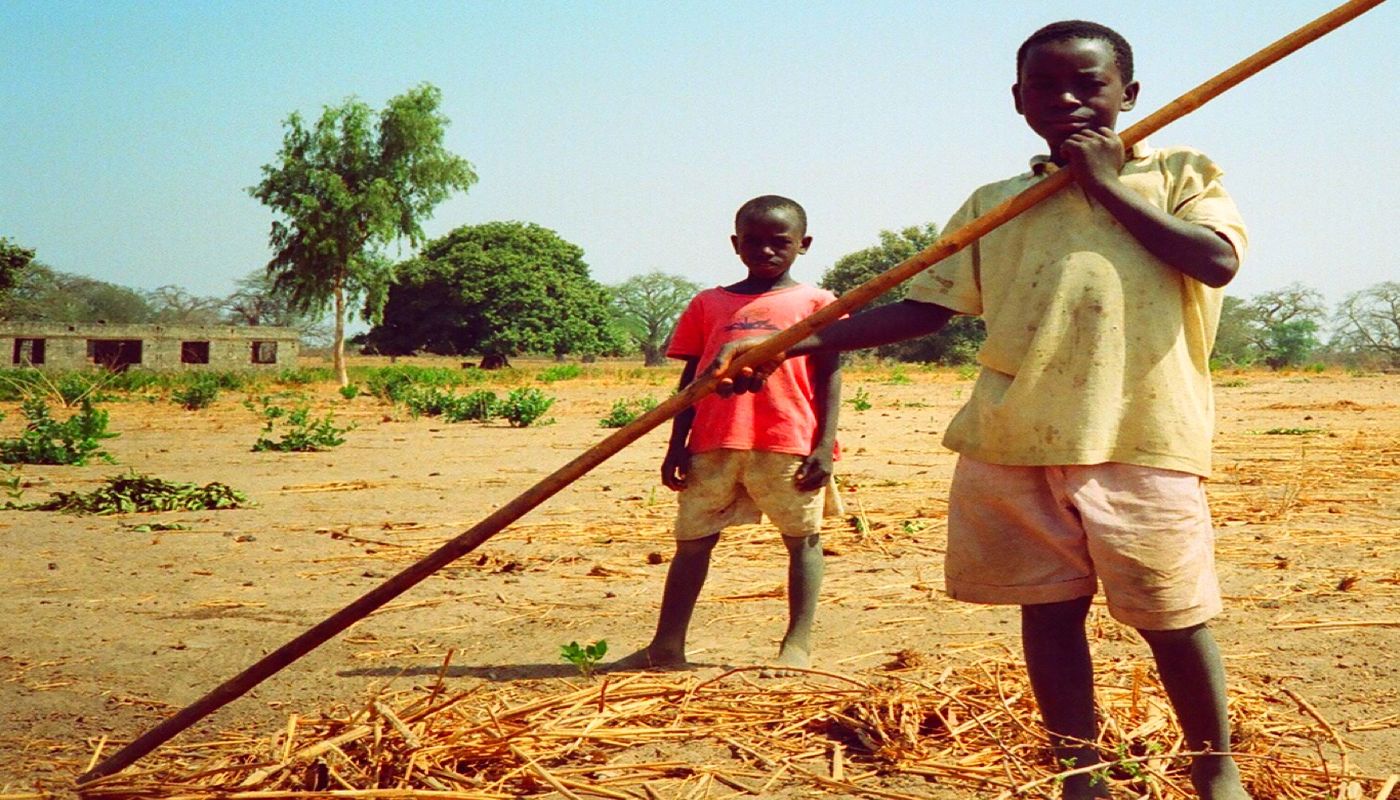
Landscape of The Gambia
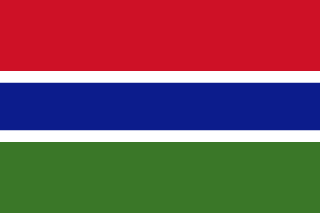
Flag of The Gambia

The Gambia

Africa

The Gambia is the smallest country in Africa, but is home to over 2 million people. The government recently outlawed the dangerous practice of FGM in 2015, but it is still practiced in many rural areas and affects an estimated 75% of women in the country. The government is taking steps to improve the education system. In 2007 the country reached equality between genders in school enrollment for the first time. Healthcare in the country is not very effective due to lack of doctors and sufficient funding.1 1 https://www.cia.gov/library/publications/the-world-factbook/geos/ga.html

What would you like to learn about in The Gambia?

Select a section to explore the country where nonprofits are creating positive change.

About The Gambia

The Gambia gained its independence from the UK in 1965. Geographically surrounded by Senegal, it formed a short-lived federation of Senegambia between 1982 and 1989. In 1991 the two nations signed a friendship and cooperation treaty, but tensions have flared up intermittently since then. Yahya JAMMEH led a military coup in 1994 that overthrew the president and banned political activity. A new constitution and presidential elections in 1996, followed by parliamentary balloting in 1997, completed a nominal return to civilian rule. JAMMEH has been elected president in all subsequent elections including most recently in late 2011.

Quick Facts

Population
1,883,051 (July 2013 est.)
Area
11,295 sq km
ISO Code
GM
Continent
Africa
Government
republic
Active Causes
12
View all countries in Africa

Geography & Environment

Climate

tropical; hot, rainy season (June to November); cooler, dry season (November to May)

Terrain

flood plain of the Gambia River flanked by some low hills

Natural Resources

fish, clay, silica sand, titanium (rutile and ilmenite), tin, zircon

Environmental Issues

deforestation; desertification; water-borne diseases prevalent

People & Society

64.09 years
Avg. Life Expectancy
51.1%
Literacy Rate
57.3% of total population (2011)
Total Urban Population

Languages

English (official), Mandinka, Wolof, Fula, other indigenous vernaculars

Religions

Muslim 90%, Christian 8%, indigenous beliefs 2%

Health Expenditure

5.7% of GDP (2010) of GDP

Education Expenditure

3.9% of GDP (2011) of GDP

Economy

$1,900
GDP per Capita (PPP)
NA%
Unemployment Rate
48.4% (2010 est.)
Below Poverty Line

Economic Overview

The Gambia has sparse natural resource deposits and a limited agricultural base, and relies in part on remittances from workers overseas and tourist receipts. About three-quarters of the population depends on the agricultural sector for its livelihood and the sector provides for about one-quarter of GDP. The agricultural sector has untapped potential - less than half of arable land is cultivated. Small-scale manufacturing activity features the processing of peanuts, fish, and hides. The Gambia's natural beauty and proximity to Europe has made it one of the larger markets for tourism in West Af...

Causes in The Gambia

Environment

The Gambia is a largely undeveloped country with few industrial campuses. Foreign investment has changed this in recent years; a private Chinese company built a fishmeal factory in Gunjur in 2016 and there are already reports of waves of dead fish washing onto shore downstream. It has been revealed that the factory is dumping waste directly into the river.1 Primary environmental concerns in the Gambia include deforestation, water pollution, and desertification. Only around 9% of the Gambia’s original forests have survived the high rates of agricultural expansion. Additionally, rainfall has decreased by more than 30% in the past few decades, contributing to the increasing desertification of the country’s landscape.2

Family

It is estimated that 40% of women who experience domestic violence in the Gambia do not report it to authorities. 10% of women surveyed had experienced domestic violence within 12 months of the survey.1 The birth rate was 30 births per 1,000 people in 2017.2 Female genital mutilation continues to be a major issue. The practice of FGM is officially criminalized, but it continues in rural communities.3

Human Rights

The most common human rights abuses in the Gambia include government interference with the judicial process, the abuse and censorship of critics of the government, and the torture, arbitrary arrest, and detention of citizens. Additionally, prison conditions in the country are very poor and unsanitary. The freedoms of citizens are often arbitrarily oppressed, especially the right to assembly and expression. Transitional governments are often violent and practice impunity.1 One fourth of Gambian children are engaged in child labor practices.2 Female genital mutilation (FGM) is rampant throughout the country and contributes to the high rate of infant and maternal deaths. Over 78% of girls in the Gambia undergo FGM, which contributes to recurring infections, sexual problems, and complications with pregnancy and childbirth.3

Education

Only 56% of the population is literate, with significant gender discrepancies. The male literacy rate is 64% and the female literacy race is 48%.1 There are very few schools available for upper basic education. There are 368 schools for the lower grades and only 89 for upper grades. The school system only recently reached gender equality in enrollment in 2007, but retention remains a problem as only 64 girls for every 100 boys move on from primary school. The country’s extremely small size has allowed NGOs to be efficient and effective, and the education system has greatly benefited from the intervention of international organizations.2

Poverty

Nearly 50% of the Gambian population lives below the poverty line. The unemployment rate is uncertain, but much of the rural population works in the agricultural industry.1 The Gambia’s economy is heavily dependent on agriculture, which is responsible for generating one-fifth of the GDP and provides jobs for 75% of the population.2

Religion

The Gambia’s population is approximately 95% Muslim and 4% Christian, while the rest of the population follow indigenous belief systems or did not identify themselves with a certain religion.1

Clean Water

Approximately 90% of Gambians have access to clean drinking water, but only 60% of the country has access to adequate sanitation infrastructure.1 One of the largest issues facing rural populations is diarrhoeal diseases spread by the consumption of contaminated water. These diseases are the leading cause of death for children under the age of five.2

Economy

48% of the population lives below the poverty line in the Gambia. The government’s debt is 116% of the GDP. The economy is reliant on income generated by the export of peanut products, fish, and cotton. Imports largely consist of food products and manufactured goods. The Gambia’s main trade partners are the Cote d’Ivoire, Mali, Brazil, and Guinea. Agriculture is the largest sector in the Gambia’s economy, and nearly 75% of the population relies on agriculture for their livelihood.1

Government

The Republic of the Gambia gained independence from the United Kingdom in 1965 and is now a presidential republic governed by a president. There are ten major political parties. The president is both the chief of state and head of government, and also holds the power to appoint the cabinet.1 Government corruption is pervasive; Transparency International ranks the country 130th out of 180 countries for perceived corruption, while the public scores their government 30 out of a possible 100 for corruption.2

Health

Life expectancy in the Gambia is 65 years. The government has invested nearly 7.5% of GDP annually in healthcare. 16% of children below the age of five are underweight. The maternal mortality rate is the ninth-highest in the world at 706 deaths per 100,000 live births. Infant mortality is extremely high as well at 60 deaths per 1,000 live births. One of the main health issues for the country is the lack of doctors. There is only 1 physician for every 10,000 people.1 Female genital mutilation (FGM) is rampant throughout the country and contributes to the high rate of infant and maternal deaths. In 2015, 75% of girls in the Gambia had undergone FGM, a practice which contributes to recurring infections, sexual problems, and complications with pregnancy and childbirth.2

Children

40% of the Gambian population is under the age of 14. The under-five mortality rate is very high for children at 98 deaths per 1,000 live births.1 One of the major concerns for children is the prevalence of child labor. The US Department of Labor found that the country made moderate progress in the realm of child labor in 2016 with the enactment of an official Child Protection Strategy, but there are still reports of children being forced to engage in begging, and many are exploited in the commercial sex trade.2 High rates of child labor adversely affect school enrollment, and the primary school attendance rate is only 70%.3 Child marriage is another common practice; 9% of the country’s girls are married by age 15 and 30% are married by age 18.4

Animals

The environmental features of the Gambia vary greatly across the country from the coast inland. Some notable species local to the area include the giraffe, wild dog, lion, elephant, and black rhinoceros. These animals are threatened by commercial poaching and the destruction of habitats from illegal grazing of livestock. The drainage and contamination of wetlands for industrial or urban projects is especially dangerous for migratory birds.1

Nonprofits Working in The Gambia

Discover organizations making a difference in The Gambia

Make Your Impact Today

Discover causes you care about and support the nonprofits making a difference in communities around the world.

Are you a nonprofit? Join Project World Impact for free

Join Us Free