Landscape of Guinea
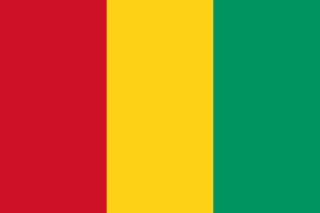
Flag of Guinea

Guinea

Africa

In recent years the Guinean government has focused on becoming more democratic. The government displays evidence of their long history with France; many institutions remain modeled after the French model. The salient poverty evident in the country does not fit with the wealth of diamonds and gold that are in the country. Political turmoil and internal warfare have prevented Guinea from becoming an efficient exporter of their valuable resources. Child marriage is one of the largest threats facing young Guineans.1 1 https://www.cia.gov/library/publications/resources/the-world-factbook/geos/gv.html

What would you like to learn about in Guinea?

Select a section to explore the country where nonprofits are creating positive change.

About Guinea

Guinea has had a history of authoritarian rule since gaining its independence from France in 1958. Lansana CONTE came to power in 1984 when the military seized the government after the death of the first president, Sekou TOURE. Guinea did not hold democratic elections until 1993 when Gen. CONTE (head of the military government) was elected president of the civilian government. He was reelected in 1998 and again in 2003, though all the polls were marred by irregularities. History repeated itself in December 2008 when following President CONTE's death, Capt. Moussa Dadis CAMARA led a military coup, seizing power and suspending the constitution. His unwillingness to yield to domestic and international pressure to step down led to heightened political tensions that culminated in September 2009 when presidential guards opened fire on an opposition rally killing more than 150 people, and in early December 2009 when CAMARA was wounded in an assassination attempt and evacuated to Morocco and subsequently to Burkina Faso. A transitional government led by Gen. Sekouba KONATE held democratic elections in 2010 and Alpha CONDE was elected president in the country's first free and fair elections since independence. CONDE in July 2011 survived an attack on his residence allegedly perpetrated by the military. In October 2012, he announced a cabinet reshuffle that removed three members of the military from their positions, making the current administration Guinea's first all-civilian government.

Quick Facts

Population
11,176,026 (July 2013 est.)
Area
245,857 sq km
ISO Code
GN
Continent
Africa
Government
republic
Active Causes
12
View all countries in Africa

Geography & Environment

Climate

generally hot and humid; monsoonal-type rainy season (June to November) with southwesterly winds; dry season (December to May) with northeasterly harmattan winds

Terrain

generally flat coastal plain, hilly to mountainous interior

Natural Resources

bauxite, iron ore, diamonds, gold, uranium, hydropower, fish, salt

Environmental Issues

deforestation; inadequate supplies of potable water; desertification; soil contamination and erosion; overfishing, overpopulation in forest region; poor mining practices have led to environmental dama...

People & Society

59.11 years
Avg. Life Expectancy
41%
Literacy Rate
35.4% of total population (2011)
Total Urban Population

Languages

French (official)

Religions

Muslim 85%, Christian 8%, indigenous beliefs 7%

Health Expenditure

4.9% of GDP (2010) of GDP

Education Expenditure

3.1% of GDP (2011) of GDP

Economy

$1,100
GDP per Capita (PPP)
NA%
Unemployment Rate
47% (2006 est.)
Below Poverty Line

Economic Overview

Guinea is a poor country that possesses major mineral, hydropower, and agricultural resources. The country has almost half of the world's bauxite reserves and significant iron ore, gold, and diamond reserves. However, Guinea has been unable to profit from this potential, as rampant corruption, dilapidated infrastructure, and political uncertainty have drained investor confidence. In the time since a 2008 coup following the death of long-term President Lansana CONTE, international donors, including the G-8, the IMF, and the World Bank, have significantly curtailed their development programs. Th...

Causes in Guinea

Environment

Environmental challenges in Guinea are typical of the environmental issues that plague many African countries. Desertification is a major concern, especially with the advent of climate change which has had a discernible impact on the country and people’s lives. Soil erosion is an ongoing issue that affects the cleanliness of the water supply as well as the agricultural sector.1 Another factor that has significantly affected the environment is the influx of refugees who use significant amounts of resources. Natural resources are under a lot of strain, especially in the south of the country.2 The country is highly susceptible to natural disasters such as flooding, due to their extreme rainy season and continued effects of desertification.3

Education

Guinea was one of the only former colonies to completely sever ties with the French system and embark on their own system. The current government in Guinea mandates six years of compulsory public education that begin at age seven. Secondary education is another six years after that, and the language of instruction is primarily French.1 Many children, especially those in rural areas, do not even have the opportunity to complete their primary education due to poverty, child marriage, or lack of transportation.2 70% of the population older than 15 is illiterate. 38% of males older than 15 are literate, while only 23% of females of the same age bracket are literate.3

Poverty

The Republic of Guinea is home to around 12.4 million people.1 The massive abundance of oil and natural mineral deposits seems contradictory to the immense poverty and malnutrition levels that are present in throughout Guinea. 55% of the population lives below the poverty line, and in the forested regions of the country the unemployment rate is very high. 1.9 million people are food insecure, and flooding negatively impacts food supplies for about 60,000 people a year.2

Religion

The country is 87% Muslim and 9% Christian. The remaining 4% follow indigenous beliefs.1 Religious groups must be registered with the state, and are not allowed to operate TV or radio shows. Schools do not include religious education in their curriculum.2

Clean Water

93% of the urban population has access to clean drinking water as opposed to the 68% of the rural dwelling population that has access.1 If increased access to potable water is not achieved the economic situation in the country will not improve. There are numerous international donors that are working in the country to help Guinea raise the standard of living for its citizens. Water shortages throughout the country are frequent and many believe this will become a permanent situation.2

Economy

Overall Guinea is categorized as a very poor country with vast amounts of mineral, hydropower capabilities, solar power, and agricultural resources. Despite the fact that Guinea is the world’s second largest producer of Bauxite, the world’s main source for aluminum, the majority of citizens have not seen the profits.1 Within the economic sphere, corruption, inefficient infrastructure, and political instability have greatly diminished the confidence of potential foreign investors. The economy has not been able to benefit from foreign assistance since aid is contingent on the government’s ability to be transparent and to enact sweeping reforms to the banking system.2 The economy is further strained by the fact that Guinea has become home to hundreds of thousands of refugees from nearby Ivory Coast, Sierra Leone, and Liberia. Many government processes and economic activities remain shrouded in uncertainty.3

Government

The Republic of Guinea is a presidential republic. Their constitution was most recently modified in 2010. The legal system is based on a French model leftover from French occupation until 1958. The government has been in a state of flux after a military coup in 2008, but overall the country is moving towards a more democratic form of ruling. There are six major political parties, and very few influential lobbyist groups.1 There are significant political tensions between the Malinke and Peul ethnic groups. They make up 35% and 40% of the Guinean population, respectively.2

Health

The average age of first-time mothers in Guinea is 19 years old. Maternal mortality rates are the 11th highest in the world at 679 deaths per 100,000 live births. The infant mortality rate is 50 deaths per 1,000 live births, and life expectancy at birth is 61 years. Guineans live with a very high risk of contracting infectious diseases such as hepatitis A, typhoid fever, malaria, dengue fever, and rabies. 18.7% of children under the age of 5 are underweight, and 7.7% of adults are overweight.1

Children

21% of children in Guinea are married by the time they reach 15 years of age. A further 31%, totaling 52%, are married by the time they reach age 18. The minimum legal age for marriage is 18, but enforcement is lax. 25% of girls between the ages of 15 and 19 are in polygamous unions, and the average spousal age difference is 14 years. In 2017 Guinea joined the African Union campaign to end child union.1 Ebola is also a major threat to children’s health. Around 750 children in Guinea lost one or both parents due to Ebola in the most recent outbreak in 2015. Doctors have traced patient zero to a two-year-old boy in Guinea, causing the outbreak to strongly affect Guinea more than neighboring countries.2 Children who have lost their parents to Ebola are often abandoned by relatives because there is a great fear of becoming infected. Young survivors often face stigmatization, hunger, malnutrition, and in extreme cases even violence.3

Family

The recently revised criminal code has prohibited early or enforced marriage, and declared the minimum age for marriage is 18. There is, however, permission within the law for “marriage according to custom,” which has allowed for continued practice of child marriage.1 The government is also working against the traditional ideals of Guinean families, which say that that domestic violence is the acceptable way for a husband to correct his wife.2

Human Rights

There has been little to no progress in the investigation of officials who violently attacked peaceful protesters in 2009. These violations were committed by the security forces, and the lack of action by the government of Guinea has prompted the response of the United Nations. According to sources, 156 people died, 109 women were raped, and nearly 1,000 people were injured in the attack.1 People who express dissent or frustration with the government are harassed and threatened. Five trade unionists were jailed for six months for “contempt of the President.” Additionally, torture was criminalized in the revised criminal code, but many actions that are internationally considered torture are defined under the section of human rights abuses in the code, which has much more vague punishment.2

Animals

Main animal species in Guinea include the Diana monkey, Campbell’s monkey, and western red colobus. There are more than 200 endemic plants in the Afrotropical region that includes Côte d'Ivoire and Sierra Leone along with Guinea. Severe threats facing the region include local slash-and-burn farming techniques, a style of farming where farmers burn down new parts of the forest each season to plant crops. Additionally, habitats are threatened by logging, civil conflict, and mining.1

Nonprofits Working in Guinea

Discover organizations making a difference in Guinea

Make Your Impact Today

Discover causes you care about and support the nonprofits making a difference in communities around the world.

Are you a nonprofit? Join Project World Impact for free

Join Us Free