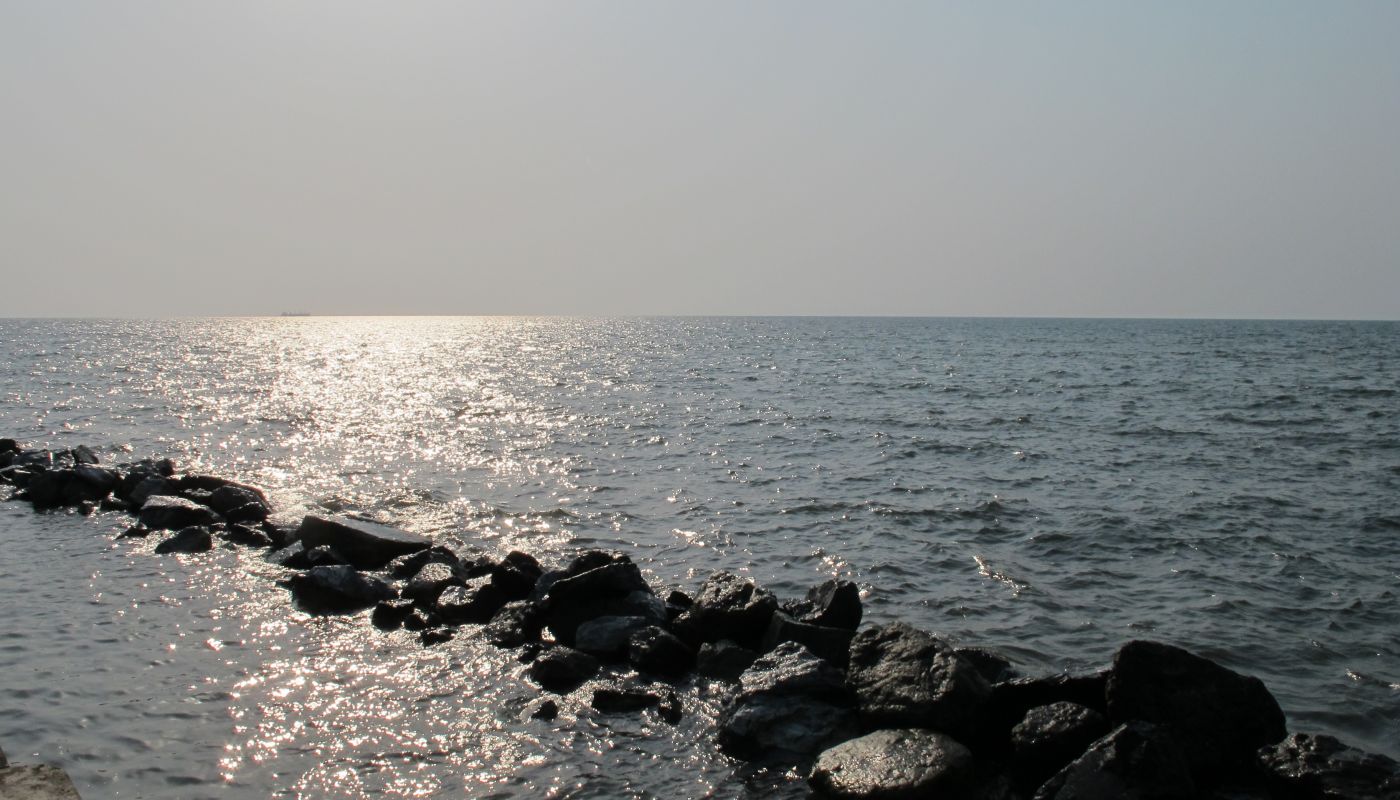
Landscape of Guinea Ecuatorial
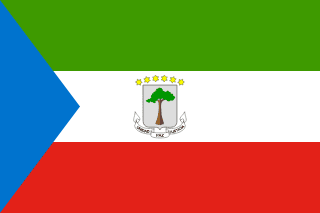
Flag of Guinea Ecuatorial

Guinea Ecuatorial

Africa

Equatorial Guinea is one of the smallest nations in Africa, and is a former Spanish colony. The nation gained its independence in 1968 and has both a mainland and five islands under its territory. Equatorial Guinea’s first president was ousted in a coup, after he dissolved the nation’s infrastructure.1 Equatorial Guinea is the only sovereign nation in Africa with Spanish as its official language.2 The nation is also home to the longest serving president in the world, who has been serving since 1979 after the previous president was removed in the coup.3 The infant mortality rate is 65 deaths per 1,000 live births, an extremely high rate, with proportionally as high maternal mortality — 42 deaths per 100,000 live births.4 1 https://www.cia.gov/library/publications/the-world-factbook/geos/ek.html 2 Ibid 3 https://www.hrw.org/world-report/2018/country-chapters/equatorial-guinea 4 https://www.cia.gov/library/publications/the-world-factbook/geos/ek.html

What would you like to learn about in Guinea Ecuatorial?

Select a section to explore the country where nonprofits are creating positive change.

About Guinea Ecuatorial

Equatorial Guinea gained independence in 1968 after 190 years of Spanish rule. This tiny country, composed of a mainland portion plus five inhabited islands, is one of the smallest on the African continent. President Teodoro OBIANG NGUEMA MBASOGO has ruled the country since 1979 when he seized power in a coup. Although nominally a constitutional democracy since 1991, the 1996, 2002, and 2009 presidential elections - as well as the 1999, 2004, and 2008 legislative elections - were widely seen as flawed. The president exerts almost total control over the political system and has discouraged political opposition. Equatorial Guinea has experienced rapid economic growth due to the discovery of large offshore oil reserves, and in the last decade has become Sub-Saharan Africa's third largest oil exporter. Despite the country's economic windfall from oil production, resulting in a massive increase in government revenue in recent years, improvements in the population's living standards have been slow to develop.

Quick Facts

Population
704,001 (July 2013 est.)
Area
28,051 sq km
ISO Code
GQ
Continent
Africa
Government
republic
Active Causes
12
View all countries in Africa

Geography & Environment

Climate

tropical; always hot, humid

Terrain

coastal plains rise to interior hills; islands are volcanic

Natural Resources

petroleum, natural gas, timber, gold, bauxite, diamonds, tantalum, sand and gravel, clay

Environmental Issues

tap water is not potable; deforestation

People & Society

63.12 years
Avg. Life Expectancy
94.2%
Literacy Rate
39.5% of total population (2011)
Total Urban Population

Languages

Spanish (official) 67.6%, other (includes French (official), Fang, Bubi) 32.4% (1994 census)

Religions

nominally Christian and predominantly Roman Catholic, pagan practices

Health Expenditure

4.5% of GDP (2010) of GDP

Education Expenditure

0.6% of GDP (2003) of GDP

Economy

$26,400
GDP per Capita (PPP)
22.3%
Unemployment Rate
NA%
Below Poverty Line

Economic Overview

The discovery and exploitation of large oil and gas reserves have contributed to dramatic economic growth, but fluctuating oil prices have produced huge swings in GDP growth in recent years. The economy is still dominated by hydrocarbon production. The government has solicited foreign investment, particularly from the United States, to diversify the economy. Undeveloped natural resources include gold, zinc, diamonds, columbite-tantalite, and other base metals. Forestry and farming are also minor components of GDP. Subsistence farming is the dominant form of livelihood. Although pre-independenc...

Causes in Guinea Ecuatorial

Environment

Equatorial Guinea is party to a number of international environmental agreements including agreements on biodiversity, climate change, desertification, endangered species, hazardous wastes, marine dumping and wetlands.1 Equatorial Guinea is home to a number of species of birds, sea turtles, primates and amphibians, including the leatherback and hawksbill sea turtle, the drill and red-eared guenon, the western mountain greenbul.2

Family

Equatorial Guinea’s infant mortality rate is 65 deaths per 1,000 live births, an extremely high rate, with proportionally as high maternal mortality — 42 deaths per 100,000 live births. These rates place Equatorial Guinea in the upper 95 and 85 percentile, respectively, for worst infant and maternal mortality rates in the world.1 Thirty percent of girls are married by age 18,2 and 9 percent are married by age 15.3

Human Rights

In Equatorial Guinea, the few news outlets that exist are closely tied to the president’s office, and other rights of association, assembly and expression are limited.1 In fall of 2017, the vice president was tried and charged in French courts with embezzlement and money laundering. His property and possessions in France were seized, including 11 luxury vehicles, a mansion and a $24 million art collection.2 The government has been known to stifle any political or civil opposition.3

Education

Just over 95 percent of the population in Equatorial Guinea can read and write.1 42 percent of children who are of age to attend primary school are not registered in the school system, and just 50 percent of children who do attend school complete it.2 The most recent data shows that just 1.97 percent of Equatorial Guinea’s national budget is allocated for education.3

Poverty

Equatorial Guinea scores 135th out of 188 nations on the Human Development Index in an evaluation of the nation’s social and economic development.1 44 percent of the population falls below the poverty line, and over half the population lacks access to an improved water supply.2 The infant mortality rate is high, at 65 deaths per 1,000 live births.3

Religion

Equatorial Guinea is largely Roman Catholic, and a formally Christian nation, with incorporation of pagan practices.1

Clean Water

Over half of Equatorial Guinea lacks access to an improved water supply, and 25 percent of the population lacks access to basic sanitation facilities.1 Only 10 percent of the population is using piped water, and just 38 percent uses some form of non-piped improved water system. 13 percent of the population uses surface water.2 The risk of contracting bacterial and protozoal diarrhea is high.3

Economy

The majority of Equatorial Guinea’s economy is dominated by oil and gas production — the nation is the third largest producer of oil in Sub-Saharan Africa — yet with the prices of oil dropping, the national budget is overworked. Forestry and farming comprise the remainder of the economy.1 Prior to receiving its independence in the 1990s, cocoa production led the economy, and a large portion of the population are subsistence farmers.2 Infrastructural weaknesses and government corruption have made both foreign and domestic investment complicated; the government was criticized for its use of the revenue from oil and gas production.3 The Equatorial Guinean government is currently engaging in measures to diversify its economy through agriculture, fishing and tourism.4 Its GDP per capita is $30,300, but 44 percent of the population falls below the poverty line.5

Government

Equatorial Guinea is home to the longest serving president in the world, who has been in power since 19791 after a military coup.2 The nation is a presidential republic and is formally known as the republic of Equatorial Guinea.3 In a ranking of 180 countries by Transparency International, Equatorial Guinea was 171st for public perceptions of governmental corruption.4 The legal system is a combination of civil and customary law, and the prime minister is the head of government with the president as chief of state.5 Though Equatorial Guinea has formally been a constitutional democracy since 1991, elections are perceived to be largely compromised.6

Health

Over half of Equatorial Guinea lacks access to an improved water supply, and 25 percent of the population lacks access to basic sanitation facilities.1 Only 10 percent of the population is using piped water, and just 38 percent uses some form of non-piped improved water system. 13 percent of the population uses surface water.2 The risk of contracting bacterial and protozoal diarrhea is high, as well as for hepatitis A, typhoid fever, dengue fever and malaria .3 Equatorial Guinea’s infant mortality rate is 65 deaths per 1,000 live births, an extremely high rate, with proportionally as high maternal mortality — 42 deaths per 100,000 live births. These rates place Equatorial Guinea in the upper 95 and 85 percentile, respectively, for worst infant and maternal mortality rates in the world.4

Children

Equatorial Guinea’s infant mortality rate is 65 deaths per 1,000 live births, an extremely high rate, with proportionally as high maternal mortality — 42 deaths per 100,000 live births. These rates place Equatorial Guinea in the upper 95 and 85 percentile, respectively, for worst infant and maternal mortality rates in the world.1 The under five mortality rate is 90 deaths for every 1,000 live births, yet there are many undocumented births — only 53 percent of children under the age of five were registered at birth.2 Thirty percent of girls are married by age 18,3 and 9 percent are married by age 15.4 The net attendance ratio for children in primary school is 60 percent.5

Animals

Equatorial Guinea is home to a number of species of birds, sea turtles, primates and amphibians, including the leatherback and hawksbill sea turtle, the drill and red-eared guenon, the western mountain greenbul.1

Nonprofits Working in Guinea Ecuatorial

Discover organizations making a difference in Guinea Ecuatorial

Make Your Impact Today

Discover causes you care about and support the nonprofits making a difference in communities around the world.

Are you a nonprofit? Join Project World Impact for free

Join Us Free