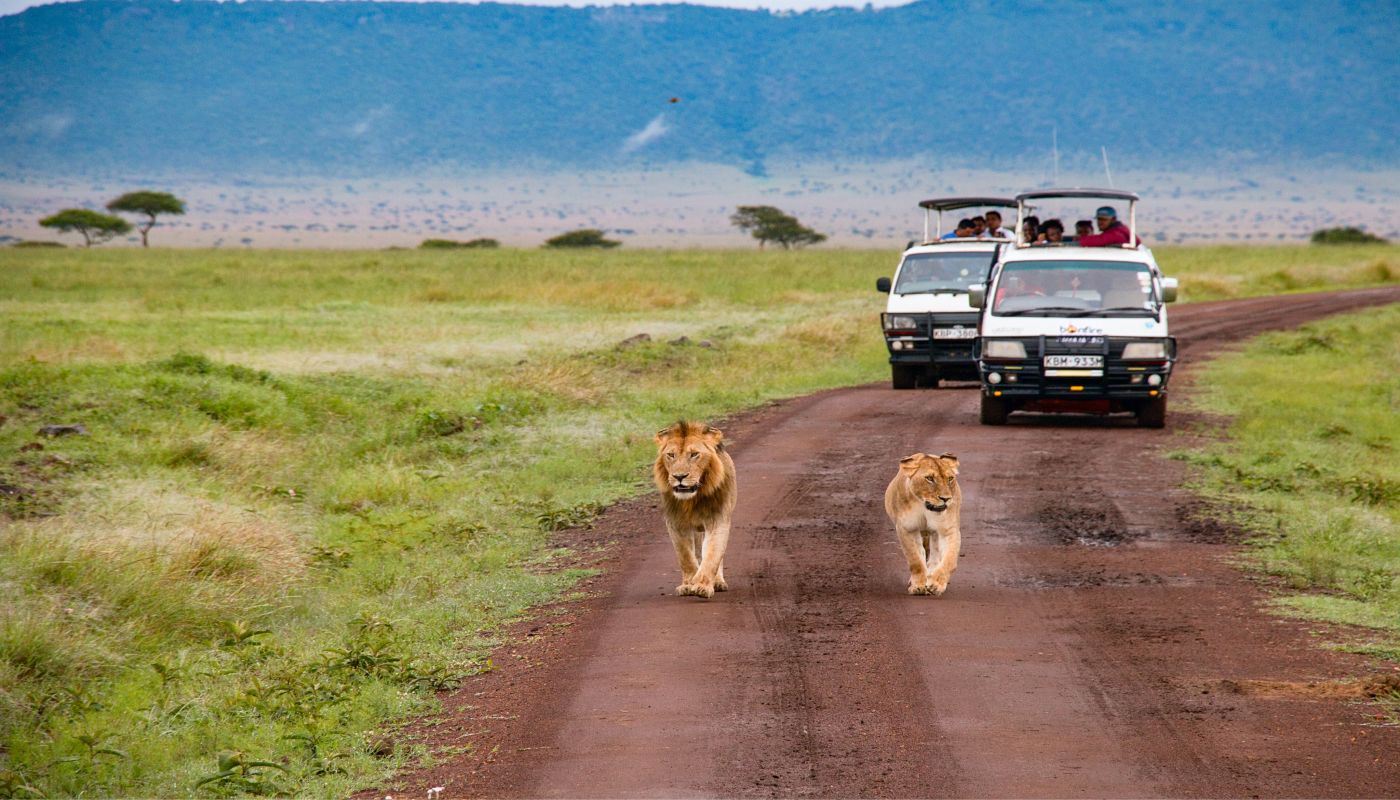
Landscape of Kenya
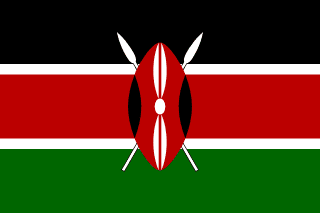
Flag of Kenya

Kenya

Africa

The country of Kenya adopted a new constitution in 2010, after years of violence and frustration from the Kenyan citizens. The new system contains more checks of power, and encourages greater transparency from the government. One of the largest issues concerning human rights is the high number of refugees fleeing conflict in Syria. There are estimated to be around 490,000 refugees in Kenya, which creates many logistical problems with distribution of resources and health services. The country’s GDP is improving, but not at the same rate as surrounding countries.1 1 https://www.cia.gov/library/publications/the-world-factbook/geos/ke.html

What would you like to learn about in Kenya?

Select a section to explore the country where nonprofits are creating positive change.

About Kenya

Founding president and liberation struggle icon Jomo KENYATTA led Kenya from independence in 1963 until his death in 1978, when President Daniel MOI took power in a constitutional succession. The country was a de facto one-party state from 1969 until 1982 when the ruling Kenya African National Union (KANU) made itself the sole legal party in Kenya. MOI acceded to internal and external pressure for political liberalization in late 1991. The ethnically fractured opposition failed to dislodge KANU from power in elections in 1992 and 1997, which were marred by violence and fraud, but were viewed as having generally reflected the will of the Kenyan people. President MOI stepped down in December 2002 following fair and peaceful elections. Mwai KIBAKI, running as the candidate of the multiethnic, united opposition group, the National Rainbow Coalition (NARC), defeated KANU candidate Uhuru KENYATTA and assumed the presidency following a campaign centered on an anticorruption platform. KIBAKI's NARC coalition splintered in 2005 over a constitutional review process. Government defectors joined with KANU to form a new opposition coalition, the Orange Democratic Movement (ODM), which defeated the government's draft constitution in a popular referendum in November 2005. KIBAKI's reelection in December 2007 brought charges of vote rigging from ODM candidate Raila ODINGA and unleashed two months of violence in which as many as 1,500 people died. African Union-sponsored mediation led by former UN Secretary General Kofi ANNAN in late February 2008 resulted in a power-sharing accord bringing ODINGA into the government in the restored position of prime minister. The power sharing accord included a broad reform agenda, the centerpiece of which was constitutional reform. In August 2010, Kenyans overwhelmingly adopted a new constitution in a national referendum. The new constitution introduced additional checks and balances to executive power and significant devolution of power and resources to 47 newly created counties. It also eliminated the position of prime minister following the first presidential election under the new constitution, which occurred on 4 March 2013. Uhuru KENYATTA, the son of founding president Jomo KENYATTA, won the March elections in the first round by a close margin and was sworn into office on 9 April 2013.

Quick Facts

Population
44,037,656 (July 2013 est.)
Area
580,367 sq km
ISO Code
KE
Continent
Africa
Government
republic
Active Causes
12
View all countries in Africa

Geography & Environment

Climate

varies from tropical along coast to arid in interior

Terrain

low plains rise to central highlands bisected by Great Rift Valley; fertile plateau in west

Natural Resources

limestone, soda ash, salt, gemstones, fluorspar, zinc, diatomite, gypsum, wildlife, hydropower

Environmental Issues

water pollution from urban and industrial wastes; degradation of water quality from increased use of pesticides and fertilizers; water hyacinth infestation in Lake Victoria; deforestation; soil erosio...

People & Society

63.29 years
Avg. Life Expectancy
87.4%
Literacy Rate
24% of total population (2011)
Total Urban Population

Languages

English (official), Kiswahili (official), numerous indigenous languages

Religions

Christian 82.5% (Protestant 47.4%, Catholic 23.3%, other 11.8%), Muslim 11.1%, Traditionalists 1.6%, other 1.7%, none 2.4%, unspecified 0.7% (2009 cen...

Health Expenditure

4.8% of GDP (2010) of GDP

Education Expenditure

6.7% of GDP (2010) of GDP

Economy

$1,800
GDP per Capita (PPP)
40%
Unemployment Rate
50% (2000 est.)
Below Poverty Line

Economic Overview

Kenya has been hampered by corruption and by reliance upon several primary goods whose prices have remained low. Low infrastructure investment threatens Kenya's long-term position as the largest East African economy. In the key December 2002 elections, Daniel MOI's 24-year-old reign ended, and a new opposition government took on the formidable economic problems facing the nation. After some early progress in rooting out corruption and encouraging donor support, the KIBAKI government was rocked by high-level graft scandals in 2005 and 2006. In 2006, the World Bank and IMF delayed loans pending...

Causes in Kenya

Environment

Kenya’s environment is varied, with differing ecosystems throughout the country. Only 8% of Kenya’s land is arable due to its arid and semi-arid regions. However, a large percentage of the population works in agriculture. Environmental issues include soil erosion, deforestation, water pollution, and desertification. Kenya is characterized by drought, especially the severe drought beginning in 2006 which endangered nearly 3.5 million citizens’ ability to survive. Environmental issues are caused by more than mere weather concerns, however. Pesticide use by farmers has corrupted water sources and many unsustainable farming methods threaten the environment’s future.1 Deforestation brings about soil erosion, which affects both people’s livelihoods and the habitats of local fauna.2 Animals are also affected by nomadic tribes becoming more stationary, impeding on land they did not used to stay in.3 Air pollution and water pollution in urban centers are also problematic environmental concerns.4

Family

The Kenyan family faces several difficulties. One is early marriage, which is common for women before the age of 18. Many young women already have children by 18. Such young brides face health difficulties such as high risk births and high rates of infant and maternal mortality. Poor, rural women tend to have babies at the youngest ages, increasing pressure on poor families. Family planning remains inaccessible for many women, especially the poor. One out of four married women, aged 15 to 49, wishes to delay her next pregnancy, but does not have access to contraception.1 Thus, unplanned pregnancies occur in most families. Divorce in Kenya can only be achieved by proving a breach of marital fidelity or cruelty within the marriage.2 Some wish to broaden the criteria for divorce. Additionally, widows face hardship in Kenya, as they are often left with few rights after their husband dies. They do not receive an inheritance from their husband, and often do not have the means to economically support themselves and their families after their husband passes away.3 Approximately 6% of girls in Kenya are married by age 15, and 26% are married by age 18.4

Human Rights

The Kenyan government allows for a corrupt police force, abuses by the armed forces (including rape, torture, and killings), and the restriction of freedom of speech, press, and assembly. The judicial system fails to prosecute abusive government officials. In the first eight months of 2016, 78 extrajudicial executions were committed.1 The rights of prisoners are limited, with poor medical care and difficult living conditions within the prisons. Somali refugees have also experienced inhumane conditions in Kenya. Reports have stated that police have taken over refugee camps, making arrests and seeking out bribes, as well as raping refugee women and looting shops.2 Earlier this year, Kenya proposed a plan to shut down the Dadaab refugee camp that was holding about 280,000 refugees, citing the responsibility of the international community to help with the refugee crisis. Property rights are not acknowledged; the government seizes land from homeowners in order to complete infrastructure projects such as roads.3 Reporting sexual violence or domestic abuse to authorities often results in disbelief, further abuse, or cruelty, and society does not accept open discussion of sexual crime.4

Education

Education in Kenya is free, but there are still expenses involved in attending class, which deters a large portion of families from sending their children to school. Additionally, many girls’ experience of sexual abuse, early marriage, or pregnancy prevents them from beginning or completing their education. The system also displays high dropout rates, and low teacher retention. Teachers are largely not trained, and many classrooms are far larger than standards should allow.1 There is a discrepancy between male and female education. The literacy rate among men is 81%, compared to 75% in women.2

Poverty

Kenya is one of the world’s poorest countries. Projections indicate that the poverty rate is between 34 and 42 percent, but data is uncertain because there has not been a household survey since 2012.1 Regional disparities in income remain, with rural areas experiencing a much higher poverty rate, a higher infant mortality rate, and a lower education rate than some urban areas.2 Poverty in Kenya is often rural, linked with agricultural difficulties and ecological degradation.3 Climate change threatens to increase such concerns. Additionally, poverty is often linked to lack of education and large households.4 Access to sanitation and clean water remains poor for Kenya’s rural populations, with access to improved sanitation facilities at only 30% and access to clean water at 57%.5

Religion

Kenya's religious demographic is predominantly Christian, with Christian groups making up 83% of the population. Muslims make up about 11% of the population and other religious groups make 3% of the population.1 While in the past Kenya has experienced general religious harmony, tensions have arisen in recent years between Muslim and Christian groups, particularly in Kenya’s coastal region. The violence is instigated by different groups, including al-Shabaab militants, Christian mobs, and Kenyan military.2

Clean Water

Only 63% of Kenya’s population has access to improved water sources.1 Droughts and poor infrastructure, along with water contamination, limit the water that is available. Water shortages have caused many health issues. The available water is polluted, and breeds viruses, parasites, typhoid, and cholera. The lack of clean water is especially problematic for hospitals. Largely contributing to the water issues are Kenya’s environmental challenges, including drought, which have caused hunger and economic difficulty in the largely agricultural country.2 Additionally, Kenya’s water shortage means that a majority of the country’s women and girls spend one third of their day fetching water, exposing them to a higher risk of waterborne diseases and from attacks and violence.3

Economy

Kenya’s GDP is growing at a rate of about 5.5%.1 Low inflation and a reduction of debt also point to Kenya’s improving economy. Despite these positive indicators, Kenya is underperforming, and its growth rate is lower than other East African and sub-Saharan African nations.2 The poverty rate is currently estimated to be at 43% and the unemployment rate is at 40%. 35% of the GDP comes from agricultural income. The service sector accounts for 47.3% of GDP, and industry 6.7%. Kenya’s main export partners are Uganda, Tanzania, the United States, the Netherlands, and the United Kingdom.3

Government

The Republic of Kenya has been an independent nation since 1963. The constitution for the presidential republic was re-drafted in 2010, creating a role of president as the head of state. The law allows indigenous groups to follow traditions of divorce or marriage and Islamic courts to settle Muslim issues.1 Kenya’s government is highly corrupt. There have been numerous scandals and reports of corruption from all levels of government, such as over $46 million stolen from the Ministry of Education.2 Transparency International ranks Kenya 145th out of 176 countries for perceived corruption, and its own citizens score their elected officials at 26 of 100.3 There is an Ethics and Anti-Corruption Commission (EACC) that conducted an internal investigation and found that nearly $6 billion, 30% of Kenya’s GDP, is lost to corruption annually.4

Health

Kenya’s health care system is in crisis. There is little local care and the average life expectancy is 67 years of age. The death rate from HIV/AIDS dropped by 61.5%, and is no longer the leading cause of death in the country; it now is second to diarrhoeal diseases. HIV/AIDS does, however, continue to be the leading cause of premature death.1 Over one million children have been orphaned due to HIV/AIDS and 200,000 children are afflicted with the disease.2 The mortality rate is high for young children and infants, and 11% of children under 5 are underweight.3 The maternal mortality rate is the nineteenth highest in the world; 510 deaths per 100,000 live births. Infant mortality is 37.1 deaths per 1,000 live births.4

Children

As of 2017, there were 489,250 refugees living in Kenya.1 Refugee children in this population experience frequent discrimination and are at risk of sexual violence due to their highly vulnerable social status.2 Children with disabilities do not have access to proper care in Kenya. One of the most extreme dangers facing Kenya’s female children is female genital mutilation. Although illegal, the practice is ingrained in the culture and difficult to eradicate. 3 Child marriage is also common for girls, with a 23% of Kenyan girls married before age 18.4 Kenya’s infant mortality rate is 37 deaths for every 1,000 live births.5 There is a youth policy, but it has not been updated since 2012.6

Animals

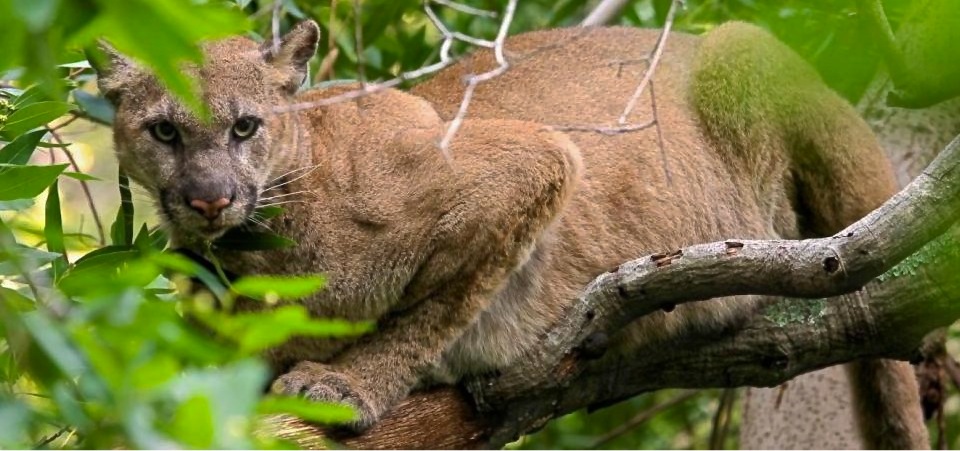
Kenya’s coast is part of the Coastal East Africa ecosystem. This region is home to savanna African elephants, as well as wild dogs, rhinos, and five species of marine turtles. Elephants are a source of fear and frustration for local communities due to their affinity for invading farmland to graze on crops, greatly hurting the profitability of that year’s harvest. The World Wildlife Fund is working to improve the fishing and farming methods used by coastal farmers to create a more sustainable system. Unregulated or illegal fishing, along with deforestation and the illegal wildlife trade has created major threats to the wellbeing of local animal species.1

Nonprofits Working in Kenya

Discover organizations making a difference in Kenya

Make Your Impact Today

Discover causes you care about and support the nonprofits making a difference in communities around the world.

Are you a nonprofit? Join Project World Impact for free

Join Us Free