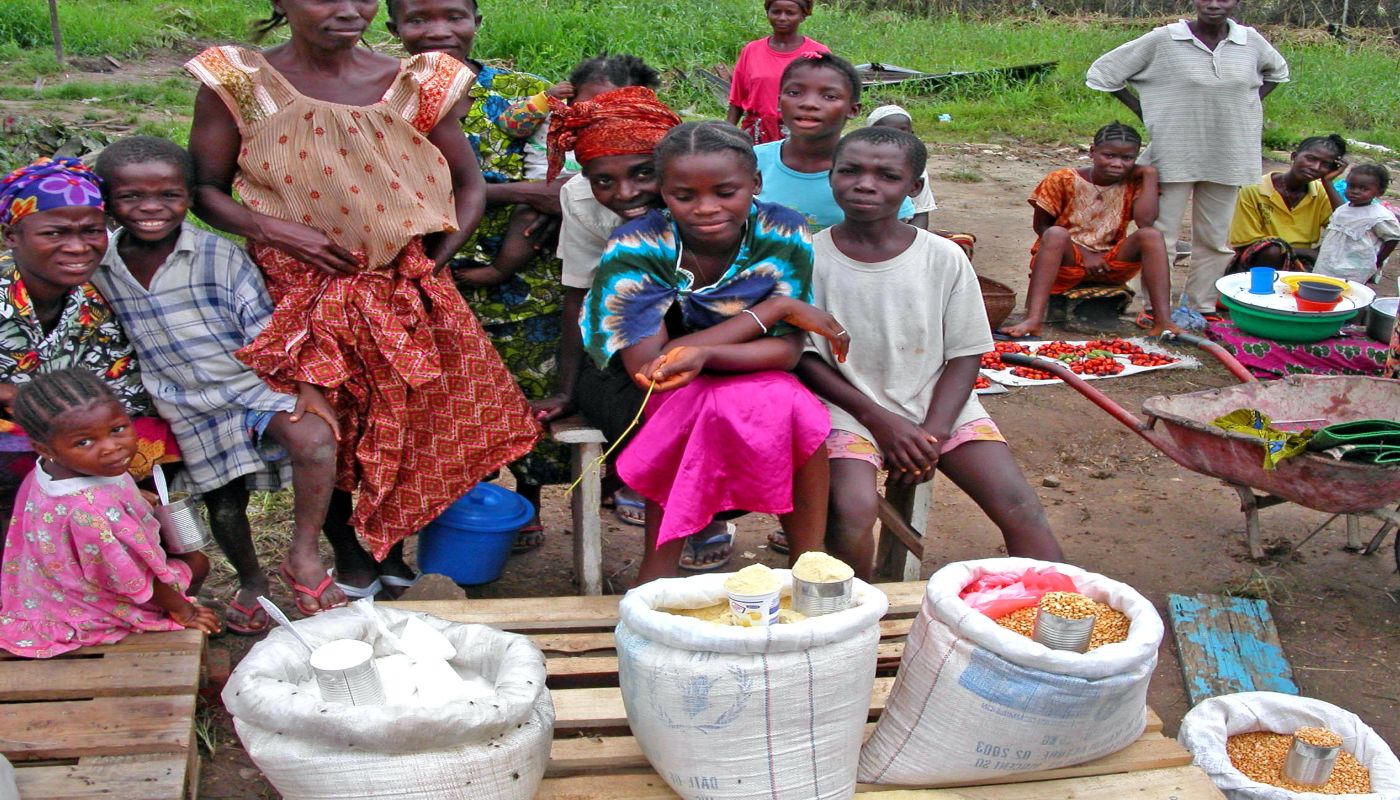
Landscape of Liberia
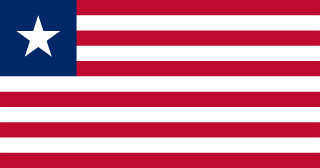
Flag of Liberia

Liberia

Africa

Overview, Liberia The majority of the population in the coastal country of Liberia lives in poverty. The economy has not recovered from the civil war that devastated the country through 2003. Social issues include child labor and prostitution, along with domestic violence against women. Additionally, education is very poor and the literacy rates have not been improving. Healthcare is insufficient, and poor infrastructure hinders transportation and access to clean water.1 1 https://www.cia.gov/library/publications/the-world-factbook/geos/li.html

What would you like to learn about in Liberia?

Select a section to explore the country where nonprofits are creating positive change.

About Liberia

Settlement of freed slaves from the US in what is today Liberia began in 1822; by 1847, the Americo-Liberians were able to establish a republic. William TUBMAN, president from 1944-71, did much to promote foreign investment and to bridge the economic, social, and political gaps between the descendants of the original settlers and the inhabitants of the interior. In 1980, a military coup led by Samuel DOE ushered in a decade of authoritarian rule. In December 1989, Charles TAYLOR launched a rebellion against DOE's regime that led to a prolonged civil war in which DOE was killed. A period of relative peace in 1997 allowed for elections that brought TAYLOR to power, but major fighting resumed in 2000. An August 2003 peace agreement ended the war and prompted the resignation of former president Charles TAYLOR, who faces war crimes charges in The Hague related to his involvement in Sierra Leone's civil war. After two years of rule by a transitional government, democratic elections in late 2005 brought President Ellen JOHNSON SIRLEAF to power. She subsequently won reelection in 2011 in a second round vote that was boycotted by the opposition and remains challenged to build Liberia's economy and reconcile a nation still recovering from 14 years of fighting. The United Nations Security Council in September 2012 passed Resolution 2066 which calls for a reduction of UN troops in Liberia by half by 2015, bringing the troop total down to fewer than 4000, and challenging Liberia's security sector to fill the gaps.

Quick Facts

Population
3,989,703 (July 2013 est.)
Area
111,369 sq km
ISO Code
LR
Continent
Africa
Government
republic
Active Causes
12
View all countries in Africa

Geography & Environment

Climate

tropical; hot, humid; dry winters with hot days and cool to cold nights; wet, cloudy summers with frequent heavy showers

Terrain

mostly flat to rolling coastal plains rising to rolling plateau and low mountains in northeast

Natural Resources

iron ore, timber, diamonds, gold, hydropower

Environmental Issues

tropical rain forest deforestation; soil erosion; loss of biodiversity; pollution of coastal waters from oil residue and raw sewage

People & Society

57.81 years
Avg. Life Expectancy
60.8%
Literacy Rate
48.2% of total population (2011)
Total Urban Population

Languages

English 20% (official), some 20 ethnic group languages few of which can be written or used in correspondence

Religions

Christian 85.6%, Muslim 12.2%, Traditional 0.6%, other 0.2%, none 1.4% (2008 Census)

Health Expenditure

11.9% of GDP (2010) of GDP

Education Expenditure

2.8% of GDP (2008) of GDP

Economy

$700
GDP per Capita (PPP)
85%
Unemployment Rate
80% (2000 est.)
Below Poverty Line

Economic Overview

Liberia is a low income country heavily reliant on foreign assistance for revenue. Civil war and government mismanagement destroyed much of Liberia's economy, especially the infrastructure in and around the capital, Monrovia. Many businesses fled the country, taking capital and expertise with them, but with the conclusion of fighting and the installation of a democratically-elected government in 2006, several have returned. Liberia has the distinction of having the highest ratio of direct foreign investment to GDP in the world. Richly endowed with water, mineral resources, forests, and a clima...

Causes in Liberia

Environment

Even after recovering from civil war that ended in 2003, Liberia is still one of the world’s poorest countries. The economy is largely driven by the agricultural sector, which also provides much of the citizens’ employment. Climate change negatively affects both the employment sector as well as the agricultural and economic sectors. The Global Environment Facility has been working to coordinate educational programs that will help farmers make decisions that are the most efficient environmentally.1 Liberia’s infrastructure is so weak that it is extremely difficult to effectively implement climate change legislation and measures.2

Family

Violence and discrimination against women is one of the biggest issues that women face in Liberia. 33% of married Liberian women have reported that they are victims of domestic violence. 77% reported that they are victims of sexual violence. Cases of Liberian domestic violence are rarely addressed inside of a courthouse, as many families and husbands prefer to settle it internally, so the number of reported incidents are likely much lower than the number of actual incidents. The Liberian government is currently working to restrict the amount of illegal settlements and to ameliorate this problem.1

Human Rights

Inconsistencies and abuses within both the judiciary and the security sectors are common. Police forces remain overzealous and corruption is endemic. Additionally, prison conditions are a human rights concern, as prisons are overcrowded and the majority of detainees were detained before their trials.1 One of the hindrances in reforming Liberia’s human rights record is the culture of impunity that does not allow for total transparency during court proceedings of those convicted of human rights abuses.2 Certain European authorities have taken the initiative to carry out arrests of three leaders who committed atrocities in the civil war, since the Liberian government has not taken action in that area.3

Education

In Liberia, the literacy rate is only at 62% for males and 33% for females, with an average literacy rate of 47.6%.1 For children under 15, however, the literacy rate is 54.5% on average.2 The lower literacy rate among females can be attributed to stigmas against girls receiving an education and females marrying at young ages. Primary school enrollment is at 98%.3

Poverty

Recovery from Liberia’s 14 year civil war has been arduous, and most of the population remains in poverty. Nearly three-fourths of materially poor Liberians live in rural areas and make their livelihood from agriculture and farming activities.1 The GDP per capita is very low at only $673 and unemployment remains stagnant at 85% of the population.2

Religion

Christians in Liberia constitute around 85.6% of the population, and 12.2% are Muslims. The remaining 2.2% follow other traditional indigenous religious beliefs. Many Christian Liberians have integrated indigenous beliefs into their Christian worship.1

Clean Water

Liberia is still attempting to rebuild their water infrastructure after the destruction incurred during the civil war. 76% of the population does not have access to potable water, and only 17% have access to clean sanitation facilities.1 1 in every 4 Liberian people has no access to clean water and 58% of the water that is provided has been found to be infected with E. coli. The World Health Organization estimates that this infected water has exacerbated the spread of preventable illnesses such as cholera and diarrhea.2

Economy

Liberia is strongly dependent on foreign aid and assistance since it is classified as a low income country. The civil war destroyed the country’s economy and infrastructure. This problem was exacerbated by the general mismanagement of funds and resources by the government. Liberia is rich in water, mineral resources, and agricultural products. Liberia’s primary exports are iron ore, rubber, diamonds, and gold. Current investments are being made in the infrastructure and power sector. Liberia continues to face challenges in overcoming corruption and ensuring political stability to build up the economy.1 Liberians have begun to receive assistance through micro-loans that are provided by the Access Bank Limited and the African Development Bank. The majority of future financial assistance programs will be provided for in conjunction with the AfDB.2

Government

Liberia is a republic government with a chief of state and head of government.1 Liberia has the distinction of being the oldest republic-style government in Africa. The country has a history of heads of state perpetrating war crimes during times of political upheaval. Corruption is endemic and anti-corruption laws are loosely interpreted and enforced.3

Health

Since the end of the civil war, the health of Liberians has seen minor improvements. The country has taken steps to reduce the infant mortality rate, which is currently at 66 deaths per 1,000 live births.1 The current life expectancy is 64 years.2 Malaria is the leading cause of death in Liberia and the communicable disease rate remains very high. Diarrheal disease and tuberculosis are also quite common. Recently, there were several outbreaks of Ebola and hemorrhagic fever.3

Children

One issue that affects Liberian children is the practice of child prostitution. The girls involved are called ‘short-time girls’ and they are most commonly seen in the capital of Monrovia. There are hundreds of girls in Monrovia who are sold with the intention of providing for themselves and sometimes for their families. Liberia has not been able to conduct any official surveys on the state of child prostitution, and no official statistics are available. The unique aspect of this phenomenon in Liberia is that prostitution is not perpetrated by crime syndicates, but is encouraged by peers and extended family members.1 Despite this, 36% of children in Liberia are married by the time they are 18.2

Animals

With one of the wettest climates in West Africa, Liberia’s ecosystem consists mainly of lowland forests. Almost all of the forests are influenced by human activity. The country is home to the Diana monkey, Campbell’s monkey, and western red colobus. Civil conflict, mining, logging, and slash-and-burn farming are all threats to the habitats of the native species. The government has almost no protective programs in place to preserve the forests.1

Nonprofits Working in Liberia

Discover organizations making a difference in Liberia

Make Your Impact Today

Discover causes you care about and support the nonprofits making a difference in communities around the world.

Are you a nonprofit? Join Project World Impact for free

Join Us Free