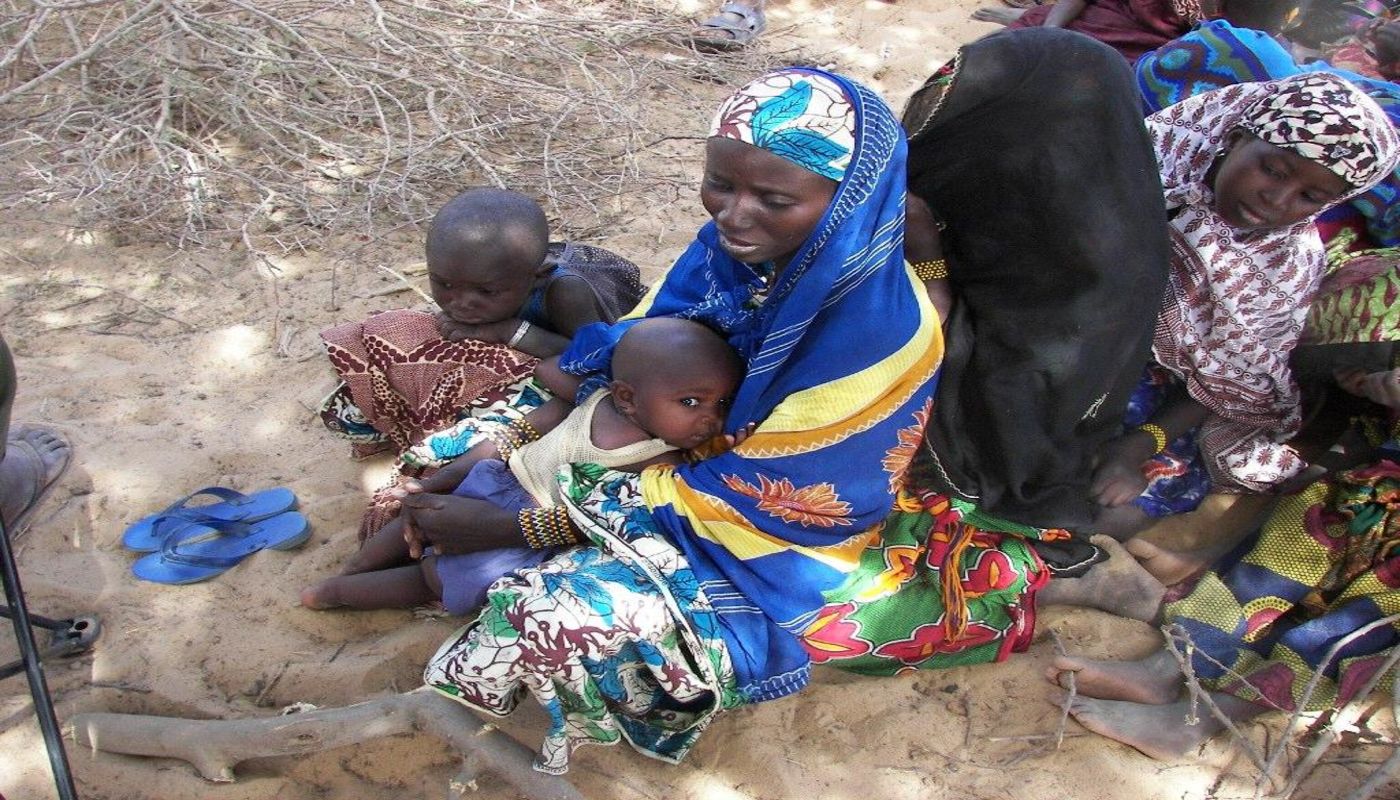
Landscape of Mali
Flag of Mali

Mali

Africa

The country of Mali is landlocked in the western central region of Africa. With rising unrest and internal violence, the country is lacking in foreign investment and reliable economic growth. The government has recently restrained its spending which has reduced financial stress in some areas. Child marriage is a prevalent issue in Malian society, with unions creating educational and health issues for young people, especially young mothers. The country sorely needs educational reform and a balance of legal rights between the genders. Religious freedoms and civil rights are limited.1 1 https://www.cia.gov/library/publications/the-world-factbook/geos/ml.html

What would you like to learn about in Mali?

Select a section to explore the country where nonprofits are creating positive change.

About Mali

The Sudanese Republic and Senegal became independent of France in 1960 as the Mali Federation. When Senegal withdrew after only a few months, what formerly made up the Sudanese Republic was renamed Mali. Rule by dictatorship was brought to a close in 1991 by a military coup that ushered in a period of democratic rule. President Alpha KONARE won Mali's first two democratic presidential elections in 1992 and 1997. In keeping with Mali's two-term constitutional limit, he stepped down in 2002 and was succeeded by Amadou TOURE, who was elected to a second term in 2007 elections that were widely judged to be free and fair. Malian returnees from Libya in 2011 exacerbated tensions in northern Mali, and Tuareg ethnic militias started a rebellion in January 2012. Low- and mid-level soldiers, frustrated with the poor handling of the rebellion overthrew TOURE on 22 March. Intensive mediation efforts led by the Economic Community of West African States (ECOWAS) returned power to a civilian administration in April with the appointment of interim President Dioncounda TRAORE. The post-coup chaos led to rebels expelling the Malian military from the three northern regions of the country and allowed Islamic militants to set up strongholds. Hundreds of thousands of northern Malians fled the violence to southern Mali and neighboring countries, exacerbating regional food insecurity in host communities. A military intervention to retake the three northern regions began in January 2013 and within a month most of the north had been retaken. In a democratic presidential election conducted in July and August of 2013, Ibrahim Boubacar KEITA was elected president.

Quick Facts

Population
15,968,882 (July 2013 est.)
Area
1,240,192 sq km
ISO Code
ML
Continent
Africa
Government
republic
Active Causes
12
View all countries in Africa

Geography & Environment

Climate

subtropical to arid; hot and dry (February to June); rainy, humid, and mild (June to November); cool and dry (November to February)

Terrain

mostly flat to rolling northern plains covered by sand; savanna in south, rugged hills in northeast

Natural Resources

gold, phosphates, kaolin, salt, limestone, uranium, gypsum, granite, hydropower

Environmental Issues

deforestation; soil erosion; desertification; inadequate supplies of potable water; poaching

People & Society

54.55 years
Avg. Life Expectancy
33.4%
Literacy Rate
34.9% of total population (2011)
Total Urban Population

Languages

French (official), Bambara 46.3%, Peul/foulfoulbe 9.4%, Dogon 7.2%, Maraka/soninke 6.4%, Malinke 5.6%, Sonrhai/djerma 5.6%, Minianka 4.3%, Tamacheq 3....

Religions

Muslim 94.8%, Christian 2.4%, Animist 2%, none 0.5%, unspecified 0.3% (2009 Census)

Health Expenditure

5% of GDP (2010) of GDP

Education Expenditure

4.8% of GDP (2011) of GDP

Economy

$1,100
GDP per Capita (PPP)
30%
Unemployment Rate
36.1% (2005 est.)
Below Poverty Line

Economic Overview

Among the 25 poorest countries in the world, Mali is a landlocked country highly dependent on gold mining and agricultural exports for revenue. The country's fiscal status fluctuates with gold and agricultural commodity prices and the harvest. Mali remains dependent on foreign aid. Economic activity is largely confined to the riverine area irrigated by the Niger River and about 65% of its land area is desert or semidesert. About 10% of the population is nomadic and about 80% of the labor force is engaged in farming and fishing. Industrial activity is concentrated on processing farm commodities...

Causes in Mali

Environment

Mali’s economic output is almost entirely dependent on renewable resources such as agriculture and forestry. Additionally, the country is home to diverse climatic regions. Much of the land-locked country is desert, but Mali also has arable land that receives plenty of rainfall. Droughts and irregular rainfall are the two largest concerns as far as climate change is concerned.1 The Malian National Meteorological Service has taken steps to create a system with which they can alert farmers to extreme weather changes such as droughts and also provide three-day weather forecasts.2

Family

Mali has a population growth rate of 3%, even though the country struggles greatly with poverty and unemployment.1 Young brides are virtually voiceless in their early married life, but gain responsibilities and authority as they age. Polygamy is acceptable, and often the oldest wife manages the younger wives.2 The Committee on the Elimination of Discrimination Against Women recommended that Mali push reform for women’s rights, encourage female education, and pass legislation to ban female genital mutilation.3

Human Rights

Human rights have suffered recently as the government stalled in its implementation of a 2015 peace accord.1 There was a report of a journalist being arrested for demotivating the army, and religious hate crimes were committed and prosecuted. There are a variety of independent armed forces moving unhindered within the country initiating attacks on both hostile and civilian groups. More than 135,000 Malians remained in other countries due to the internal conflict. The justice system is sorely lacking in representation of women who were victims of violence. The country created a Truth, Justice, and Reconciliation Commission in 2014, but as of the end of 2016 it was still not functional.2

Education

Mali is in desperate need of education reforms. The adult literacy rate is at 33%, and school enrollment is at 56%.1 After 2012, with violence and political conflict spiraling out of control, the government determined that the way to reconstruct their country was to redo the school system. With help from UNICEF and the UN, Mali is beginning to remake the schools for the almost 800,000 children who were affected by the series of crises that rocked the country. Many schools still lack the necessary supplies, like benches, in order to be effective. Additionally, many teachers are being trained in order to provide psycho-social support.2 Once teachers are trained, there is a disparity in regards to the hiring of competent teachers. Well-trained teachers are relocated to urban areas, resulting in a perpetual cycle of poor education in rural areas.3

Poverty

Poverty is widespread in Mali. The unpredictability of the weather and the threats of climate change have increased food insecurity within the borders. Although poverty in developing countries is thought to be more prevalent within rural communities, there has been a growing level of urban poverty in Mali. It has some of the lowest social indicators in the world, with extremely low vaccination rates for children.1 30% of Malians are unemployed, and 36% are living below the poverty line.2

Religion

The vast majority of the population in Mali (94.8%) practices Sunni Islam, and the rest either follow traditional tribal religions or are Christians. Mali is traditionally Islam, with roots in the religion dating back to the 11th century. The French are credited with introducing Christianity to Mali.1

Clean Water

In Mali, there are an estimated 3.7 million citizens who do not currently have access to safe drinking water. Furthermore, about 80% of the population, 12 million people, have no means of purifying the water or properly disposing of waste. Malians are suffering from their lack of clean water and 4,000 children die annually because of it. Water scarcity is a pervasive problem, especially since the country is landlocked and groundwater is difficult to get to.1 Urban centers provide much better clean water sources, and 97% of citizens in cities have access to potable water. Rural areas suffer the most water shortage, where only about 64% of people have access to drinkable water.2

Government

The Republic of Mali has a multi-party democracy system with a president and a prime minister. Their judicial system remains largely based off of the legal codes that they borrowed from France while under their rule.1 Mali’s government has found the control of corruption and nepotism to be especially challenging, even after the violent conflict ceased. They are ranked 116th out of 176 countries included on the Perceived Corruptions Index. The Malian public ranked their government at 32 out of 100 in transparency.2 The judiciary is particularly susceptible to influence from the political sphere. Despite the fact that the government has been developing anti-corruption measures since the millennium began, there have been few changes that show progress.3

Health

Malaria and diarrhoeal diseases are the most prevalent killers in Mali, but the social stigma behind the contraction of HIV/AIDS causes it to continue to be a pervasive problem because people are reluctant to be diagnosed or treated. The past years have seen decreasing HIV/AIDs rates, finally dropping the diseases from the top ten causes of death in Mali. Girls having children before they are biologically ready combined with inadequate medical care lead to high infant and mother mortality rates.1

Children

Child marriage is a common reality in Mali. The country ranks fourth-highest in child marriages internationally; around 55% of children are married by the time they are 18 and 15% before they are 15. 90% of the girls in these marriages are illiterate. Additionally, they often have children before their bodies are fully ready, which results in high maternal and infant mortality rates.1 The government does not have a general youth policy, but there is a Ministry of Youth and Citizenship Building whose focus is mainly the employment of youth.2 Child labor is a prevalent issue, although the government has made significant progress in reducing the number of children working dangerous jobs in recent years. The industries guilty of using the most child labor are the mining, agricultural, and military sectors.3

Economy

The freedom score of Mali’s economy is well below the world average because of its declining freedoms regarding property rights and monetary freedom. There have been reforms in government spending, which has allowed the entrepreneurial sector to expand, but more steps will need to be taken in order to sustain such growth. Government policy encourages foreign investment in theory, but in actuality the corruption, poor infrastructure, and regional conflict discourages investors. 1

Animals

The Inner Niger Delta is home to one of the last populations remaining of Western African manatees. Hippos, gazelles, and antelopes are all native to Mali, but are endangered by warfare and depleted water sources. Unregulated overfishing has greatly decreased the diversity of fish species. Manmade projects such as farmlands and dams change the water tables and the flood patterns, and are drastically changing the landscape.1

Nonprofits Working in Mali

Discover organizations making a difference in Mali

Make Your Impact Today

Discover causes you care about and support the nonprofits making a difference in communities around the world.

Are you a nonprofit? Join Project World Impact for free

Join Us Free