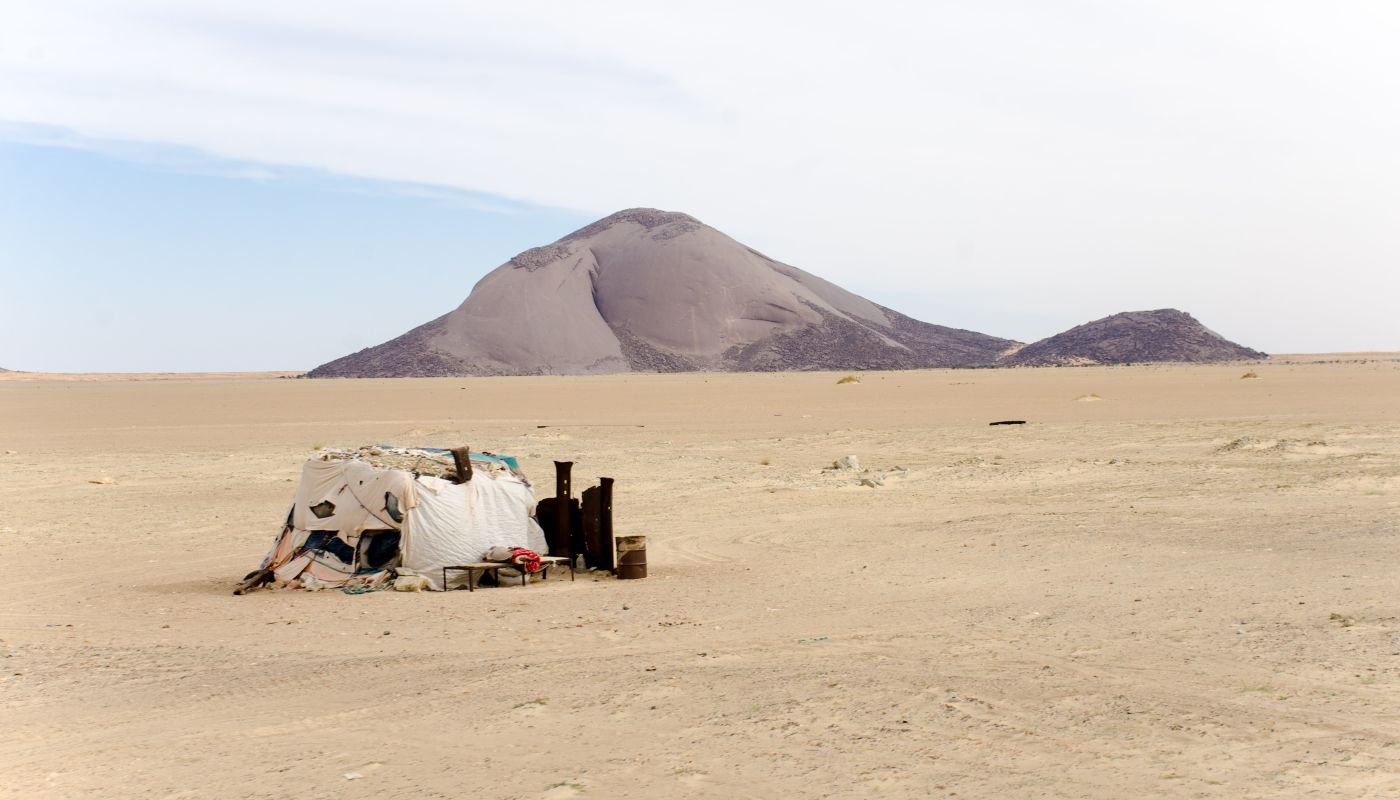
Landscape of Mauritania
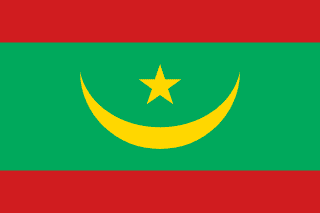
Flag of Mauritania

Mauritania

Africa

Mauritania, found on the western edge of the Sahara desert, suffers from extreme problems with poverty and slavery. The slave trade persists even though slavery was abolished in 1981. The country has a long history of harbouring and being subject to attacks from terrorist organizations, but recently has begun to open dialogues with them in order to reduce the violence. The population suffers greatly from contaminated water and poor infrastructure. There continues to be significant ethnic tension between the three main people groups: Haratines, Bidhan, and other sub-saharan ethnic groups. The country has been experiencing a drought since 1997, which has caused environmental and economic stress.1 1 https://www.cia.gov/library/publications/the-world-factbook/geos/mr.html

What would you like to learn about in Mauritania?

Select a section to explore the country where nonprofits are creating positive change.

About Mauritania

Independent from France in 1960, Mauritania annexed the southern third of the former Spanish Sahara (now Western Sahara) in 1976 but relinquished it after three years of raids by the Polisario guerrilla front seeking independence for the territory. Maaouya Ould Sid Ahmed TAYA seized power in a coup in 1984 and ruled Mauritania with a heavy hand for more than two decades. A series of presidential elections that he held were widely seen as flawed. A bloodless coup in August 2005 deposed President TAYA and ushered in a military council that oversaw a transition to democratic rule. Independent candidate Sidi Ould Cheikh ABDALLAHI was inaugurated in April 2007 as Mauritania's first freely and fairly elected president. His term ended prematurely in August 2008 when a military junta led by General Mohamed Ould Abdel AZIZ deposed him and installed a military council government. AZIZ was subsequently elected president in July 2009 and sworn in the following month. AZIZ sustained injuries from an accidental shooting by his own troops in October 2012 but has continued to maintain his authority. The country continues to experience ethnic tensions among its black population (Afro-Mauritanians) and white and black Moor (Arab-Berber) communities, and is having to confront a growing terrorism threat by al-Qa'ida in the Islamic Maghreb (AQIM).

Quick Facts

Population
3,437,610 (July 2013 est.)
Area
1,030,700 sq km
ISO Code
MR
Continent
Africa
Government
military junta
Active Causes
12
View all countries in Africa

Geography & Environment

Climate

desert; constantly hot, dry, dusty

Terrain

mostly barren, flat plains of the Sahara; some central hills

Natural Resources

iron ore, gypsum, copper, phosphate, diamonds, gold, oil, fish

Environmental Issues

overgrazing, deforestation, and soil erosion aggravated by drought are contributing to desertification; limited natural freshwater resources away from the Senegal, which is the only perennial river; l...

People & Society

61.91 years
Avg. Life Expectancy
58.6%
Literacy Rate
41.5% of total population (2011)
Total Urban Population

Languages

Arabic (official and national), Pulaar, Soninke, Wolof (all national languages), French, Hassaniya

Religions

Muslim (official) 100%

Health Expenditure

4.4% of GDP (2010) of GDP

Education Expenditure

3.9% of GDP (2011) of GDP

Economy

$2,200
GDP per Capita (PPP)
30%
Unemployment Rate
40% (2004 est.)
Below Poverty Line

Economic Overview

Half the population still depends on agriculture and livestock for a livelihood, even though many of the nomads and subsistence farmers were forced into the cities by recurrent droughts in the 1970s and 1980s. Mauritania has extensive deposits of iron ore, which account for nearly 40% of total exports. The nation's coastal waters are among the richest fishing areas in the world but overexploitation by foreigners threatens this key source of revenue. The country's first deepwater port opened near Nouakchott in 1986. Before 2000, drought and economic mismanagement resulted in a buildup of foreig...

Causes in Mauritania

Environment

Mauritania is extremely susceptible to natural disasters, particularly flooding which occurs during the rainy season. Other effects of climate change within the country are rising temperatures and an increase in the extremity of climate events. Since nearly half of the population relies on agriculture to support themselves, the effects of climate change on the economy will be devastating if the government fails to adequately support mitigation methods.1 Twenty years of drought have also contributed to the desertification of much of Mauritania’s land, severely limiting the agricultural productivity of the country.2

Family

Child marriage is a significant concern in Mauritania, and 34% of girls are married before they reach 18.1 In Mauritania, obesity is seen as a sign of wealth, and many child brides are force-fed before marriage in order to make them more desirable. Some young girls are even force-fed animal hormones in order to speed up the process. This force-feeding causes early death and heart disease. There are no laws in place to protect young girls from either child marriage or force-feeding.2 Additionally, there are no domestic abuse laws in place to protect women and children. If a woman is raped, she is at a high risk for being tried and convicted as an adulterer in a court of law.3

Human Rights

Legally, slavery in Mauritania was abolished in 1981. Despite this law, an estimated 43,000 people are living in modern-day slavery.1 The existence of this industry is denied by the government, although there have been three anti-slavery courts created in recent years. Human rights are acknowledged in the country’s constitution, but there are no programs in place to enforce them. Additionally, there are numerous reports that those held in police custody suffered from maltreatment and torture. Human rights activists were frequently arrested during peaceful protests, especially those supporting anti-slavery ideals.2

Education

Over the past decade, Mauritania has seen an increase in the number of private schools throughout the country. However, since these schools have a tuition fee, the number of students who can actually afford to attend is low. Public schools have been a low priority for the government, and teachers can nearly double their salaries by teaching at the private schools.1 Despite this, primary school enrollment has been steadily increasing, and was last measured at 80% in 2015. 2 Mauritania’s adult literacy rate is 52%.3,4,5

Poverty

Mauritania consistently ranks as one of the most underdeveloped and food deficient countries in the world. The high food prices, droughts, and lack of clean water resources have contributed to extreme food insecurity in the country. The government is searching for programs and initiatives that may help bring the country out of its struggle with poverty. 1 One way that Mauritania has fought poverty is by educating the population on sustainable land management to improve agricultural productivity. 2 The country’s unemployment rate is around 13% and the poverty rate is estimated to be 31%.3

Religion

The constitution of Mauritania officially declares the country to be a democratic, Islamic republic, and it only permits Muslim Mauritanians to become citizens. Because of that law, censuses say that 100% of the population is Muslim. Freedom of religion is nonexistent. If a Muslim converts to another religion, they are required to recant within three days or be sentenced to death. Proselytization and distributing non-Islamic materials is criminalized by law.2

Clean Water

As a desert country in the Sahel region of Africa, Mauritania is prone to desertification and water insecurity. Mauritania has been in a drought since the late 1990s. Rural communities are forced to rely on pits or wells miles from their houses which often produce polluted water that causes sickness.1 Even urban areas such as capital city Nouakchott have no pipe system for water.2 Mauritania relies heavily on international aid from organizations such as UNICEF, Oxfam, and the International Red Cross in order to help provide clean water access and sanitation supplies to the citizens.3 Currently, only 58% of the population has access to improved drinking water sources and 40% of the population has access to improved sanitation infrastructure.4

Economy

The majority of Mauritania’s economy is reliant on agriculture and natural resources. The country is rich in mineral deposits such as iron ore, copper, and gold, though much of the population works in agriculture, the fishing industry, or raises livestock. Mauritania is looking to expand to oil and natural gas exploration. The country is highly dependent on foreign aid, and therefore, the government has not been challenged to create an efficient internal infrastructure or rebuild the human capital capacity.1 As such, Mauritania has very extensive institutional weaknesses and with pervasive corruption, the public trust and opinion of the economy has diminished. The financial sector is institutionally weak, and hinders economic growth.2 The country’s unemployment rate is only 13%, but the population still living below the poverty line makes up 31% of the country.3

Health

20% of the females in Mauritania are obese.1 Another serious health issue is female genital mutilation. As of 2013, 69% of all women between ages 15 and 49 in Mauritania had undergone female genital mutilation. This practice is banned, but continues to be performed in rural settings and homes.2 3 Malnutrition is a serious health concern as well, and more than 35,000 children are currently suffering from acute malnutrition.4 The infant mortality rate in Mauritania is 53.3 deaths per 1,000 live births. The maternal mortality rate is also high with 602 deaths per 100,000 live births.5 Communicable diseases, maternal, perinatal, and nutritional problems contribute to 61% of the deaths in the country.6

Children

The slave trade is one of the leading human rights abuses in Mauritania, and children are at the highest risk. The government has taken steps to reduce these problems by creating three anti-slavery courts, as well as funding many smaller programs to prevent child labor. However, these actions are generally ineffective at reducing the risk of slavery for children because birth certificates can only be obtained after proof of marriage and citizenship of the parents are produced. This almost guarantees that these children cannot enroll in secondary school, which greatly increases the odds of them ending up as slaves.1

Government

The Islamic Republic of Mauritania gained independence from France in 1960 and has been under control of a military junta since 2012. Some of the most serious issues facing the government are ethnic tensions between black Afro-Mauritanians and the white and black Moor ethnic groups, as well as the threat of radical Islam and terrorist attacks from Al-Qaeda.1 Corruption has long been a serious problem within the Mauritanian government. Political instability from the military junta has made judicial and fiscal transparency nearly impossible to achieve.2 The public rates their government 27th out of 100 in perceived corruption.3

Animals

The majority of animals in Mauritania are livestock. The native gazelles, cheetahs, and lynx populations are being forced into scattered pockets across the country due to the destruction of habitats from civil wars, land clearing for agriculture, overgrazing, and droughts. There is limited vegetation for many of the same reasons. The government has set aside no protected lands or reserves, which has greatly impacted the wildlife in the country.1

Nonprofits Working in Mauritania

Discover organizations making a difference in Mauritania

Make Your Impact Today

Discover causes you care about and support the nonprofits making a difference in communities around the world.

Are you a nonprofit? Join Project World Impact for free

Join Us Free