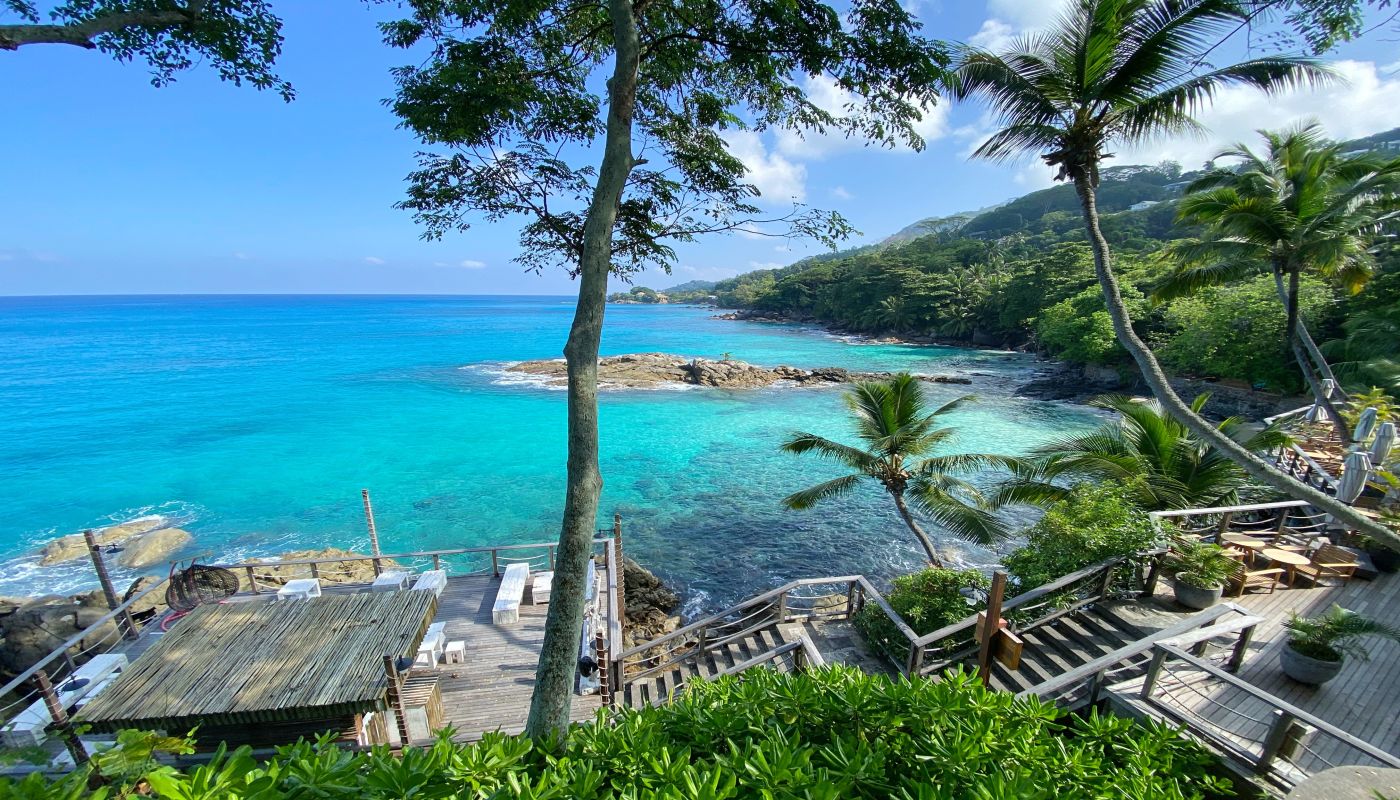
Landscape of Seychelles
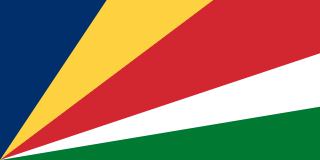
Flag of Seychelles

Seychelles

Africa

The island country of Seychelles is located in the Indian Ocean off the coast of Africa. The small nation was the cause for years of struggle between France and Great Britain, with conflict ending in 1814 in victory for Great Britain. Seychelles gained their independence from Great Britain in 1976, followed by the implementation of a new constitution and free elections in 1993. One of the greatest social struggles facing Seychelles is the financial gap between the upper and lower classes, with a large percentage of the population living below the poverty line despite their notable advances in accessibility of education.1 1 https://www.cia.gov/library/publications/resources/the-world-factbook/geos/se.html

What would you like to learn about in Seychelles?

Select a section to explore the country where nonprofits are creating positive change.

About Seychelles

A lengthy struggle between France and Great Britain for the islands ended in 1814, when they were ceded to the latter. Independence came in 1976. Socialist rule was brought to a close with a new constitution and free elections in 1993. President France-Albert RENE, who had served since 1977, was re-elected in 2001, but stepped down in 2004. Vice President James MICHEL took over the presidency and in July 2006 was elected to a new five-year term; he was reelected in May 2011.

Quick Facts

Population
90,846 (July 2013 est.)
Area
455 sq km
ISO Code
SC
Continent
Africa
Government
republic
Active Causes
12
View all countries in Africa

Geography & Environment

Climate

tropical marine; humid; cooler season during southeast monsoon (late May to September); warmer season during northwest monsoon (March to May)

Terrain

Mahe Group is granitic, narrow coastal strip, rocky, hilly; others are coral, flat, elevated reefs

Natural Resources

fish, copra, cinnamon trees

Environmental Issues

water supply depends on catchments to collect rainwater

People & Society

74.01 years
Avg. Life Expectancy
91.8%
Literacy Rate
53.6% of total population (2011)
Total Urban Population

Languages

Creole 91.8%, English (official) 4.9%, other 3.1%, unspecified 0.2% (2002 census)

Religions

Roman Catholic 82.3%, Protestant 7.5% (Anglican 6.4%, Seventh-Day Adventist 1.1%), other Christian 3.4%, Hindu 2.1%, Muslim 1.1%, other non-Christian...

Health Expenditure

3.4% of GDP (2010) of GDP

Education Expenditure

4.8% of GDP (2006) of GDP

Economy

$25,600
GDP per Capita (PPP)
2%
Unemployment Rate
NA%
Below Poverty Line

Economic Overview

since independence in 1976, per capita output in this Indian Ocean archipelago has expanded to roughly seven times the pre-independence, near-subsistence level, moving the island into the upper-middle-income group of countries. Growth has been led by the tourist sector, which employs about 30% of the labor force and provides more than 70% of hard currency earnings, and by tuna fishing. In recent years, the government has encouraged foreign investment to upgrade hotels and other services. At the same time, the government has moved to reduce the dependence on tourism by promoting the development...

Causes in Seychelles

Education

Seychelles was recently recognized by UNESCO as the only country in Africa to achieve full access to education for all students in the country. As of 2012, 92% of the population was literate. There are new early childhood education care centers and the government made primary education free and compulsory, which has resulted in a 94% primary education enrollment.1 2.9% of the GDP was spent on education in the last survey. For being classified as a small island developing state, the Seychelles has made excellent progress, but there is still room for improvement in developing vocational education programs and providing additional training opportunities for teachers.2, 3

Poverty

The government of the Seychelles is receiving developmental assistance from the United Nations Development Program in order to swiftly and efficiently implement programs of poverty eradication. These programs will specifically target low-income households and the unemployed, both of whom are considered vulnerable to falling into severe material poverty.1 One of Seychelles’ most prevalent issues is the gap between classes, seen in the 39% of the population living below the poverty line.2

Economy

Since gaining their independence in 1976, Seychelles’ GDP per capita has grown sevenfold, giving it one of the highest GDP per capitas in the African region. Tourism was the driving force of economic growth, but the economy has expanded to the tuna fishing industry as well. In 2017 Seychelles achieved developed country status, after reaching fiscal surplus of 3% of the GDP in 2016.1 The government is still working to implement broad-based institutional reforms that will increase the competitiveness on a global scale. After years of being almost solely dependent on tourism to support their economy, Seychelles is looking to diversify their income base by expanding into other industries, such as farming and small-scale manufacturing.2

Government

The Republic of Seychelles has operated in relative stability since the country gained independence from the UK in 1976. The presidential government is characterized by a severe lack of transparency regarding privatization and allocation of land. Public finances have been consistently mismanaged over the last two decades. Records of government embezzlement were also found.1 Seychelles was ranked 43 out of 178 countries on a Corruption Perceptions Index. Seychelles’ government has partnered with the European Union regarding the eradication of piracy in the water surrounding the islands.2,3

Health

Although Seychelles has not yet achieved all of the Millennium Development Goals pertaining to health, the government has been developing and implementing programs to aid in the advancement of health programs. In 2016 life expectancy had risen to 77 for females and 70 for males. The leading causes of death are heart and respiratory diseases.1 Additionally, progress has been slow with the spread and prevalence rate of contraceptives. Currently, only half of the population uses some form of family planning methods.2

Children

In Seychelles, there are few government controls and treaties regarding the treatment of children. There are several government funded awareness programs that focus on curbing the risky behaviors in children that could possibly lead to their exploitation, but despite this, there are no legal processes or protections for children engaging in dangerous labor while they are under the age of 18. Seychelles does not have any sort of youth policy integrated into their government.1 As of 2017, the birth mortality rate had dropped below 11 deaths per 1000 births.2 Seychelles has done remarkably well in the provision of universal primary education and enrollment has drastically increased.3

Environment

Seychelles has joined the Paris Climate Agreement, along with many other agreements concerning environmental problems with oceans, hazardous wastes, and climate change.1 The climate is tropical marine, with frequent monsoons. The water supply is heavily dependent on rainfall, which can be problematic during droughts.2

Family

In Seychelles unions between men and women are common but also unstable, with many ending in divorce. Marriages rarely extend outside social or ethnic classes. Men and women are equal in some areas of the society when considering their specific roles. Women tend to have more economic responsibilities and men do more of the manual labor, such as fishing.1

Human Rights

In Seychelles, governmental security is generally effective but there is evidence that police accept bribes. Additionally, brutality and corruption plague the system. There were also recorded instances of denial of fair public trial. Citizens who openly criticize the government risk their jobs and licenses, and are often intimidated and harassed. Though there are other problems salient within the system, the most common are restriction of free speech or conduct, corruption, and violence toward women and children.1

Religion

The citizens of Seychelles are divided into eight different religious classifications. 76.2% are Roman Catholic, 10.6% are Protestant, 2.4% are other denominations of Christian, 2.4% are Hindu, 1.6% are Muslim, 1.1% are non-Christian, 4.8% are unspecified, and .9% do not have a religion.1

Clean Water

Around 95.7% of the population of Seychelles has access to clean water as of 2015, yet the country suffers from droughts in the dry season. During these times, the entire archipelago struggles to find clean drinking water.1

Animals

The tropical environment of the island country of Seychelles is the cause for the great variety of species that live in its forests. There are over 250 species of birds that can be found there, 12 species of which are completely unique to Seychelles. Along with birds, some other animal attractions are a variety of tortoises, turtles, lizards, and amphibians. These species were greatly endangered by hunting and deforestation, but recent efforts have resulted in much of the wildlife in Seychelles being protected.1

Nonprofits Working in Seychelles

Discover organizations making a difference in Seychelles

Make Your Impact Today

Discover causes you care about and support the nonprofits making a difference in communities around the world.

Are you a nonprofit? Join Project World Impact for free

Join Us Free