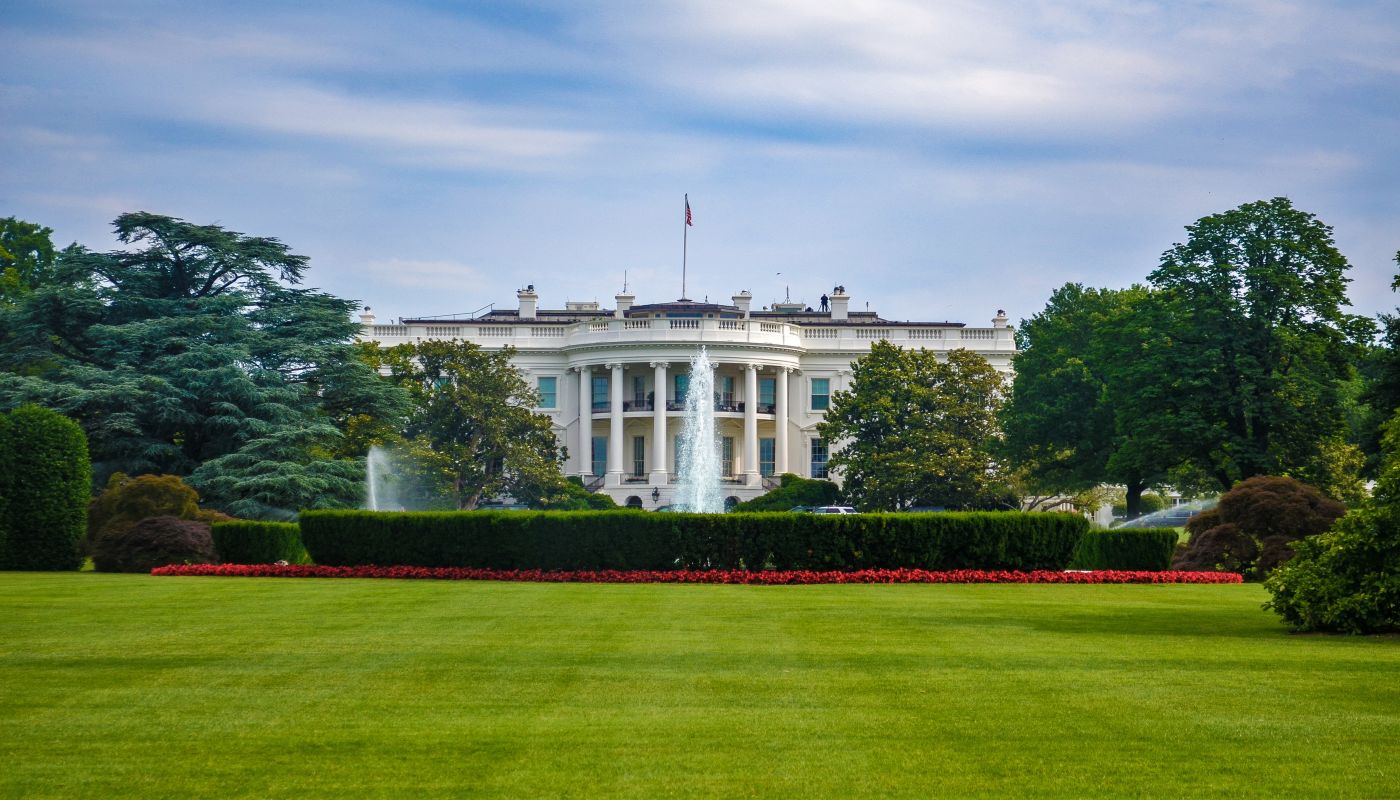
Landscape of United States of America
Flag of United States of America

United States of America

North America

The oldest modern democracy in the world, the United States was founded in 1776. Since the end of World War II, the nation has enjoyed its position as a world superpower with one of the world’s largest economies and most influential governments.1 The United States is known as a melting pot of people from many different ethnic backgrounds, religions, and ideologies. In recent years, the most important issues in the United States have been the risk of terror attacks, the prevalence of race-related gun violence, and immigration reforms.2 1 https://www.cia.gov/library/publications/resources/the-world-factbook/geos/us.html
2 https://www.usnews.com/news/blogs/data-mine/2016/01/03/what-will-be-the-biggest-issues-in-2016

What would you like to learn about in United States of America?

Select a section to explore the country where nonprofits are creating positive change.

About United States of America

Britain's American colonies broke with the mother country in 1776 and were recognized as the new nation of the United States of America following the Treaty of Paris in 1783. During the 19th and 20th centuries, 37 new states were added to the original 13 as the nation expanded across the North American continent and acquired a number of overseas possessions. The two most traumatic experiences in the nation's history were the Civil War (1861-65), in which a northern Union of states defeated a secessionist Confederacy of 11 southern slave states, and the Great Depression of the 1930s, an economic downturn during which about a quarter of the labor force lost its jobs. Buoyed by victories in World Wars I and II and the end of the Cold War in 1991, the US remains the world''s most powerful nation state. Since the end of World War II, the economy has achieved relatively steady growth, low unemployment and inflation, and rapid advances in technology.

Quick Facts

Population
316,668,567 (July 2013 est.)
Area
9,826,675 sq km
ISO Code
US
Continent
North America
Government
Constitution-based federal republic; strong democratic tradition
Active Causes
12
View all countries in North America

Geography & Environment

Climate

mostly temperate, but tropical in Hawaii and Florida, arctic in Alaska, semiarid in the great plains west of the Mississippi River, and arid in the Great Basin of the southwest; low winter temperature...

Terrain

vast central plain, mountains in west, hills and low mountains in east; rugged mountains and broad river valleys in Alaska; rugged, volcanic topography in Hawaii

Natural Resources

coal, copper, lead, molybdenum, phosphates, rare earth elements, uranium, bauxite, gold, iron, mercury, nickel, potash, silver, tungsten, zinc, petroleum, natural gas, timber

Environmental Issues

air pollution resulting in acid rain in both the US and Canada; large emitter of carbon dioxide from the burning of fossil fuels; water pollution from runoff of pesticides and fertilizers; limited nat...

People & Society

78.62 years
Avg. Life Expectancy
99%
Literacy Rate
82% of total population (2010)
Total Urban Population

Languages

English 82.1%, Spanish 10.7%, other Indo-European 3.8%, Asian and Pacific island 2.7%, other 0.7% (2000 census)

Religions

Protestant 51.3%, Roman Catholic 23.9%, Mormon 1.7%, other Christian 1.6%, Jewish 1.7%, Buddhist 0.7%, Muslim 0.6%, other or unspecified 2.5%, unaffil...

Health Expenditure

17.9% of GDP (2010) of GDP

Education Expenditure

5.4% of GDP (2009) of GDP

Economy

$50,700
GDP per Capita (PPP)
8.1%
Unemployment Rate
15.1% (2010 est.)
Below Poverty Line

Economic Overview

The US has the largest and most technologically powerful economy in the world, with a per capita GDP of $49,800. In this market-oriented economy, private individuals and business firms make most of the decisions, and the federal and state governments buy needed goods and services predominantly in the private marketplace. US business firms enjoy greater flexibility than their counterparts in Western Europe and Japan in decisions to expand capital plant, to lay off surplus workers, and to develop new products. At the same time, they face higher barriers to enter their rivals' home markets than f...

Causes in United States of America

Environment

The largest environmental concerns in the United States are pollutants from industry, agriculture, and transportation. The United States Environmental Protection Agency (EPA) oversees and enforces laws and regulations protecting the environment. Various legislations have improved the quality of air and water sources in the United States, but sources of pollution contaminating local resources persist.1 Reports suggest that pollutants from industry and transportation result in $100 billion in increased health costs per year.2 Natural disasters and storms cause damage to infrastructure and many deaths each year, and United States’ Federal Emergency Management Agency, or FEMA, is the official government branch dedicated to disaster prevention, awareness, and relief work.3 After a disaster hits, FEMA acts in accordance within its National Disaster Recovery Framework to deploy professional emergency responders and community response teams.3

Family

Family life has been changing in the United States in the last few decades, and the number of children living with two parents has decreased to 69 percent.1 In 2015, same-sex marriage became legalized in the United States nationwide.2 1 in 4 women and 1 in 7 men will become victims of domestic abuse during their lifetime, which constitutes millions of total victims.3 Currently, 40–50 percent of all marriages in the United States end in divorce.4

Human Rights

The United States legally ensures a wide range of human rights for its citizens. The Constitution and the Bill of Rights guarantee the fundamental liberties.1 These provisions have not been held consistent across all people groups at all points in American history, but modern Americans enjoy these rights regardless of race, class, and gender.1 The media is free to report as they wish, freedom of religion is upheld, and Americans have the right to protest and assemble. Major human rights issues involve immigration policies, drug policy, and criminal justice; with these issues, members of lower socioeconomic status are disproportionately affected. For example, minorities are more likely to be arrested for drug possession even though all ethnicities use drugs at the same rate and the prison system allows for the death penalty and harsh conditions even for minors.1

Education

Education is universally available and compulsory for ages 5-17.1 In 2016, high school graduation rates reached an all-time high of 83 percent of students graduating2 Problems in the education system are frequently rooted in poverty. Public education receives its funding from local, state, and federal governments via taxpayer dollars, which often means that the resources available and quality of education are dependent on the wealth of the surrounding community.3 A high number of students go on to receive vocational training or higher education degrees, but for those entering these programs, only 59% complete their degrees in six years. The causes for this are related to rising cost of education and a lack of academic preparation.3

Poverty

The United States has done much to limit and combat poverty within its borders. Government initiatives such as welfare, food stamps, and Social Security have done much to mitigate the negative influences of poverty and have kept as many as 40 million additional Americans out of poverty.1 It is estimated that 14 percent of Americans live in poverty.2 Poverty is disproportionately higher in black and Hispanic communities.2 According to 2015 data, only 9 percent of white citizens lived in poverty, whereas 24 percent of black citizens lived in poverty.3

Religion

According to the United States Constitution, citizens are free to practice the religion of their choice.1 Christianity is the largest religion in the U.S., with Judaism and Islam also being widely practiced.1 The separation of church and state is a fundamental principle contained within the government of the United States.2 Regardless, religion tends to have a considerable amount of influence in politics, as most presidents have professed some affiliation with Christianity. Some religious institutions encourage their believers to vote a particular way, and groups lobby the government for certain policies on behalf of their religious beliefs.2 While the political sphere has traditionally been dominated by Christians, other minority groups are beginning to get elected more frequently. In 2017, Ilhan Omar, a former refugee, became the first elected female Muslim legislator.3

Clean Water

The United States enjoys some of the safest drinking water in the world.1 This has been achieved through significant efforts to improve legislation and public awareness surrounding water cleanliness. There are a number of technologies to purify water used in the United States, and a typical water treatment plant uses a series of steps that attracts pollutants out of the water using chemicals, filtration, and disinfection through the use of chlorine to purify water.1 However, many water systems in the United States are aging, which is leading to serious problems in tap water nationwide. In 2015 in Flint, Michigan, the entire water system was deemed undrinkable due to high amounts of lead in the water.2

Economy

The United States possesses one of the world’s most powerful economies. It is market-oriented for the public, and the government usually procures their necessary goods from the private sector.1 Lower income American families are facing economic issues like income stagnation and quickly rising medical costs.1 There are a number of agencies, associations, nonprofits, and NGOs dedicated to promoting economic development and job growth. The federal government organization that is dedicated to job creation and economic growth is the Economic Development Administration (EDA), which equips regional communities with the necessary means to compete in a globally competitive market.2

Government

The United States government is a representative democracy with local, state, and federal levels of government.1 The U.S. has a multi–party system, but the Democratic and Republican parties are the two most influential of the political parties. Polls have found that citizens, regardless of party identification, believe the most pressing problem in the U.S. today is the government and its policies.2 In recent years, there has been a lack of trust in the government and many allegations of corruption and collusion with foreign governments, particularly following the 2017 election.3 Despite these drawbacks, Americans enjoy a strong rule of law, many civil liberties, and an effective electoral system.

Health

The leading causes of death in the United States today are heart disease, cancer, chronic lower respiratory disease, and stroke.1 Other concerns include childhood obesity, diabetes, and communicable diseases. Minority groups experience a disproportionate burden of preventable disease, death, and disability, but the U.S. still has one of the highest life expectancies in the world at 79.1 Medical services are extremely expensive without health insurance, and the number of uninsured Americans hit an all time low of 30 million at the end of 2016.2 However, the healthcare system in the United States is undergoing unprecedented change with the 2017 reversal of the controversial Affordable Care Act which previously expanded health coverage, but put economic burden on the middle class.2

Children

16 million children in the United States live in poverty. Consequences of poverty include inadequate food supply, poor educational opportunities, and limited opportunities for upward mobility. African-American and Latino children disproportionately experience child poverty, and 1 in 3 children of color in the U.S. are born into impoverished households.1 Child abuse cases in the United States are found in every socioeconomic class, ethnic division, and religion. It is estimated that more than four children die every day as a result of child abuse.2 However, over 78 percent of child abuse cases take the form of neglect. Physical abuse comprises roughly 18 percent of all child abuse cases and sexual abuse cases comprise over 9 percent of cases.2 Child marriage is seen as an emerging problem in the United States, and between 2000 and 2010, nearly 250,000 young girls were married to men mostly over the age of 18.3

Animals

The United States is home to a wide array of animals ranging from buffalo, dolphins, wolverines, and alligators. The range of animals is due to the diverse ecosystems found around the country like the desert, arctic, mountain range regions, prairies, and two different tropical coastlines.1 Rare animals like loggerhead turtles and polar bears are now on the endangered species list because of increased human populations in their habitat and climate change destroying their environments.1

Nonprofits Working in United States of America

Discover organizations making a difference in United States of America

Vincent House

Vincent House

Vincent House offers a holistic approach to transforming lives of adults affected by mental health challenges. Participants at Vincent House have access to the entire range of training opportunities in our Recovery through Work Partnership, including socialization, work, education, and shared responsibility. Vincent House members develop skills, achieve educational goals, obtain paid employment, find friendship, pursue careers and lead purposeful lives. Vincent House is a family-founded, not-for-profit organization that relies on a financial partnership with members and their families. Tuition covers approximately one half the actual cost of services; financial assistance is available to eligible applicants and their families. Vincent House leads adults with mental illness on a journey to wellness, with work being the core healing process.

Pinellas Park, Florida

Make Your Impact Today

Discover causes you care about and support the nonprofits making a difference in communities around the world.

Are you a nonprofit? Join Project World Impact for free

Join Us Free