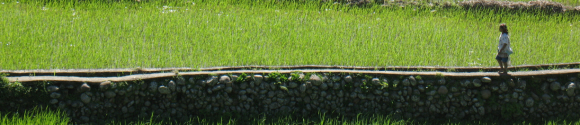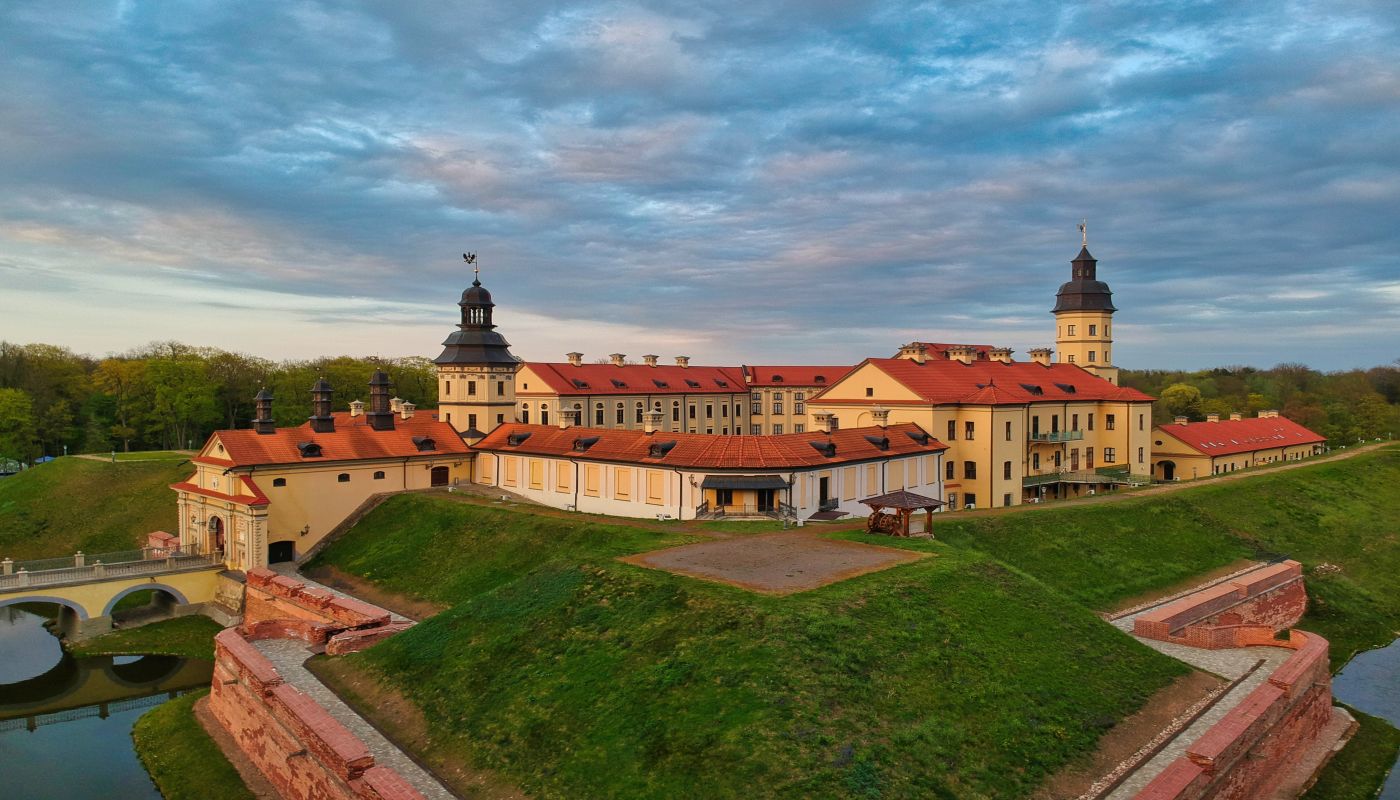
Landscape of Belarus
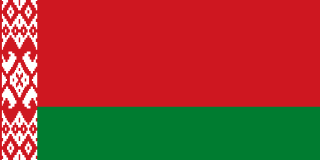
Flag of Belarus

Belarus

Europe

Belarus obtained its independence from Soviet rule in 1991, yet has maintained a close relationship with the Kremlin. The nation held its first free elections in 1994 when Aleksandr Lukashenko was elected. Lukashenko has continued to be Belarus’ president since then.1 Belarusians were heavily affected by the Chernobyl nuclear disaster in 1986; around one fifth of the nation was heavily contaminated with radiation poisoning as a result of the meltdown.2 Belarus formerly had a thriving industrial sector, and though these industries have been largely preserved, they are now out of date and inefficient. Additionally, they operate almost entirely off of Russian energy, profiting from the preferences of the Russian market.3 The nation entered a recession in 2015 through 2016; its GDP per capita is $18,600.4 Belarus spends 20 percent of its annual budget on coping with the aftermath of Chernobyl.5 1 https://www.cia.gov/library/publications/the-world-factbook/geos/bo.html 2 https://www.sos-usa.org/where-we-are/europe/belarus 3 https://www.cia.gov/library/publications/the-world-factbook/geos/bo.html 4 Ibid 5 https://www.usatoday.com/story/news/world/2016/04/17/belarus-border-town-chernobyl-30th-anniversary/82888796/

What would you like to learn about in Belarus?

Select a section to explore the country where nonprofits are creating positive change.

About Belarus

After seven decades as a constituent republic of the USSR, Belarus attained its independence in 1991. It has retained closer political and economic ties to Russia than any of the other former Soviet republics. Belarus and Russia signed a treaty on a two-state union on 8 December 1999 envisioning greater political and economic integration. Although Belarus agreed to a framework to carry out the accord, serious implementation has yet to take place. Since his election in July 1994 as the country's first president, Aleksandr LUKASHENKO has steadily consolidated his power through authoritarian means. Government restrictions on freedom of speech and the press, peaceful assembly, and religion remain in place.

Quick Facts

Population
9,625,888 (July 2013 est.)
Area
207,600 sq km
ISO Code
BY
Continent
Europe
Government
republic in name, although in fact a dictatorship
Active Causes
12
View all countries in Europe

Geography & Environment

Climate

cold winters, cool and moist summers; transitional between continental and maritime

Terrain

generally flat and contains much marshland

Natural Resources

timber, peat deposits, small quantities of oil and natural gas, granite, dolomitic limestone, marl, chalk, sand, gravel, clay

Environmental Issues

soil pollution from pesticide use; southern part of the country contaminated with fallout from 1986 nuclear reactor accident at Chornobyl' in northern Ukraine

People & Society

71.81 years
Avg. Life Expectancy
99.6%
Literacy Rate
75% of total population (2011)
Total Urban Population

Languages

Belarusian (official) 23.4%, Russian (official) 70.2%, other 6.4% (includes small Polish- and Ukrainian-speaking minorities) (1999 census)

Religions

Eastern Orthodox 80%, other (including Roman Catholic, Protestant, Jewish, and Muslim) 20% (1997 est.)

Health Expenditure

5.6% of GDP (2010) of GDP

Education Expenditure

5.3% of GDP (2011) of GDP

Economy

$15,900
GDP per Capita (PPP)
1%
Unemployment Rate
27.1% (2003 est.)
Below Poverty Line

Economic Overview

As part of the former Soviet Union, Belarus had a relatively well-developed industrial base; it retained this industrial base - which is now outdated, energy inefficient, and dependent on subsidized Russian energy and preferential access to Russian markets - following the breakup of the USSR. The country also has a broad agricultural base which is inefficient and dependent on government subsidies. After an initial burst of capitalist reform from 1991-94, including privatization of state enterprises, creation of institutions of private property, and development of entrepreneurship, Belarus' eco...

Causes in Belarus

Environment

Timber, peat, oil and natural gas, granite and limestone are all natural resources of Belarus.1 Belarus has over 10,000 lakes, as well as large, forested areas.2 Soil pollution is a prominent issue, stemming from insecticide use.3 99.2 percent of Belarus’ electricity comes from fossil fuels, and Belarus is heavily dependent on Russia for its energy.4 In 1986, during a systems test, a nuclear power plant in Chernobyl exploded, contaminating one-fourth of the country with radiation, affecting over two million people.5 Approximately 70 percent of the radioactive damage was concentrated in Belarus, and over half a million people have been relocated since the incident.6 Belarus spends 20 percent of its annual budget on coping with the lingering impacts of Chernobyl, and harmful radioactive isotopes reportedly still remain in and around the exclusion zone at the border shared with Ukraine.7

Family

The birth rate in Belarus is 10.3 per 1000 people, and the infant mortality rate is 3.6 deaths per 1000 births, a considerably low rate.1 Additionally, there are 8.9 marriages for every 1000 people, making Belarus 11th in the world for its marriage rates, according to The Economist.2 The divorce rate is 3.8 per 1000 people.3 In 2016, Belarus became the fourth nation in the world to eradicate mother-child HIV and congenital syphilis.4

Human Rights

Belarus is the only European country remaining that still uses the death penalty.1 In spring of 2018, 100 peaceful protestors were detained by authorities.2 The government has also been fighting for the ability to block its citizens’ access to certain websites.3 Members of the media have also been known to be detained and abused by the authorities.4 Additionally, the election process in Belarus has not historically been free.5

Education

Education in Belarus is free, and is compulsory until the age of 15, yet many students stay on to finish at age 18.1 All students follow the same basic curriculum until 15, when they are free to enroll in and attend a college or technical institute.2 The two official languages in Belarus are Russian and Belarusian.3 While the primary school enrollment rate in Belarus is reported as 99 percent,6 approximately 14,000 children do not attend primary school.7 The national literacy rate is 99.7 percent.8

Poverty

Belarus’ poverty rate is just 5.6 percent, and the unemployment rate is extremely low at just 1 percent. However, reports show that underemployment is an issue, though virtually the entire population is employed in some capacity.1 The GDP per capita is $18,600.2 5.7 percent of the population lacks access to proper sanitation facilities.3 The World Bank reports that from 2000 to 2016 the poverty rate fell from 41.9 to 5.7 percent.4

Religion

In Belarus, 48.3 percent of the population considers themselves Orthodox, 7.1 percent are Catholic and 3.5 percent are other. 41.1 percent say they are non-believers.1 The Belarusian Orthodox Church is granted special privileges and rights by the government that are not granted to other religious groups. However, the Belarusian constitution grants citizens the right to worship and observe any religion. All religious groups are required to obtain permits to establish themselves within Belarus; religious groups operating without a permit are prohibited.2 The government has been known to limit the rights of religious minority groups, including Jehovah’s Witnesses.

Clean Water

Belarus has widespread, almost complete, access to clean water for its citizens, but 5.7 percent of Belarus still does not have access to proper sanitation facilities.1 In spring of 2014, the World Bank gave Belarus a loan of $90 million to help finance the ongoing Water Supply and Sanitation Project to improve dependability and infrastructure of a number of urban water and sanitation facilities.2 The World Bank reports that the implementation of this project is progressing as planned.3

Economy

Belarus formerly had a thriving industrial sector, and though these industries have been largely preserved, they are now out of date and inefficient. Additionally, Belarusian industry operates almost entirely off of Russian energy, profiting from the preferences of the Russian market.1 The nation entered a financial crisis in 2011 due to a government-mandated salary increase, and a recession lasted from 2015 through 2016.2 Foreign investment has been low, save for Russian investments. In early 2018, the Belarusian government released $600 million in Eurobonds primarily to investors in the United States and Great Britain. Public debt accounts for 46.2 percent of the GDP.3 The GDP per capita in Belarus is $18,600, and 5.7 percent of the population falls below the poverty line.4 Belarus spends 20 percent of its annual budget on coping with the effects of the 1986 Chernobyl nuclear disaster.5

Government

Until 1991, Belarus was a republic of the USSR, and though it has declared its independence it remains closely tied with Russia.1 Aleksandr Lukashenko is the first elected president, and has centralized the economic system and retained power through authoritarian means.2 In 2015, Lukashenko won another election for his fifth, five year term, though international critics claim the elections were not free.3 Corruption has been pervasive in all branches of the government since Lukashenko obtained power over two decades ago.4 There are few checks and balances placed on the presidency or any branch of government.5 Transparency International gives Belarus a low score of 44 out of 100 for lack of government transparency and high levels of corruption.6 Additionally, Belarus is ranked above average, 68th of 180, for the level of corruption perceived to be present in the government by its citizens.

Health

In 1986, during a systems test, a nuclear power plant in Chernobyl exploded, contaminating one-fourth of the country with radiation and affecting over two million people.1 Approximately 70 percent of the radioactive damage was concentrated in Belarus, and over half a million people have been relocated since the incident.2 5.7 percent of the population lacks access to proper sanitation facilities.3 There are approximately 19,000 people living with HIV/AIDS in Belarus or 0.4 percent of the adult population.4 Heart disease, strokes and Alzheimer’s disease are the leading causes of death.5

Children

Belarus is known as having one of the lower birth rates in the world, approximately 10 births per 1,000 people.12 Five percent of Belarusian children under the age of 14 are working.3 Roma children are particularly at risk of marginalization, faced with challenges in enrolling in schools, particularly because Belarusian schools are taught in the nation’s official language, Russian.4 In 2015, in the Belarus Universal Periodic Review on Children’s Right, Belarus amended the current legislation in place to include provisions for children to appear before court, as well as have a say in custody hearings when necessary.5

Animals

Belarus has little to no legislation in place ensuring the protection of animals, nor does it enforce the few policies that it has in place. The World Animal Protection Index gives Belarus a G rating in animal protection, a poor score. Animal welfare policies in place define humane treatment as processes that do not alter the quality of whatever products may come from the animal in question.1 As a result of the Chernobyl nuclear meltdown, the region surrounding the former nuclear plant is now emptied of human influence, leaving local wolf populations to grow; the wolf population in the Belarusian Chernobyl restricted zone is seven times higher than that of other unrestricted areas in the nation. However, the region still faces the effects of radiation, and is uninhabitable by human beings.2

Nonprofits Working in Belarus

Discover organizations making a difference in Belarus

Make Your Impact Today

Discover causes you care about and support the nonprofits making a difference in communities around the world.

Are you a nonprofit? Join Project World Impact for free

Join Us Free