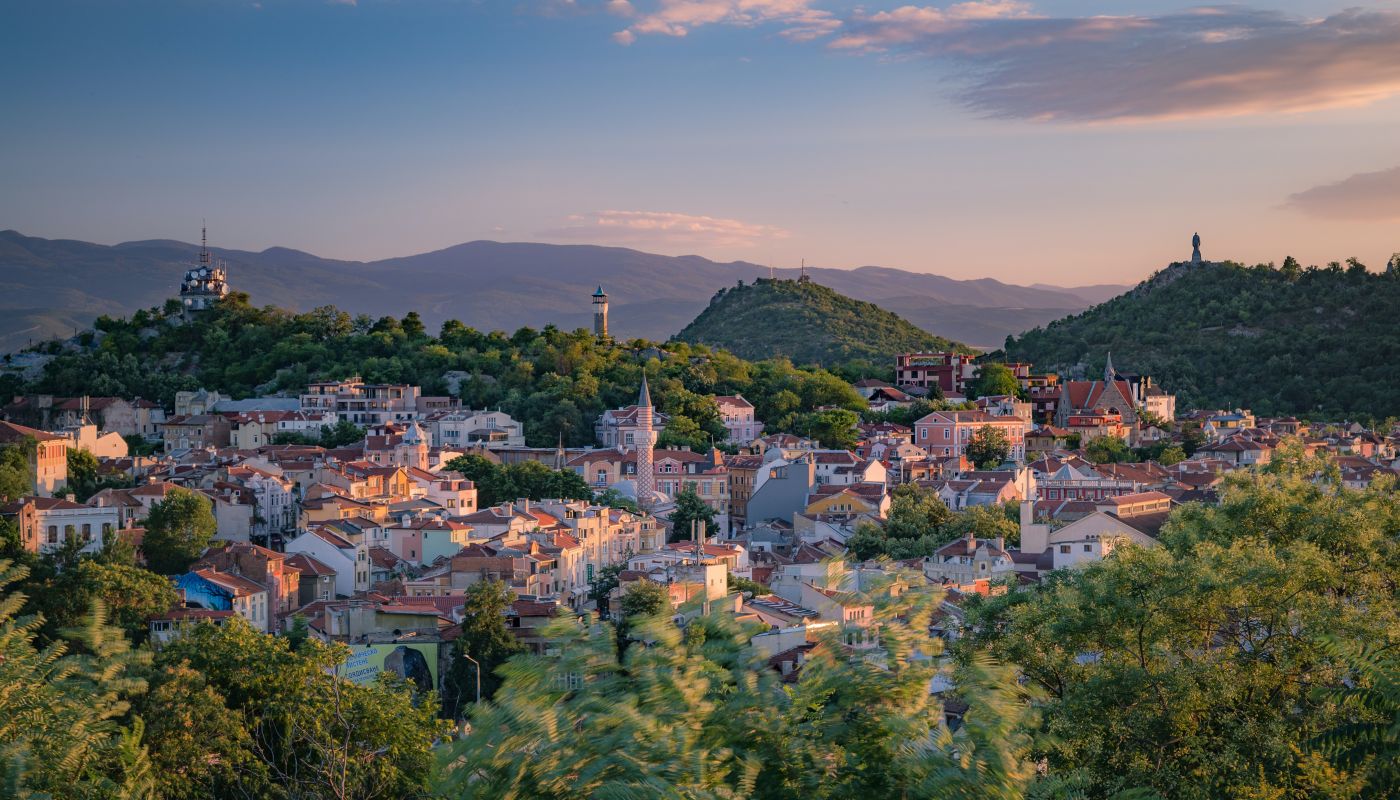
Landscape of Bulgaria
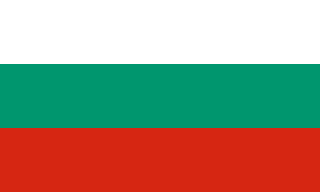
Flag of Bulgaria

Bulgaria

Europe

Bulgaria gained its freedom from the Ottoman Empire in 1908, but in 1946 it fell under Soviet power, and became a People’s Republic. In the 1990s, when Soviet rule fell, and communist control ended, Bulgaria ran its first multiparty elections since World War II and began the process toward true democracy and a free market economic system. Bulgaria joined NATO and the EU in the early 2000s.1 Bulgaria’s per capita income continues to be the lowest in the European Union, though its economy has displayed continuous growth.2 1 https://www.cia.gov/library/publications/the-world-factbook/geos/bu.html 2 Ibid

What would you like to learn about in Bulgaria?

Select a section to explore the country where nonprofits are creating positive change.

About Bulgaria

The Bulgars, a Central Asian Turkic tribe, merged with the local Slavic inhabitants in the late 7th century to form the first Bulgarian state. In succeeding centuries, Bulgaria struggled with the Byzantine Empire to assert its place in the Balkans, but by the end of the 14th century the country was overrun by the Ottoman Turks. Northern Bulgaria attained autonomy in 1878 and all of Bulgaria became independent from the Ottoman Empire in 1908. Having fought on the losing side in both World Wars, Bulgaria fell within the Soviet sphere of influence and became a People's Republic in 1946. Communist domination ended in 1990, when Bulgaria held its first multiparty election since World War II and began the contentious process of moving toward political democracy and a market economy while combating inflation, unemployment, corruption, and crime. The country joined NATO in 2004 and the EU in 2007.

Quick Facts

Population
6,981,642 (July 2013 est.)
Area
110,879 sq km
ISO Code
BG
Continent
Europe
Government
parliamentary democracy
Active Causes
12
View all countries in Europe

Geography & Environment

Climate

temperate; cold, damp winters; hot, dry summers

Terrain

mostly mountains with lowlands in north and southeast

Natural Resources

bauxite, copper, lead, zinc, coal, timber, arable land

Environmental Issues

air pollution from industrial emissions; rivers polluted from raw sewage, heavy metals, detergents; deforestation; forest damage from air pollution and resulting acid rain; soil contamination from hea...

People & Society

74.08 years
Avg. Life Expectancy
98.4%
Literacy Rate
73.1% of total population (2011)
Total Urban Population

Languages

Bulgarian (official) 76.8%, Turkish 8.2%, Roma 3.8%, other 0.7%, other (unknown) 10.5% (2011 census)

Religions

Eastern Orthodox 59.4%, Muslim (Sunni) 7.4%, Muslim (Shia) 0.4%, other (including Catholic, Protestant, Armenian Apostolic Orthodox, and Judaism) 1.7%...

Health Expenditure

6.9% of GDP (2010) of GDP

Education Expenditure

4.6% of GDP (2009) of GDP

Economy

$14,500
GDP per Capita (PPP)
11.1%
Unemployment Rate
21.8% (2008)
Below Poverty Line

Economic Overview

Bulgaria, a former Communist country that entered the EU on 1 January 2007, averaged more than 6% annual growth from 2004 to 2008, driven by significant amounts of bank lending, consumption, and foreign direct investment. Successive governments have demonstrated a commitment to economic reforms and responsible fiscal planning, but the global downturn sharply reduced domestic demand, exports, capital inflows, and industrial production. GDP contracted by 5.5% in 2009, stagnated in 2010, despite a significant recovery in exports, grew 1.7% in 2011, and 1% in 2012. Despite having a favorable inves...

Causes in Bulgaria

Environment

Bulgaria suffers various forms of air and water pollution from industrial emissions and sewage, as well as soil contamination from industrial waste, and deforestation. Forests additionally suffer from the air pollution and acid rain.1 In a country brief prepared by the European Environment Agency, the EEA found that Bulgaria’s industries were consuming significant amounts of the nation’s energy and national resources.2 Bulgaria possesses a high amount of water resources, compared to other EU nations, yet it uses a large amount of these resources for the cooling process during energy production rather than for human consumption.3 There has also been a decrease in the population of birds in the nation.4

Family

Marriage trends and patterns in Bulgaria are largely the same as those in Western countries.1 Only civil ceremonies are recognized as legally binding, although religious ceremonies often accompany them.2 Divorce is becoming more common and the stigmatization that accompanies it is diminishing.3 Bulgaria passed the Law on Protection Against Domestic Violence in the early 2000s, establishing and inter-ministerial task group assigned with overseeing the law’s implementation. The Ministry of Labor and Social Policy also developed a plan to combat domestic violence, aiming to ensure punishment for abusers, and safety for victims.4

Human Rights

Bulgaria is on a route taken by many refugees through Iran, Turkey, Serbia, Croatia and Italy.1 After conducting interviews with 45 asylum seekers attempting to cross from Turkey to Bulgaria, the Human Rights Watch found that all but one had been stripped of their belongings, and 26 of them had been bitten by dogs or otherwise beaten by the Bulgarian border authorities.2 Unaccompanied child refugees are not given adequate living conditions upon arrival. Additionally, the Bulgarian media is subjected to political pressure or charges, and is the lowest ranking nation in the European Union on the World Press Freedom Index.3

Education

The Ministry of Education and Science provides technical and financial support for the education system in Bulgaria.1 Between the ages of 7 and 16, attendance and participation in school is mandatory.2 There are around 51 fully accredited and established higher education schools in Bulgaria, and the official language of instruction is Bulgarian.3-4 However, there are secondary schools that specialize in foreign language learning and there, students can learn Armenian, Hebrew, Russian, French, Italian, English, and German.5 Higher education institutions are subject to regulations from the Higher Education Law of 1995.6 The country’s literacy rate is 98.4 percent.7

Poverty

23.4 percent of Bulgarians live under the poverty line, and 6.2 percent of the population is unemployed — a lower rate than in previous years.1 Additionally, 14 percent of Bulgarians do not have modern sewage and sanitation facilities.2 Bulgaria is 10 years behind its European allies in growth and reform economically. It is the poorest nation in the EU. Economists say that bureaucratic red tape and corruption played a heavy role in Bulgaria’s slow reform.3

Religion

The majority of Bulgarians claim the Eastern Orthodox church. The remainder of the population identifies as Muslim (7.8 percent), other, meaning Catholic, Protestant, Armenian Apostolic Orthodox or Jewish (1.7 percent), none (3.7 percent) or unspecified (27.4 percent).1 The Bulgarian constitution and laws formally protect the aspect of religious freedom, but laws and policies are inconsistently enforced, thus leaving room for societal abuses.2 Additionally, the Eastern Orthodox church is considered the national, traditional church and therefore does not have to register with the government, as other religious groups do.3

Clean Water

Nearly all of the country has access to clean water — just 0.6 percent of Bulgarians lacking access. However, 14 percent of Bulgarians do not have modern sewage and sanitation facilities.1 Though water is available to virtually the entire population, rural communities can seasonally experience shortages. In 2016, the World Bank’s Municipal Infrastructure Development Project announced that it will build, complete or repair a number of dams in rural areas of Bulgaria to ensure that approximately 170,000 Bulgarians will have consistent access to a reliable water supply, rather than having to ration water seasonally.2 Bulgaria’s rivers are also subject to pollution through the dumping of raw sewage, heavy metals and detergents.3

Economy

Bulgaria’s per capita income continues to be the lowest in the European Union, though its economy has displayed continuous growth.1 Russia is the nation’s primary source of energy, creating an economic dependence, particularly related to natural gas, though Bulgaria is working with the EU to remedy that dependence and expand supply for natural gas.2 Bulgaria’s GDP in purchasing power is $153 billion.3 The unemployment rate is 6.2 percent, a comparatively middle-range rate internationally.4 6.8 percent of the population is in agriculture, 26.6 percent is in industry, and 66.6 percent is in services.5

Government

Bulgaria is a former Soviet People’s Republic, and communist rule ended in 1990.1 The country became a member of NATO in 2004 and joined the European Union in 2007.2 The Republic of Bulgaria is currently a parliamentary democracy with a president and prime minister.3 Transparency International gives Bulgaria a score of 43 for its national perception of corruption, ranking the nation as 71st in the scoring of 180 countries for transparency. Eastern Europe is one of the lowest ranking regions in transparency and corruption perception.6

Health

A serious issue that Bulgaria currently faces is the high rate of health care professionals and doctors that are leaving Bulgaria in favor of working elsewhere in the European Union.1 Doctors in other EU countries have the opportunity to earn up to ten times more than the salary of a doctor who practices in Bulgaria.2 Cardiovascular disease and cancer are the leading causes of death, and life expectancy is 74.7 years, the second lowest life expectancy in the EU.3 Almost 12 percent of the population lacks health insurance.4 Bulgaria also has the largest smoking population in the EU.5

Children

UNICEF reports that Bulgaria has made progress toward the improvement and modernization of child welfare policy, as well as the goals set by the Committee on the Rights of the Child and the EU.1 Bulgaria maintained the budget for its child protective service, despite its social services budget receiving cuts. In the early 2000s, the number of children in residential care institutions, such as orphanages and children’s homes, dropped by 40 percent. Children with disabilities still represent 46 percent of children in these residential care systems.2 Roma children are particularly at risk of marginalization in the school system. Roughly 130,000 children do not attend school in Bulgaria, and a majority of them are Roma.3 UNICEF, alongside the Bulgarian government, is working to reduce exclusion through support and resources to such marginalized communities. Their current objective is to make these efforts more systematic.4

Animals

Bulgaria is home to the Balkan Forests, and, subsequently, houses a large variety of plants and animals.1 No reliable data or reportable policies exist on animal protection or welfare policies in the nation. However, as a member of the European Union, Bulgaria is subject to the goals and policies of the EU on issues such as animal transportation and trade in the agriculture industry, to prevent animal abuse, the spread of disease and injury.2 There has also been a decrease in the population of birds in the nation.3

Nonprofits Working in Bulgaria

Discover organizations making a difference in Bulgaria

EUROPEAN & MIDDLE EASTERN MINISTRIES INCORPORATED

EUROPEAN & MIDDLE EASTERN MINISTRIES INCORPORATED

EME endeavors to enable worshipping communities to transform their local environments through education and community / business development projects, especially in the Southeastern Europe, the Middle East and North Africa Mission Statement EME Purposes To: • Enable local churches, ministries and other partners, primarily in the Mediterranean Region. • Empower partnerships with necessary provisions—e.g. personnel, finance, training and other essentials—to better advance their efforts. • Support the development of educational programs within the framework of partnerships— e.g. kindergartens, primary schools, K-12 schools and adult education—and the implementation of community building projects, including Business as/for Mission.

Jonesboro, Arkansas

Polaris

Modern slavery is a multi-billion dollar criminal industry that denies freedom to 20.9 million people around the world. And no matter where you live, chances are it’s happening right down the street. From the girl forced into prostitution at a truck stop, to the man discovered in a restaurant kitchen, stripped of his passport and held against his will. Polaris, named after the North Star that guided slaves to freedom in the U.S., disrupts the conditions that allow human trafficking to thrive in our society. From working with government leaders to protect victims’ rights, to building partnerships with the world’s leading technology corporations, we spark long-term change that focuses communities on identifying, reporting and eliminating trafficking networks. Our comprehensive model puts victims at the center of all that we do -- helping survivors restore their freedom, preventing more victims, and gathering the data to pursue traffickers wherever they operate. Unparalleled expertise. Relentlessness. And an innovative spirit. This is how Polaris eradicates the slavery networks that rob human beings of their lives and their independence. Freedom happens now.

Washington, District Of Columbia
CORDELL HULL FOUNDATION FOR INTERNATIONAL EDUCATION

CORDELL HULL FOUNDATION FOR INTERNATIONAL EDUCATION

The Cordell Hull Foundation, a nonprofit 501(c)(3) corporation, is active in sponsoring exchange programs for qualifying teachers from six continents. Currently, teachers hail from more than fifty countries including Argentina, Australia, Austria, Belgium, Bolivia, Brazil, Botswana, Bulgaria, Canada, Chile, China, Colombia, Costa Rica, Croatia, The Czech Republic, Denmark, The Dominican Republic, El Salvador, Ecuador, England, France, Germany, Greece, Guatemala, Honduras, Hungary, India, Ireland, Italy, Japan, Korea, Lebanon, Luxembourg, Mexico, Nepal, The Netherlands, Nicaragua, Nigeria, Panama, Peru, Russia, South Africa, Scotland, Spain, Sri Lanka, Switzerland, Taiwan, Thailand, Turkey, Ukraine, Uruguay, Venezuela, and Wales. After enjoying the experience of teaching in the United States on a temporary basis, program participants return home to share wonderful memories and positive feedback on American culture.

New York, New York

Make Your Impact Today

Discover causes you care about and support the nonprofits making a difference in communities around the world.

Are you a nonprofit? Join Project World Impact for free

Join Us Free