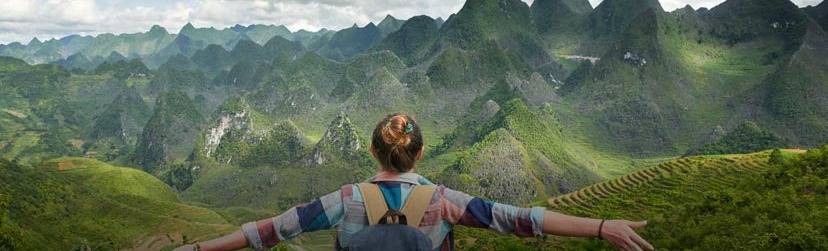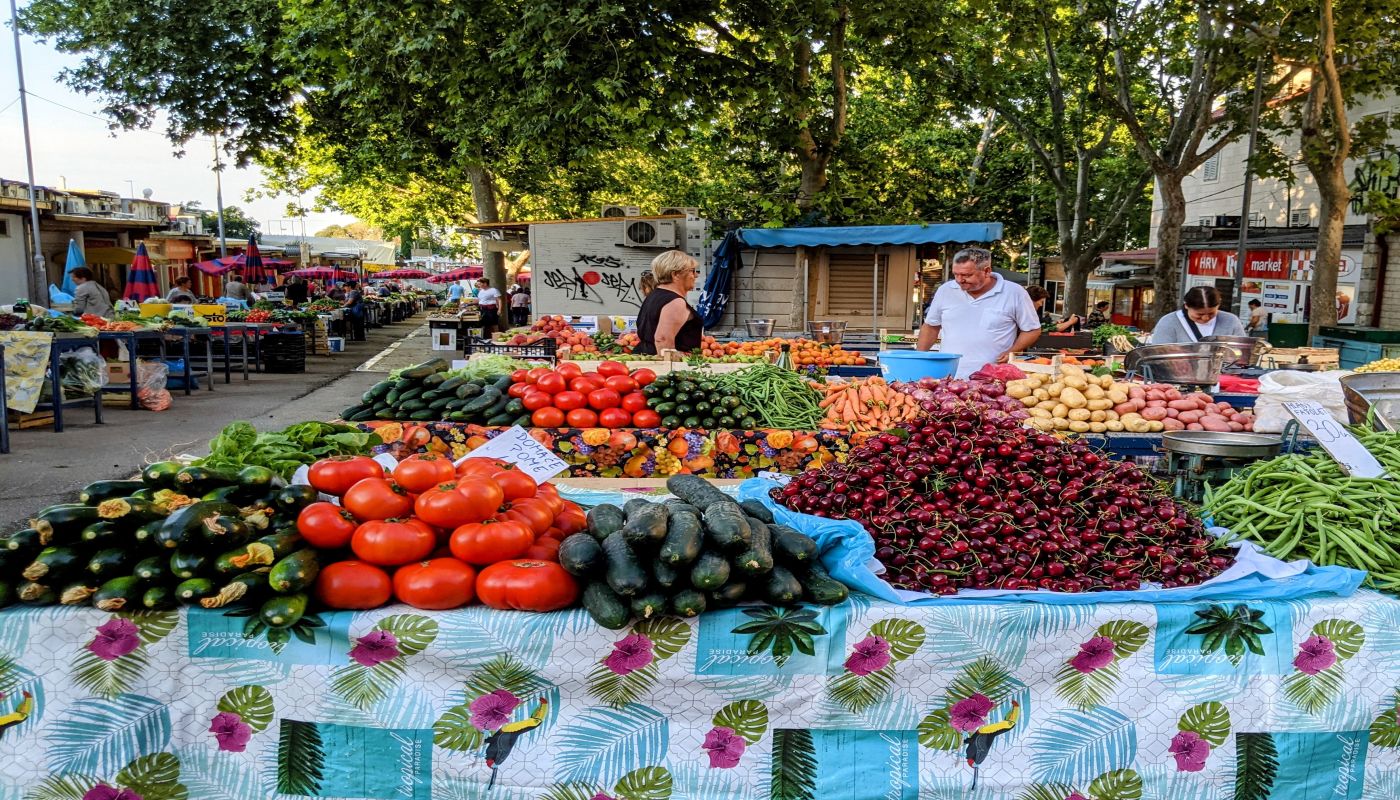
Landscape of Croatia
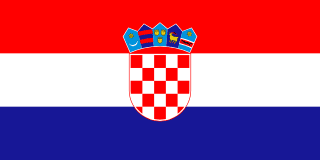
Flag of Croatia

Croatia

Europe

Croatia was successful in joining the European Union in 2013 after a decade-long application, and the economy began to make gains after 2015. 1 The country faces hurdles in overcoming a persistently high unemployment rate — though it dropped in 2017 to 11.1 percent2 — uneven development in certain regions, and the decline of foreign investments.3 The successful integration into the EU has put more pressure on the Croatian government to reduce the high public debt through a Value Added Tax and strict tax collections.4 The nation is ahead of other southeastern European countries in access to and quality of education; the Croatian literacy rate is 99.3 percent.5 In early 2018, Croatia launched a series of curricular reforms to increase the education system’s relevance to the labor force, and improve the quality of education for children with disabilities, including the provision of augmentative and alternative communication devices to the Center for Autism in the nation’s capital of Zagreb.6 1 https://ec.europa.eu/info/sites/info/files/2018-european-semester-country-report-croatia-en.pdf 2–4 Ibid 5 https://www.cia.gov/library/publications/the-world-factbook/geos/hr.html 6 https://www.unicef.hr/en/vijest/teaming-up-to-bring-benefits-of-technology-to-the-most-vulnerable-children/

What would you like to learn about in Croatia?

Select a section to explore the country where nonprofits are creating positive change.

About Croatia

The lands that today comprise Croatia were part of the Austro-Hungarian Empire until the close of World War I. In 1918, the Croats, Serbs, and Slovenes formed a kingdom known after 1929 as Yugoslavia. Following World War II, Yugoslavia became a federal independent communist state under the strong hand of Marshal TITO. Although Croatia declared its independence from Yugoslavia in 1991, it took four years of sporadic, but often bitter, fighting before occupying Serb armies were mostly cleared from Croatian lands, along with a majority of Croatia's ethnic Serb population. Under UN supervision, the last Serb-held enclave in eastern Slavonia was returned to Croatia in 1998. The country joined NATO in April 2009 and the EU in July 2013.

Quick Facts

Population
4,475,611 (July 2013 est.)
Area
56,594 sq km
ISO Code
HR
Continent
Europe
Government
parliamentary democracy
Active Causes
12
View all countries in Europe

Geography & Environment

Climate

Mediterranean and continental; continental climate predominant with hot summers and cold winters; mild winters, dry summers along coast

Terrain

geographically diverse; flat plains along Hungarian border, low mountains and highlands near Adriatic coastline and islands

Natural Resources

oil, some coal, bauxite, low-grade iron ore, calcium, gypsum, natural asphalt, silica, mica, clays, salt, hydropower

Environmental Issues

air pollution (from metallurgical plants) and resulting acid rain is damaging the forests; coastal pollution from industrial and domestic waste; landmine removal and reconstruction of infrastructure c...

People & Society

76.2 years
Avg. Life Expectancy
98.9%
Literacy Rate
58% of total population (2010)
Total Urban Population

Languages

Croatian (official) 96.1%, Serbian 1%, other and undesignated (including Italian, Hungarian, Czech, Slovak, and German) 2.9% (2001 census)

Religions

Roman Catholic 87.8%, Orthodox 4.4%, other Christian 0.4%, Muslim 1.3%, other and unspecified 0.9%, none 5.2% (2001 census)

Health Expenditure

7.8% of GDP (2010) of GDP

Education Expenditure

4.4% of GDP (2009) of GDP

Economy

$18,100
GDP per Capita (PPP)
19.1%
Unemployment Rate
21.1% (2011)
Below Poverty Line

Economic Overview

Though still one of the wealthiest of the former Yugoslav republics, Croatia's economy suffered badly during the 1991-95 war. The country's output during that time collapsed and Croatia missed the early waves of investment in Central and Eastern Europe that followed the fall of the Berlin Wall. Between 2000 and 2007, however, Croatia's economic fortunes began to improve slowly with moderate but steady GDP growth between 4% and 6% led by a rebound in tourism and credit-driven consumer spending. Inflation over the same period remained tame and the currency, the kuna, stable. Croatia experienced...

Causes in Croatia

Environment

Croatia has 29 percent lower per capita greenhouse gas emissions than the European Union average.1 Of Croatia’s energy production, 51 percent is produced through hydroelectric or other renewable sources2 However, air pollution is a concern in urban areas, partially due to emissions from neighboring countries.3

Family

One third of all Croatian families experience domestic violence,1 and 43 percent of female victims being the ones charged in court2 though the women are the victims in 70–80 percent of domestic violence cases.3 The divorce rate in Croatia is lower than that of other nations; as of 2015, the number of marriages were rising and the number of divorces were falling.4

Human Rights

Abuses against people with disabilities continue to be reported in Croatia.1 Additionally, Croatian authorities are ill-equipped to deal with the arrival of refugees and asylum seekers, primarily from Afghanistan and Somalia.2 Croatian officials failed to examine the asylum claims of refugees and immigrants in spring of 2017, and subsequently deported many migrants to Greece and Italy by the fall.3 There are little to no accommodations for asylum seekers upon arrival in Croatia, even for unaccompanied children. Additionally, Romani immigrants lack citizenship and have low school attendance.4

Education

Croatia is ahead of other southeastern European countries in access to and quality of education. The literacy rate is 99.3 percent.1 In early 2018, Croatia launched a series of curricular reform initiatives to increase the education system’s relevance to the labor force, and improve the quality of education for children with disabilities, including the provision of augmentative and alternative communication devices to the Center for Autism in Zagreb.2 Efforts such as these are attributed to the external pressure that the European Union has put on its newest member country to improve education standards.3 However, Croatia has not yet reached the EU’s formal standards.4

Poverty

The estimated amount of Croatia’s population below the poverty line is 19.5 percent, higher than many of its neighboring European nations.1 In an effort to reduce social exclusion and systemic poverty, Croatia adapted a Strategy on Combating Poverty and Social Exclusion for 2014–2020.2 This policy specifically targets the elderly, single parent families, ethnic minorities, such as Romani and Serbs, veterans and children without adequate parental care.3

Religion

The three most common religions in Croatia are Roman Catholicism, 86.3 percent, Orthodox Christianity 4.4 percent, and Islam 1.5 percent.1 Croatia’s constitution protects its citizens’ freedom of religion, and the country has no official religion.2 However, the government does have agreements with the Catholic church that provide the church with funds and benefits.3

Clean Water

Largely, Croatia has very few issues accessing clean water for its citizens. In 2017, the European Union’s Cohesion Fund allocated $112 million to Slavonia and Istria for wastewater treatment plants and protection for groundwater from infiltration.1 Forty kilometers of the two regions will be reworked to ensure safe transportation and treatment of water, as well as proper sewage disposal.2 The projects are scheduled to be completed by 2020.3 Only 3 percent of the nation has issues accessing modern sanitation facilities, primarily in rural areas.4

Economy

Croatia’s economy suffered during its 1991–1995 war for independence, and during the 2008 global financial crisis.1 The country faces hurdles in overcoming a persistently high unemployment rate — though it dropped in 2017 to 11.1 percent2 — uneven development in certain regions, and the decline of foreign investments.3 Croatia was successful in joining the European Union in 2013 after a decade-long application, and the economy began to make gains after 2015. 4 The successful integration into the EU has put more pressure on the government to reduce the high public debt through Value Added Tax and strict tax collections.5 Croatia’s GDP purchasing power is $100.2 billion, and its GDP per capita is $24,100.6

Government

In 1991, Croatia won their independence from Yugoslavia.1 Today, Croatia is a parliamentary republic with a president and prime minister who make up the executive branch. There is a unicameral legislative branch and an independent judicial branch.2 Transparency International rates Croatia with a score of 57 out of 100 for the public’s widespread perception of government corruption.3 The U.S. State Department Office of Investment Affairs states that Croatia has sufficient statutes in place to prevent and fight corruption, including bribery, embezzlement and laundering policies,4 though in 2012 former Prime Minister Ivo Sanader was convicted on charges of bribery.5 Upon being granted admission into the European Union in 2013, Croatia was urged to persist in their efforts to eliminate corruption.6 The Heritage Foundation maintains that corruption is still an issue in the political system.7

Health

Quality of and access to healthcare in Croatia rose by 13 percent in the last 20 years, according to the Institute for Health Metrics and Evaluation.1 Cardiovascular disease, heart attacks and lung cancer are the leading causes of death.2 The life expectancy in Croatia is 76 years of age,3 and the infant mortality rate is nine deaths per 1,000 live births.4

Children

In 2017, alongside UNICEF, Croatia opened its first human milk bank.1 The nation also hosted the Milky Way race to raise awareness and support for the cause, raising both corporate and individual sponsorship from the public.2 Croatia also expanded its range of treatment, analysis and diagnosis of children with autism spectrum disorders, per a joint initiative set forth by UNICEF and the nation in 2011 to offer improved educational services and opportunities to children with disabilities.3 In an effort to reduce discrimination against Romani children, Croatia is implementing programs that emphasize early childhood education, teacher bias training and collective approaches from the Romani community and educators to eliminate mistreatment of Romani children in the education system.4

Animals

In 2006, the Croatian government enacted the Animal Protection Act as a safeguard against animal abuse in private residences, zoos or farms, as well as in scientific research, competitive events, circuses and shelters.1 The act is extensive and thorough, prohibiting acts such as the use of electric training collars, and requires anesthesia to be used during medical procedures.2

Nonprofits Working in Croatia

Discover organizations making a difference in Croatia

Make Your Impact Today

Discover causes you care about and support the nonprofits making a difference in communities around the world.

Are you a nonprofit? Join Project World Impact for free

Join Us Free