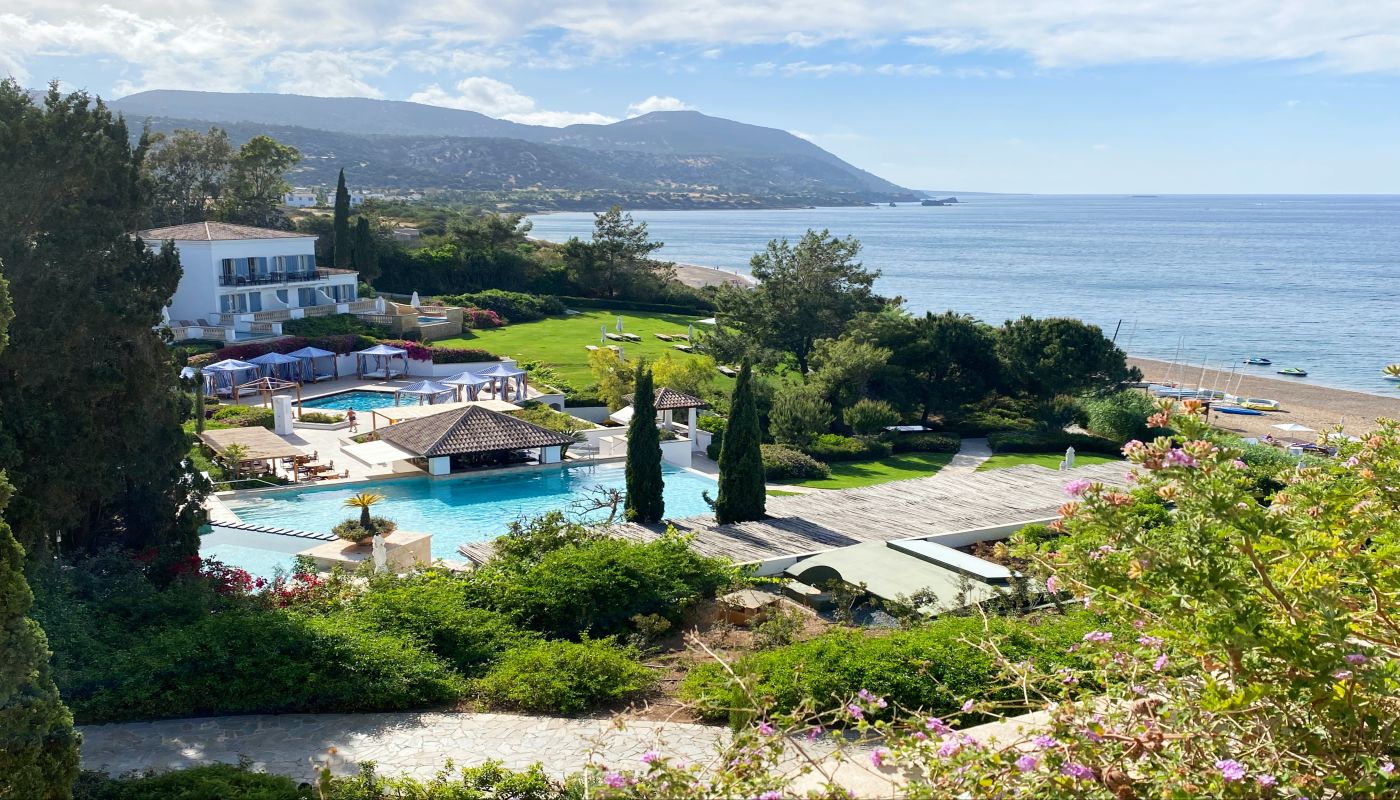
Landscape of Cyprus
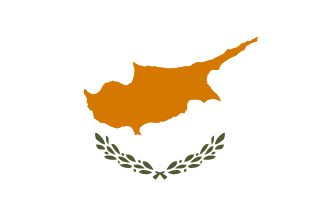
Flag of Cyprus

Cyprus

Europe

The nation of Cyprus faces unique challenges in its ethnic, cultural and geographic split between the Greek and Turkish Cypriots. Nicosia, the city’s capital, is divided by the Green Line, and the nation has been divided since the Turkish invasion in 1974.1 Conflict began in 1963 when tensions erupted between the Greek and Turkish Cypriots, and the Turkish Cypriots formed a Turkish enclave in the northern part of the island.2 When the Greek population attempted to overthrow the then Turkish president, Turkish forces invaded the island to prevent the overthrow, and soon a third of the island was controlled by Turkish forces. The north of the island is known as the “Turkish Republic of Northern Cyprus,” but is not recognized internationally, save by Turkey itself. Cyprus has entered a number of peace talks over the years, but none have been entirely successful.3 1 https://www.nytimes.com/2016/11/08/world/europe/cyprus-reunification-talks.html 2 https://www.cia.gov/library/publications/the-world-factbook/geos/cy.html 3 Ibid

What would you like to learn about in Cyprus?

Select a section to explore the country where nonprofits are creating positive change.

About Cyprus

A former British colony, Cyprus became independent in 1960 following years of resistance to British rule. Tensions between the Greek Cypriot majority and Turkish Cypriot minority came to a head in December 1963, when violence broke out in the capital of Nicosia. Despite the deployment of UN peacekeepers in 1964, sporadic intercommunal violence continued forcing most Turkish Cypriots into enclaves throughout the island. In 1974, a Greek Government-sponsored attempt to seize control of Cyprus was met by military intervention from Turkey, which soon controlled more than a third of the island. In 1983, the Turkish Cypriot-occupied area declared itself the "Turkish Republic of Northern Cyprus" ("TRNC"), but it is recognized only by Turkey. The election of a new Cypriot president in 2008 served as the impetus for the UN to encourage both the Greek Cypriot and Turkish Cypriot communities to reopen unification negotiations. In September 2008, the leaders of the two communities began discussions under UN auspices aimed at reuniting the divided island. The talks are ongoing. The entire island entered the EU on 1 May 2004, although the EU acquis - the body of common rights and obligations - applies only to the areas under the internationally recognized government, and is suspended in the areas administered by Turkish Cypriots. However, individual Turkish Cypriots able to document their eligibility for Republic of Cyprus citizenship legally enjoy the same rights accorded to other citizens of European Union states.

Quick Facts

Population
1,155,403 (July 2013 est.)
Area
9,251 sq km (of which 3,355 sq km are in north Cyprus)
ISO Code
CY
Continent
Europe
Government
republic
Active Causes
12
View all countries in Europe

Geography & Environment

Climate

temperate; Mediterranean with hot, dry summers and cool winters

Terrain

central plain with mountains to north and south; scattered but significant plains along southern coast

Natural Resources

copper, pyrites, asbestos, gypsum, timber, salt, marble, clay earth pigment

Environmental Issues

water resource problems (no natural reservoir catchments, seasonal disparity in rainfall, sea water intrusion to island's largest aquifer, increased salination in the north); water pollution from sewa...

People & Society

78.17 years
Avg. Life Expectancy
98.7%
Literacy Rate
70.5% of total population (2011)
Total Urban Population

Languages

Greek (official), Turkish (official), English

Religions

Greek Orthodox 78%, Muslim 18%, other (includes Maronite and Armenian Apostolic) 4%

Health Expenditure

6% of GDP (2010) of GDP

Education Expenditure

7.9% of GDP (2009) of GDP

Economy

$27,500
GDP per Capita (PPP)
11.9%
Unemployment Rate
NA%
Below Poverty Line

Economic Overview

The area of the Republic of Cyprus under government control has a market economy dominated by the service sector, which accounts for four-fifths of GDP. Tourism, financial services, and real estate are the most important sectors. Erratic growth rates over the past decade reflect the economy's reliance on tourism, the profitability of which can fluctuate with political instability in the region and economic conditions in Western Europe. Nevertheless, the economy in the area under government control has grown at a rate well above the EU average since 2000. Cyprus joined the European Exchange Rat...

Causes in Cyprus

Family

65 percent of Cyprotians are married, nearly 24 percent are single, 6 percent are widowed and 5 percent are divorced.1 The European Union reports lower birth rates in Cyprus, and a mother’s average age at birth of her first child is 29.2 In Cyprus, 15 percent of women report domestic abuse, a lower rate than many of its neighboring countries.3 The nation ranks 84th out of 144 countries in the Global Gender Gap ranking, according to the World Economic Forum, just above the global weighted average.4

Human Rights

Over the past year, the government was not able to provide sufficient control over certain sectors of security authorities, and such authorities accused of committing police abuse and of using torture while subjects were in custody.2 Furthermore, Cyprus’ prison conditions are known to be overcrowded, as are detention centers for asylum seekers — neither meet international standards. 3 Northern Cyprus, under Turkish control, had formally declared that homosexuality was a criminal offense.4 However, it recently repealed the law in the name of advancing human rights.5 While Cyprus does not entirely meet international human trafficking standards, it is improving its response, as it formulates anti-trafficking protocols, and formally recognizes NGOs to offer shelter and support for victims.6 EU civil rights only apply to areas under the control of the internationally recognized government, not the Turkish controlled North.7

Education

Cyprus places high value on education, and education accounts for 8 percent of their GDP.1 Over half of the Cypriot workforce has a higher education degree, and university enrollment is increasing.2 Cypriot law mandates that children must attend school from age 5 until age 15, or 9th grade. However, most students continue their education to receive their high school diploma, as they cannot get a job or attend university without one.3

Poverty

Cyprus’ unemployment rate has been improving since the recession officially ended in 2015; in 2016 the rate was 13 percent, and in 2017 it fell to 11.9 percent. Statistics on the national poverty rate are unavailable.1 However, according to Eurostat, the rate of children at risk for poverty and social exclusion has increased in Cyprus at a higher rate than most other EU nations, by four percentage points or more.2

Religion

The largest and most prominent religion in Cyprus is Greek Orthodox, with 89 percent of citizens claiming the Greek Orthodox church.1 3 percent are Roman Catholic, 2 percent are Protestant or Anglican, 1.8 percent of the population are Muslim and the other 3.5 percent of the population belong to other religions such as Buddhism, Hinduism and atheism.2 The nation is split along ethnic lines, with the north being populated by Turks, and the south by Greeks; 78 percent of the island’s population are Greek Cypriot and 18 percent are Turkish Cypriots. Religious data is officially unavailable for the 18 percent of the population in the Turkish-controlled north.3 However, the majority of the north is known for its Muslim roots.4

Clean Water

The nation faces fresh water resource issues, as sea water can infiltrate the Cyprus’ primary aquifer, salinating the fresh water supply.1 Desalination facilities heavily aid in providing fresh water to the nation.2 As a result of such facilities, virtually 100 percent of the Cyprus reportedly has access to clean drinking water, as well as appropriate sanitation facilities.3

Economy

The service sector is the most dominant industry within Cyprus’ economy.1 More than four-fifths of the GDP is in tourism, financial services and real estate sales.2 Cyprus joined the European Union in 2004 and was able to adopt the euro in 2008.3 However, the Cypriot banking system’s involvement with the Greek national debt sent Cyprus into an economic crisis in 2013.4 Unemployment dropped to 11.9 percent in 2017 after being at 13 percent in 2016, though it averaged at just 4 percent in the early 2000s.5 In 2012, Cyprus became the fifth EU member to ask for a bailout from the International Monetary Fund. However, the country’s recession ended in 2015, with economic growth reaching 3.4 percent.6 49 percent of Cyprus’ national loans are non-performing (NPLs), creating a drag on the economy.7

Government

Although Cyprus is officially classified as a republic, the country remains divided on ethnic and political lines, despite ongoing peace talks initiated by the United Nations in an attempt to negotiate reunification.1 Currently, Greek Cypriots are the majority in Cyprus. However, Turkish Cypriots have de facto control over the north side of the island, and elect their own president, although the Turkish-controlled region’s sovereignty is only recognized by Turkey.2 The Greek Cypriot side of the island is the only internationally recognized government on the island, as well as the only portion officially part of the European Union.3 This division has made it so that EU civil rights only apply to areas under the control of the internationally recognized government, not the Turkish controlled North.4 The government has faced serious complications rebounding from the financial and economic crisis that hit the island in 2013,5 and is instituting a series of reforms to remedy its fiscal situation.6

Health

The life expectancy at birth is 78.8 years in Cyprus; the infant mortality rate is 8 deaths per 1,000 live births, a low rate, comparatively.1 7.4 percent of the GDP is spent on health expenditures each year.2 By European and international standards, Cyprus is fast-approaching Millennium Development Goals for health.3 The most common non-communicable diseases in Cyprus are breast and prostate cancer, and obesity is also a common health condition.4

Children

Cyprus has social welfare services that protect children who are inadequately cared for, and the government assumes parental rights, removes the child/children from their biological family, and placing the child/children under the foster care system when deemed necessary by the state.1 Families may receive counseling and assistance from social services in efforts to remedy the situation.2 Putting children in other living situations, such as a children’s home, is said to be used as a last resort.3

Environment

Cyprus’ national resources include copper, gypsum, timber and salt, as well as marble and clay.1 The nation’s faces fresh water resource issues, as it has no natural structures to catch rainfall, and has varied, limited, seasonal rainfall to begin with. Sea water can infiltrate the nation’s primary aquifer, salinating the fresh water supply.2 Cyprus also has high waste production rates.3

Animals

Cyprus has a number of animal charities and protection organizations.1 However, they are not ranked on the World Animal Protection Agency’s index for animal welfare.2

Nonprofits Working in Cyprus

Discover organizations making a difference in Cyprus

Polaris

Modern slavery is a multi-billion dollar criminal industry that denies freedom to 20.9 million people around the world. And no matter where you live, chances are it’s happening right down the street. From the girl forced into prostitution at a truck stop, to the man discovered in a restaurant kitchen, stripped of his passport and held against his will. Polaris, named after the North Star that guided slaves to freedom in the U.S., disrupts the conditions that allow human trafficking to thrive in our society. From working with government leaders to protect victims’ rights, to building partnerships with the world’s leading technology corporations, we spark long-term change that focuses communities on identifying, reporting and eliminating trafficking networks. Our comprehensive model puts victims at the center of all that we do -- helping survivors restore their freedom, preventing more victims, and gathering the data to pursue traffickers wherever they operate. Unparalleled expertise. Relentlessness. And an innovative spirit. This is how Polaris eradicates the slavery networks that rob human beings of their lives and their independence. Freedom happens now.

Washington, District Of Columbia

Make Your Impact Today

Discover causes you care about and support the nonprofits making a difference in communities around the world.

Are you a nonprofit? Join Project World Impact for free

Join Us Free