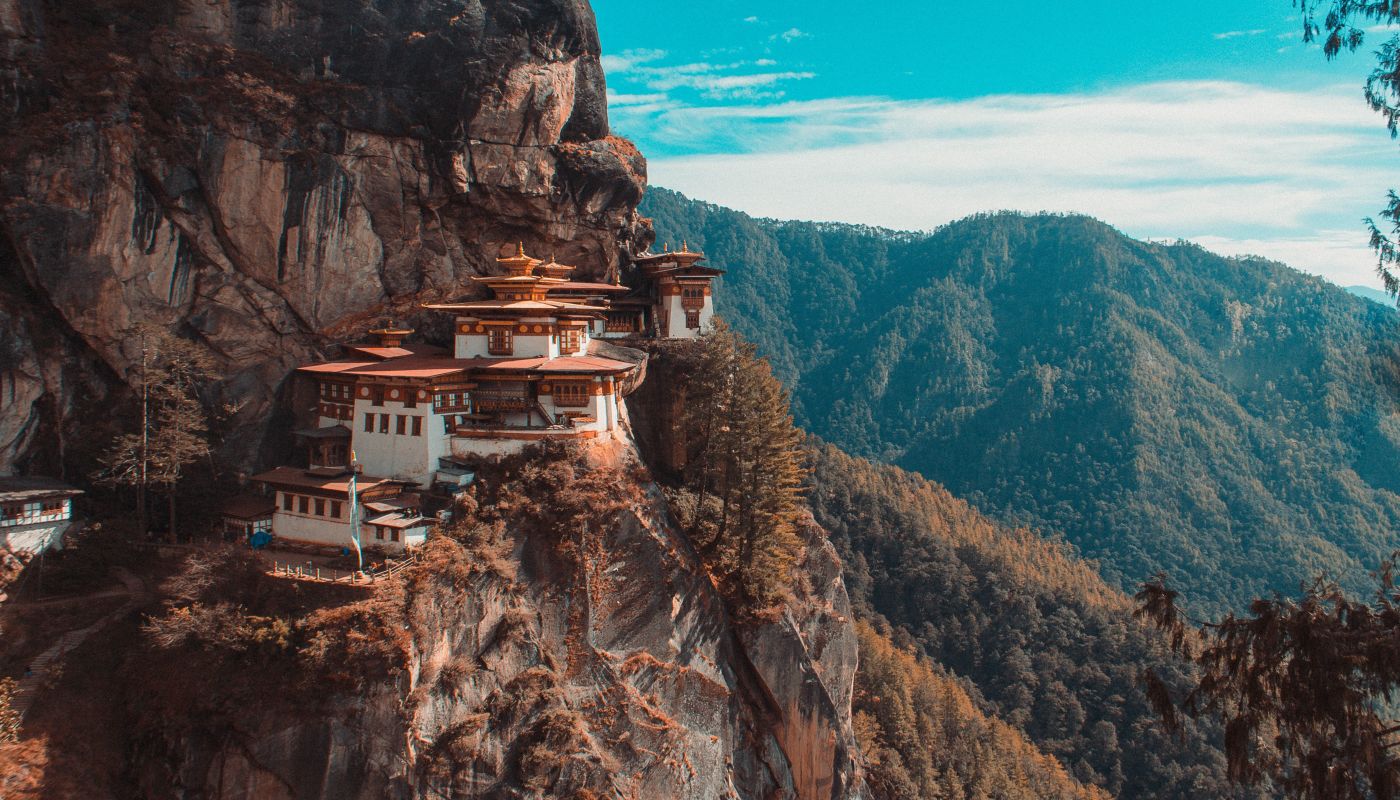
Landscape of Bhutan
Flag of Bhutan

Bhutan

Asia

Bhutan is a small nation of 758,288 people.1 In the Bhutan Vision 2020 plan, one of the government’s stated focuses is promoting Gross National Happiness and an understanding of its principles.2 The GDP per capita is low, $8,700. The economy is primarily based on agriculture, forestry and hydropower — Bhutan’s main export, accounting for 40 percent of its national exports.3 49.6 percent of the population lacks access to proper sanitation facilities, and the risk of contracting major infectious diseases is high — particularly bacterial and protozoal diarrhea, hepatitis A and typhoid fever.4 26 percent of girls are married before the legal age of 18, and 6 percent are married before 15.5 Domestic abuse and violence against women are also issues in Bhutan, particularly because there is widespread cultural acceptance of these practices. One survey indicated that around 70 percent of women in Bhutan thought they deserved to be beaten if they neglected their children, denied their partner sex, or ruined a meal.6 Bhutan’s infant mortality rate is 32 deaths per 1,000 live births, putting Bhutan in the upper 70th percentile for worst infant mortality rates internationally.7 1 https://www.cia.gov/library/publications/the-world-factbook/geos/bt.html 2 https://www.globalpartnership.org/country/bhutan 3 https://www.cia.gov/library/publications/the-world-factbook/geos/bt.html 4 Ibid 5 https://www.girlsnotbrides.org/child-marriage/bhutan/ 6 http://www.bhutannewsservice.com/main-news/violence-against-women-still-on-rise-in-bhutan/ 7 https://www.cia.gov/library/publications/the-world-factbook/geos/bt.html

What would you like to learn about in Bhutan?

Select a section to explore the country where nonprofits are creating positive change.

About Bhutan

In 1865, Britain and Bhutan signed the Treaty of Sinchulu, under which Bhutan would receive an annual subsidy in exchange for ceding some border land to British India. Under British influence, a monarchy was set up in 1907; three years later, a treaty was signed whereby the British agreed not to interfere in Bhutanese internal affairs, and Bhutan allowed Britain to direct its foreign affairs. This role was assumed by independent India after 1947. Two years later, a formal Indo-Bhutanese accord returned to Bhutan the areas annexed by the British, formalized the annual subsidies the country received, and defined India's responsibilities in defense and foreign relations. In March 2005, King Jigme Singye WANGCHUCK unveiled the government's draft constitution - which introduced major democratic reforms - and pledged to hold a national referendum for its approval. In December 2006, the King abdicated the throne in favor of his son, Jigme Khesar Namgyel WANGCHUCK, in order to give him experience as head of state before the democratic transition. In early 2007, India and Bhutan renegotiated their treaty to allow Bhutan greater autonomy in conducting its foreign policy, although Thimphu continues to coordinate policy decisions in this area with New Delhi. Elections for seating the country's first parliament were completed in March 2008; the king ratified the country's first constitution in July 2008. The disposition of some 43,000 Bhutanese refugees - housed in two UN refugee camps in Nepal - remains unresolved.

Quick Facts

Population
725,296 (July 2013 est.)
Area
38,394 sq km
ISO Code
BT
Continent
Asia
Government
constitutional monarchy
Active Causes
12
View all countries in Asia

Geography & Environment

Climate

varies; tropical in southern plains; cool winters and hot summers in central valleys; severe winters and cool summers in Himalayas

Terrain

mostly mountainous with some fertile valleys and savanna

Natural Resources

timber, hydropower, gypsum, calcium carbonate

Environmental Issues

soil erosion; limited access to potable water

People & Society

68.44 years
Avg. Life Expectancy
52.8%
Literacy Rate
35.6% of total population (2011)
Total Urban Population

Languages

Sharchhopka 28%, Dzongkha (official) 24%, Lhotshamkha 22%, other 26%

Religions

Lamaistic Buddhist 75%, Indian- and Nepalese-influenced Hinduism 25%

Health Expenditure

5.2% of GDP (2010) of GDP

Education Expenditure

4.7% of GDP (2011) of GDP

Economy

$6,800
GDP per Capita (PPP)
4%
Unemployment Rate
23.2% (2008)
Below Poverty Line

Economic Overview

Bhutan's economy, small and less developed, is based on agriculture and forestry, which provide the main livelihood for more than 40% of the population. Agriculture consists largely of subsistence farming and animal husbandry. Rugged mountains dominate the terrain and make the building of roads and other infrastructure difficult and expensive. The economy is closely aligned with India's through strong trade and monetary links and is dependent on India's financial assistance. The industrial sector is technologically backward with most production of the cottage industry type. Most development pr...

Causes in Bhutan

Environment

Bhutan faces issues with soil erosion, industrial pollution, wildlife conservation and waste disposal, among other environmental concerns.1 Bhutan is particularly vulnerable to flash floods in the rainy season. The Himalayas account for a large portion of the nation’s landscape, creating cool winters and hot summers in the valleys.2 The nation is party to international agreements on biodiversity, climate change, desertification and hazardous waste.3

Family

Child marriage is a concern in Bhutan, and approximately 26 percent of girls are married before the legal age of 18, and 6 percent are married before 15.1 Domestic abuse and violence against women are also issues in Bhutan, particularly because there is widespread cultural acceptance of these practices. One survey indicated that around 70 percent of women in Bhutan thought they deserved to be beaten if they neglected their children, denied their partner sex, or ruined a meal.2

Human Rights

Bhutanese security authorities are reported to be relatively free of corruption and human rights abuses.1 However, there have been recent reports of political prisoners being abused while under the care of the state, and human trafficking remained a serious and pervasive issue.2 There have also been several complaints that the Bhutanese government mishandled issues related to refugees and discrimination against LGBT citizens.3 Additionally, there are thousands of Nepali Bhutanese refugees currently living in UN refugee camps in Nepal who were forced out of Bhutan during the 1980s and 90s. They have been unable to return, despite having legitimate claims to citizenship.4 Child marriage is a concern in Bhutan, and approximately 26 percent of girls are married before the legal age of 18, and 6 percent are married before 15.5 Domestic abuse and violence against women are also issues in Bhutan, particularly because there is widespread cultural acceptance of these practices. One survey indicated that around 70 percent of women in Bhutan thought they deserved to be beaten if they neglected their children, denied their partner sex, or ruined a meal.6

Education

35 percent of Bhutan is illiterate. There are significant gender disparities in literacy, with 73 percent of males able to read and write, while just 55 percent of women can read or write.1 The primary school gross enrollment is 96 percent.2 The key elements of the Bhutan Vision 2020 pertaining to education include reducing gender disparity within the system, increasing participation in early childhood education and raising investment in special needs programming.3

Poverty

Approximately 12 percent of Bhutan’s population lives below the poverty line, and unemployment is 3.2 percent.1 Bhutan’s eastern region is particularly vulnerable to poverty, as any rural, remote region has limited access to infrastructure like roads and centers of trade.2 49.6 percent of the population lacks access to proper sanitation facilities, and the risk of major infectious diseases are high — particularly bacterial and protozoal diarrhea, hepatitis A and typhoid fever.3

Religion

Approximately 75 percent of the Bhutanese population are Buddhist, and 22 are Nepali Hindu. The other nearly 3 percent identify with another religion.1 The constitution of Bhutan protects religious freedom and this is generally well respected.2 However, religious figures in the country are denied voting rights in an attempt to separate religion and politics.3 Additionally, reports of societal discrimination against religious minorities, particularly Christians, have prompted the government to make a statement regarding religious tolerance and respect.4

Clean Water

Though virtually the entire population has access to clean water, 49.6 percent of the population lacks access to proper sanitation facilities. The risk of bacterial and protozoal diarrhea is high, as well as hepatitis A.1 The rural populations are particularly unreached when it comes to sanitary resources, as 66 percent of the population that lacks access to modern sanitation facilities are in rural areas.2

Economy

Bhutan’s economy is primarily based on agriculture, hydropower and forestry, and does the majority of its trade with India.1 The nation’s main export is hydropower, which accounts for 40 percent of all the nation’s exports.2 The GDP per capita is just $8,700.3 Unemployment is at just 3.2 percent, but the labor force is estimated to be only 397,900, and the nation has a significant shortage of skilled laborers.4 12 percent of the population is below the poverty line.5

Government

Bhutan is a constitutional monarchy; the first hereditary king came into power in 1907. In 2008, the government transitioned from a total monarchy to a democratic, constitutional government, electing its first parliament and ratifying the constitution that was drafted in 2001.1 Bhutanese anti-corruption policies are enforced, and violators are criminally punished.2

Health

Bhutan’s infant mortality rate is 32 deaths per 1,000 live births, and the maternal mortality rate is 148 deaths per 100,000 births. 12.8 percent of children under the age of 5 are underweight. 49.6 percent of the population lacks access to proper sanitation facilities, and the risk of major infectious diseases are high — particularly bacterial and protozoal diarrhea, hepatitis A and typhoid fever.1 However, Bhutan is one of the first nations in southeast Asia to have reached the regional objective to eradicate measles by 2020.2

Children

Bhutan’s infant mortality rate is 32 deaths per 1,000 live births, putting Bhutan in the upper 70th percentile for worst infant mortality rates internationally.1 Research on child labor in the nation is scarce. However, the United States Department of Labor reports evidence that many children are subject to child labor. The Bhutanese government does not have policies implemented that directly prohibit child labor, even the worst forms.2 42 percent of children under the age of 15 cannot read, and only 48 percent of women over the age of 15 are literate.3 16 percent of school-aged children do not attend school.4 Nearly 13 percent of children under the age of 5 are underweight, and the risk of infectious diseases like typhoid, hepatitis A and diarrhea is high.5

Animals

Bhutan faces issues with wildlife conservation and biodiversity.1 There are a small number of animal shelters and care centers in the nation that take in and treat injured or sick animals, including Barnyard Bhutan Animal Rescue, an entity of the Maya Foundation.2

Nonprofits Working in Bhutan

Discover organizations making a difference in Bhutan

Make Your Impact Today

Discover causes you care about and support the nonprofits making a difference in communities around the world.

Are you a nonprofit? Join Project World Impact for free

Join Us Free