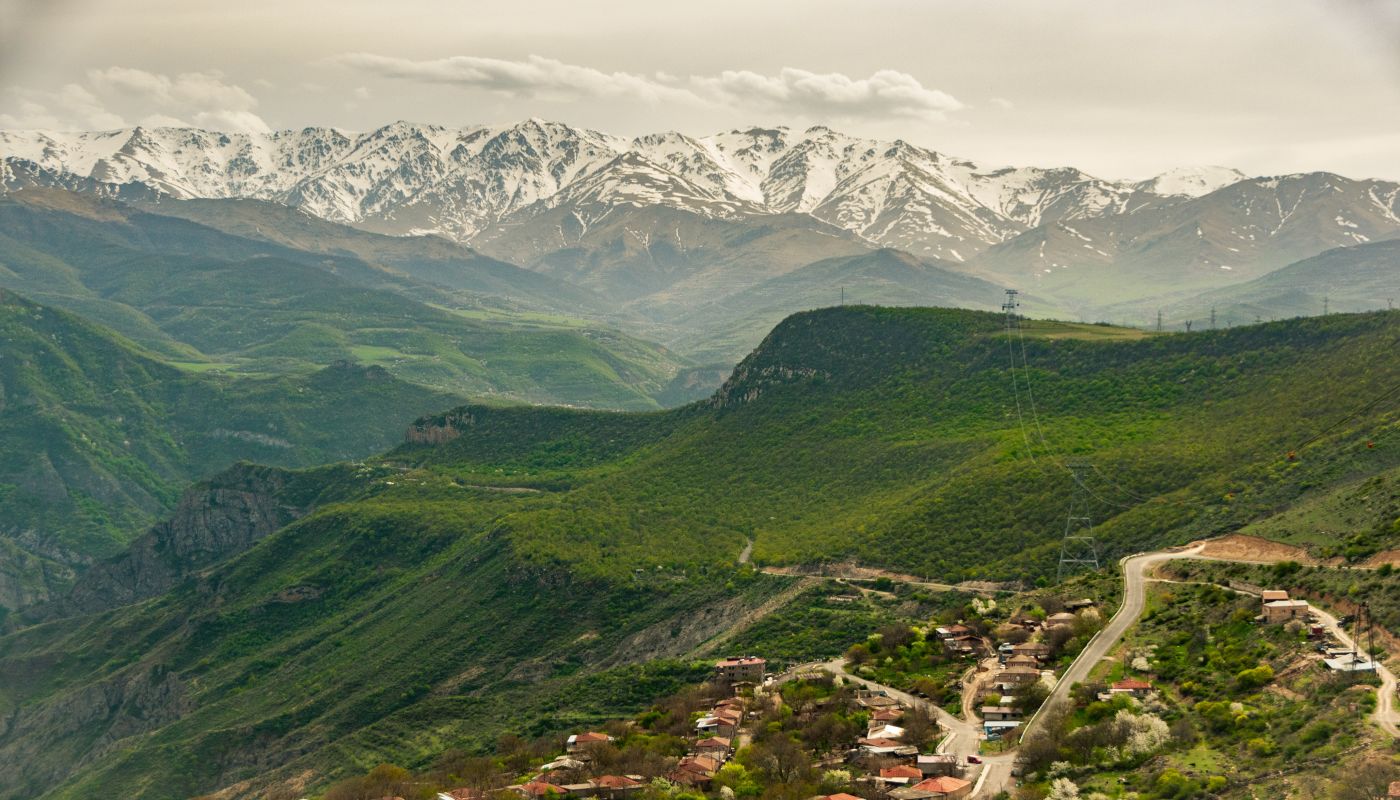
Landscape of Armenia
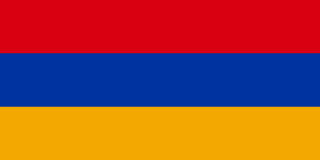
Flag of Armenia

Armenia

Asia

Armenia and Azerbaijan have been at odds since the fall of the Soviet Union. Tension between the two was caused by the rule of Soviet Azerbaijan over parts of Armenia before 1991 and their unwillingness to relinquish their claim to the territory. This issue has hindered economic progress for Armenia, as both Azerbaijan and Turkey have closed their Armenian trade borders. Armenia also struggles to provide adequate healthcare and education for its citizens. The country has significant pollution issues near cities and industrial factories.1 1 https://www.cia.gov/library/publications/the-world-factbook/geos/am.html

What would you like to learn about in Armenia?

Select a section to explore the country where nonprofits are creating positive change.

About Armenia

Armenia prides itself on being the first nation to formally adopt Christianity (early 4th century). Despite periods of autonomy, over the centuries Armenia came under the sway of various empires including the Roman, Byzantine, Arab, Persian, and Ottoman. During World War I in the western portion of Armenia, Ottoman Turkey instituted a policy of forced resettlement coupled with other harsh practices that resulted in at least 1 million Armenian deaths. The eastern area of Armenia was ceded by the Ottomans to Russia in 1828; this portion declared its independence in 1918, but was conquered by the Soviet Red Army in 1920. Armenian leaders remain preoccupied by the long conflict with Azerbaijan over Nagorno-Karabakh, a primarily Armenian-populated region, assigned to Soviet Azerbaijan in the 1920s by Moscow. Armenia and Azerbaijan began fighting over the area in 1988; the struggle escalated after both countries attained independence from the Soviet Union in 1991. By May 1994, when a cease-fire took hold, ethnic Armenian forces held not only Nagorno-Karabakh but also a significant portion of Azerbaijan proper. The economies of both sides have been hurt by their inability to make substantial progress toward a peaceful resolution. Turkey closed the common border with Armenia in 1993 in support of Azerbaijan in its conflict with Armenia over control of Nagorno-Karabakh and surrounding areas, further hampering Armenian economic growth. In 2009, senior Armenian leaders began pursuing rapprochement with Turkey, aiming to secure an opening of the border, but Turkey has not yet ratified the Protocols normalizing relations between the two countries.

Quick Facts

Population
2,974,184 (July 2013 est.)
Area
29,743 sq km
ISO Code
AM
Continent
Asia
Government
republic
Active Causes
12
View all countries in Asia

Geography & Environment

Climate

highland continental, hot summers, cold winters

Terrain

Armenian Highland with mountains; little forest land; fast flowing rivers; good soil in Aras River valley

Natural Resources

small deposits of gold, copper, molybdenum, zinc, bauxite

Environmental Issues

soil pollution from toxic chemicals such as DDT; the energy crisis of the 1990s led to deforestation when citizens scavenged for firewood; pollution of Hrazdan (Razdan) and Aras Rivers; the draining o...

People & Society

73.75 years
Avg. Life Expectancy
99.6%
Literacy Rate
64.1% of total population (2011)
Total Urban Population

Languages

Armenian (official) 97.7%, Yezidi 1%, Russian 0.9%, other 0.4% (2001 census)

Religions

Armenian Apostolic 94.7%, other Christian 4%, Yezidi (monotheist with elements of nature worship) 1.3%

Health Expenditure

4.4% of GDP (2010) of GDP

Education Expenditure

3.2% of GDP (2010) of GDP

Economy

$5,900
GDP per Capita (PPP)
7%
Unemployment Rate
35.8% (2010 est.)
Below Poverty Line

Economic Overview

After several years of double-digit economic growth, Armenia faced a severe economic recession with GDP declining more than 14% in 2009, despite large loans from multilateral institutions. Sharp declines in the construction sector and workers' remittances, particularly from Russia, led the downturn. The economy began to recover in 2010 with 2.1% growth, and picked up to 4.6% growth in 2011, before slowing to 3.8% in 2012. Under the old Soviet central planning system, Armenia developed a modern industrial sector, supplying machine tools, textiles, and other manufactured goods to sister republic...

Causes in Armenia

Environment

Climate resilience and disaster prevention are the main focuses of the government regarding the environment.1 One of the largest issues facing the Armenian environment is the pollution of rivers by factories. Waste management is poor, and an estimated 20 percent of rivers can be categorized as having “catastrophic” amounts of pollution. 70 percent of rivers are considered “good” or “excellent” in their cleanliness, and this directly correlates to the lack of industrial activity in the area.2

Family

Domestic violence is a pervasive problem in Armenia, and as many as 1 in 3 women will experience domestic violence during their lifetime.1 In 2017 Armenia passed a law that provides more protection for domestic violence survivors, but Human Rights Watch points out that this new legislation will not be useful until the authorities find a way to integrate it into police responses and invest in programs for domestic violence survivors. Police response to domestic violence reports is currently apathetic at best. There are still issues with the government enforcing gender role stereotypes within the nuclear family through legislation.2

Human Rights

For the past few elections in Armenia, police were unresponsive to citizens’ complaints of voter harassment and vote-bullying. Mistreatment of detainees in police custody is also rampant. There have been several peaceful protests in recent years that were disbanded through violent means without investigation.1 Impunity and unfair trials are reported throughout judicial proceedings. Rights such as freedom of expression, economic, social, and cultural rights are consistently violated. Violence against LGBT communities also persists.2

Education

Armenia has been trying to institute education reform for the past decade but it has not been effective. In 2014 the World Bank approved a loan of $30 million USD to help finance the Education Improvement Project in Armenia. The education reform project aims to improve the primary school readiness of Armenian students as well as improve the physical infrastructures of secondary schools around the country.1 99 percent of the adult population is literate.2

Poverty

32 percent of the Armenian population lives below the poverty line.1 Food insecurity is prevalent and is exacerbated by increasing income disparity.2 The Borgen Project cites labor force migration, unemployment, and a weak agricultural system as the main causes for the poverty problem facing the country.3

Religion

Armenia was the first country in the world that formally adopted the Christian religion in the early 4th century. 92 percent of the population is Armenian Apostolic Christian. The remaining people are either Evangelical Christian, follow other religions, or are unaffiliated.1 Armenia’s constitution protects the right of religious freedom, however other laws and policies place restrictions on religious practices. Religious groups must register with the government and the Armenian National Church is granted privileges not available to other religious groups in the country. Religious conflict and discrimination are rare.2

Clean Water

Armenia largely has consistent access to potable water, and 100 percent of the population has access to improved drinking water sources. Additionally, 96 percent of the population has access to improved sanitation infrastructure.1 In May 2014, the government approved a draft of national water management and health targets that was proposed to the government by the United Nations Economic Commission for Europe. This legislation regulates the amount of wastewater needing to be sent for treatment to reduce the amount of waterborne diseases.2

Economy

Armenia joined the Eurasian Economic Union in 2015 but is open to closer ties with the EU as well. Armenia’s main exports are copper, iron, and nonferrous metals. Imports include petroleum and tobacco products. Russia, Bulgaria, and China are the main trade partners with the country. Public debt is slowly rising and is currently 56.7 percent of GDP. The unemployment rate is 19 percent, while 32 percent of the population lives below the poverty line. The only open trade borders for the country are with Iran and Georgia due to territorial disputes with Azerbaijan and Turkey. The trade imbalance created by limited open borders has been somewhat stabilized through remittances and international aid.1 Anti-corruption measures within the economy are not enforced and they remain well below international standards.2

Government

The Republic of Armenia is a parliamentary democracy that has a president as chief of state. The prime minister is the head of government who also gets to appoint the council of prime ministers that make up the cabinet. There are ten major political parties. Armenia was formerly under the rule of Soviet Russia and gained independence in 1991.1 Armenia’s government has endemic and pervasive corruption at all levels of government, including the judiciary, the police, and the healthcare sector. Transparency International ranks the country 107 out of 180 and the public scores them 35 out of a possible 100.2

Health

The average life expectancy for Armenians is 75 years. Infant mortality is 12 deaths per 1,000 live births, and maternal mortality is 25 deaths per 100,000 live births. The government spends about 4.5 percent of GDP on healthcare. Obesity is a major health concern. 20 percent of the adult population struggles with obesity, and the rate of obesity among adolescents is rising among children ages 11 to 13 years old.1, 2 Drug use is a another major health hazard, and illegal drug use has increased by 50 percent since 2012.3

Children

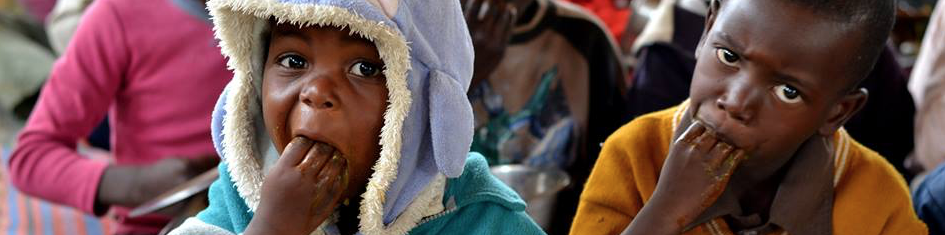
The minimum age of employment in Armenia is 16, although exceptions can be made for those between the ages of 14 and 16 who have special permission from their parents. The United States Department of Labor found that the children in Armenia are exploited in the agricultural sector. Many children work as farmers in rural areas, and in urban settings many children work in construction or in factories.1 Approximately 8 percent of children ages 5 to 14 in Armenia are involved in child labor.2 Additionally, malnutrition is a widespread concern for children in Armenia, and approximately 1 in 5 children in the country are stunted due to lack of proper nutrition.3

Animals

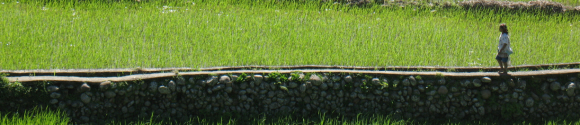
Armenia is part of the critically endangered palearctic region. The landscape is made up of high plateaus and mountain peaks, as well as lowlands with patches of forests. These habitats are home to ancestors of the wheat, barley, rye, and oat plants, as well as many grape and wild pear trees. Local wildlife includes the brown bear, grey wolf, and striped hyena. Habitat loss can be attributed to agriculture, unsustainable biological practices, and industrial and urban expansion.1

Nonprofits Working in Armenia

Discover organizations making a difference in Armenia

Make Your Impact Today

Discover causes you care about and support the nonprofits making a difference in communities around the world.

Are you a nonprofit? Join Project World Impact for free

Join Us Free