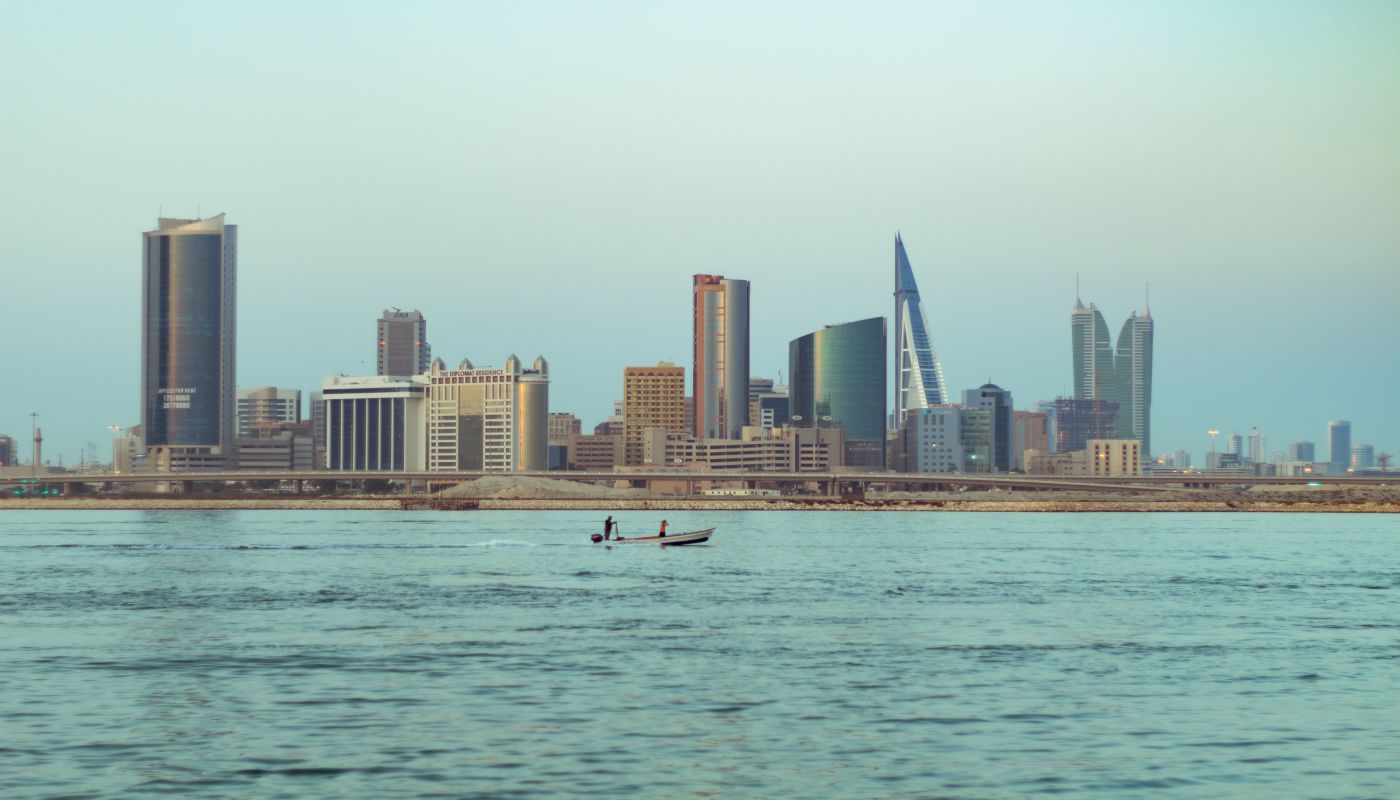

Landscape of Bahrain
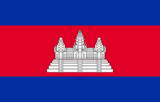
Flag of Bahrain

Bahrain

Asia

The Kingdom of Bahrain is a constitutional monarchy whose king, King Hamad bin Isa Al-Khalifa, has been in power since 1999.1 The monarchy has been Sunni Muslim since 1783, but the majority of Bahrain’s citizens are Shi’a Muslim, creating ongoing political tension, and raising a number of reports of human rights violations.2 Of the Muslim population, 60–70 percent of the population is Shi’a and 30–40 percent are Sunni. The legal system is a conglomeration of Islamic law, Egyptian code, English common law and various other customary practices.3 Bahrain still struggles to eliminate child labor, though 15 is the minimum age for a child to legally work.4 1 https://www.cia.gov/library/publications/the-world-factbook/geos/ba.html 2–3 Ibid 4 http://www.dol.gov/ilab/reports/child-labor/findings/2012TDA/bahrain.pdf

What would you like to learn about in Bahrain?

Select a section to explore the country where nonprofits are creating positive change.

About Bahrain

In 1783, the Sunni Al-Khalifa family captured Bahrain from the Persians. In order to secure these holdings, it entered into a series of treaties with the UK during the 19th century that made Bahrain a British protectorate. The archipelago attained its independence in 1971. Facing declining oil reserves, Bahrain has turned to petroleum processing and refining and has become an international banking center. Bahrain's small size and central location among Persian Gulf countries require it to play a delicate balancing act in foreign affairs among its larger neighbors. The Sunni-led government has struggled to manage relations with its large Shia-majority population. In early 2011, amid Arab uprisings elsewhere in the region, the Bahraini Government confronted similar protests at home with police and military action. The aftermath led to modest reforms, though continued dissatisfaction by Bahraini oppositionists with the extent of the reforms, has led to a broader dialogue between government officials, political societies, and legislators.

Quick Facts

Population
1,281,332 July 2013 est.
Area
760 sq km
ISO Code
BH
Continent
Asia
Government
constitutional monarchy
Active Causes
12
View all countries in Asia

Geography & Environment

Climate

arid; mild, pleasant winters; very hot, humid summers

Terrain

mostly low desert plain rising gently to low central escarpment

Natural Resources

oil, associated and nonassociated natural gas, fish, pearls

Environmental Issues

desertification resulting from the degradation of limited arable land, periods of drought, and dust storms; coastal degradation (damage to coastlines, coral reefs, and sea vegetation) resulting from o...

People & Society

78.43 years
Avg. Life Expectancy
94.6%
Literacy Rate
88.7% of total population (2011)
Total Urban Population

Languages

Arabic (official), English, Farsi, Urdu

Religions

Muslim (Shia and Sunni) 81.2%, Christian 9%, other 9.8% (2001 census)

Health Expenditure

5% of GDP (2010) of GDP

Education Expenditure

2.9% of GDP (2008) of GDP

Economy

$29,200
GDP per Capita (PPP)
15%
Unemployment Rate
NA%
Below Poverty Line

Economic Overview

Bahrain has taken great strides in diversifying its economy and its highly developed communication and transport facilities make Bahrain home to numerous multinational firms with business in the Gulf. As part of its diversification plans, Bahrain implemented a Free Trade Agreement (FTA) with the US in August 2006, the first FTA between the US and a Gulf state. Bahrain's economy, however, continues to depend heavily on oil. Petroleum production and refining account for more than 60% of Bahrain's export receipts, 70% of government revenues, and 11% of GDP. Other major economic activities are pro...

Causes in Bahrain

Family

Bahrain is a signatory party to the United Nations 1979 Convention of the Elimination of all Forms of Discrimination against Women.1 However, Bahrain signed the convention with reservations pertaining to the clause regarding women and men’s equal power to transmit nationality or citizenship to their children.2 Women are typically prohibited from assuming leadership positions in the workforce. Women are also unable to file for divorce without sizable legal, religious and financial barriers, nor are they able to easily file for custody of their children in the event of a divorce. Conversely, men are able to file for divorce with little to no legal or societal resistance.3 In the event of rape or sexual assault, perpetrators may avoid legal penalties if they agree to marry their victim. There are no laws protecting women from spousal rape.4

Human Rights

Bahrain persists in denying the Office of the UN High Commissioner for Human Rights complete access to its proceedings, including those pertaining to torture.1 In 2017, the head of the Bahrain Center for Human Rights was sentenced to two years in prison for “disseminating false news, statements and rumors … that would undermine [Bahrain’s] prestige and status,” in a series of media responses he delivered two years prior. He also received 15 years for another case involving tweets that were critical against the government’s foreign policy.2 Additionally, the High Civil Court has dismantled Bahrain’s largest opposition groups.3 There are definitive divisions between the Sunni and Shi’a Muslim sects.4 60–70 percent of the population is Shi’a and 30–40 percent are Sunni. Though the majority of the Bahraini population is Shi’a, the monarchy is Sunni. The government has been accused of discriminating against Shi’a populations with building permits, citizenship and in hiring processes.5 Bahrain is a signatory party to the United Nations 1979 Convention of the Elimination of all Forms of Discrimination against Women.6 However, Bahrain signed the convention with reservations pertaining to the clause regarding women and men’s equal power to transmit nationality or citizenship to their children.7 Women are typically prohibited from assuming leadership positions in the workforce. Women are also unable to file for divorce without sizable legal, religious and financial barriers, nor are they able to easily file for custody of their children in the event of a divorce. Conversely, men are able to file for divorce with little to no legal or societal resistance.8

Education

Education in Bahrain is paid for by the government and is compulsory for students under the age of 15. Education includes primary, intermediate and secondary levels. Though the secondary level, for ages 14–17, is not mandatory.1 The Bahraini Ministry of Education is in the midst of implementing reforms to strengthen the education system.2The national literacy rate is 95.7 percent, but the rate is lower for women than men: 93.5 and 96.9 percent, respectively.3 Education expenditures account for 2.7 percent of the GDP.4 Overall, Bahrain has one of the most advanced education systems in the region.5

Religion

The population in Bahrain is, on majority, Muslim, at 70.3 percent of the population,1 but there are definitive divisions between the Sunni and Shi’a Muslim sects.2 Of the Muslim population, 60–70 percent is Shi’a and 30–40 percent are Sunni. Though the majority of the Bahraini population is Shi’a, the ruling family is Sunni. The government has been accused of discriminating against Shi’a populations with building permits, citizenship and in hiring processes.3 The remainder of the population that is not Muslim identifies with minority religions like Hinduism and Buddhism.4

Clean Water

Virtually 100 percent of Bahrain population has access to clean drinking water, and to improved sanitation infrastructure.1

Economy

Low oil prices have caused Bahrain’s national debt to rise to 10 percent of its GDP, a deficit of $3.5 billion.1 Oil makes up 85 percent of Bahrain’s revenue, despite government efforts to diversify the economy. Other exports include aluminum and textiles. The United States and Bahrain signed a Free Trade Agreement (FTA) in 2006. The GDP per capita is $51,800 — Bahrain has the 26th highest GDP per capita in the world, just behind countries like Saudi Arabia, Iceland, Ireland, the United States, Switzerland and Hong Kong. The official unemployment rate is just 3.2 percent, but estimates project that the rate is actually higher.2 Bahrain is a major banking and financial center. The nation does not have a personal income tax, and the economy is filled primarily with state-owned operations.3

Government

The Kingdom of Bahrain is a constitutional monarchy whose king, King Hamad bin Isa Al-Khalifa, has been in power since 1999.1 The monarch is responsible for appointing a prime minister when necessary.2 Over the past few decades, Bahrain has encountered some controversial political issues.3 The ruling family has been Sunni Muslim since 1783, but the majority of Bahrain’s citizens are Shi’a Muslim, creating ongoing political tension, and reports of human rights violations.4 The judicial branch of the government is relatively transparent and able to function without political influence.5 The legal system is a conglomeration of Islamic law, Egyptian code, English common law and various other customary practices.6

Health

Bahrain has relatively low infant and maternal mortality rates, and the life expectancy at birth is 79.1 Heart disease, diabetes and road injuries are the leading causes of death.2 29.8 percent of the adult population in Bahrain is obese, and health expenditures account for 5 percent of the GDP.3

Children

Bahrain still struggles to eliminate child labor, though 15 is the minimum age for a child to legally work.1 Law No. 37, Promulgating the Child Law, passed in 2012 further established safeguards against the use of children in the labor force.2 Though the nation has improved the quality and reach of children’s rights, non-citizen children are still susceptible to neglect or other various forms of abuse.3 Education is compulsory for children in Bahrain.4 The Bahraini government supports an NGO shelter, Dar Al Aman, that offers various services for child victims of trafficking and exploitation.5

Environment

Bahrain has an arid, desert climate, and is prone to drought and dust storms. Coastal degradation — in coastlines and coral reefs — and oil spills are the primary environmental concerns.1 Ground and seawater are the nation’s only source of water2. Bahrain is party to international agreements pertaining to biodiversity, climate change, desertification and hazardous waste.3

Poverty

There is no official data available on poverty rates.1

Animals

Though there are independent animal welfare organizations functioning within Bahrain, there are no national statistics or policies available available regarding animal welfare. However, Bahrain participated in the OIE National Focal Points Seminar on Animal Welfare in 2012, alongside eight other Middle Eastern nations.1

Nonprofits Working in Bahrain

Discover organizations making a difference in Bahrain

Make Your Impact Today

Discover causes you care about and support the nonprofits making a difference in communities around the world.

Are you a nonprofit? Join Project World Impact for free

Join Us Free