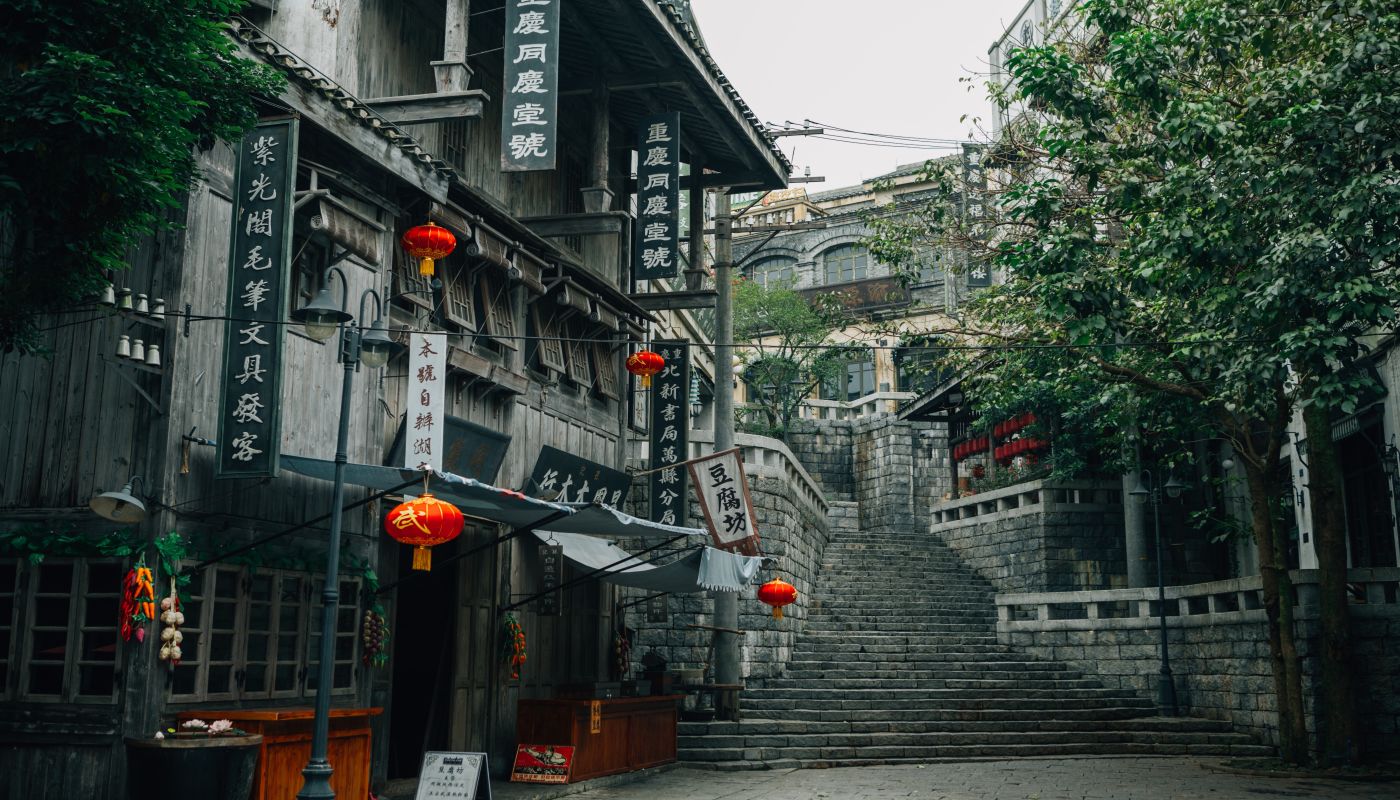
Landscape of China
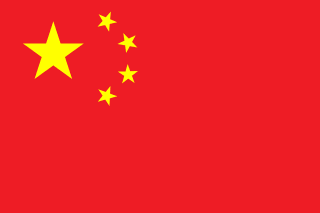
Flag of China

China

Asia

China, one the great cultural centers of the ancient world, is home to the largest population in the world and is known for its incredible rise to the global stage after opening the economy and industrializing. Despite great economic success, China has remained under communist rule with large levels of income inequality. There are also many international disagreements regarding its borders that China and its neighbors are actively engaged in.1 Since opening the country’s markets and borders, many people’s living conditions have improved, but they still lack many basic political freedoms.2 1 https://www.britannica.com/place/China 2 https://www.cia.gov/library/publications/the-world-factbook/geos/ch.html

What would you like to learn about in China?

Select a section to explore the country where nonprofits are creating positive change.

About China

For centuries China stood as a leading civilization, outpacing the rest of the world in the arts and sciences, but in the 19th and early 20th centuries, the country was beset by civil unrest, major famines, military defeats, and foreign occupation. After World War II, the communists under MAO Zedong established an autocratic socialist system that, while ensuring China's sovereignty, imposed strict controls over everyday life and cost the lives of tens of millions of people. After 1978, MAO's successor DENG Xiaoping and other leaders focused on market-oriented economic development and by 2000 output had quadrupled. For much of the population, living standards have improved dramatically and the room for personal choice has expanded, yet political controls remain tight. Since the early 1990s, China has increased its global outreach and participation in international organizations.

Quick Facts

Population
1,349,585,838 (July 2013 est.)
Area
9,596,961 sq km
ISO Code
CN
Continent
Asia
Government
Communist state
Active Causes
12
View all countries in Asia

Geography & Environment

Climate

extremely diverse; tropical in south to subarctic in north

Terrain

mostly mountains, high plateaus, deserts in west; plains, deltas, and hills in east

Natural Resources

coal, iron ore, petroleum, natural gas, mercury, tin, tungsten, antimony, manganese, molybdenum, vanadium, magnetite, aluminum, lead, zinc, rare earth elements, uranium, hydropower potential (world's...

Environmental Issues

air pollution (greenhouse gases, sulfur dioxide particulates) from reliance on coal produces acid rain; China is the world's largest single emitter of carbon dioxide from the burning of fossil fuels;...

People & Society

74.99 years
Avg. Life Expectancy
95.1%
Literacy Rate
50.6% of total population (2011)
Total Urban Population

Languages

Standard Chinese or Mandarin (Putonghua, based on the Beijing dialect), Yue (Cantonese), Wu (Shanghainese), Minbei (Fuzhou), Minnan (Hokkien-Taiwanese...

Religions

Daoist (Taoist), Buddhist, Christian 3%-4%, Muslim 1%-2%

Health Expenditure

5.1% of GDP (2010) of GDP

Education Expenditure

NA of GDP

Economy

$9,300
GDP per Capita (PPP)
6.5%
Unemployment Rate
13.4%
Below Poverty Line

Economic Overview

Since the late 1970s China has moved from a closed, centrally planned system to a more market-oriented one that plays a major global role - in 2010 China became the world's largest exporter. Reforms began with the phasing out of collectivized agriculture, and expanded to include the gradual liberalization of prices, fiscal decentralization, increased autonomy for state enterprises, creation of a diversified banking system, development of stock markets, rapid growth of the private sector, and opening to foreign trade and investment. China has implemented reforms in a gradualist fashion. In rece...

Causes in China

Environment

The deterioration of the environment is one the most concerning outcomes of China’s rapid economic expansion. The most severe environmental issues are air and water pollution, desertification, and erosion. China is the most populous nation in the world, and this population explosion has also caused significant loss of biodiversity and environmental degradation within the country.1 It is the largest producer of greenhouse gas emissions in the world, and levels of air pollution have, at times, shut down entire cities and been over 40 times higher than what is deemed safe to breathe by the World Health Organization. In 2015, China signed the Paris Accords which aimed to significantly cut world greenhouse gas emissions, but it is unclear if China will be able to significantly reduce their carbon footprint to a level that will make a difference.2

Family

Families in China have undergone structural changes in recent years. Overall, there is an increasing tendency to marry later in life and have fewer children.1 In 2016, China relaxed its controversial one-child policy to allow families to legally have two children. Since its inauguration in the 1980s, the one-child policy created a large gender imbalance because boys are culturally preferred to girls. In 2012, it was estimated that there were 40 million more men than women in China.2 In addition, rates of domestic abuse in China are very high, and an estimated 40 percent of women who are married or in a relationship have suffered abuse at the hands of their partner.3

Human Rights

China has had a long history of unlawful detentions, arbitrary censorship of media, and the banning of international non-governmental organizations. There are cases of land seizures, abuses of power by government officials, forced evictions, and discrimination reported daily throughout the country.1 Advocates of human rights, religious groups, and protesters are frequently targets of surveillance and punitive detentions. Many websites, browsers, and common Western websites are blocked throughout China. Even with both the press and religion tightly regulated, there is a unique atmosphere of acceptance around the intense political constraints on the rights of the Chinese people.2 Estimates suggest that roughly 500,000 people are currently being detained without charge or trial.1

Education

Academic achievement is highly valued in China, particularly in fields of science and technology. However, there are discrepancies in access to quality education. Urban areas have state funded education systems while rural areas suffer from a lack of funding and resources.1 The high school attendance rate in rural China is estimated to be as low as 40 percent. In addition, university enrollment has dramatically increased but constitutes only a relatively small percentage of the number of students enrolled in primary school. There is a gap in college attendance between urban and rural areas, with nearly 84 percent of Shanghai's high school students enrolling in college compared to only 5 percent of China’s rural poor.2 The national literacy rate is at 95 percent.3

Poverty

China was the first country to achieve the United Nations Millennium Development Goal of reducing the number of individuals living in extreme poverty. Between 1981 and 2008, China reduced its poverty rate from 84 percent to 12 percent. Despite this achievement, China still faces difficulty in addressing enduring poverty. Economic growth and opportunities are concentrated in eastern coastal cities with rural regions being neglected. The unemployment rate is at 4.1% and approximately 6.1 percent live below the poverty line.1

Religion

The Chinese Communist Party is officially atheist, and members of religious groups are often censored or detained by the state. China acknowledges Buddhism, Taoism, Islam, Catholicism, and Protestantism as state registered religions.1 Religious freedom varies by province. Muslims in the Xinjang province face significant restrictions on the practice of their faith because of their Turkish affiliations. Tibetan Buddhists also face restrictions on the practice of their faith in an effort to limit dissent and uprisings in the region.2 Approximately 18 percent of the population is Buddhist, 5 percent are Christian, 1 percent are Muslim, 21 percent adhere to traditional religions, and 52 percent are nonreligious.3

Clean Water

China faces difficulties in providing clean, unpolluted water to all citizens. It is estimated that over half of groundwater resources do not meet international or national standards.1 The threat of severe water shortage could dramatically damage China’s agricultural and industrial industries, and their consumption exacerbates tensions with neighboring countries dependent on Chinese water and resources.2 Approximately 91 percent of the population has access to improved drinking water, but only 65 percent have access to adequate sanitation infrastructure.3

Economy

China has seen rapid economic growth since 1978 when they turned from a centrally planned to a market based economy. The country now has a prominent role in international affairs and the global economy.1 China has earned the distinction of the world’s largest exporter and has successfully grown its GDP at a rate of nearly 10 percent each year.2 Despite this growth, China is still considered a developing country based on per capita income, and the rapid economic growth has made large income inequalities, very poor environment protection policies, and a lack of domestic consumption.1 The unemployment rate is at 4.1 percent and approximately 6.1 percent live below the poverty line.2

Government

The People’s Republic of China is governed through a single-party system with one legislative house. The government is largely predicated on the decisions of the nation’s official political party, the Chinese Communist Party (CPP).1 Members of the CCP enjoy significant benefits such as access to more reliable access to information, higher-quality jobs, and valuable networking opportunities.2 Although independent candidates can technically run for office, these people are often intimidated or subject to corruption or fraud that prevents them from getting into office. There are high levels of government corruption, and many anticorruption initiatives have failed to address cases of fraud and a lack of disclosure of important budget documents.3

Health

Due to the size of the population and the mounting health concerns resulting from pollution, China faces immense obstacles in providing healthcare to all. Because of China’s healthcare system’s inability to keep up with population growth, the chief question is whether to devote resources to providing minimal care for many or to provide a high standard of care to a limited few. Rural areas often are the places that suffer a lack to healthcare.1 The greatest health concerns facing China today are due to environmental degradation. The concentration pollutants in the air, for example, is 40 times higher than the level deemed safe by the World Health Organization. This has led to respiratory and heart diseases, which are the leading causes of death in China. There are over one million premature deaths annually that can be linked to air pollution. Babies born to mothers who have inhaled smog during pregnancies are at risk of slow brain development.2

Children

China has the highest number in the world of children who suffer from psychological disorders. Many are also subject to child labor and other forms of exploitation.1 Some children, especially those raised in rural areas, grow up without their parents present in their lives due to the pressure to seek better employment in major cities. This disrupts a natural family environment for children and increases the strain on youth and adolescents.2

Animals

China boasts a large variety of wildlife because of its size and varied terrain. The Great Panda, China’s flagship animal, is endangered with less than 2,000 left in the wild. China is the only place in the world these animals live outside of captivity, so conservation efforts have focused on protecting bamboo forests and pandas’ habitats.1 China has long been the target of animal activists who seek to end the eating of dog meat and the huge market for illegal animal products. In the last 20 years, animal protection groups and veterinary clinics have sprung up in China, mostly on the coast. This is somewhat due to the younger generation’s disinterest in owning things like shark fins and ivory.2

Nonprofits Working in China

Discover organizations making a difference in China

Make Your Impact Today

Discover causes you care about and support the nonprofits making a difference in communities around the world.

Are you a nonprofit? Join Project World Impact for free

Join Us Free