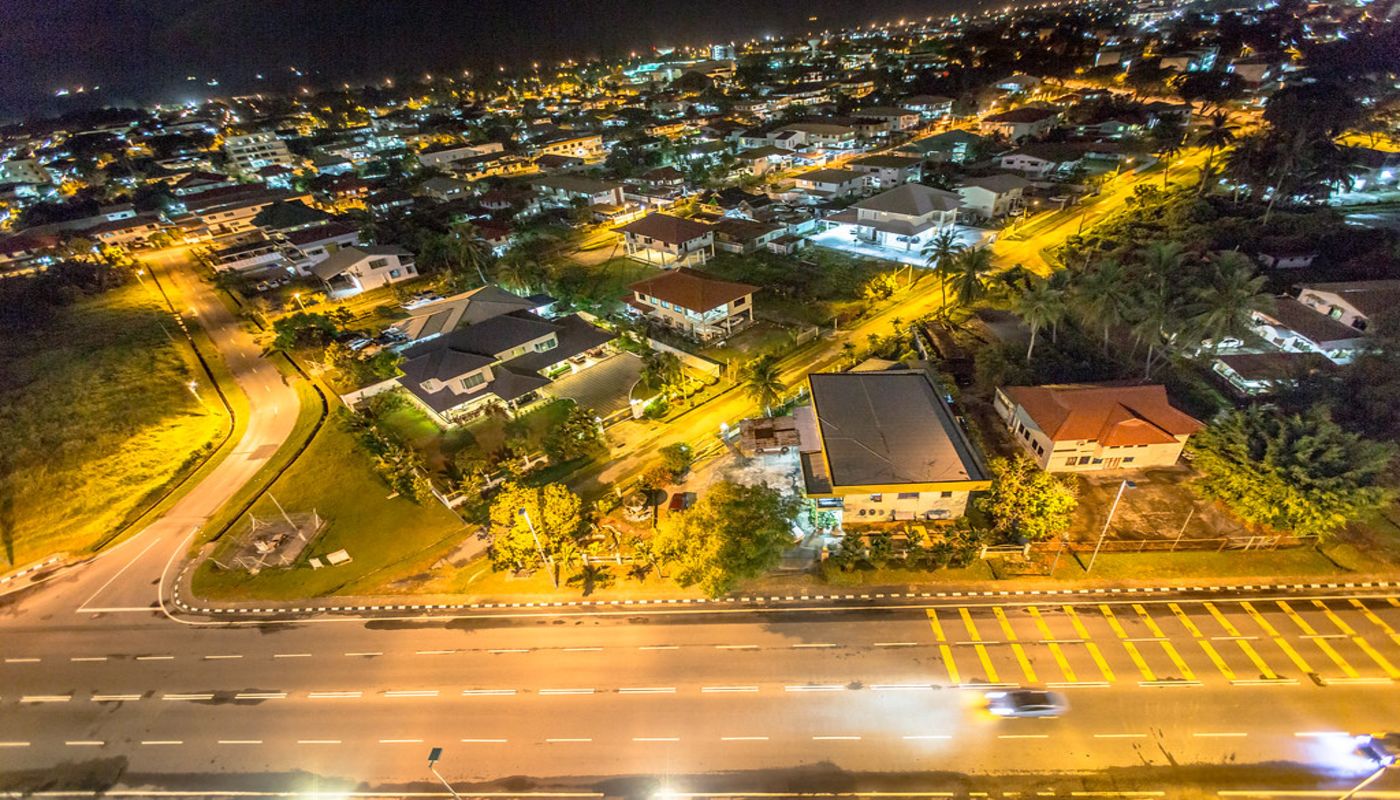
Landscape of Brunei Darussalam
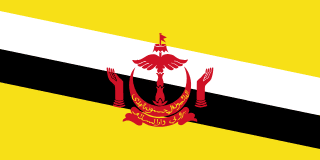
Flag of Brunei Darussalam

Brunei Darussalam

Asia

Brunei Darussalam is a small coastal sultanate of 443,593 people, surrounded by Malaysia and split into two separate regions, with the Malaysian Limbang Corridor dividing the two. Brunei has expansive petroleum and natural gas fields, creating one of the highest GDP per capitas in the world: $78,200.1 The government is able to provide its citizens with free education through the tertiary level, and free medical care, without personal income taxes.2 Its leading exports are mineral fuels and organic chemicals, and the majority of the Bruneian workforce is in industries, like petroleum, natural gas, construction or transportation.3 Brunei has strong economic infrastructure, an educated workforce and stable government. The nation focuses heavily on foreign investment.4 Brunei is predominantly Muslim, and abides by Shari’a penal code.5 1 https://www.cia.gov/library/publications/the-world-factbook/geos/bx.html 2–5 Ibid

What would you like to learn about in Brunei Darussalam?

Select a section to explore the country where nonprofits are creating positive change.

About Brunei Darussalam

The Sultanate of Brunei's influence peaked between the 15th and 17th centuries when its control extended over coastal areas of northwest Borneo and the southern Philippines. Brunei subsequently entered a period of decline brought on by internal strife over royal succession, colonial expansion of European powers, and piracy. In 1888, Brunei became a British protectorate; independence was achieved in 1984. The same family has ruled Brunei for over six centuries. Brunei benefits from extensive petroleum and natural gas fields, the source of one of the highest per capita GDPs in Asia.

Quick Facts

Population
415,717 (July 2013 est.)
Area
5,765 sq km
ISO Code
BN
Continent
Asia
Government
constitutional sultanate (locally known as Malay Islamic Monarchy)
Active Causes
12
View all countries in Asia

Geography & Environment

Climate

tropical; hot, humid, rainy

Terrain

flat coastal plain rises to mountains in east; hilly lowland in west

Natural Resources

petroleum, natural gas, timber

Environmental Issues

seasonal smoke/haze resulting from forest fires in Indonesia

People & Society

76.57 years
Avg. Life Expectancy
95.4%
Literacy Rate
76% of total population (2011)
Total Urban Population

Languages

Malay (official), English, Chinese

Religions

Muslim (official) 67%, Buddhist 13%, Christian 10%, other (includes indigenous beliefs) 10%

Health Expenditure

2.8% of GDP (2010) of GDP

Education Expenditure

3.3% of GDP (2012) of GDP

Economy

$55,300
GDP per Capita (PPP)
2.6%
Unemployment Rate
NA%
Below Poverty Line

Economic Overview

Brunei has a small well-to-do economy that depends on revenue from natural resource extraction but encompasses a mixture of foreign and domestic entrepreneurship, government regulation, welfare measures, and village tradition. Crude oil and natural gas production account for 60% of GDP and more than 90% of exports. Per capita GDP is among the highest in Asia, and substantial income from overseas investment supplements income from domestic production. For Bruneian citizens the government provides for all medical services and free education through the university level. The government of Brunei...

Causes in Brunei Darussalam

Environment

Brunei is party to agreements on biodiversity, climate change, desertification, endangered species, hazardous wastes, law of the sea, ozone protection and ship pollution.1 Brunei is both coastal plain and hilly lowland with a tropical climate. The nation experiences occasional, infrequent, natural hazards: typhoons, earthquakes and flooding.2

Family

Full implementation of the Shari’a penal code poses threats to women’s rights, according to Amnesty International, requiring unmarried women to remain in the home of their nuclear family or other guardian. Adultery, sodomoy and rape would be punishable by stoning or lashing under the implementation of phase three of the Shari’a penal code.1 Maternal and infant mortality rates are fairly low.2 Official data pertaining to Brunei’s stance on child marriage is unavailable.3

Human Rights

The Human Rights Watch’s latest report lacks any information on human rights in Brunei.1 Amnesty International reports that Brunei’s lack of transparency creates difficulty in monitoring the protection of human rights in the nation.2 However, Amnesty International cites concern that, if fully implemented, the Shari’a penal code would impede the rights of Bruneian citizens, inhibiting freedom of speech, expression and religion, and further reducing the rights of women. Adultery, sodomoy and rape would be punishable by stoning or lashing under the implementation of phase three of the Shari’a penal code.3

Education

Since Brunei is a small, wealthy country, the government is able to provide an extensive welfare system that allows for free education through university level, and free health care, for its 443,593 citizens, all without personal income taxes.1 The average child is in school for 15 years, and the literacy rate is at 96 percent.2 Education accounts for 4.4 percent of Brunei’s GDP.3 Non-citizen children encounter barriers in accessing education, having to apply for their enrollment and pay monthly fees to the school.4

Poverty

There is no official data available on population below the poverty line in Brunei. 9.6 percent of children under the age of 5 are underweight. The GDP per capita is $78,200, and the unemployment rate is 6.9 percent.1

Religion

Islam is the official religion of Brunei and accounts for 78 percent of the population, with Christianity accounting for 8.7 percent of the population, Buddhism for 7.8 percent and 4.7 percent identifying with another faith.1 Shari’a penal code applies to Muslim and non-Muslim citizens alike.2

Clean Water

Brunei reportedly has high standards for water quality,1 but there are no official national statistics on the percentage of the population with or without access to modern sanitation facilities and clean water sources.2

Economy

Though Brunei is a small nation of just under half a million people, it has strong economic infrastructure, an educated workforce and stable government. The nation focuses largely on foreign investment.1 Brunei’s GDP per capita is $78,200, one of the highest in the world.2 Its leading exports are mineral fuels and organic chemicals, and the majority of the Bruneian workforce is in industries, like petroleum, natural gas, construction or transportation.3 The unemployment rate is 6.9 percent.4 Bruneians do not pay personal income taxes, and are provided free medical services and education.5

Government

Brunei Darussalam is formally known as an absolute monarchy or sultanate, and is often called Brunei in its short form.1 The current sultanate family has been in power for the last 600 years.2 All political power in Brunei is concentrated in the sultan, as he acts as both the chief of state and head of government.3 Brunei is a largely Islamic state, and adheres to Shari’a penal code. The first of three phases of the penal code was rolled out in 2014; this code applies to both Muslim and non-Muslim citizens.4

Health

Brunei’s life expectancy at birth is 77 years, and the infant and maternal mortality rates are fairly low.1 The Bruneian government provides free health care to all of its citizens.2 Heart disease, strokes and diabetes are the leading causes of death in Brunei.3

Children

Just over 23 percent of the Bruneian population is under the age of 15.1 The infant mortality rate is relatively low, at just 9.6 percent per 1,000 members of the population, but approximately 9 percent of children under the age of 5 are underweight.2 The Bruneian government’s does not imprison juvenile criminals, rather, juvenile offenders are placed in detention or rehabilitation centers, and the maximum service time cannot exceed 6 months. In 2013, the Bruneian government amended the Children and Young Person’s Order, allowing juveniles to perform community service rather than spend time in a detention center.3

Animals

Brunei is home to the proboscis monkey, the black and yellow broadbill, green crested lizard, python and sun bear.1 Brunei is party to agreements on biodiversity, endangered species and law of the sea.2 Brunei is both coastal plain and hilly lowland with a tropical climate.3

Make Your Impact Today

Discover causes you care about and support the nonprofits making a difference in communities around the world.

Are you a nonprofit? Join Project World Impact for free

Join Us Free