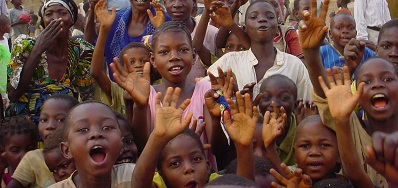
Landscape of Republic of Chad
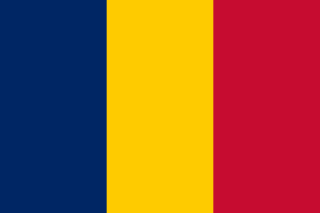
Flag of Republic of Chad

Republic of Chad

Africa

Chad has been involved in civil war conflict for most of its life as an independent nation. Destruction of arable land, along with severe drought conditions, has harmed agriculture production and plunged over 45% of the population into poverty.1 Those in poverty struggle to receive proper education, health care, and access to clean water and sanitation facilities.2 Finally, the corrupt government is closely involved in the private sector and is known to funnel profits from exports directly to public officials, hindering any possibility of economic growth.3 1 https://borgenproject.org/addressing-poverty-in-chad/ 2 http://www.ruralpovertyportal.org/country/home/tags/chad 3 http://www.heritage.org/index/country/chad

What would you like to learn about in Republic of Chad?

Select a section to explore the country where nonprofits are creating positive change.

About Republic of Chad

Chad, part of France's African holdings until 1960, endured three decades of civil warfare, as well as invasions by Libya, before a semblance of peace was finally restored in 1990. The government eventually drafted a democratic constitution and held flawed presidential elections in 1996 and 2001. In 1998, a rebellion broke out in northern Chad, which has sporadically flared up despite several peace agreements between the government and the insurgents. In 2005, new rebel groups emerged in western Sudan and made probing attacks into eastern Chad despite signing peace agreements in December 2006 and October 2007. In June 2005, President Idriss DEBY held a referendum successfully removing constitutional term limits and won another controversial election in 2006. Sporadic rebel campaigns continued throughout 2006 and 2007. The capital experienced a significant insurrection in early 2008, but has had no significant rebel threats since then, in part due to Chad's 2010 rapprochement with Sudan, which previously used Chadian rebels as proxies. DEBY in 2011 was reelected to his fourth term in an election that international observers described as proceeding without incident. Power remains in the hands of an ethnic minority.

Quick Facts

Population
11,193,452 (July 2013 est.)
Area
1.284 million sq km
ISO Code
TD
Continent
Africa
Government
republic
Active Causes
12
View all countries in Africa

Geography & Environment

Climate

tropical in south, desert in north

Terrain

broad, arid plains in center, desert in north, mountains in northwest, lowlands in south

Natural Resources

petroleum, uranium, natron, kaolin, fish (Lake Chad), gold, limestone, sand and gravel, salt

Environmental Issues

inadequate supplies of potable water; improper waste disposal in rural areas contributes to soil and water pollution; desertification

People & Society

49.07 years
Avg. Life Expectancy
35.4%
Literacy Rate
21.8% of total population (2011)
Total Urban Population

Languages

French (official), Arabic (official), Sara (in south), more than 120 different languages and dialects

Religions

Muslim 53.1%, Catholic 20.1%, Protestant 14.2%, animist 7.3%, other 0.5%, unknown 1.7%, atheist 3.1% (1993 census)

Health Expenditure

4.5% of GDP (2010) of GDP

Education Expenditure

2.9% of GDP (2011) of GDP

Economy

$2,000
GDP per Capita (PPP)
NA%
Unemployment Rate
80% (2001 est.)
Below Poverty Line

Economic Overview

Chad's primarily agricultural economy will continue to be boosted by major foreign direct investment projects in the oil sector that began in 2000. Economic conditions have been positive in recent years, with real GDP growth reaching 13% in 2010 because of high international prices for oil and a strong local harvest. GDP growth for 2012 was 5%. However, Chad's investment climate remains challenging due to limited infrastructure, a lack of trained workers, extensive government bureaucracy, and corruption. At least 80% of Chad's population relies on subsistence farming and livestock raising for...

Causes in Republic of Chad

Environment

The largest issues that plague the environment in Chad are the desertification and the shrinking of Lake Chad. Lake Chad has decreased by 90% in the past 50 years due to periodic droughts, below average rainfall, and increasing withdrawal for irrigation.1 Well over 20 million people in Chad, Niger, Nigeria, and Cameroon all depend on Lake Chad for agricultural cultivation and drinkable water, making the shrinkage a large-scale problem.2 Poverty also contributes to the population’s vulnerability to climate change because people cannot receive the help they need to recover from floods and drought.1

Family

In Chad, polygamy is widely accepted and practiced throughout the country.1 Additionally, the country of Chad is home to the world’s third highest rate of child marriages. 68% of girls are married before the age of 18.2 The Chadian culture values women based on the number of children they bear and allows violence in marriage to bring about submission. Most women are illiterate and have little to no access to health information or maternal care.3

Human Rights

Chad’s human rights record is very poor. The government has never upheld a standard for human rights and security forces are committing numerous human rights violations with impunity. Some of the recent violations that have occurred in Chad include extrajudicial killings, beatings, torture, rape, and widespread corruption in all levels of the government.1 Female genital mutilation in Chad is illegal, but it is still widely practiced.2 Human rights activists and journalists have been threatened and harassed by security forces for speaking out against human rights violations and government corruption.1

Education

Only 40% of Chad’s population is literate.1 20% of children do not ever attend primary school, and of those who do attend, only one-third finish. In past years, little funding or attention has been given to the educational system, resulting in poor facilities and resources. Only 30% of teachers are properly trained to teach students. Even students who do attend school do not receive quality education due to these conditions.2

Poverty

Around 45% of the population in Chad lives at or below the poverty line, and Chad remains one of the poorest countries in the world.1 With such widespread and pervasive poverty, it is increasingly difficult for the average citizen to access health care and proper nutrition. Chad is also a landlocked country, which means that its natural resources are severely limited.2 Other factors that increase the poverty level are the country’s inadequate infrastructure, climate variability, and the low annual rainfall.3 In rural areas, poverty is more prevalent than in urban areas, since 80% of the people rely solely on farming to make a livelihood and climate change and drought have limited agricultural productivity in recent years.2 Additionally, nearly 90% of the Chadian population resides in slum housing, which is defined as housing that lacks clean water access, sanitation, or structural stability.1

Religion

About half of Chad’s population identifies as Muslim, one third identifies as Christian, and the rest tend to follow indigenous religious beliefs.1 Although Chad has no official state religion, Muslims hold a disproportionately high number of public office positions. The government also bans certain Muslim groups that are known for extreme violence.2 In recent years, Chad has been pulled into a conflict between Muslims and Christians in the Central African Republic and has become a haven for refugees displaced by the violence.3

Clean Water

Contaminated water is one of the leading causes of child mortality and cholera in Chad.1 49% of the population does not have access to clean water or sanitation. In some regions, water is sold as a luxury commodity and many cannot afford it.2 The Chadian government is highly reliant on humanitarian groups to build latrines and water sanitation systems throughout the county. The families who live near these systems are required to pay a small fee in order to use the water on a daily basis and the money goes towards the maintenance of the facilities and soap.1

Economy

Chad’s economy relies heavily on agricultural products such as cotton and grains, as well as oil exports. There is a marked lack of business freedom and property rights, and the government is very involved in the private sector. Mismanagement of government funds greatly undermines any lasting economic development that could occur in Chad.1 The economy’s growth is largely dependent on world oil prices, which fluctuate often.2

Government

Chad gained independence from France in 1960, and the country’s history has since been marred by violence and political instability.1 It has been engaged in civil war for 35 of the 57 years of its freedom.2 The Republic of Chad now operates with a presidential system of government. The current President, Idriss Deby, is widely considered to be corrupt, and nepotism reigns within his inner circle. He threw out constitutional restrictions in order to run for a fifth term in 2016 and was met with public protest. In spite of pushback from opposition, he won the election anyways.3 Rule of law and the judicial system are both very weak in Chad. Corruption has been rampant for many years and Chad consistently ranks among the most corrupt countries in the world. Much of the country’s recent oil wealth has been mismanaged and many believe government corruption is to blame.4

Health

Chad’s healthcare system is sorely lacking in trained doctors, manpower, funding, resources and facilities. In some regions, there is only one doctor for every 244,000 people. Because of this, the distribution of medications is uneven and ineffective. 33% of Chadian children are unable to be vaccinated against preventable childhood diseases and Chad has the highest percentage of childhood malnutrition in West Africa.1 Malnutrition is the leading cause of child mortality, and 30% of children are underweight. Noncommunicable diseases are the leading cause of death, as people don’t have access to vaccinations for conditions like malaria, tuberculosis, HIV/AIDS.2

Children

Children in eastern Chad are at risk of being recruited at as young as 13 for the Chadian army and armed opposition groups. Children in rural areas are rarely provided with education or employment opportunities as alternatives to military recruitment, and the government does not actively condemn the use of children in military groups.1 Even as children are being transitioned out of military roles, there are inadequate resources to provide them with education and recovery.2 Additionally, the mortality rate for children under five is very high, with 150 deaths per 1,000 live births.3 More than 500,000 children suffer from malnutrition due to food shortages.4

Animals

Chad has a rich animal life and is home to a variety of animals such as lions, elephants, rhinoceroses, cheetahs, and many species of birds and reptiles.1 Some species, such as the West African lion and Dama gazelle, are endangered due to poaching and destruction of their habitats through deforestation. There are areas of conservation, but the government does not have sufficient funds or resources to keep them in operation.2

Nonprofits Working in Republic of Chad

Discover organizations making a difference in Republic of Chad

Make Your Impact Today

Discover causes you care about and support the nonprofits making a difference in communities around the world.

Are you a nonprofit? Join Project World Impact for free

Join Us Free