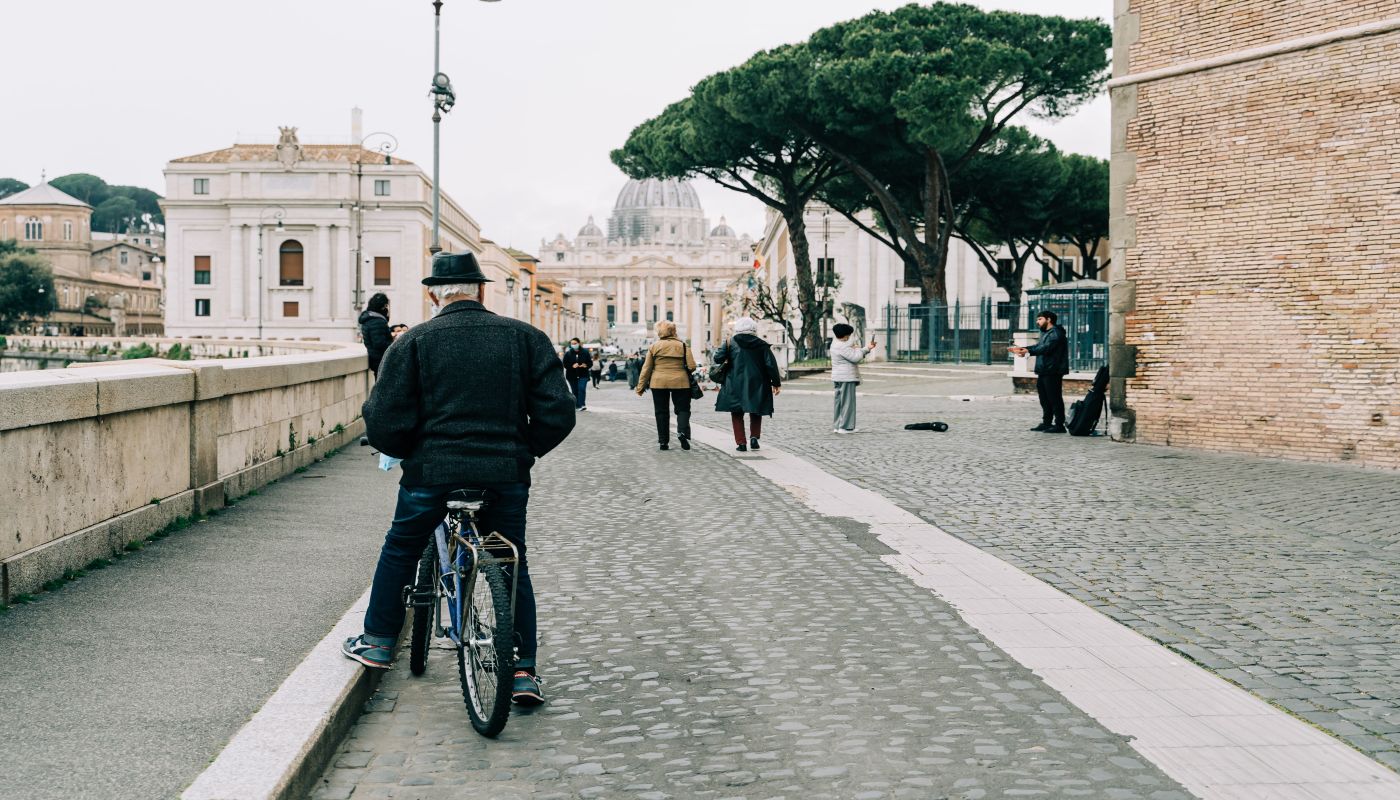
Landscape of Holy See
Flag of Holy See

Holy See

Europe

The name “Holy See” comes from the Latin phrase “Sancta Sedes,” meaning Holy Chair. The Holy See is the seat of government of the Catholic church, which is presided over by the Pope and other appointed officials.1 1http://catholicstraightanswers.com/what-does-the-term-holy-see-mean/

What would you like to learn about in Holy See?

Select a section to explore the country where nonprofits are creating positive change.

About Holy See

Popes in their secular role ruled portions of the Italian peninsula for more than a thousand years until the mid 19th century, when many of the Papal States were seized by the newly united Kingdom of Italy. In 1870, the pope's holdings were further circumscribed when Rome itself was annexed. Disputes between a series of "prisoner" popes and Italy were resolved in 1929 by three Lateran Treaties, which established the independent state of Vatican City and granted Roman Catholicism special status in Italy. In 1984, a concordat between the Holy See and Italy modified certain of the earlier treaty provisions, including the primacy of Roman Catholicism as the Italian state religion. Present concerns of the Holy See include religious freedom, threats against minority Christian communities in Africa and the Middle East, international development, interreligious dialogue and reconciliation, and the application of church doctrine in an era of rapid change and globalization. About 1.2 billion people worldwide profess the Catholic faith.

Quick Facts

Population
839 (July 2013 est.)
Area
0.44 sq km
ISO Code
VA
Continent
Europe
Government
ecclesiastical
Active Causes
12
View all countries in Europe

Geography & Environment

Climate

temperate; mild, rainy winters (September to May) with hot, dry summers (May to September)

Terrain

urban; low hill

Natural Resources

none

Environmental Issues

NA

People & Society

100%
Literacy Rate
100% of total population (2010)
Total Urban Population

Languages

Italian, Latin, French, various other languages

Religions

Roman Catholic

Economy

NA%
Below Poverty Line

Economic Overview

The Holy See is supported financially by a variety of sources, including investments, real estate income, and donations from Catholic individuals, dioceses, and institutions; these help fund the Roman Curia (Vatican bureaucracy), diplomatic missions, and media outlets. Moreover, an annual collection taken up in dioceses and from direct donations go to a non-budgetary fund, known as Peter's Pence, which is used directly by the Pope for charity, disaster relief, and aid to churches in developing nations. Donations increased between 2010 and 2011. The separate Vatican City State budget includes t...

Causes in Holy See

Human Rights

The mission of the Holy See is to advance religious freedom and guarantee sanctity of life from conception to natural death and all the aspects of life in between.1

Government

The Holy See is the universal government of the Catholic church and operates from the Vatican City State. The jurisdiction of the Holy See applies to all Catholic churches across the world and is not just confined to the borders of the Vatican City.1 The Holy See has been recognized as a sovereign state since the Lateran Treaty of 1929, which created the Vatican City and gave the Holy See status as a sovereign state separate from Italy. The treaty offered the Vatican and Holy See full autonomy as long as its bishops were Italian citizens and gave Rome status as the center of the Catholic world.2 The treaty also gave the Holy See a palace so it could possess the territory required for official statehood. While the Vatican and the Holy See are often referred to interchangeably, they are distinct. The Holy See goes beyond the geographical borders of the Vatican City to govern the worldwide Catholic church and be involved in diplomatic affairs.3 The Holy See is not a full member of the United Nations—it observes international diplomatic councils and supports human rights efforts.1

Make Your Impact Today

Discover causes you care about and support the nonprofits making a difference in communities around the world.

Are you a nonprofit? Join Project World Impact for free

Join Us Free