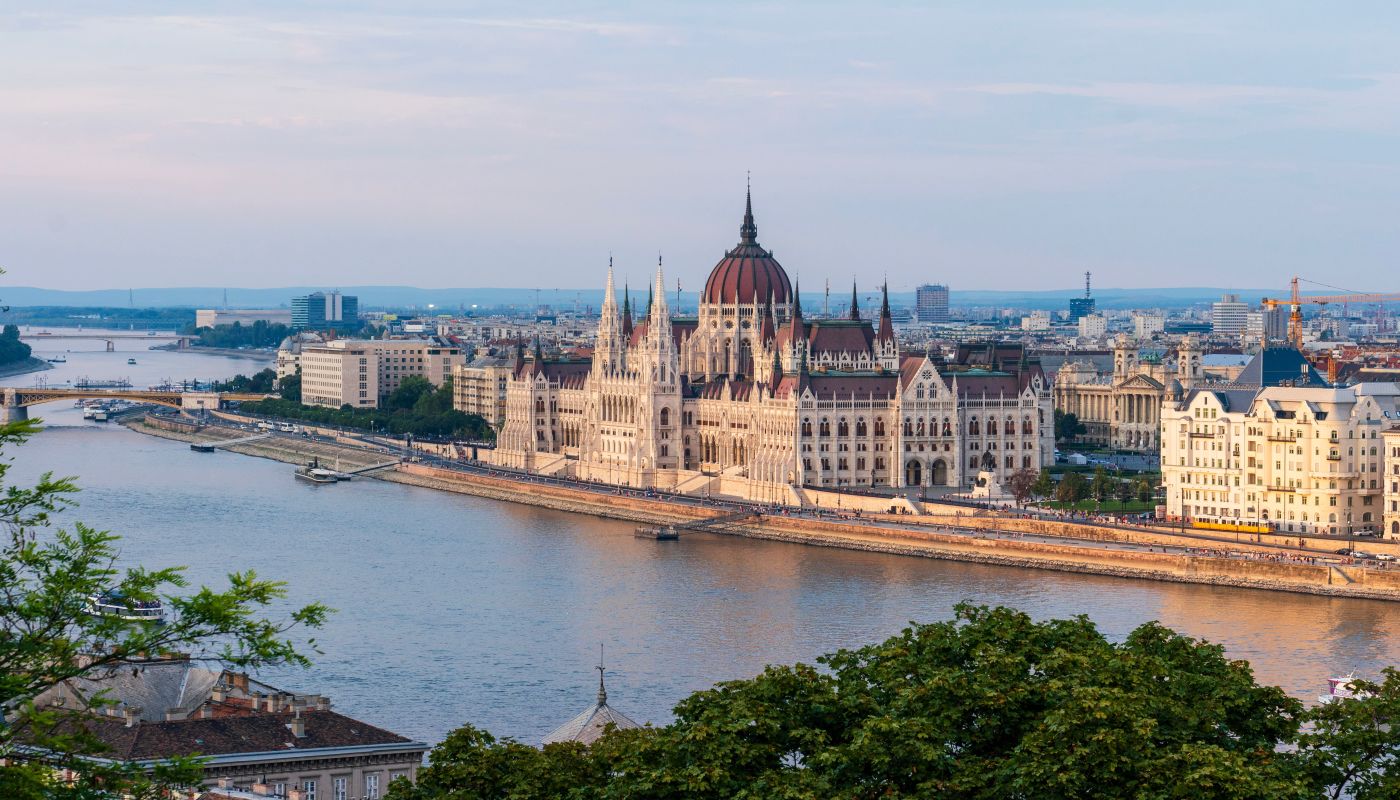

Landscape of Hungary
Flag of Hungary

Hungary

Europe

Hungary has streamlined their licensing process and greatly improved the freedoms of economic and investment sectors. Children and minority groups suffer the most from discrimination and poverty. The Hungarian government has tightened regulations on education and media freedoms, and discriminated against and restricted the rights of minority groups. Smoking and highly contaminated water from heavy metals are two of the leading health concerns in the country, along with non-communicable and communicable diseases.1 1 https://www.cia.gov/library/publications/the-world-factbook/geos/hu.html

What would you like to learn about in Hungary?

Select a section to explore the country where nonprofits are creating positive change.

About Hungary

Hungary became a Christian kingdom in A.D. 1000 and for many centuries served as a bulwark against Ottoman Turkish expansion in Europe. The kingdom eventually became part of the polyglot Austro-Hungarian Empire, which collapsed during World War I. The country fell under communist rule following World War II. In 1956, a revolt and an announced withdrawal from the Warsaw Pact were met with a massive military intervention by Moscow. Under the leadership of Janos KADAR in 1968, Hungary began liberalizing its economy, introducing so-called "Goulash Communism." Hungary held its first multiparty elections in 1990 and initiated a free market economy. It joined NATO in 1999 and the EU five years later. In 2011, Hungary assumed the six-month rotating presidency of the EU for the first time.

Quick Facts

Population
9,939,470 (July 2013 est.)
Area
93,028 sq km
ISO Code
HU
Continent
Europe
Government
parliamentary democracy
Active Causes
12
View all countries in Europe

Geography & Environment

Climate

temperate; cold, cloudy, humid winters; warm summers

Terrain

mostly flat to rolling plains; hills and low mountains on the Slovakian border

Natural Resources

bauxite, coal, natural gas, fertile soils, arable land

Environmental Issues

the upgrading of Hungary's standards in waste management, energy efficiency, and air, soil, and water pollution to meet EU requirements will require large investments

People & Society

75.24 years
Avg. Life Expectancy
99%
Literacy Rate
69.5% of total population (2011)
Total Urban Population

Languages

Hungarian 93.6%, other or unspecified 6.4% (2001 census)

Religions

Roman Catholic 51.9%, Calvinist 15.9%, Lutheran 3%, Greek Catholic 2.6%, other Christian 1%, other or unspecified 11.1%, unaffiliated 14.5% (2001 cens...

Health Expenditure

7.3% of GDP (2010) of GDP

Education Expenditure

5.1% of GDP (2009) of GDP

Economy

$20,000
GDP per Capita (PPP)
10.9%
Unemployment Rate
14% (2012)
Below Poverty Line

Economic Overview

Hungary has made the transition from a centrally planned to a market economy, with a per capita income nearly two-thirds that of the EU-27 average. The private sector accounts for more than 80% of GDP. Foreign ownership of and investment in Hungarian firms are widespread, with cumulative foreign direct investment worth more than $70 billion. In late 2008, Hungary's impending inability to service its short-term debt - brought on by the global financial crisis - led Budapest to obtain an IMF/EU/World Bank-arranged financial assistance package worth over $25 billion. The global economic downturn,...

Causes in Hungary

Environment

Hungary’s environment suffers from air, water, and land pollution. In an effort to industrialize quickly, Hungary compromised their environmental policies. As a result, pollution from factories, cars, and electric power plants have contaminated domestic resources. One prominent concern is the leaching of heavy metal contaminants into groundwater sources. This type of pollution taints the supply of safe drinking water and can have dire health implications for those consuming the water.1 The CIA asserts that Hungary has not made the necessary investments to reach EU standards for air, soil, and water pollution, waste management, and energy efficiency.2

Family

Domestic abuse is a prevalent issue in Hungary.1 There are few means of recourse for women suffering from domestic abuse as Hungary’s legal and procedural framework often returns women to the same situations in which they were victims.2 It is also typically difficult for young couples to find independent housing. Shortages of apartments and living quarters force many couples into the homes of relatives.3 Additionally, the divorce rate in Hungary is around 60%.4

Human Rights

Hungary has had widespread reports of human rights abuses most commonly seen in matters of judicial independence, media freedom, and minority rights.1 A report published by Human Rights Watch has received international attention for its exposure of the nature of chronic domestic abuse in Hungary. Other human rights abuses include inaction on the part of the police forces and shelter spaces that are insufficient for needs of citizens.2 The government has a record of discouraging NGO action within the country and suppressing freedom of news reporting; a government-critiquing newspaper was shut down in 2016 and promptly purchased by a high-ranking government official. There are also extreme abuses and discrimination against minority ethnic groups.3

Education

Recent reforms have left the Hungarian education system with less funding and strict government control. Government-funded scholarships were also dramatically cut, resulting in a 25% reduction in applications to higher education schools. The government has been working towards centralization and higher state control over the education sector.1 The Hungarian government has also taken steps to limit the freedom of universities, attempting to nationalize their mission.2 The nation has a 99% literacy rate.3

Poverty

Roughly 15% of Hungarians live in poverty. When combined with an unemployment rate of 5%, many individuals live in poverty or in risk of poverty with limited opportunities to increase their income.1 There are record numbers of homeless living in Budapest, spurring the government to pass laws that allow them to be arrested and imprisoned.2 Housing prices have increased by 31% in the past three years. Although there are few people under the poverty line, around 44% of Hungarians cannot afford basic resources.3

Religion

Hungary has no official state religion and nominally guarantees religious freedom.1 The Church Act of 2012 was charged with restricting the rights of minority religions, and deregistered over 350 institutions that had previously been filed as recognized churches under the state’s registration requirements. There has also been societal discrimination against religious groups. Notably, there has been an increase of anti-Semitic activity.2 37.2% of the Hungarian population is Roman Catholic, 11.6% Calvinist, 2.2% Lutheran, and 1.8% Greek Catholic.3

Clean Water

Almost 2 million people lack access to clean water in Hungary. Pollution from heavy metal contaminants has leaked into groundwater supplies, resulting in serious health concerns for the Hungarian populace.sup>1 Clean water is also a part of the political sphere in Hungary; the government claims that their water is completely safe and denies the reports made by the CDC.2

Economy

Fiscal transparency and accountability within the public finance sector are critical to the success of Hungary’s economic growth. Policy changes have led to a more efficient private sector and have developed trade, business, and investment freedom.1 Privileged businesses in Hungary benefit substantially from associations with the public sector. Alleged corruption in the economy and poor commitment to checks and balances may serve to discourage potential investors.2 Hungary’s main trade partners are Germany, Austria, and many other European countries, and Hungarian exports consist mainly of machinery, equipment, and other manufactures. In 2016, Hungary had a 5.1% unemployment rate.3

Health

Non-communicable diseases are the leading cause of death in Hungary. Life expectancy is 76 years old. Infant mortality is at 4.9 deaths per 1,000 live births, and maternal mortality rates are 17 deaths per 100,000 live births. 26% of adults are obese.1 Nearly 29% of the population smokes in Hungary. The government has taken steps to decrease the legal sale of tobacco, but this has merely expanded the illegal trade of the same products.2 Widespread corruption and excessive consumption of medical resources further undermines the efficiency and efficacy of the health system.3

Children

The tumultuous transition to a free market economy left many Hungarians financially compromised, and vulnerable children have felt the effects. Children of Sinti and Roma descent are among those at highest risk for living in poverty due to the discrimination these people groups face.1 Additionally, with a youth unemployment rate hovering around 27%, opportunities for wealth creation and income security are limited.2 In recent years, the government has created more tax benefits for families with children and more social services to provide food and education for those from impoverished households.3 Children are also at risk of being trafficked through and from Hungary. Human traffickers recruit young women from state-run housing homeless shelters to work in the sex industry.4

Government

Hungary is a parliamentary republic. The head of government, or prime minister, and the head of state are two separate offices. There are ten major political parties and a variety of extremely powerful lobbying organizations.1 Transparency International ranks Hungary 57th out of 176 countries for corruption found in government. The Hungarian public scores their own public officials as 48 out of 100 for corruption.2 There is a serious debt problem; the national debt in 2016 was 74% of the GDP.3

Animals

Landlocked Hungary is home to the roe deer, wild boar, fox, mouflon, and imperial eagle. The Great Plain part of the country is a breeding ground to many different birds, and host to many kinds of plant species. Some of the biggest challenges facing the local wildlife are the pollution of local air and water from human activity and irresponsible waste management.1

Nonprofits Working in Hungary

Discover organizations making a difference in Hungary

Make Your Impact Today

Discover causes you care about and support the nonprofits making a difference in communities around the world.

Are you a nonprofit? Join Project World Impact for free

Join Us Free