Landscape of Luxembourg
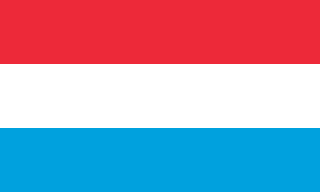
Flag of Luxembourg

Luxembourg

Europe

Luxembourg gained its independence from the Netherlands in 1867. After being taken over by Germany in both world wars, the government ended its neutrality streak and joined NATO in 1949. Luxembourg was one of the six original countries to join the European Union, and is the only grand duchy in the world. Pollution of the air and the soil is one of the biggest concerns for the generally wealthy and stable country.1 1 https://www.cia.gov/library/publications/the-world-factbook/geos/lu.html

What would you like to learn about in Luxembourg?

Select a section to explore the country where nonprofits are creating positive change.

About Luxembourg

Founded in 963, Luxembourg became a grand duchy in 1815 and an independent state under the Netherlands. It lost more than half of its territory to Belgium in 1839 but gained a larger measure of autonomy. Full independence was attained in 1867. Overrun by Germany in both world wars, it ended its neutrality in 1948 when it entered into the Benelux Customs Union and when it joined NATO the following year. In 1957, Luxembourg became one of the six founding countries of the European Economic Community (later the European Union), and in 1999 it joined the euro currency area. In January 2013, Luxembourg assumed a nonpermanent seat on the UN Security Council for the 2013-14 term.

Quick Facts

Population
514,862 (July 2013 est.)
Area
2,586 sq km
ISO Code
LU
Continent
Europe
Government
constitutional monarchy
Active Causes
12
View all countries in Europe

Geography & Environment

Climate

modified continental with mild winters, cool summers

Terrain

mostly gently rolling uplands with broad, shallow valleys; uplands to slightly mountainous in the north; steep slope down to Moselle flood plain in the southeast

Natural Resources

iron ore (no longer exploited), arable land

Environmental Issues

air and water pollution in urban areas, soil pollution of farmland

People & Society

79.88 years
Avg. Life Expectancy
100%
Literacy Rate
85% of total population (2010)
Total Urban Population

Languages

Luxembourgish (national language), German (administrative language), French (administrative language)

Religions

Roman Catholic 87%, other (includes Protestant, Jewish, and Muslim) 13% (2000)

Health Expenditure

7.8% of GDP (2010) of GDP

Education Expenditure

3.8% of GDP (2001) of GDP

Economy

$81,100
GDP per Capita (PPP)
6%
Unemployment Rate
NA%
Below Poverty Line

Economic Overview

This small, stable, high-income economy - benefiting from its proximity to France, Belgium, and Germany - has historically featured solid growth, low inflation, and low unemployment. The industrial sector, initially dominated by steel, has become increasingly diversified to include chemicals, rubber, and other products. Growth in the financial sector, which now accounts for about 27% of GDP, has more than compensated for the decline in steel. Most banks are foreign-owned and have extensive foreign dealings, but Luxembourg has lost some of its advantages as a favorable tax location because of O...

Causes in Luxembourg

Family

Domestic violence is one of the leading familial problems in Luxembourg. In 2017 the government approved a draft law combating domestic violence, providing more protections for those affected, especially children.1 Luxembourg legalized same-sex marriages in hopes of reducing discrimination based on sexual orientation.2 Marriage rates in the country have dropped sharply; there are only about 3 marriages per 1000 people annually, compared to 7 per 1000 in 1970.3

Education

As a highly developed country, Luxembourg has an excellent education system and high enrollment rates in both the primary and secondary schools. There is 97% enrollment in primary schools.1 The majority of educational institutions are free public schools, and schooling is compulsory for anyone ages 4 through 16. The educational system is also multilingual.2 Over 41% of the workforce has some form of higher education degree, which is higher than the OECD average of 28%.3

Poverty

With such a high GDP per capita, small population, and small geographical size, the amount of poverty in Luxembourg is marginal. There is little to no data on the number of people living under the poverty line, but other economic data such as falling unemployment and rising GDP indicate that poverty is steadily decreasing.1

Religion

The main religion practiced in Luxembourg is Roman Catholicism, followed by Protestantism, Judaism, and Islam. Official statistics demonstrate that there is equal treatment among all religions, but there have been some minority religions that have spoken out and stated that they are not receiving equal funding or treatment by the government.1,2

Clean Water

As a highly-developed and economically stable country, Luxembourg has successfully provided all of its citizens with clean water. 2.4% of the population does not have access to clean sanitation facilities.1

Economy

Luxembourg boasts a stable and high-income economy that has benefited tremendously from its proximity and trading relationships with Belgium, France, and Germany. Unemployment is 6.7%, while the population living below the poverty line is less than 1%.1 Luxembourg has been undergoing tax reforms because of pressure from the EU and OECD. Previously, the country made money by acting as a tax haven for foreign companies, but leaked documents in 2015 exposed their double standards for taxes that lured companies to their banks. Since this incident Luxembourg has increased banking transparency and restricted banking freedoms.2

Government

The Grand Duchy of Luxembourg is a constitutional monarchy. The country has the distinction of being one of the six founding member states of the European Economic Community, which later became known as the European Union.1 Luxembourg’s government has always been a promoter of European integration and the country was a founding member of the Euro. With a well-developed infrastructure and an overall highly skilled labor force, Luxembourg has managed to remain largely free from corruption. Anti-corruption laws and measures are highly enforced, and there is a strong culture of transparency.2

Health

In recent years the obesity rates of adults in Luxembourg have been rising. 24.8% of the population is obese.1 Life expectancy is 82, while leading causes of death are degenerative diseases, heart disease, cancer, and respiratory diseases.2 Maternal mortality rates are 10 per 100,000 births, and infant mortality is 3.4 deaths per 1,000 births. The country spends 6.6% of its GDP on health expenditures.3

Children

Luxembourg has a good record with children’s rights and the provision of education. The average child is in school for 14 years, and 4.1% of the GDP is spent on education.1 87% of children continue to secondary education.2 Children are well-represented in government, there are multiple policies protecting children’s rights, such as their right to be protected from abuse, the right to protection during armed conflict, and the right to have contact with their father or mother. Children under 18 are tried in juvenile courts.3

Environment

Luxembourg’s environment is at risk from the high levels of manufacturing pollution leaking heavy metals into the air and water. Some of the main metals present in testing are mercury and cadmium. The European Environment Agency has assisted the country in creating a waste prevention program.1 Another main concern is the pollution of soil in the farmlands, as well as flooding.2

Human Rights

Human rights abuses are not a major reported concern for citizens of Luxembourg. Some issues reported in 2015 were domestic violence, human trafficking, child trafficking for sexual and labor exploitation, but the cases are few and often isolated.1

Animals

Luxembourg has greatly reduced its biodiversity in order to expand agriculture and infrastructure. Recreation, tourism, and urbanization have led to the pollution and destruction of habitats near landmarks and cities.1 Among the species endangered by these activities are the eurasian otter, eurasian peregrine falcon, the pond bat, and the southern damselfly.2

Nonprofits Working in Luxembourg

Discover organizations making a difference in Luxembourg

Make Your Impact Today

Discover causes you care about and support the nonprofits making a difference in communities around the world.

Are you a nonprofit? Join Project World Impact for free

Join Us Free