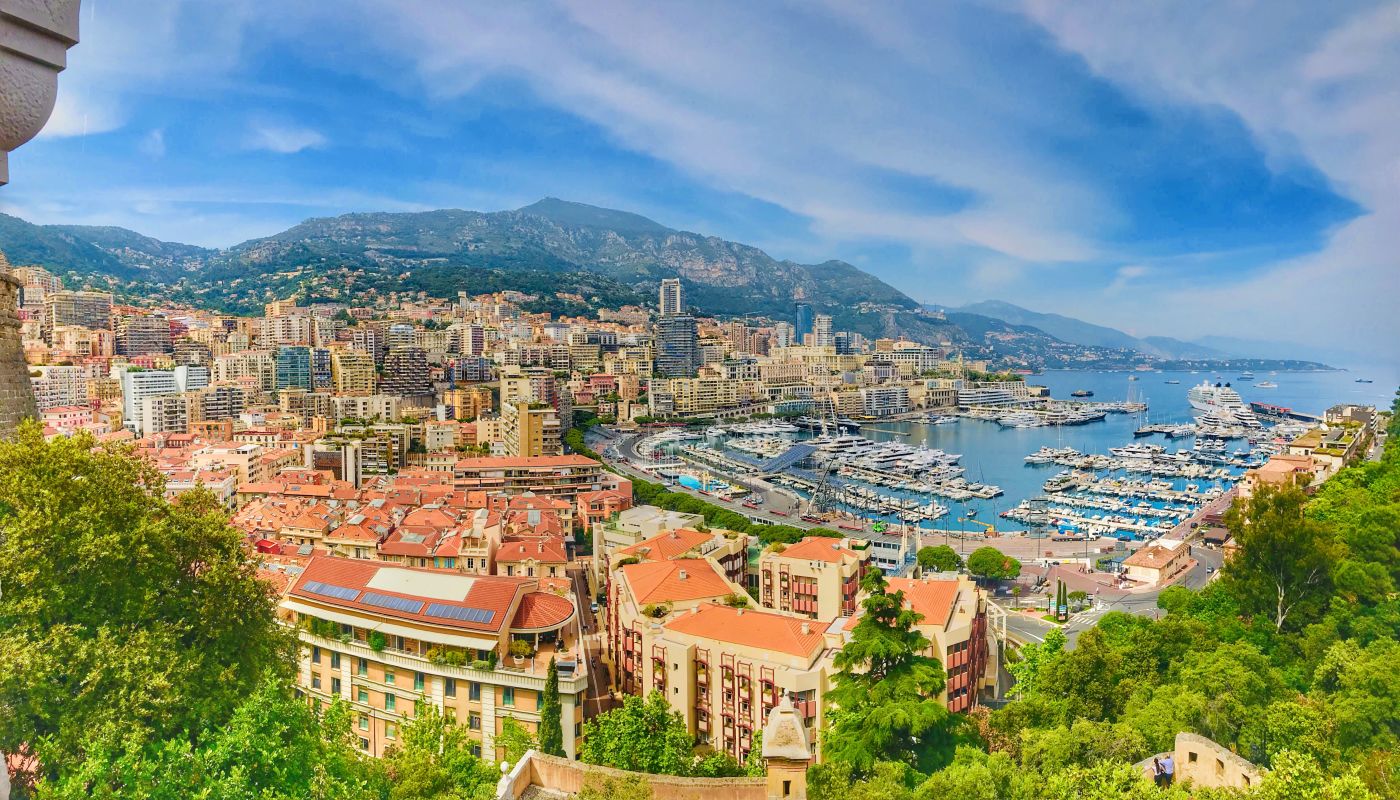
Landscape of Monaco
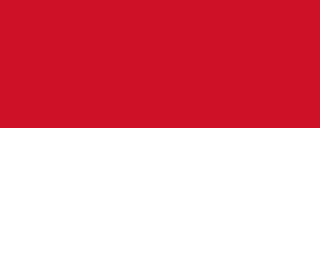
Flag of Monaco

Monaco

Europe

The second-smallest country in the world, Monaco has a population of 30,000 on only two square kilometers of land. The principality is located on the coast of the Mediterranean and is bordered on all sides by France. The absence of personal income tax has attracted many companies and wealthy businesspeople to the most densely populated country in the world. The education system, economy, and tourism sector are all thriving and world-renowned. Since there are nearly no human rights issues, the main problem facing the government of Monaco is how to expand the country without changing its borders.1 1 https://www.cia.gov/library/publications/resources/the-world-factbook/geos/mn.html

What would you like to learn about in Monaco?

Select a section to explore the country where nonprofits are creating positive change.

About Monaco

The Genoese built a fortress on the site of present day Monaco in 1215. The current ruling Grimaldi family first seized temporary control in 1297, and again in 1331, but were not able to permanently secure their holding until 1419. Economic development was spurred in the late 19th century with a railroad linkup to France and the opening of a casino. Since then, the principality's mild climate, splendid scenery, and gambling facilities have made Monaco world famous as a tourist and recreation center.

Quick Facts

Population
30,500 (July 2013 est.)
Area
2 sq km
ISO Code
MC
Continent
Europe
Government
constitutional monarchy
Active Causes
12
View all countries in Europe

Geography & Environment

Climate

Mediterranean with mild, wet winters and hot, dry summers

Terrain

hilly, rugged, rocky

Natural Resources

none

Environmental Issues

NA

People & Society

89.63 years
Avg. Life Expectancy
99%
Literacy Rate
100% of total population (2010)
Total Urban Population

Languages

French (official), English, Italian, Monegasque

Religions

Roman Catholic 90% (official), other 10%

Health Expenditure

4.3% of GDP (2010) of GDP

Education Expenditure

1.2% of GDP (2009) of GDP

Economy

$70,700
GDP per Capita (PPP)
0%
Unemployment Rate
NA%
Below Poverty Line

Economic Overview

Monaco, bordering France on the Mediterranean coast, is a popular resort, attracting tourists to its casino and pleasant climate. The principality also is a banking center and has successfully sought to diversify into services and small, high-value-added, nonpolluting industries. The state has no income tax and low business taxes and thrives as a tax haven both for individuals who have established residence and for foreign companies that have set up businesses and offices. Monaco, however, is not a tax-free shelter; it charges nearly 20% value-added tax, collects stamp duties, and companies fa...

Causes in Monaco

Human Rights

Monaco has an excellent human rights record with hardly any violations.1 The most prominent human rights issues are prisons not meeting certain exercise standards and refusal to acknowledge political rights for foreign women. There is little to no civil unrest.2

Education

Monaco is internationally recognized as having an excellent education system. The duration of compulsory schooling is ten years. The student-teacher ratio in primary schools is 22:5.1 School attendance is mandatory for students between the ages of 6 and 16. The school systems operate under the French educational system, and the official language of instruction is French. There are programs that exist to help non-French speaking students to fully integrate into school. Schools in Monaco are internationally renowned for providing world-class teaching with highly trained teachers, small classes, and a high emphasis on language acquisition at a young age.2 The literacy rate is 99%.3

Religion

The Roman Catholic Church is the official church in Monaco and 90% of the citizens are Roman Catholic. The other 10% are unspecified.1 Freedom of religion is recognized in Article 23 of the Constitution. Although Roman Catholicism remains the largest religion in the country, attendance at Catholic churches has gone down in recent years.2

Clean Water

Since Monaco is a highly developed country, 100% of their citizens have access to excellent clean water sources. This is easily achieved because of the country’s size and the fact that the entire population lives in urban areas; this makes providing services logistically easier and more efficient.1

Economy

Tourism is by far the most lucrative sector of Monaco’s economy. The principality is located on the coast of France and borders the Mediterranean. Because of its temperate climate and picturesque location, it has become an extremely popular vacation destination for Europeans and North Americans. The banking sector is also an incredibly successful pillar of the economy, and since there are no income taxes many foreign companies operate in Monaco.1 The country’s economy suffered greatly during the euro-zone crisis, and only recently did the GDP begin to increase again.2 Real estate and commerce within the principality play a large role in the economic stability. Due to the fact that Monaco has multiple lucrative sectors and facets of the economy, the macroeconomic stability has remained constant for the past few decades.3 The unemployment rate is 2%.4

Government

The Principality of Monaco is a constitutional hereditary monarchy. Prince Albert II has been the chief of state since 2005. The Grimaldi family, who still rules today, first came into power in 1297 but did not completely secure their rule until 1419. Since then, the Grimaldis have been the chiefs of state. It was in the late 19th century that Monaco finally opened its borders to France and economic growth expanded with the opening of casinos. The country of Monaco has been heavily influenced by France in its governmental and economic structures.1 The government is motivated to remain stable and transparent because of the amount of international investments supporting their economy.2 Accordingly, Monaco has recently taken steps towards the improvement of their financial transparency by becoming more cooperative with tax authorities.3

Health

Annually, the government in Monaco spends 3.86% of the GDP on health care. One of the prominent health care issues is the 30% prevalence rate of neuropsychiatric disorders. Due to this issue, Monaco has an extensive and comprehensive mental health policy plan as well as a developed mental health treatment center.1 The life expectancy is 90 years of age. Monaco has a high concentration of extreme wealth and therefore can afford expensive and excellent health care.2

Children

Monaco has implemented and ratified the UN Convention on the Rights of the Child. The infant mortality rate is 1.8 per 1000 births.1 Children may not get married without parental consent until they are 21. With parental permission girls can get married at 15, and boys at 18. There is a Department for Education, Youth and Sport, but no current youth policy.2

Environment

The main environmental concern in Monaco is sustainability. The government has been proactive in designating protected areas; these reserves make up 20% of the country’s small territory. The government has placed an emphasis on recycling, eco-friendly transportation, and city planning that encourages pedestrian travel.1 The government has had to come up with creative solutions to preserve the coastline, such as building a semi-submersible concrete dyke that sits in the water and absorbs the shock of waves by transferring it to the seafloor below.2

Family

Due in part to the general affluence of Monaco’s population, divorce rates are low and the average family unit is small. The Mediterranean and Roman Catholic influence can be seen clearly in the marriage traditions and family values.1

Poverty

The principality of Monaco is a travel destination for many of the world’s most affluent people, and there is room for little else besides resorts, casinos, and shopping centers. Therefore, poverty is not a prevalent issue in this country, and there is little to no data available. 1

Animals

There are limited habitats that could support wildlife in Monaco, but it is the native home to the roe deer and the least weasel. Many birds and small rodents can be found in different seasons, and dolphins are frequently spotted just off the coast.1 Some private companies have started a project to quantify the effects of climate change on the wildlife in the Mediterranean.2

Make Your Impact Today

Discover causes you care about and support the nonprofits making a difference in communities around the world.

Are you a nonprofit? Join Project World Impact for free

Join Us Free